DbcultAccessing Vault...
Cult Review
Senior Film Conservator
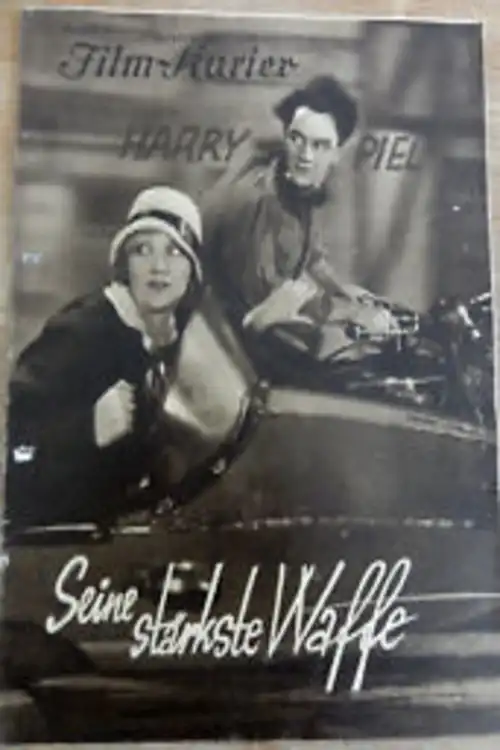
If you have a spare hour and you don't mind reading subtitles—or just guessing what people are saying since it's a silent film—then Seine stärkste Waffe is actually pretty decent. It is definitely for the crowd that likes to see how people in 1928 imagined the future of technology. If you need things to blow up every ten minutes, you will probably be bored out of your mind and should go watch something else.
Harry Piel stars as Harry Petersen, and he has that classic silent movie face where every emotion is dialed up to eleven. He has invented this lamp that works without any electrical supply, which sounds like magic even today. I spent a good five minutes wondering if the prop was just a really bright flashlight they hid in his hand.
The movie opens with him looking very tired but very proud. You can tell he hasn't slept in days because his hair is a total mess. He goes to meet this American businessman, Al Kinley, who is played with a lot of arrogance by the actor. Kinley is the kind of guy who probably thinks he owns the sun, so a cordless lamp doesn't impress him much.
There is this one scene where Petersen is trying to explain the science, and he’s waving his hands around so much I thought he might accidentally hit someone. It is a very physical performance. It reminded me a bit of the energy in How I Became Krazy, though this one tries to be a bit more serious.
The sets are actually quite cool, very typical of that late 1920s German style. Lots of sharp shadows and big, empty-looking offices. Kinley’s office feels huge, like a desert made of wood and paper. It makes Petersen look even smaller and more desperate.
I noticed a small detail in the background during the office scene—there is a clock on the wall that doesn't seem to move at all. It made the whole meeting feel like it was taking place outside of time. I don't know if that was on purpose or if they just forgot to wind the clock that day.
The pacing is a bit uneven, to be honest. The first half is all about the lamp and the rejection, and it feels very heavy. Then it picks up a bit when you realize that Petersen isn't going to just give up. He has this stubbornness that is actually quite relatable.
Compared to something like The Barricade, this feels a lot more personal. It isn't about a huge social movement; it is just about one guy and his weird light bulb. It feels smaller, which I actually liked.
There is a woman in the film, Carla Bartheel, who plays a character that seems way more interesting than the movie allows her to be. She has these very observant eyes. Every time she is on screen, she feels like she knows exactly what is going to happen next.
The way they filmed the light from the lamp is actually pretty clever. They use these harsh white glows that make the rest of the room look pitch black. It’s a bit dramatic, but it works for the mood they are trying to set.
I did find myself getting a little distracted by the costumes. Everyone is wearing these incredibly stiff collars that look like they are choking the actors. I don't know how they managed to deliver their lines—well, their title cards—without gagging.
There is a moment toward the middle where Harry looks at his invention and you can see the reflection of the camera crew for a split second in the glass. I love stuff like that. It reminds you that a bunch of people were standing around in a dark room in Berlin almost a hundred years ago trying to make this work.
If you’ve seen Naked Hearts, you might find the melodrama here a bit familiar. It’s that specific era of filmmaking where a sigh is never just a sigh—it’s a total collapse of the soul.
The "strongest weapon" mentioned in the title isn't actually a gun or a bomb. It’s more about the power of an idea, which is a bit cheesy but also kind of sweet. Petersen really believes in his lamp.
I think the movie gets a bit lost in the secondary characters toward the end. There are a few guys in suits who all look the same, and I kept forgetting which one was which. They all have the same mustache and the same angry expression.
The film doesn't really explain how the lamp works, which is probably for the best. If they tried to explain the physics in 1928, it would probably sound like complete nonsense now. Instead, they just treat it like a miracle.
One reaction shot of Al Kinley lasts for about ten seconds too long. He just stares at the lamp with this look that is somewhere between confusion and hunger. It becomes a little bit funny after the sixth second.
I liked the music in the version I saw, though obviously that varies depending on which restoration you find. It had this plinking piano sound that got very frantic whenever Harry was stressed out. Which was basically the whole movie.
It’s not a masterpiece like some of the other stuff coming out of Germany at the time, but it’s a solid watch. It has a bit of that scrappy energy that you see in Taking a Chance. It’s a movie that knows it’s a bit silly but plays it straight anyway.
Harry Piel was known for being an action star, but here he is mostly just an inventor. You can tell he wants to jump off a bridge or climb a building, but the script keeps him stuck in rooms talking about batteries. He still brings a lot of intensity to the role, though.
By the time the movie ends, you feel like you’ve been on a bit of a journey, even if you only went from a lab to an office and back again. It’s a small story, but it’s told with a lot of heart. Don't expect a huge twist, just a nice ending for a guy who worked hard.
Overall, it’s a fun little artifact. It’s grainy, the acting is over-the-top, and the plot is thin, but I’d still recommend it over a lot of the boring stuff they pump out today. Just make sure you have some coffee, because the silence can get a little heavy if you aren't in the right mood. 💡
IMDb —
1927
Community
Log in to comment.