DbcultAccessing Vault...
Cult Review
Senior Film Conservator
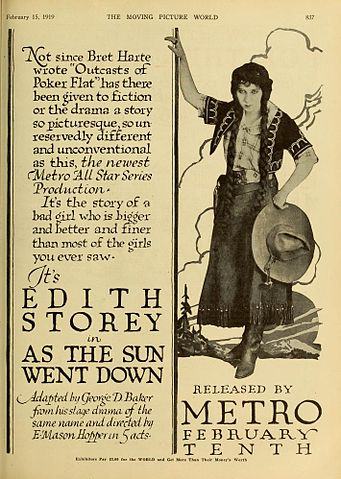
George D. Baker's As the Sun Went Down, a cinematic artifact from an era when the Western genre was still finding its spurs, offers a fascinating glimpse into the nascent complexities of frontier narratives. This film, though perhaps overshadowed by later, more grandiose productions, stands as a compelling study of identity, societal judgment, and the relentless pull of one's inherent nature. At its core is the enigmatic figure of "Colonel Billy," a woman whose very existence challenges the rigid gender constructs of the early 20th century, even as it reflects the brutal pragmatism of the Wild West. Her story is not merely one of a gunfighter, but a poignant exploration of a soul caught between the desire for acceptance and the inescapable demands of survival.
Rattlesnake Gulch, a name that perfectly encapsulates its desolate charm, serves as the crucible for Billy's tumultuous journey. Here, her reputation as a formidable gunfighter, a "Colonel" in all but official rank, precedes her, casting a long shadow of fear over the male populace. This fear, however, translates into an equally potent ostracization from the women, whose judgment, fueled by rumor and puritanical whispers of her "loose ways" during the Gold Rush, is perhaps more cutting than any bullet. Billy, portrayed with a stoic intensity by F.A. Turner, exists in a liminal space, respected for her prowess yet reviled for her perceived transgressions. Her only solace, a tentative love for the gold prospector Faro Bill, hints at a longing for a life beyond the trigger and the glare of judgment.
The arrival of outsiders from the comparatively civilized San Francisco acts as the catalyst for the narrative's central conflict. Gerald Morton (Harry Northrup), an actor, brings with him his wife Mabel, their baby, and the earnest, morally upright preacher Albert Atherton (F.E. Spooner). Their presence in Rattlesnake Gulch is akin to dropping a polished stone into a muddy pond, creating ripples that disturb the established, albeit chaotic, order. The townspeople, perhaps out of a perverse sense of humor or a desire to witness a clash of worlds, orchestrate a cruel prank: Atherton is sent to board with Billy. This arrangement, intended to provoke, instead initiates an unexpected, profound interaction between two diametrically opposed souls. It’s a classic setup that, while simple, delves into the deeper questions of morality and influence.
Atherton, embodying the steadfast virtues of his calling, embarks on a mission to shepherd Billy towards redemption. His conviction, devoid of judgment and brimming with genuine concern, begins to soften Billy's hardened exterior. We witness, through Turner's nuanced performance, the internal struggle of a woman who has known nothing but the harsh realities of the frontier, now confronted with the possibility of a different path. Her love for Faro Bill further fuels this desire for change, offering a tangible vision of a domesticity she might have once thought beyond her grasp. This period of nascent transformation is the heart of the film's emotional resonance, exploring the universal human yearning for a fresh start, for a chance to shed the burdens of a complicated past. It’s a theme that, while perhaps not as overtly radical as the female agency explored in How Could You, Jean?, certainly touches upon the idea of a woman redefining her own destiny, albeit through a more spiritual lens.
The narrative, however, takes a sharp turn, reminding us that the frontier, by its very nature, is resistant to easy redemption. Morton's discovery of a rich gold vein is the fulcrum upon which the story pivots. News of this strike, like wildfire across dry plains, reaches San Francisco, drawing a new and distinctly unsavory element to Rattlesnake Gulch. The influx of these opportunists, gamblers, and outlaws shatters the fragile peace, plunging the camp back into a state of lawlessness. The very social fabric that Atherton had begun to mend starts to unravel, demonstrating the fragility of order in the face of avarice. This sequence of events starkly illustrates the cyclical nature of chaos and the often-futile attempts to impose civilization on untamed lands. It’s a poignant echo of how quickly societal progress can be undone by primal human desires, a theme also powerfully, if more tragically, explored in Destruction.
In this maelstrom of renewed anarchy, the townspeople, ironically, find themselves in desperate need of Billy's unique skills. The woman they had once shunned, whose past they had condemned, becomes their only bulwark against utter pandemonium. This forces Billy into a devastating choice: embrace the peaceful life she yearns for with Faro Bill and Atherton's blessings, or revert to the formidable gunfighter persona that ensures the survival of the community, and perhaps, herself. Her return to arms is not a glorious triumph, but a tragic necessity, a testament to the fact that some destinies, particularly in the unforgiving West, are difficult to escape. The film, in this regard, offers a melancholic commentary on how circumstances can dictate identity, forcing individuals back into roles they believed they had outgrown. It's a powerful statement on the limits of personal transformation when confronted by overwhelming external pressures.
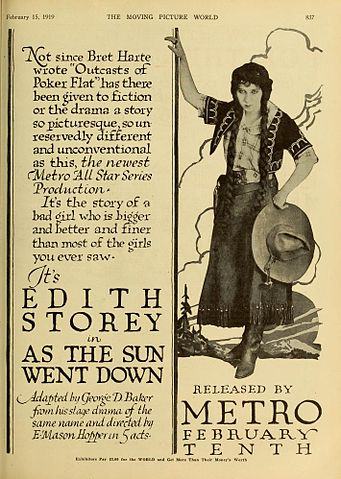
F.A. Turner's portrayal of Colonel Billy is undoubtedly the linchpin of As the Sun Went Down. She imbues Billy with a compelling blend of strength and vulnerability, a stoicism that barely conceals a yearning for acceptance and a softer existence. Her eyes, often shadowed, convey a world of past hardship and present conflict, making her eventual, reluctant return to her gunfighting ways all the more impactful. F.E. Spooner as Preacher Atherton provides the perfect foil, his earnestness a beacon of hope against the prevailing cynicism. Spooner manages to convey Atherton's conviction without making him appear naive, a difficult balance to strike in early cinema. Harry Northrup's Gerald Morton, while a catalyst for the plot, represents the more opportunistic side of human nature, his discovery of gold inadvertently unleashing the very forces Billy must now contend with. The ensemble cast, including Zasu Pitts in an early role, contributes to the vibrant, albeit chaotic, tapestry of Rattlesnake Gulch, each character adding a brushstroke to the overall portrait of a frontier town teetering on the edge of order and anarchy.
Thematic richness abounds in As the Sun Went Down. Beyond the obvious Western tropes of gunfights and gold rushes, the film delves into profound questions of gender roles and societal expectations. Billy is a woman operating in a man's world, not just surviving, but excelling, often outperforming her male counterparts. Yet, this very transgression against conventional femininity is what earns her the scorn of the other women, highlighting the internal policing of gender norms even within a supposedly lawless society. Her struggle for redemption is not just a personal one, but a battle against the entrenched prejudices of her community. The film also explores the corrupting influence of wealth, demonstrating how the promise of gold can swiftly dismantle any semblance of order or morality. This serves as a timeless commentary on human greed, a force as potent and destructive as any natural disaster. The cycle of violence, order, and renewed chaos is a recurring motif in Westerns, and As the Sun Went Down captures this beautifully, suggesting that peace on the frontier is often a temporary illusion, perpetually threatened by external forces and internal human failings. This cyclical nature of conflict and the struggle for a moral compass within a lawless environment can be seen in other films of the era, though perhaps with different nuances, such as The Demon or The Social Buccaneer, both of which grapple with the darker aspects of human nature and societal breakdown.
George D. Baker, as the writer, crafts a narrative that, for its time, was remarkably progressive in its characterization of Billy. The film avoids simplistic portrayals, instead presenting a complex protagonist whose moral ambiguity is her greatest strength and her greatest burden. While direct commentary on Baker's directorial style for this specific film might be speculative without viewing it, one can infer from the strong narrative structure and character development that he understood the power of visual storytelling, even in its nascent form. Early silent films often relied heavily on strong performances and clear thematic arcs to convey their messages, and As the Sun Went Down appears to deliver on both fronts. The pacing, crucial for maintaining audience engagement without dialogue, would have been meticulously crafted to build tension and allow for the emotional beats of Billy's transformation and relapse to resonate. The visual language of the Western, even in this nascent period, was already developing its iconic imagery: vast landscapes, dusty towns, and the stark contrast between the lone individual and the sprawling wilderness. These elements would have been central to establishing the film's atmosphere and reinforcing its themes of isolation and struggle.
The film's title, As the Sun Went Down, is itself laden with symbolism. The setting sun can represent the end of an era, the fading of hope, or the descent into darkness. For Billy, it might symbolize the twilight of her hopes for a peaceful, accepted life, or perhaps the inevitable return to the shadows of her past. It evokes a sense of melancholic finality, a recognition that some battles, both internal and external, are never truly won, merely postponed. This metaphorical depth elevates the film beyond a simple action narrative, imbuing it with a reflective quality that speaks to larger existential concerns. In an era where cinema was still finding its voice, such nuanced titling and thematic undertones suggest a sophisticated approach to storytelling, aiming for more than just superficial entertainment. It's a title that lingers, much like the questions the film poses about human nature and the societal forces that shape our destinies.
Comparing As the Sun Went Down to other films of its period reveals its unique position. While films like The Daring of Diana might focus on a woman's adventurous spirit, Billy's story is one born more out of necessity and circumstance than pure thrill-seeking. Her agency is not a choice of freedom but a burden of responsibility. The moral quandaries presented are perhaps less clear-cut than in something like Romance and Brass Tacks, where societal conventions are more explicitly challenged. Here, the conventions are implicitly defied by Billy's very existence, only to be reasserted by the community's judgment and the return of chaos. The film also touches upon the idea of identity performance, a theme that Morton, as an actor, embodies literally, but which Billy lives out through her shifting roles as gunfighter, hopeful lover, and reluctant protector. This fluid sense of self, forced by circumstances, adds another layer of psychological depth to her character, making her a compelling figure even by today's standards. This exploration of identity and societal pressure, while set in the American West, resonates with universal experiences, making the film's core themes enduringly relevant.
The legacy of As the Sun Went Down lies not just in its pioneering portrayal of a complex female protagonist in the Western genre, but in its unflinching look at the compromises demanded by a brutal world. It challenges the simplistic notions of good and evil, redemption and damnation, presenting a narrative where morality is often a luxury, and survival a constant, messy negotiation. The film, through Billy's journey, suggests that true character is forged not in the absence of temptation, but in the crucible of impossible choices. It is a reminder that the wild frontier was not just a stage for heroic exploits, but a harsh arbiter of human nature, stripping away veneers of civility to reveal the raw, often contradictory, essence of individuals. This enduring message, delivered through the evocative power of silent cinema, secures its place as a significant, albeit perhaps underappreciated, piece of film history. It speaks to the enduring human struggle to find peace and purpose amidst chaos, and the difficult, often tragic, choices we are sometimes forced to make for the greater good, or simply, for survival.
Ultimately, As the Sun Went Down offers more than just a period piece; it provides a timeless commentary on the human condition. It explores the tension between individual desire and communal need, the fragile line between law and lawlessness, and the profound impact of reputation and circumstance on a person's path. Through the compelling figure of Colonel Billy, the film asks us to consider what it truly means to be redeemed, and whether, in certain environments, the very skills that make one an outcast are precisely those that are most desperately needed. It's a testament to the power of early cinema to weave narratives that transcend their technological limitations, delivering stories that resonate with emotional truth and intellectual depth, leaving audiences to ponder the complex interplay of fate, choice, and character long after the final fade to black.
IMDb 7
1927
Community
Log in to comment.