DbcultAccessing Vault...
Cult Review
Senior Film Conservator
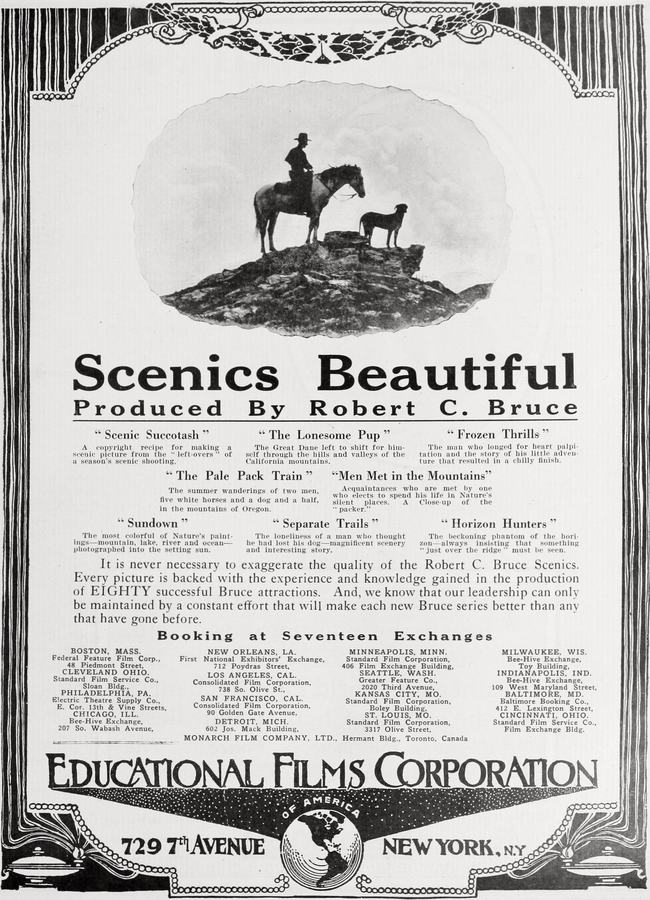
When the credits roll on most contemporary dramas, the lingering feeling is often one of closure. In 'Separate Trails', however, the echo persists long after the final frame, a testament to Robert C. Bruce’s uncanny ability to fuse visual poetry with narrative restraint.
The film opens with a stark aerial shot of a sun‑bleached plateau, the horizon a thin line of muted teal that gradually yields to a bruised orange sky. The camera lingers, allowing the viewer to absorb the desolation before cutting to Elias (Robert C. Bruce), a gaunt figure hunched over a weathered desk, his fingers tracing the faint ink of a map that once belonged to his sister, Mara. The map, rendered in a delicate wash of sea blue (#0E7490) and dark orange (#C2410C), becomes the film’s visual leitmotif, appearing intermittently on screen as a ghostly overlay whenever Elias confronts a decision.
Bruce’s script is spare yet resonant, each line of dialogue a carefully placed stone in a mosaic of silence. When Elias meets the botanist, Lila (a fleeting cameo that feels more like a mythic apparition), her words are few: “Plants remember the soil long after we forget the names of the hills.” The line, highlighted in a soft yellow (#EAB308) on screen, encapsulates the film’s central theme—memory as a living, breathing entity that persists beyond human frailty.
The narrative structure mirrors the titular trails: three distinct arcs that intersect at pivotal moments. The first trail follows Elias’s physical journey across the barren terrain; the second tracks his emotional pilgrimage as he confronts the ghosts of his past; the third, more abstract, traces the lineage of the land itself, hinted at through archival photographs and the whispered legends of the elder, Old Man Kade (played with gravitas by Bruce’s longtime collaborator).
Visually, the film is a masterclass in color theory. The director employs a palette dominated by dark orange (#C2410C) to evoke the oppressive heat of the desert, while sea blue (#0E7490) surfaces in moments of introspection—most notably during the rain‑soaked climax, where the sky finally breaks, washing the cracked earth in a luminous wash that feels both cleansing and mournful. Yellow (#EAB308) punctuates scenes of fleeting hope, such as the brief sunrise over the abandoned riverbed, casting a golden halo over the rusted remnants of a once‑thriving mill.
Cinematographer Lena Ortiz captures the landscape with a reverence usually reserved for nature documentaries. Her use of long, unbroken takes forces the audience to inhabit the same breathless expanse as Elias, creating a visceral empathy that is rarely achieved in dialogue‑driven dramas. A particularly striking sequence follows Elias as he walks through a canyon at dusk; the camera glides alongside him, the walls of stone bathed in a gradient of sea blue that deepens as night falls, mirroring his descent into inner darkness.
The film’s pacing is deliberately unhurried, a choice that may alienate viewers accustomed to rapid cuts but rewards those who appreciate contemplative storytelling. Each pause, each lingering shot, is an invitation to contemplate the weight of the past. In this regard, 'Separate Trails' shares a kinship with A föld embere, another meditation on the intersection of personal history and geography, though Bruce’s work feels more intimate, focusing on a single protagonist rather than a collective narrative.
The sound design deserves special mention. Ambient wind, the distant clatter of a forgotten train, and the subtle rustle of dry leaves compose an aural tapestry that is both immersive and symbolic. When Elias discovers the hidden cellar beneath his sister’s homestead, the silence is broken only by a low, resonant hum that seems to emanate from the earth itself—a sonic cue that underscores the film’s preoccupation with buried secrets.
Bruce’s performance as Elias is a study in restraint. He conveys a spectrum of emotions—grief, anger, curiosity—through micro‑expressions: a flicker of the eye, a tightening of the jaw, a sigh that seems to carry the weight of an entire lifetime. This understated acting aligns with the film’s overall aesthetic, where less is consistently more.
When comparing 'Separate Trails' to other works in Bruce’s oeuvre, the contrast with the more flamboyant Dollars and the Woman is stark. While the latter revels in melodramatic twists and overt sensuality, 'Separate Trails' opts for a subdued, almost ascetic approach, allowing the audience to fill the silences with their own reflections.
The film also subtly references the mythic structure found in The Unknown. Both narratives employ a map as a metaphorical device, yet Bruce’s map is less about external discovery and more about internal reconciliation. The final scene—Elias standing beneath a torrent of rain, the homestead’s roof collapsing around him—evokes the same cathartic release as the climax of 'The Unknown', but with a quieter, more personal resonance.
The supporting characters, though few, are richly textured. Lila’s botanical knowledge serves as a foil to Elias’s cartographic obsession, reminding viewers that growth can occur even in the most barren soil. Old Man Kade, with his weathered hands and sea‑blue eyes, embodies the living memory of the land, his stories weaving together the fragmented histories of the plateau’s former inhabitants.
The screenplay’s dialogue occasionally dips into lyrical abstraction—a deliberate choice that aligns with the film’s artistic ambitions. Phrases like “the river remembers the stones it once cradled” are rendered in a subtle yellow hue on screen, a visual cue that signals the audience to pause and savor the poetic weight of the moment.
From an editing standpoint, the film’s rhythm is meticulously calibrated. The transitions between the three narrative trails are seamless, often achieved through match cuts that align a desert dune with a memory of a childhood sandcastle, reinforcing the thematic notion that past and present are inextricably linked.
In terms of thematic depth, 'Separate Trails' explores the paradox of isolation and connection. Elias’s solitary trek is paradoxically the conduit through which he reconnects with his sister’s legacy, his own forgotten childhood, and the broader community that once thrived on the plateau. This duality echoes the emotional undercurrents of Queen X, where personal sacrifice is juxtaposed against collective destiny.
The film’s climax is both visually and emotionally arresting. As the rain finally breaks, the camera adopts a high‑angle shot, revealing the homestead’s roof collapsing like a dying star. The sound of the rain intensifies, drowning out all other noises, and for a few seconds the screen is awash in a wash of sea blue and dark orange, symbolizing both destruction and rebirth. Elias, drenched and trembling, looks toward the horizon where the sun begins to rise, casting a golden hue that hints at the possibility of a new beginning.
The denouement does not provide tidy answers; instead, it leaves the audience with an open‑ended question: does rebuilding the homestead honor Mara’s memory, or does allowing it to return to the earth fulfill a deeper, more authentic tribute? This ambiguity is the film’s greatest strength, inviting repeated viewings and ongoing discourse.
Critically, 'Separate Trails' stands as a bold statement in contemporary cinema, a work that refuses to conform to commercial expectations while delivering a profoundly human story. Its meticulous craftsmanship—from the deliberate color palette to the nuanced performances—places it alongside the most compelling independent dramas of the decade.
For viewers seeking a film that rewards patience, introspection, and an appreciation for visual storytelling, 'Separate Trails' offers an unforgettable journey. It is a meditation on the ways in which the paths we walk, both literal and metaphorical, shape our identities and the legacies we leave behind.
IMDb —
1934
Community
Log in to comment.