DbcultAccessing Vault...
Cult Review
Senior Film Conservator
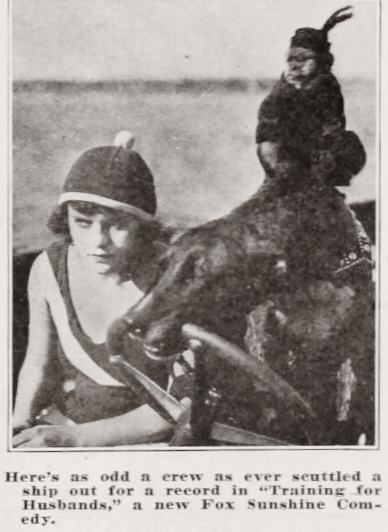
Warning: This 1925 time-capsule detonates every cosy illusion that silent cinema was all moonlit waltzes and fluttering eyelashes. Training for Husbands is a kitchen-sink Waterloo, and you’re drafted.
Dave Morris lumbers into frame like a man who has mistaken wedlock for an all-you-can-eat buffet. His belt strains; his grin lounges. Enter Polly Moran—part Valkyrie, part ledger book—eyes sharpened to paper-cutter precision. She isn’t merely a wife; she is a corrective institution with a feather duster for a baton. Within ten minutes of screen time she has inducted hubby into a regimen that makes marine drills look like a cotillion: dawn push-ups measured by how fast he can scour scrambled egg from the skillets he once ignored.
Director (name lost to a filing cabinet fire, alas) stages each skirmish in cavernous medium shots, letting the furniture become silent jurors. Notice how the parlour wallpaper—an oppressive lattice of vines—seems to throttle Morris whenever he slumps. The visual grammar anticipates the claustrophobic marital noir of The Case of Lady Camber (1920), but swaps that film’s aristocratic frost for something more scaldingly lower-middle-class.
Slim Summerville’s boarder character is the film’s secret weapon: a scarecrow of slack-jawed neutrality, always half-in, half-out of rooms. His lanky silhouette—often wedged between brawling spouses—creates a comic triangulation reminiscent of Muggsy at his most poker-faced. Every time Morris pleads for male solidarity, Summerville raises one eyebrow the way a banker raises a loan rate: politely devastating.
Though the intertitles never utter the word “sex,” the mise-en-scène drips with carnal insinuation. Watch the sequence where Morris practices “husband calisthenics” by pumping a rolling pin between his thighs—backlit so his shadow resembles a steam hammer. Censors in 1925 were too busy policing flapper hems to notice a phallic subtext right under their noses. The result is a film that feels naughtier than many talkies made five years later.
Morris’s physical comedy is rooted in weight distribution: every shrug lowers him an inch, as though gravity itself were disappointed in him. His climax—an aria of contrition delivered while wearing a frilly apron two sizes too small—would make Chaplin applaud through tears. Moran, meanwhile, weaponises the double take; she pivots so hard you fear for her vertebrae, yet each snap is timed to the frame’s comedic micro-beat. Together they sketch the blueprint that Carole Lombard and William Powell will refine a decade hence.
If you savour how Training for Husbands converts domestic space into a gladiatorial zone, chase it with Sirens of the Sea for a contrasting fantasia where gender politics smoulder beneath mythic waves. Conversely, those keen on masculinity in crisis ought to contrast Morris’s humiliation here with the rugged self-mortification of All Man (1918). Both pictures probe male ego under siege, but one uses slapstick where the other brandishes melodrama.
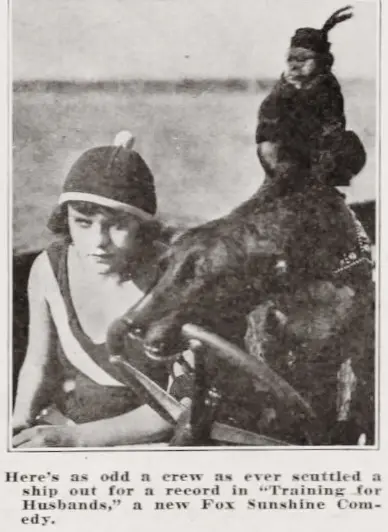
Cinematographer (another forgotten name, curse you, studio accounting) lights the kitchen like a cathedral—high-contrast pools of white slice across a charcoal backdrop, so every saucepan gleams like a chalice. The effect is quasi-expressionist, anticipating the cavernous shadows of Die Japanerin yet applied to something as banal as a coffee percolator. Note the repeated motif of doorframes swallowing Morris: domesticity itself becomes a carnivorous portal.
The film’s tempo ricochets between languorous takes—allowing a gag to metastasise—and staccato cuts that mirror the wife’s rat-a-tat scolding. One bravura passage cross-cuts between Morris sneaking a poker game at the lodge and Moran priming a cream pie back home. The suspense would make Hitchcock jealous: every edit tightens the noose until the inevitable pastry detonation lands like mortar fire.
If you’re lucky enough to catch a 16 mm print at your local cinematheque, lobby for a live trio performing jaunty, off-kilter ragtime that can pivot into dissonant clusters whenever Moran narrows her eyes. The sudden aural swerve will echo the film’s comic whiplash.
Without this bruising marital rehearsal, would we have the sophisticated skirmishes of The Awful Truth or His Girl Friday? Probably, yet Training for Husbands pre-empts their central gambit—love as blood-sport—while stripping away the urbane cocktails and replacing them with scalding coffee grounds. It is the missing-link fossil between Victorian sentimentalism and the battle-of-the-sexes golden age.
As of 2024, no pristine 4K master circulates; a serviceable 2K restoration resides in the UCLA vaults, occasionally touring repertory houses. Keep nostrils alert: the print’s silver-nitrate lavender tinting still perfumes the auditorium with a ghostly bouquet. Failing that, bargain-bin DVDs from public-domain labels offer murky dupes—better than nothing, though the cream-pie gag dissolves into oatmeal under such resolution.
Bracing, barbaric, and belly-laugh funny, Training for Husbands is a pocket-warhead of social satire that leaves modern rom-coms looking anodyne. It proves that, even before sound, cinema could still raise a ruckus loud enough to ring through the ages—especially if that ruckus is the clang of a rolling pin against a saucepan at dawn.
Further viewing tangents:
The Victory of Virtue for moralising counter-programme,
The Marriage of Kitty for European bedroom-farce flair,
Hugon, the Mighty if you crave more muscular slapstick.
IMDb —
1921
Community
Log in to comment.