DbcultAccessing Vault...
Cult Review
Senior Film Conservator
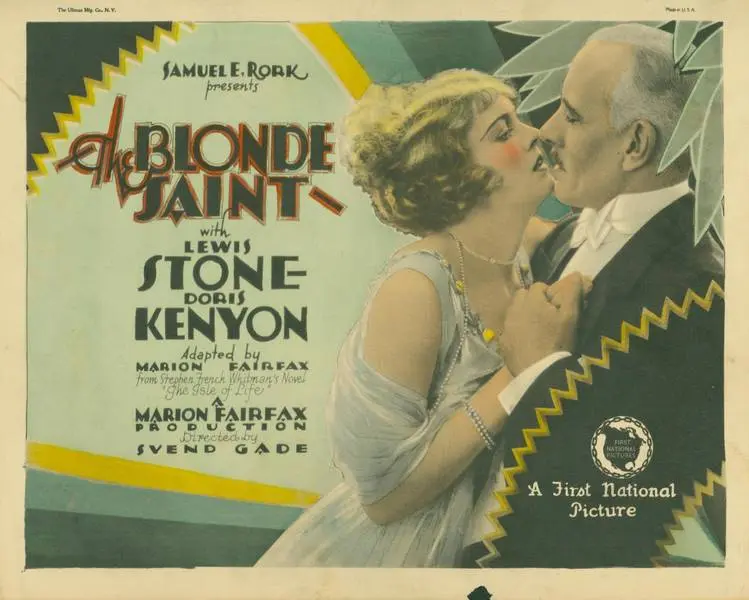
Is The Blonde Saint worth watching today? Short answer: yes, but with significant caveats that demand a certain level of historical perspective and an appreciation for the raw, often unpolished, storytelling of the silent era. This film is a fascinating, if deeply problematic, relic that offers a window into the moral ambiguities and narrative daring of early cinema.
This film is for viewers intrigued by the evolution of cinematic storytelling, those who appreciate the dramatic intensity of silent performances, and anyone seeking a film that challenges modern sensibilities while reflecting its own time's peculiar ethics. It is emphatically not for those seeking a straightforward, morally palatable romance, or audiences easily discomfited by narratives centered around non-consensual acts and abrupt genre shifts.
This film works because of its sheer audacity and the compelling, if unsettling, central performances that manage to convey complex emotions without a single spoken word. It’s a testament to the power of visual storytelling and the dramatic weight of its controversial premise.
This film fails because its narrative contrivances often stretch credulity to breaking point, especially in its abrupt transitions from society drama to forced romance, then to a survival thriller and ultimately a crime caper. The tonal whiplash can be disorienting, undermining its potential for deeper thematic exploration.
You should watch it if you are a student of film history, a silent film aficionado, or someone who enjoys dissecting the problematic elements of classic cinema through a modern lens. It offers rich material for discussion, despite its narrative flaws.
The core narrative of The Blonde Saint is, by contemporary standards, deeply unsettling. Sebastian Maure, played with a compelling blend of charm and possessiveness by Gilbert Roland, is not your typical romantic lead. He's an entitled novelist whose infatuation with Ghirlaine Bellamy (Doris Kenyon) quickly veers into obsession. Ghirlaine, the titular 'Blonde Saint,' is presented as the epitome of puritanical high society, a stark contrast to Maure's bohemian libertinism. Her engagement to Vincent Pamfort (Malcolm Denny) is the catalyst for Maure's shocking actions.
Maure’s decision to trick Ghirlaine onto a boat bound for Palermo, ostensibly for a final conversation, is merely a prelude to his grand, morally dubious gesture. The moment he grabs her and leaps overboard, forcing them into a shared, desperate struggle for survival, is cinematic shorthand for a profound violation. This isn't a meet-cute; it's a kidnapping, plain and simple. The film, however, attempts to frame it within a romantic context, a narrative choice that speaks volumes about the sensibilities of its era.
What follows is an almost jarring shift in genre. The initial society drama and forced romance quickly give way to a survival story set in a desolate fishing village. As if a forced shipwreck weren't enough, the pair finds themselves embroiled in a cholera epidemic and entangled with a local criminal gang. This layering of crises feels less like organic plot development and more like a series of increasingly elaborate tests designed to forge a bond between Maure and Ghirlaine, or perhaps to simply keep the audience on its toes.
This narrative structure is both the film's most intriguing and most frustrating element. It refuses to settle into one genre, constantly pulling the rug out from under the audience. While this can be seen as a bold, experimental approach, it also makes for a disjointed viewing experience. One moment, you're observing class dynamics; the next, you're in a medical crisis; then, a gangster standoff. The film feels less like a cohesive narrative and more like a series of increasingly bizarre dares the writers, Stephen French Whitman and Marion Fairfax, posed to themselves.
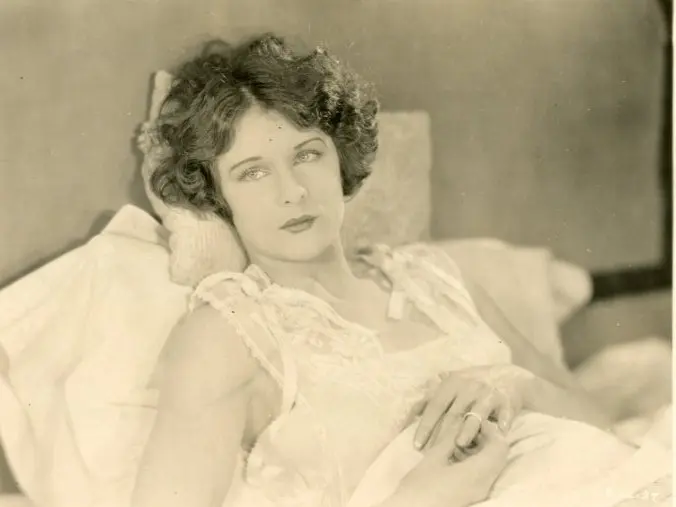
In silent cinema, the burden of emotional conveyance rests almost entirely on the actors' physicality and facial expressions. Doris Kenyon, as Ghirlaine Bellamy, delivers a performance that is central to the film's impact. She embodies the 'Blonde Saint' with an initial rigidity and primness that slowly erodes under the weight of her ordeal. Her transformation from a sheltered, indignant society woman to a resilient, albeit still traumatized, survivor is palpable. Kenyon’s wide, expressive eyes and subtle shifts in posture effectively communicate her terror, confusion, and eventual, grudging adaptation to her harsh new reality.
For example, the scene where she first realizes Maure's deception on the boat, her initial shock giving way to a desperate plea, is conveyed through a series of increasingly frantic gestures and a deeply troubled gaze. Later, in the fishing village, her quiet despair amidst the cholera-stricken populace speaks volumes without needing intertitles.
Gilbert Roland, as Sebastian Maure, is equally compelling, though his character is far more morally ambiguous. Roland exudes a roguish charm that makes Maure’s actions all the more disturbing. He is not a mustache-twirling villain, but rather a man driven by an almost childlike, yet dangerously entitled, desire. His performance walks a fine line, preventing Maure from becoming entirely unsympathetic, even as his methods are undeniably reprehensible. Roland's confident swagger and intense stares convey Maure's unwavering determination, even when faced with dire consequences.
The chemistry between Kenyon and Roland, despite the coercive nature of their characters' relationship, is surprisingly potent. They manage to sell the idea of a bond forming under extreme duress, even if the premise for that bond is ethically fraught. The supporting cast, including Cesare Gravina and Albert Conti, also contribute to the film's atmosphere, particularly in depicting the desperate villagers and menacing criminals. Their raw, unpolished portrayals add a layer of gritty realism to the island sequences, contrasting sharply with the polished veneer of the opening scenes.
Marion Fairfax, a prolific writer and director of the era, helms The Blonde Saint with a keen eye for dramatic contrast. The film's visual language is adept at highlighting the stark differences between Ghirlaine's opulent, controlled world and the chaotic, dangerous environments she's thrust into. The opening scenes, with their elegant dinner parties and refined social gatherings, are shot with a sense of order and perhaps a touch of claustrophobia, hinting at the stifling nature of Ghirlaine's existence.
In stark contrast, the sequences on the boat and especially in the fishing village are marked by a raw, almost documentary-like quality. The jump overboard, for instance, is captured with a sense of abruptness and peril, emphasizing the sudden, violent rupture of Ghirlaine's life. The depiction of the cholera epidemic is particularly striking, showcasing crowded, suffering figures and a pervasive sense of despair. Fairfax doesn't shy away from the grim realities, allowing the visuals to convey the intensity of the crisis.
The cinematography, while not always groundbreaking, effectively uses light and shadow to enhance the mood. The shadowy alleys where the criminal gang operates create a sense of menace, while the bright, open seas underscore the isolation of Maure and Ghirlaine's predicament. There's a noticeable shift in visual style as the setting changes, from the polished interiors of the elite to the rugged, sun-baked landscapes of the island, lending authenticity to each distinct segment of the narrative.
Fairfax's direction is most effective in orchestrating the large crowd scenes during the epidemic, creating a believable sense of panic and widespread suffering. However, the transitions between these disparate settings and crises can feel abrupt, suggesting a director more focused on individual dramatic moments than seamless narrative flow. Unlike the more focused emotional drama of The Invisible Bond, The Blonde Saint sacrifices some narrative cohesion for a series of high-stakes, visually distinct scenarios.
One of the most distinctive, and perhaps divisive, aspects of The Blonde Saint is its erratic pacing and wildly shifting tone. The film begins with a measured, almost languid pace, establishing the societal backdrop and the characters of Ghirlaine and Maure. This initial setup, however, quickly gives way to a rapid-fire series of events once Maure sets his plan in motion. The kidnapping and shipwreck occur with startling speed, propelling the narrative into immediate, high-stakes drama.
The subsequent chapters of the film, involving the cholera epidemic and the criminal gang, also unfold with a sense of urgency, almost as if the filmmakers were attempting to cram as much dramatic incident as possible into the runtime. This relentless progression, while keeping the audience engaged, often comes at the expense of character development and thematic depth. There's little time for reflection or emotional processing amidst the constant onslaught of new dangers.
The tonal shifts are equally pronounced. The film starts as a social commentary, albeit a light one, then morphs into a dark romance, then a survival thriller, and finally a crime drama. This genre-bending approach, while audacious, can be disorienting. It's difficult to settle into a consistent emotional register when the film is constantly pulling you in different directions. One moment you're contemplating the ethics of Maure's actions, the next you're worried about the spread of disease, and then you're anticipating a shootout.
This lack of a unified tone prevents the film from achieving a singular, powerful impact. Instead, it feels like several distinct stories loosely stitched together by the presence of its two main characters. While some might appreciate this unpredictability, it undeniably weakens the film's overall coherence. Compared to the more tightly wound suspense of a film like The Whip, The Blonde Saint feels like a narrative roller coaster that hasn't quite decided on its destination.
Absolutely, but with a critical eye. The Blonde Saint is a significant piece of silent cinema for its provocative narrative and ambitious scope. It challenges viewers to confront the complex morality of its time, while offering strong performances from its leads.
It's a historical document, a dramatic spectacle, and a conversation starter. Its flaws are as apparent as its strengths, making it a rich subject for film study and discussion.
If you enjoy exploring the boundaries of early filmmaking and are prepared for a challenging narrative, then yes, it's worth your time.
The Blonde Saint is not an easy film to categorize, nor is it one to be watched uncritically. It’s a fascinating, often frustrating, relic from the silent era that dares to be different. Its central premise, a forced romance born from an act of abduction, is undeniably problematic, yet it's precisely this audaciousness that makes it a compelling subject for study. Doris Kenyon and Gilbert Roland deliver performances that transcend the limitations of the medium, creating characters who are both compelling and complex, even if Maure's actions remain deeply disturbing.
The film’s greatest strength lies in its willingness to leap from one dramatic extreme to another, even if this leads to a disjointed viewing experience. It's a testament to the raw, experimental spirit of early cinema, where narrative conventions were still being written. While it may not offer the polished narrative of a later classic, its sheer nerve and the powerful, wordless portrayals from its leads ensure its place as a noteworthy, albeit controversial, piece of film history. It works. But it’s flawed. For those willing to engage with its challenging aspects, The Blonde Saint offers a unique and thought-provoking journey into the heart of silent-era melodrama and survival. It's a film that lingers, prompting discussion long after the final frame has faded.
IMDb —
1927
Community
Log in to comment.