DbcultAccessing Vault...
Cult Review
Senior Film Conservator
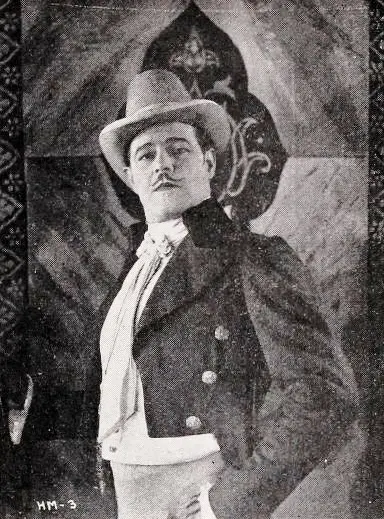
There is a peculiar, almost haunting quality to the way the silent era captured the divide between the metropolitan dream and the rustic reality. In Her City Sport, directed by the prolific Charles Lamont, we aren't just watching a slapstick short; we are peering into the collective psyche of the 1920s—a decade caught between the horse-drawn carriage of the past and the roaring aeroplane of the future.
Wanda Wiley remains one of the most unjustly overlooked luminaries of the silent screen. While her contemporaries like Buster Keaton or Harold Lloyd are enshrined in the pantheon of cinema history, Wiley’s work in films like this demonstrates a physical dexterity and a comedic timing that are nothing short of virtuosic. In Her City Sport, she embodies the 'New Woman' of the era—restless, imaginative, and perhaps a bit too susceptible to the allure of modern branding. Unlike the domestic pathos found in The Old Nest, Wiley’s character isn't pining for a lost family dynamic; she is pining for a glossy, advertised sophistication that probably doesn't exist.
Her performance is a masterclass in facial elasticity. When she gazes at the picture of the 'Beau Brummel,' her eyes don't just show admiration; they project a desperate hunger for a life less ordinary. It’s a theme we see echoed in many films of the period, such as Mr. Opp, where the grandeur of one's internal world often clashes violently with the drabness of their external circumstances.
The inclusion of an aeroplane in 1924 was not merely a plot device; it was a symbol of the terrifying and exciting intrusion of technology into the sanctuary of the countryside. When Harry McCoy’s character drops from the sky, he isn't just a man; he is a celestial messenger of the Jazz Age. This mechanical failure serves as the catalyst for a narrative pivot that is both absurd and deeply revealing. The way Lamont handles the transition from the girl’s idolatry of a poster to her interaction with the real man is handled with a deftness that rivals the high-stakes tension of De røvede Kanontegninger, albeit with a much lighter touch.
McCoy plays the city chap with a wonderful sense of unearned superiority. His 'Beau Brummel' is a construction of starch and pomade, a stark contrast to the fleshy, grounded reality of Hilliard Karr’s rustic lover. This juxtaposition is the engine that drives the film’s second act, leading to one of the most surreal sequences in early comedy: the dummy practice.
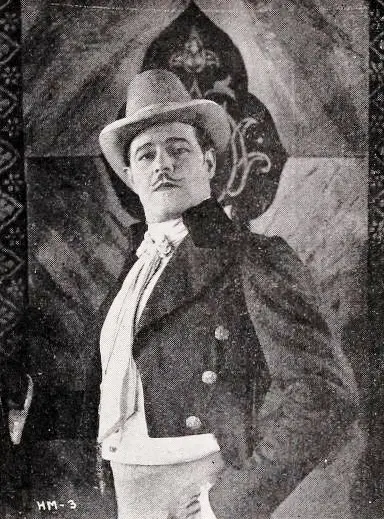
The sequence where Wiley’s character practices her 'love-making' with a dummy is a fascinating exploration of artifice. It’s a moment that feels surprisingly modern, pre-dating the absurdist movements that would later take hold in European cinema. When McCoy takes the dummy's place, the film moves from simple parody into the realm of the uncanny. The humor here is derived from the voyeuristic thrill of the city man watching the country girl’s uninhibited performance of passion—a performance directed at a literal object.
This scene elevates the film beyond the standard slapstick fare found in This Way Out. There is a psychological depth here regarding how we project our desires onto symbols. The city chap is not a person to her; he is a personification of the lithograph. This dehumanization goes both ways, as the city man views the girl as a quaint diversion, a 'sport' for his temporary amusement.
No comedy of this era would be complete without the climactic chase, and Lamont does not disappoint. However, the stakes here feel different. Hilliard Karr’s rustic lover, initially presented as a figure of fun—his girth used as a punchline—becomes a force of nature. He represents the physical reality of the land. When he 'gets into action,' the city chap’s veneer of sophistication evaporates instantly. The chase is not just a pursuit of a rival; it is the rejection of the urban interloper by the rural environment.
It’s interesting to compare this to the more dramatic tensions in The Sea Wolf, where the environment itself tests the mettle of the 'civilized' man. In Her City Sport, the test is comedic, but the result is the same: the city man is found wanting. He finds the 'action' too much for him. The metropolitan world is one of poses and pictures; the country world is one of sweat and stamina.
The film’s conclusion is bittersweet, depending on how one views the plight of the 'New Woman.' The girl is 'left' to her rustic lover. On the surface, it’s a return to the status quo, a comedic restoration of order. But after seeing Wiley’s character’s vibrant imagination, one can’t help but feel a pang of sympathy. She has seen the 'original' of the picture, and found it to be a coward. Her dream has been shattered, and she is forced back into the arms of the mundane.
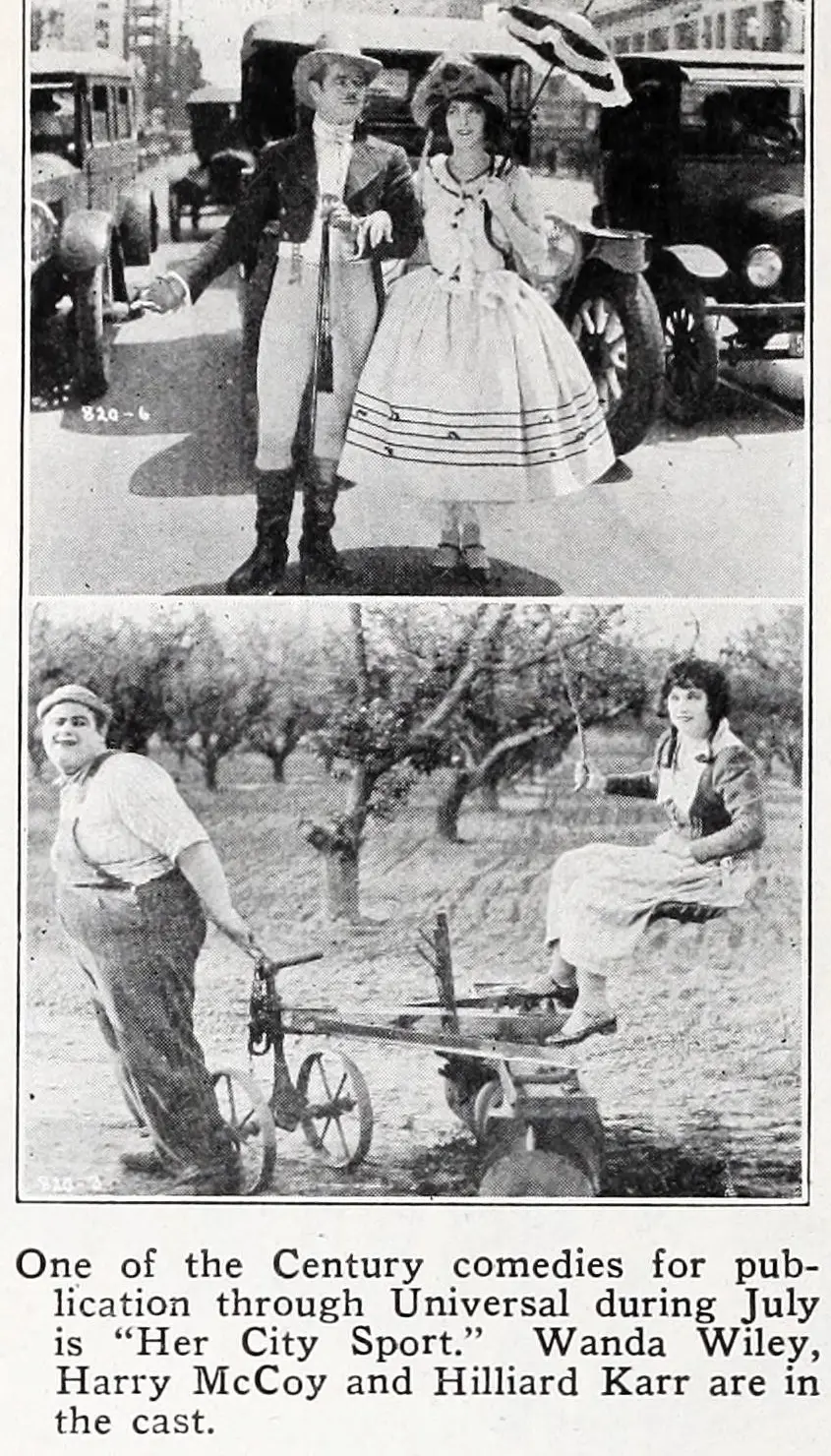
This thematic arc reminds me of the social critiques present in The Stimulating Mrs. Barton, where female agency is often constrained by the expectations of the community. In Her City Sport, the 'sport' is over, and the reality of the farm remains. It’s a grounded ending that avoids the melodrama of The Dawn of Freedom, opting instead for a pragmatic, if slightly cynical, resignation.
Charles Lamont’s direction is invisible in the best way possible. He allows the physical performances to breathe, using wide shots to establish the isolation of the rural setting before moving in for the expressive close-ups that Wiley excels at. The editing during the aeroplane sequence and the subsequent chase is remarkably fluid for 1924, showing a sophisticated understanding of pacing. While it may not have the epic scale of The Queen of Sheba, its technical competence ensures that the comedy never feels dated or clunky.
The cinematography captures the dust and the sunlight of the open fields, creating a tactile sense of place that makes the city chap’s presence feel all the more intrusive. The use of the advertisement as a recurring visual motif is a clever way to tie the narrative together, reminding the audience that the conflict is essentially one of image versus reality. It’s a visual shorthand that works as effectively here as the mystery elements in Under Suspicion.
Why does Her City Sport matter today? In an age of Instagram filters and curated digital personas, the story of a girl falling in love with a lithograph feels more relevant than ever. We are all, in some way, practicing our 'love-making' with dummies, hoping that the 'original' will eventually land their aeroplane in our backyard.
The film avoids the heavy-handed moralizing found in When Broadway Was a Trail, choosing instead to find the humor in our collective vanity. It’s a short, sharp shock of a movie that showcases the incredible talent of Wanda Wiley and the comedic potential of the silent medium. Whether you’re a fan of the frantic energy of Dodging a Million or the more measured pace of Barnaby Rudge, there is something in this film's DNA that appeals to the universal human desire for something 'more,' even if that 'more' turns out to be a dandy who can't handle a simple country chase.
In the end, Her City Sport is a testament to the power of the short form. It doesn't need a thousand-dollar reward, like in $5,000 Reward, to tell a compelling story. It just needs a girl, a poster, a pilot, and a very angry rustic lover. It’s a reminder that sometimes, the best comedy comes from the simple realization that the grass isn't always greener on the other side of the city limits—it's just better photographed.
“A brilliant, biting, and breathless comedy that proves Wanda Wiley was the true queen of the rural romp.”
IMDb 6.9
1929
Community
Log in to comment.