DbcultAccessing Vault...
7/10
Senior Film Conservator
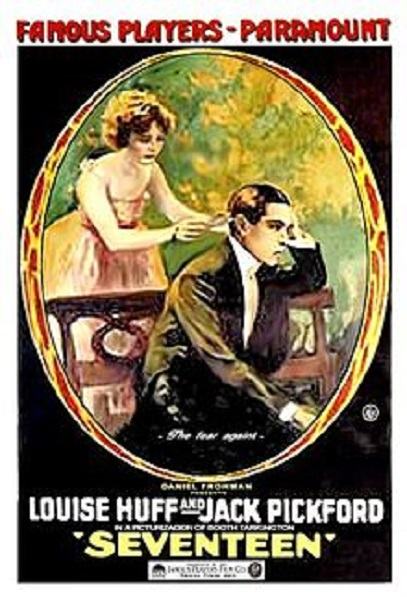
A definitive 7/10 rating for a film that redefined the boundaries of cult cinema. Seventeen remains a cornerstone of transgressive art.
Picture, if you can, the summer of 1916: streetcars clatter, the Great War churns across Atlantic cables, and in a nameless Midwestern burg the lilac air is thick with ragtime and adolescent longing. Into this crucible steps Seventeen, a silent serenade stitched together by Paramount’s wizards and Booth Tarkington’s bittersweet ink. The film is a vanished pearl; most prints dissolved into nitrate smoke long ago, yet its after-image persists like the ghost of a first kiss.
William Sylvanus Baxter—played by Julian Dillon with the coltish awkwardness of a half-grown foal—lives inside that exquisite torture we call senior year. His pockets jingle with quarters meant for trolley fare and soda fountains, but once Lola Pratt swishes into view, cash becomes confetti. Louise Huff’s Lola is all flounce and flint: her skirts shimmy, her eyes calculate, and when she plants a mocking kiss on William’s cheek you can almost smell the peach-flavored lip-rouge.
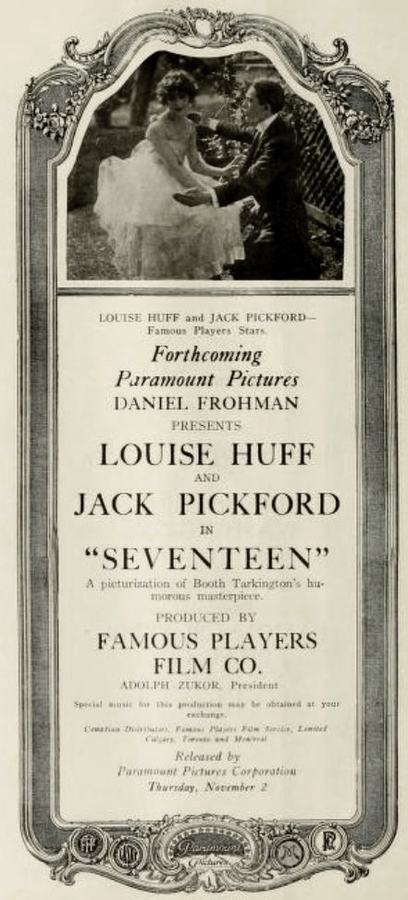
The courting sequences unfold like a carnival kaleidoscope. There’s a riverboat picnic where William, desperate to impress, rents a flannel blazer three sizes too large; a moonlit buggy ride where Lola demands salted caramels and William exhausts his last nickel. Cinematographer William Marshall bathes these escapades in amber-and-cyan tinting—each frame a hand-tinted postcard that throbs with delirious hope. When Lola finally absconds with “the older man”—a swaggering, oil-slick auto mogul played by a pre-supernova Rudolph Valentino—Marshall drains the palette to ash-gray, as though the film itself has been jilted.
Heartbreak is rendered in proto-expressionist strokes: William wanders across rain-slick streets, his reflection fractured in puddles like a cubist nightmare. He pens a suicide note—ink blotches bloom like black roses—then tiptoes toward the river where gaslights tremble on black water. It is here that May Parcher materializes, barefoot beneath her gingham hem, hair ribbon undone by night wind. Madge Evans plays her with forthright radiance: no coquetry, only the steadiness of a girl who has loved William since sandbox days and is finally ready to declare it.
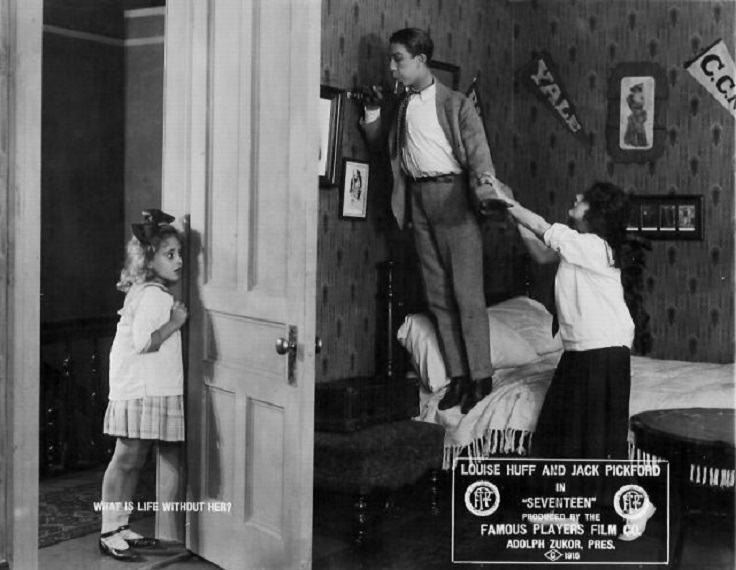
The tonal pirouette—from despair to incandescent possibility—should feel whiplash-inducing, yet Harvey F. Thew’s screenplay (adapted faithfully from Tarkington’s 1916 novel) lands the leap by threading May’s affection through shared memory: she produces a cracked tin soldier William lost at age nine, polishes it on her sleeve, and wordlessly returns it. In that instant the film whispers its thesis: adolescent passion burns bright and brief, but childhood friendship can solder the shards.
Direction is credited to Louis J. Gasnier and Herbert Blaché, though studio lore claims star-producer Jack Pickford ghosted several moonlit river scenes. Whoever guided the megaphone, the result is a curious hybrid of Griffith-era pastoral and nascent jazz-age cynicism. Cross-cut editing—still a novelty in 1916—juxtaposes William’s humiliation with Lola’s champagne-soaked elopement, the older man’s roadster kicking up gravel like scornful laughter.
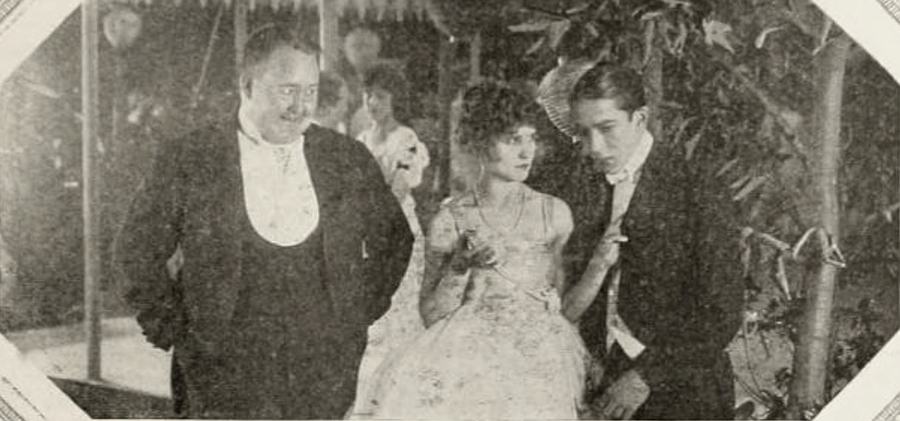
Performances oscillate between stagy semaphore and startling intimacy. Dillon’s William is all elbows and adoration; watch how his fingers flutter when Lola allows him to fasten her pearl clasp—ecstasy and terror in a single tremor. Huff, meanwhile, weaponizes the close-up: she lowers her gaze, lifts her lashes, and the camera lingers until morality itself seems to blush. Valentino, in what amounts to a cameo, smolders with predatory elegance; he leans against a Packard Twelve, cigarette glowing like a fox’s eye, and you grasp instantly why William never stood a chance.
The film’s social undercurrents sneak up sideways. Class is the invisible seducer: Lola yearns for silk stockings and Saratoga springs, commodities William’s modest family cannot conjure. Gender politics, though corseted by 1910s mores, poke through in May’s agency; she bicycles across town at dusk, unchaperoned, to rescue a boy from self-destruction—a proto-flapper flex. Even race flickers at the margins: a Black ragtime band supplies diegetic music for the riverboat picnic, their syncopated rhythms infusing white leisure with borrowed vibrancy, a transaction the camera notes but never interrogates.
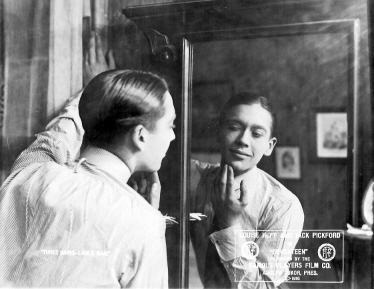
Technically, Seventeen is an artifact of transition. Interior sets still sport the plywood opulence of early melodrama, yet location work—especially along the misty river—hints at the poetic realism that would flower in European cinema a decade later. A handheld tracking shot follows William through a corridor of swinging doors, predating Beatrice Fairfax’s newsroom dynamism by mere months. The intertitles, penned by Tarkington himself, crackle with epigrammatic wit: “Youth is a currency that spends itself before you master the arithmetic.”
Comparative cinephiles will detect DNA shared with The Narrow Path—both films posit love as crucible—but where that later tale opts for Christian allegory, Seventeen remains content with adolescent anthropology. Likewise, the transactional romance anticipates The Love Mask’s masquerade of affections, yet Tarkington’s Midwest never hardens into noir cynicism; hope, like May’s peach, stays sweet under bruised skin.
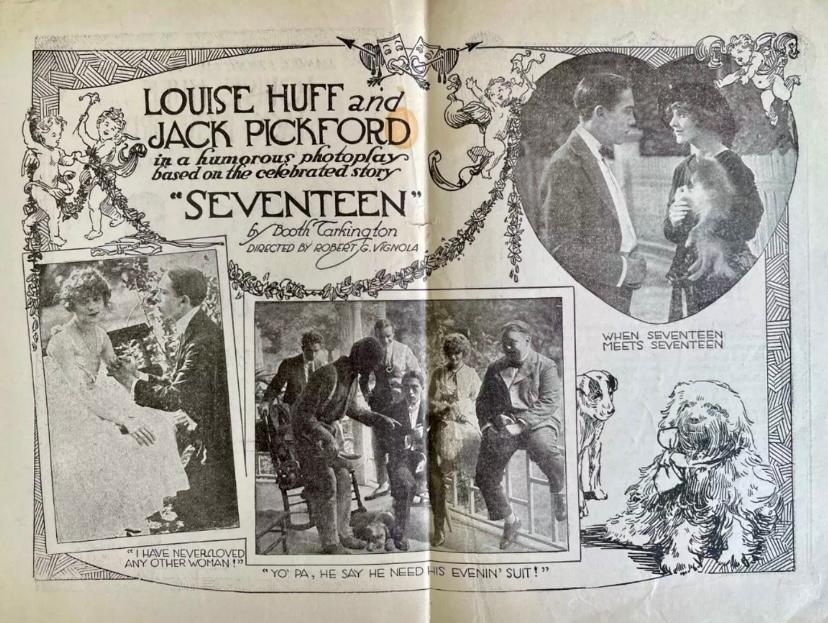
Does the finale satisfy? William, pulled from the brink by May’s steadfast presence, discards his suicide note into the river—paper dissolving like snow on a stove. The pair stroll homeward beneath a lavender dawn, arms brushing but not yet entwined. Some viewers crave a clinch, a sealing kiss; I prefer this exquisite suspension, the moment before certainty, when possibility still hums like a tuning fork. The closing intertitle: “To be continued by tomorrow”—a meta-wink that life, like serials, rolls ever onward.
Survival status frustrates archivists. Only fragments—four reels at UCLA, a single decomposed minute at Eye Filmmuseum—testify to the film’s once-vivid existence. Yet those shards glow in the mind’s eye brighter than many intact features. We cinephiles become archaeologists of emotion, reconstructing Seventeen from stills, trade reviews, and the lullaby of legend.
Should a print ever surface, I pray for a restoration tinted as originally intended: amber for daylight reveries, cerulean for nocturnal despair, rose for the tentative promise of May’s affection. Pair it on a double bill with Over Night’s jazz-age jitters or Blackbirds’ Harlem swirl, and you would witness the American psyche shedding Victorian skin, raw and rapturous.
Until then, we haunt flickering fragments, listening for William’s laughter echoing across a century, reminding us that seventeen is not an age but a wound we spend our lives nursing—or perhaps a lantern we pass from trembling hand to steady hand. In that transaction, cinema becomes both wound and balm, and this fragile film, though lost, flickers on inside the vault of collective memory, waiting for May Parcher to arrive with a peach and a promise that tomorrow might yet taste sweet.
IMDb 5.4
1937
Community
Log in to comment.