DbcultAccessing Vault...
Cult Review
Senior Film Conservator
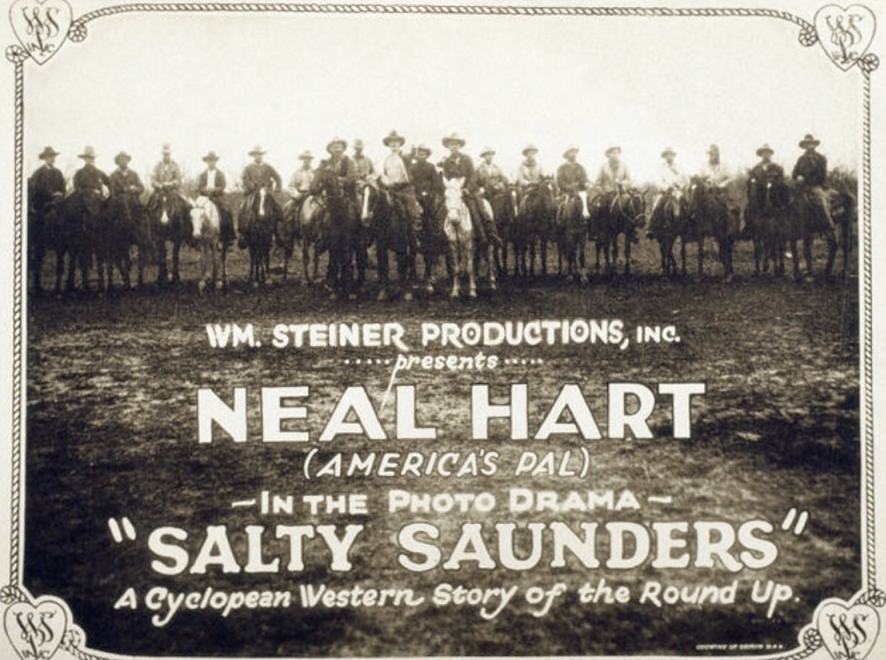
To traverse the celluloid landscape of 1923 is to encounter the raw, unvarnished sinew of the American Western in its adolescent vigor. Salty Saunders, directed by the prolific Alan James and starring the ruggedly charismatic Neal Hart, stands as a quintessential artifact of this era. It is a film that eschews the operatic grandiosity of later John Ford epics in favor of a lean, muscular narrative that prioritizes character motivation and visceral geography. Unlike the more socially stratified dramas of the period, such as This Freedom, which grappled with the domestic constraints of the British bourgeoisie, Salty Saunders finds its heartbeat in the lawless expanses of the Texas frontier, where the only currency is lead and the only law is the Ranger’s badge.
The narrative architecture is deceptively simple, yet it harbors a sophisticated interplay of identity and deception. We begin with Sam Baxter, a Texas Ranger whose intuition serves as the story's moral compass. When he learns of Scarface Wheeler’s release, we aren't merely presented with a recidivist threat; we are introduced to a ghost from the past. This theme of historical hauntings is a recurring motif in silent cinema, often explored through more mystical lenses in European works like Die schwarze Locke. However, Alan James grounds this haunting in the dirt and sweat of the Flying X Ranch. The tension is palpable from the moment Salty Saunders—portrayed by Hart with a stoicism that prefigures the archetypal Man with No Name—steps onto the property.
Neal Hart’s performance is a revelation for those accustomed to the histrionics of early silent film. There is a quietude to his movements, a deliberate economy of action that suggests a man who has seen too much and said too little. When he saves Betty Hampton during the roundup, it isn't a flamboyant display of gallantry; it is a professional necessity. This scene, captured with a frantic yet coherent camera style, showcases the technical prowess of the 1920s. The way the dust obscures the frame, creating a naturalistic chiaroscuro, reminds one of the gritty realism found in The Greater Law. Hart’s Salty is a man of shadows, a precursor to the private eyes of film noir, operating within a system that often fails the innocent.
The firing of Salty following his heroic act is a brilliant narrative pivot. It strips him of his official (though undercover) status and forces him into the role of the clandestine observer. This shift in perspective allows the audience to participate in the discovery of the film’s central conspiracy. When Salty overhears Hampton and Scarface Wheeler plotting, the film transcends the typical western trope of cattle rustling and enters the realm of the psychological thriller. The betrayal by a father figure—Hampton—adds a layer of Shakespearean tragedy that was often missing from the more lighthearted fare of the time, such as Limousine Life.
Visually, Salty Saunders utilizes the natural light of the Texas (or California-as-Texas) landscape to create a sense of inescapable openness. This openness, however, is contrasted with the claustrophobic interiors where the villains hatch their schemes. The cinematography by the uncredited cameramen of the era often relied on deep focus long before it became a stylistic hallmark of the 1940s. We see the vastness of the cattle range in the background while the tension of the individual characters plays out in the foreground, a technique also effectively used in The Raiders of Sunset Gap to emphasize the isolation of frontier life.
The film’s pacing is relentless. Alan James understands that in a silent medium, momentum is paramount. Every scene serves as a building block toward the final confrontation. The sub-plot involving Jud Howell’s fear of revenge provides the necessary stakes, making the rustling plot feel like a personal assault rather than a mere property crime. This emotional resonance is what elevates the film above contemporary genre pieces like Ukrizovaná, which, while visually striking, often struggled with narrative cohesion.
The character of Hampton is a fascinating study in the banality of evil. He presents himself as a guardian, a pillar of the community, yet he is the architect of profound suffering. This duality—the man with two faces—is a theme that silent cinema explored with great fervor, perhaps most famously in the mystery elements of The Moonstone. In Salty Saunders, the revelation that Hampton is a double murderer—killing the fathers of both the protagonist and the love interest—is a masterstroke of dramatic irony. It ties the characters together in a web of shared trauma, making their eventual union feel earned rather than merely convenient.
Scarface Wheeler’s transition from antagonist to state’s evidence is another nuanced touch. It suggests a world where morality is not a fixed point but a fluid state influenced by survival. This moral ambiguity is far more interesting than the black-and-white characterizations found in films like The Men She Married. Wheeler is a criminal, yes, but he is also a pawn in Hampton’s larger game. His decision to turn reveals a flicker of self-preservation that feels human and grounded.
When comparing Salty Saunders to the broader cinematic output of the early 1920s, its sophistication becomes even more apparent. While Lubitsch was exploring the exoticism of the East in One Arabian Night, James was refining the American vernacular. The film avoids the melodramatic excesses of The Eternal Mother, opting instead for a narrative driven by action and consequence. Even when compared to the suspense-driven Footprints, Hart’s film maintains a superior sense of place and atmosphere.
The use of animals in the film—the horses, the cattle—isn't just for set dressing. They are active participants in the drama. The roundup sequence is a testament to the physical bravery of the actors and stuntmen of the era. There were no digital safety nets in 1923; the danger was real, and that reality translates into a palpable tension on screen. This visceral quality is something that modern Westerns often struggle to replicate, despite their superior technology. It’s the kind of raw energy you find in early action-comedies like Snooky's Fresh Heir or the high-stakes intrigue of The King's Game, but channeled here into a serious, high-stakes drama.
In the final analysis, Salty Saunders is much more than a "B-Western." It is a complex narrative of redemption and discovery. The way it handles the theme of hypocrisy—represented by Hampton’s false benevolence—mirrors the social critiques found in films like Hypocrisy, yet it does so within the framework of an accessible adventure. The resolution, where Salty and Betty find solace in each other, is not just a romantic trope; it is the closing of a circle that began with the murder of their fathers. It is a restoration of order in a world that had been tilted on its axis by greed and violence.
For the modern viewer, watching Salty Saunders is like unearthing a time capsule. It reminds us that the fundamental elements of storytelling—conflict, character, and catharsis—are timeless. Whether it's the intricate plotting of Traps and Tangles or the rugged individualism of Neal Hart, the film serves as a foundational pillar of the genre. It is a stark, beautiful, and ultimately triumphant piece of cinema that deserves its place in the pantheon of silent era masterpieces. If you can look past the occasional flicker of the film stock and the absence of spoken dialogue, you will find a story that is as vibrant and relevant today as it was a century ago. The Texas Rangers may have been the legends, but Salty Saunders was the soul of the frontier.
In conclusion, Alan James and Neal Hart crafted a work that balances the demands of the market with the aspirations of art. It is a film that understands the power of a look, the weight of a secret, and the ultimate necessity of justice. In the vast, silent library of early film, Salty Saunders speaks with a voice that is clear, resonant, and undeniably human. It is a journey worth taking for any serious student of the medium or anyone who simply loves a damn good story well told.
IMDb —
1924
Community
Log in to comment.