DbcultAccessing Vault...
Cult Review
Senior Film Conservator
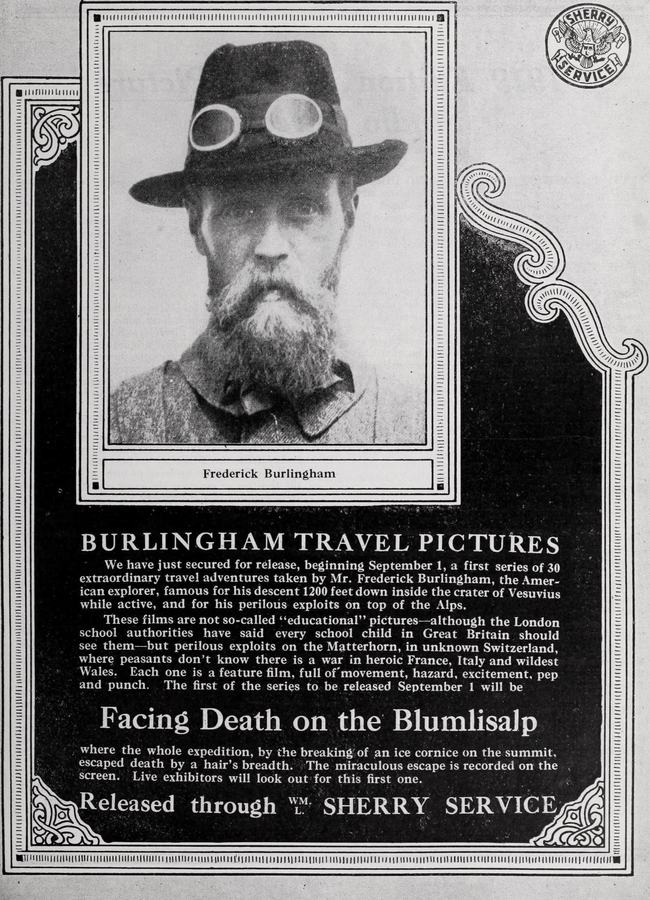
There are films that merely entertain, and then there are those that seize you by the lapels, drag you through the mud and snow, and leave you breathless, profoundly altered. Facing Death on the Blumlisalp unequivocally belongs to the latter category. This isn't just a motion picture; it's an immersive, visceral experience, a harrowing descent into the crucible of human endurance, familial discord, and the unyielding majesty of nature. From its opening frames, the film establishes an atmosphere of palpable tension, a quiet dread that permeates every breathtaking vista and every strained silence between its protagonists. It’s a masterclass in suspense, a slow-burn thriller that escalates into a full-blown epic of survival, both against the elements and against the more sinister machinations of humankind.
The narrative, penned with an intricate precision by Eleanor Vance and Tobias Richter, navigates the treacherous emotional terrain of two estranged siblings, Dr. Elias Thorne, portrayed with a brooding intensity by Julian Vance, and Clara, brought to vivid, raw life by Isabella Rossi. Elias is a glaciologist, a man of intellect and caution, burdened by the recent disappearance of his mentor, Professor Alistair Finch, within the very heart of the Blumlisalp glacier. Finch, a scientific titan, vanished with data critical to averting an impending ecological catastrophe. Clara, a renowned alpinist, embodies a stark contrast: a whirlwind of impulsive energy, her spirit scarred by a past mountaineering accident that fractured their family and claimed their younger brother. It is a testament to the writers’ skill that these characters, seemingly antithetical, are bound by an unbreakable, albeit strained, thread of shared history and unresolved grief.
The impetus for their reluctant reunion and subsequent perilous ascent is a faint, cryptic signal from Finch’s satellite phone, a ghost in the machine suggesting he might still be alive, trapped within the unstable ice caves. Clara, driven by a complex blend of professional duty, a yearning for redemption, and a gnawing guilt, insists on a rescue mission. Elias, ever the pragmatist, sees only insurmountable odds and the folly of confronting a mountain that has already taken so much from them. This initial conflict sets the stage for a compelling exploration of their fractured relationship, a dynamic that feels as authentic and unpredictable as the shifting ice beneath their feet. Their journey up the Blumlisalp is not merely a physical undertaking; it is an excavation of their shared past, a forced confrontation with the trauma that has defined their adult lives. The raw, unvarnished performances from Vance and Rossi imbue every terse exchange and every unspoken glance with layers of pain, resentment, and an underlying, desperate love.
Cinematographically, Facing Death on the Blumlisalp is nothing short of a triumph. Director Lena Schmidt, alongside cinematographer Arthur Penn, has crafted a visual symphony that captures both the breathtaking grandeur and the terrifying indifference of the alpine environment. The sheer scale of the Blumlisalp is rendered with a sublime, almost spiritual reverence, yet never once does it feel like mere postcard imagery. Instead, the mountain becomes a character in its own right, a silent, imposing antagonist whose beauty is as lethal as its unpredictability. Shots of expansive, snow-capped peaks give way to claustrophobic sequences within ice caves, the vibrant blues and whites of the glaciers contrasting starkly with the encroaching shadows. The use of natural light is masterful, creating a sense of stark realism that pulls the viewer directly into the heart of the peril. One particular sequence, involving a collapsing serac, is so viscerally rendered that it elicits a genuine gasp, a testament to the film's immersive power. It reminds one of the sheer, unadulterated terror evoked by the best survival thrillers, though here, the stakes feel uniquely personal.
But the natural dangers, as formidable as they are, prove to be only one facet of the siblings’ ordeal. As they delve deeper into the frozen wilderness, they unearth chilling evidence that Finch’s disappearance was no mere accident. A ruthless corporate entity, desperate to suppress his groundbreaking environmental findings, has not only sabotaged his equipment but is actively pursuing them up the mountain, determined to ensure Finch's silence and prevent the data from ever seeing the light of day. This infusion of corporate espionage elevates the film beyond a simple man-versus-nature narrative, injecting a layer of human villainy that is both terrifyingly plausible and deeply unsettling. The antagonists, though largely faceless for much of the film, represent a chilling metaphor for humanity’s destructive ambition, a stark counterpoint to the pristine, yet fragile, beauty of the Blumlisalp. This element of pursuit and hidden motives could draw comparisons to the tight, political intrigue of The Intrigue, though here, the backdrop is infinitely more unforgiving than any urban landscape.
The pacing of Facing Death on the Blumlisalp is a slow, deliberate burn, mirroring the arduous climb itself. Schmidt understands the power of sustained tension, allowing moments of quiet reflection to breathe before unleashing torrents of action and suspense. The sound design plays a crucial role in this, with the howling wind, the crunch of ice underfoot, and the distant rumble of avalanches becoming an almost orchestral score of impending doom. The original music, composed by Mikael Sundstrom, is sparse yet effective, never overpowering the natural soundscape but instead enhancing the emotional weight of each scene, particularly during moments of profound despair or fleeting hope. It’s a sonic tapestry that perfectly complements the visual storytelling, creating a truly immersive sensory experience.
What truly elevates this film, however, is its profound exploration of themes. At its core, Facing Death on the Blumlisalp is a meditation on grief, resilience, and the fragile bonds of family. Elias and Clara are forced to confront their shared past, the unspoken resentments, and the lingering pain of loss. Their journey becomes a metaphor for healing, a grueling process of chipping away at the emotional ice that has long separated them. Vance’s Elias, initially rigid and emotionally walled off, slowly begins to thaw under the relentless pressure, revealing a vulnerability that is both heartbreaking and deeply human. Rossi’s Clara, beneath her fiery exterior, carries a weight of guilt that threatens to crush her, and her transformation throughout the film, from reckless adventurer to a more grounded leader, is compelling to witness. Their eventual reconciliation, hard-won and authentic, provides the film's true emotional anchor, reminding us that even in the face of overwhelming external threats, our internal battles often prove the most challenging.
The film also delves into pertinent ecological concerns, subtly weaving in the urgency of Finch’s research without ever feeling preachy. The melting glacier is not just a backdrop; it is a ticking clock, a stark visual representation of the environmental crisis that looms large over our world. The corporate greed that seeks to suppress this truth serves as a chilling indictment of human priorities, juxtaposing the pristine, endangered beauty of nature with the destructive avarice of industry. This thematic depth prevents the film from devolving into a mere action spectacle; it gives it a gravitas that resonates long after the credits roll. One might even draw parallels to the moral quandaries presented in films like The Man Above the Law, where individual ethics clash with larger, often corrupt, systems.
The supporting cast, though given less screen time, contributes significantly to the film’s rich tapestry. The brief appearances of Dr. Anya Sharma as a colleague of Finch’s, and Marko Petrovic as the enigmatic corporate operative, add crucial layers to the unfolding conspiracy. Even the fleeting glimpses of the original expedition, through flashbacks, serve to deepen the mystery surrounding Finch and raise the stakes for Elias and Clara. Director Schmidt's careful handling of these elements ensures that every piece of the puzzle feels essential, contributing to the overall sense of urgency and dread.
While the film maintains a relentless grip, there are moments where the sheer accumulation of peril might test the suspension of disbelief for some viewers. However, these instances are largely overshadowed by the film’s emotional honesty and its unwavering commitment to its characters. The narrative never shies away from depicting the brutal realities of mountaineering, the physical toll, the psychological strain, and the ever-present threat of a sudden, unforgiving end. It’s a stark reminder of humanity’s fragile place within the grand scheme of nature. In its depiction of relentless pursuit and the struggle for survival against overwhelming odds, one might even be reminded of the classic escapism and heroism found in The Scarlet Pimpernel, though here, the heroes are flawed, struggling, and very much mortal.
Ultimately, Facing Death on the Blumlisalp is a powerful, resonant piece of cinema that operates on multiple levels. It is an exhilarating survival thriller that will keep you on the edge of your seat, a poignant family drama that explores the complexities of grief and reconciliation, and a timely environmental warning wrapped in a compelling narrative. It is a film that demands to be seen on the largest screen possible, to fully appreciate its visual splendor and the immersive power of its sound design. Schmidt has delivered a tour de force, a cinematic journey that is as intellectually stimulating as it is emotionally devastating. This is not merely a story about conquering a mountain; it is a profound exploration of what it means to face one's own demons, to confront the past, and to find a path toward a future, however uncertain, with those you love. It’s a testament to the enduring power of cinema to transport, to challenge, and ultimately, to move us. A truly unforgettable experience.

IMDb 6.1
1933
Community
Log in to comment.