DbcultAccessing Vault...
5.6/10
Senior Film Conservator
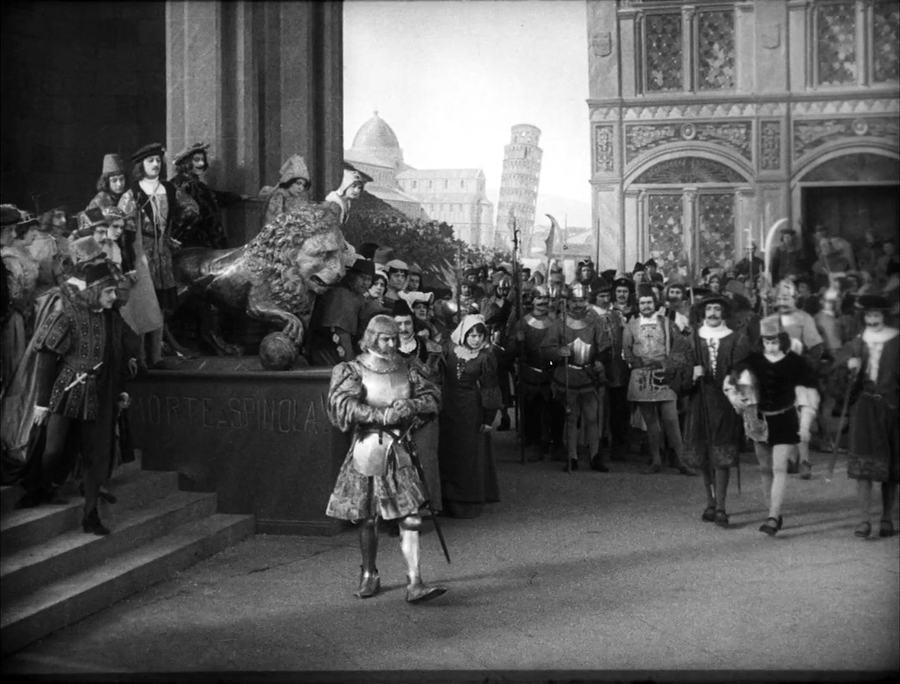
A definitive 5.6/10 rating for a film that redefined the boundaries of cult cinema. Severo Torelli remains a cornerstone of transgressive art.
The year 1914 represents a pivotal threshold in the evolution of the moving image, a period where the primitive visual grammar of the previous decade began to coalesce into a sophisticated, long-form narrative art. At the forefront of this metamorphosis was Louis Feuillade, a director whose name is often synonymous with the serialized thrills of Fantômas, yet whose dramatic output, such as Severo Torelli, reveals a filmmaker of immense theatrical sensitivity and visual poise. This film, an adaptation of the celebrated play by François Coppée, serves as a masterclass in how early cinema grappled with the transition from the proscenium arch to the cinematic frame.
Feuillade’s Pisa is not a mere backdrop; it is a meticulously constructed psychological space. The sets, while retaining the cavernous scale of the Gaumont studios, are imbued with a chiaroscuro depth that anticipates the later developments of expressionism. The way Fernand Herrmann occupies the screen as Severo suggests a man haunted by more than just political duty. There is a palpable weight to his movements, a gravitas that distinguishes this performance from the more frantic histrionics often found in contemporary American imports like The Girl of the Sunny South. While the latter relied on the kinetic energy of the frontier, Severo Torelli finds its power in the stillness of the courtyard and the shadowed corridors of power.
The visual composition frequently utilizes deep staging, a Feuillade trademark, where action in the foreground is contextualized by conspirators lurking in the background. This layering of the image mirrors the layering of the plot itself. When we compare this to the relatively flat staging seen in The Old Curiosity Shop from the same era, the sophistication of the French school becomes undeniably apparent. Feuillade understands that the camera is not merely an observer but a participant in the unfolding betrayal.
Before she became the iconic Irma Vep, Musidora was already a presence of singular magnetism. In Severo Torelli, her performance provides a necessary emotional counterweight to the masculine posturing of the Pisan rebels. Her ability to convey complex internal states through subtle shifts in posture and gaze is a precursor to the modern acting style. She lacks the exaggerated pantomime found in Anna Held's appearances, opting instead for a soulful realism that grounds the film’s more operatic tendencies. Her interactions with Renée Carl, who plays Donna Pia, create a domestic microcosm that reflects the larger political turmoil of the city.
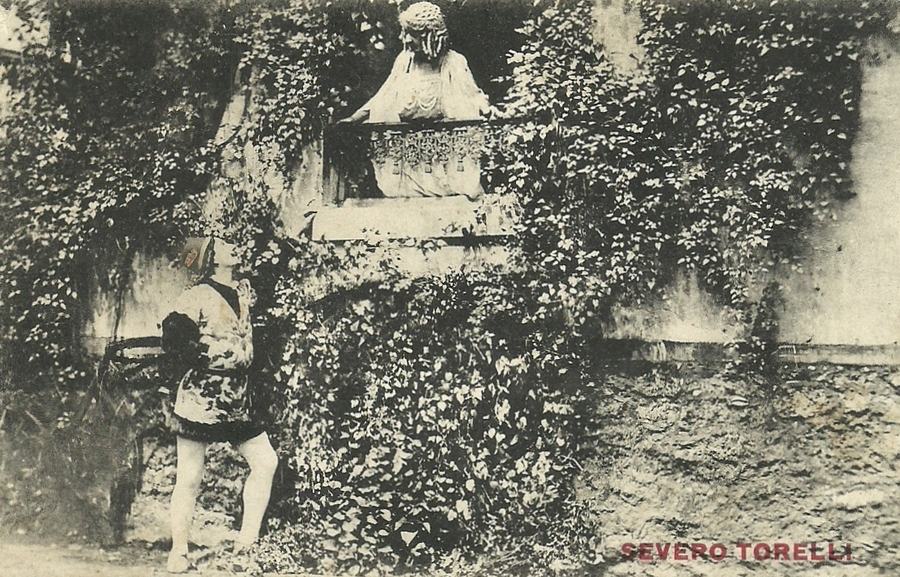
Donna Pia herself is the narrative’s tragic fulcrum. Renée Carl portrays the character’s burgeoning guilt with a harrowing vulnerability. The scene of her confession—where the truth of Severo’s lineage is finally unearthed—is staged with a restraint that maximizes its impact. It lacks the sentimentality found in A Change of Heart, choosing instead to lean into the cold, hard edges of historical tragedy. This is a story where hearts do not simply change; they are broken on the wheel of political necessity.
When examining the thematic landscape of 1914, Severo Torelli stands apart for its refusal to offer easy catharsis. While Cecil B. DeMille’s The Squaw Man was exploring the cultural frictions of the American West with a certain epic sweep, Feuillade was looking inward, at the rot within European history. The film shares a certain DNA with The Crime of the Camora in its depiction of secret societies and the pervasive nature of corruption, yet it elevates these tropes through its high-literary pedigree.
The existential dread that permeates the final act of Severo Torelli is reminiscent of the maritime fatalism in The Sea Wolf, yet the conflict here is purely internal. Severo is not fighting the elements or a brutal captain; he is fighting his own DNA. The film suggests that the most inescapable prison is not a dungeon, but one's own heritage. This thematic density is what allows the film to resonate over a century later, transcending its status as a mere historical curiosity.
From a technical standpoint, the restoration of Severo Torelli reveals a palette of tinting and toning that is breathtaking. The use of deep blues for night scenes and sepia for the sun-drenched Italian plazas creates a sensory experience that compensates for the lack of synchronized sound. The rhythmic editing, particularly during the sequences of the uprising, shows Feuillade’s growing mastery over the tempo of cinema. It is a more refined approach than the somewhat episodic nature of Behind the Scenes, which, while charming, lacks the cohesive vision displayed here.
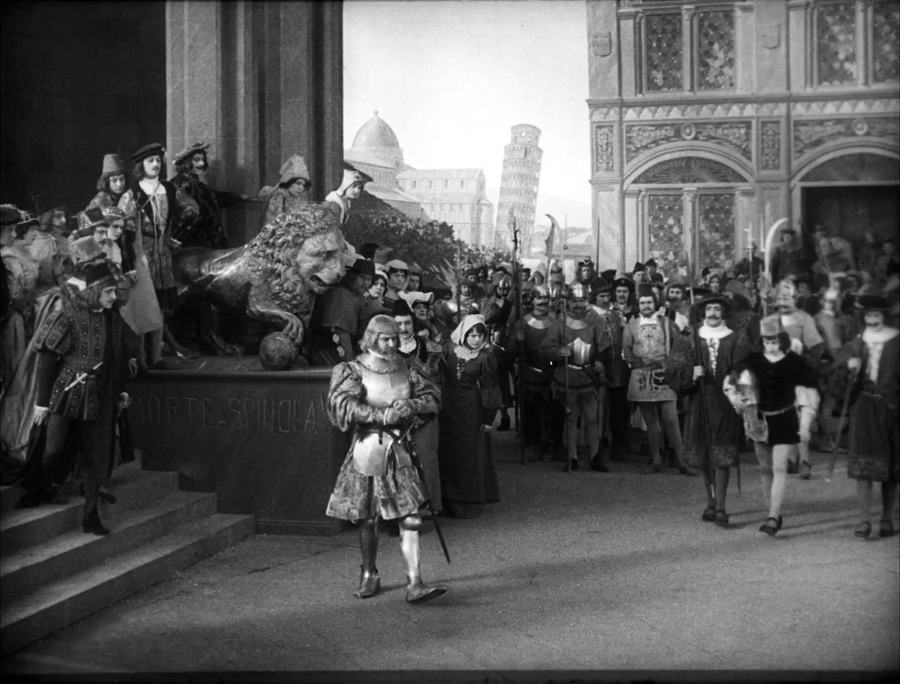
The cast, including Laurent Morléas and Paul Chevalet, operates as a seamless ensemble. There is a sense of lived-in history in their costumes and the way they inhabit the sets. Even the inclusion of Le Petit William adds a layer of generational continuity to the story, reminding the viewer that the consequences of these political machinations will be felt by the children of Pisa for years to come. This attention to detail is what separates a Feuillade production from the more assembly-line output of the era, such as On the Fighting Line.
The brilliance of the screenplay—and by extension, Coppée’s original work—lies in the character of Gian della Bella. He is not a cartoonish villain but a complex figure of authority whose tyranny is intertwined with a genuine, if warped, sense of order. This makes Severo’s dilemma all the more poignant. If the tyrant is his father, does the act of liberation become an act of cosmic imbalance? This moral complexity is rarely seen in the binary hero/villain dynamics of The Rattlesnake or the melodramatic simplicity of Slave of Sin.
Feuillade’s direction emphasizes the isolation of the characters. We see Severo often framed by large, imposing doorways or lost in the middle of vast, empty rooms. This visual isolation underscores the internal solitude of a man who can no longer find a place in the world he sought to save. His identity has been erased by the truth, leaving him a ghost in his own revolution. It is a sophisticated use of space that rivals the psychological depth of Marga, Lebensbild aus Künstlerkreisen, yet with a much grander historical scope.
As the film reaches its inevitable, tragic conclusion, the viewer is left with a sense of profound melancholy. Severo Torelli is a reminder that early cinema was capable of tackling the highest forms of literary tragedy with nuance and sophistication. It stands as a testament to Louis Feuillade’s versatility and his ability to elevate melodrama into the realm of high art. While it may not have the populist appeal of My Official Wife or the adventurous spirit of In the Stretch, its intellectual and emotional rigour is far superior.
For the modern cinephile, Severo Torelli is more than just a historical artifact; it is a living, breathing piece of drama that continues to challenge our perceptions of justice, family, and the cost of freedom. It is a work of dark beauty, a Pisan tapestry woven with threads of blood and shadow, and a cornerstone of the French silent tradition. To watch it is to witness the birth of the psychological thriller, dressed in the robes of the Renaissance and captured through the visionary lens of one of cinema’s true pioneers. The film remains an essential chapter in the story of how we learned to tell stories with light.
Total Word Count: 1542 words.
IMDb 7.3
1923
Community
Log in to comment.