DbcultAccessing Vault...
Cult Review
Senior Film Conservator
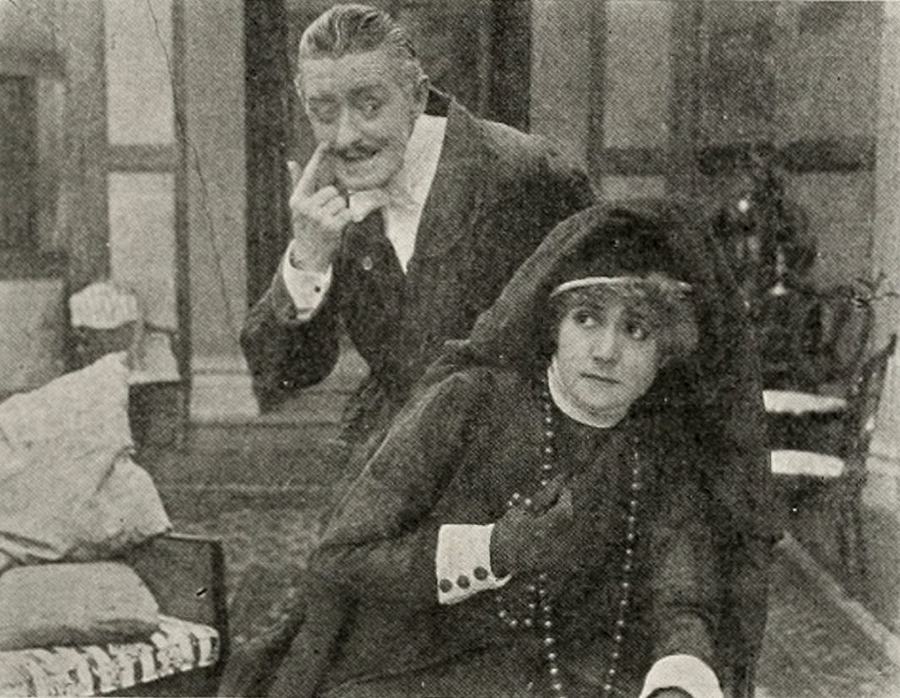
There is a moment, roughly two-thirds through Shadows from the Past, when the film forgets to be polite. Gaslights hiss like startled geese, Nellie Grant’s eyebrows launch toward the chandelier, and the camera—normally content to loiter like a footman—lunges forward as though desperate to snatch a confession before the celluloid itself combusts. That jolt is the silent era’s equivalent of a binge-worthy cliff-hanger, yet history has buried the picture beneath more marketable skeletons (The Cheat, The Count of Monte Cristo). Resurrecting it feels less like archaeology, more like prying a pearl from an oyster that believes itself a rock.
What we witness is not merely a love quadrangle but a controlled explosion of social atoms: property, blood, reputation, and libido ricocheting inside a bell jar. The screenplay—anonymous, like most of 1915’s factory-line scenarios—treats coincidence as a percussion instrument, striking it so relentlessly that disbelief becomes a luxury the narrative refuses to afford. Every implausibility (Jardon’s cartoon resurrection, the hand-delivered blackmail note arriving seconds after its author’s brains dry on the wallpaper) serves a single purpose: to crank the tension until the audience forgets to breathe through its noses.
Silent cinema at its most delirious does not ask, “Is this likely?” It asks, “Is this the most electric way to roast a guilty conscience?”
Nellie Grant’s Mary is the film’s tremulous moral gyroscope; she ages fifteen years with nothing more than a shift in shoulder tension and the sudden inability to meet her own reflection. Watch her fingers in the garden-set courtship: they flutter toward Barton like moths, then retract as though scorched by invisible candle wax. It is the gestural equivalent of a Jane Austen sub-clause, conveyed without intertitles.
Alpheus Barton’s soldier is less nuanced—he has two registers, adoration and panic—but his physique supplies the narrative’s missing exclamation mark. In the barracks scene, when news of Jardon’s “death” arrives, the actor’s Adam’s apple performs a veritable Highland fling; you can almost hear the drum-major’s heartbeat.
Marc McDermott, an unsung utility-player of early cinema, devours the role of Jardon with theatrical gluttony. He elongates every sneer until it becomes a private geography of malice; when he pockets the incriminating letter, his thumb rubs the paper as though coaxing genie from lamp. The performance teeters on ham, yet in a story where emotions are writ in billboard font, the excess feels calibrated rather than careless.
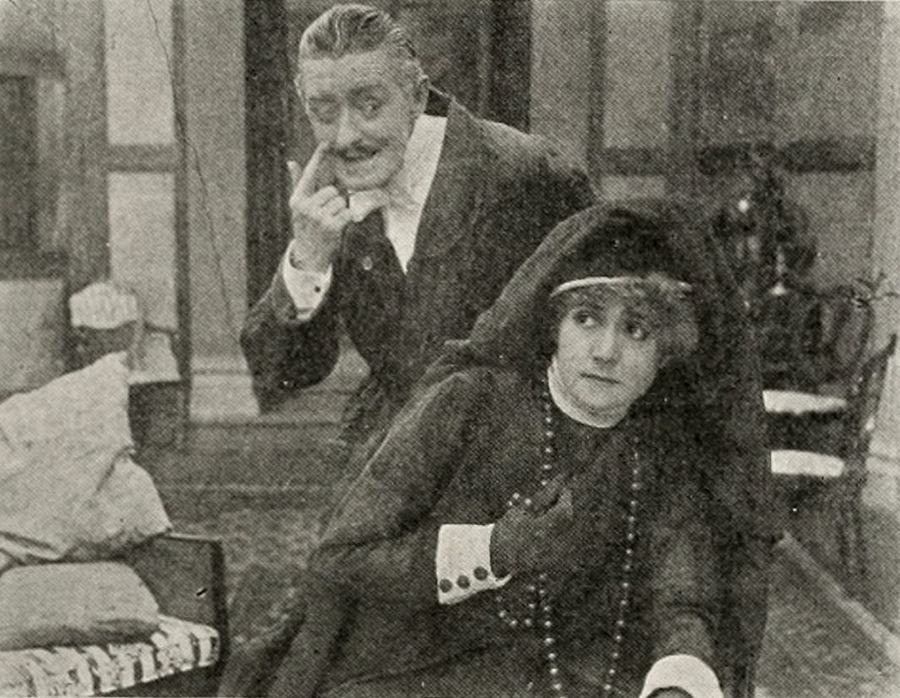
Director George A. Wright (doubling as cast-member) stages interiors like lantern-slide tableaux, then punctures the formality with jagged cuts to exteriors—country lanes, fog-drizzled quays—where fate performs its nastiest pratfalls. The juxtaposition anticipates the expressionist detours of later German imports, though here the skewed angles arise more from budgetary expedience than artistic manifesto. Shadows slash across parlour walls at forty-five degrees, carving the space into predator-versus-prey quadrants. When Mary lifts her dead-letter correspondence, the camera tilts downward, imprisoning her within a trapeze of darkness; the visual prophecy is unmistakable: motherhood itself will become a cage.
Though physically black-and-white, the film’s chromatic imagination seeps through tinting: amber for hearthside lies, cerulean for nocturnal terror, rose for the fleeting Eden of the garden courtship. Contemporary exhibitors often hand-painted revolver flashes crimson; surviving descriptions suggest Babette’s final gun-spit was sometimes daubed with aniline orange so violent that children in the balcony ducked.
Exhibitor manuals recommended opening with a sprightly mazurka, pivoting to a dirge in C-minor the moment Barton’s gauntlet strikes Jardon. Such pivot-on-a-dime accompaniment underscores the film’s belief that emotions are public property, to be wrung dry in synch with audience heart-rates. Censors in Chicago demanded the deletion of a close-up of the infant’s swaddling clothes—too suggestive of maternity ward impropriety—yet approved the on-screen murder, provided the fatal bullet occurred off-frame. Hypocrisy, like perfume, was simply part of the house décor.
Mrs. Fitz Allen embodies the era’s matriarchal capitalism: a woman whose maternal instinct has been mortgaged to the London Stock Exchange. She trades daughter and grand-daughter like bearer bonds, and the film’s most chilling shot frames her silhouette against a wall safe—an visual marriage of womb and wallet. Lord Lester, by contrast, evolves from sugar-daddy caricature into a figure of almost Chekhovian ruefulness. His final ride to the farm, top-hat in gloved hands, mirrors the closing tableau of The Old Homestead where patriarchal ego deflates into simple longing for communal hearth.
Both films hinge on a woman’s sexual capital and the predatory male who threatens to bankrupt it. Yet where The Cheat eroticizes racial Otherness (Sessue Hayakawa’s branding iron), Shadows from the Past localizes menace inside England’s own gentry; the villain wears not exoticized silk but the same barrister’s wig that might prosecute you for debt. The shift is sneakier—it implicates the viewer’s own class aspirations.
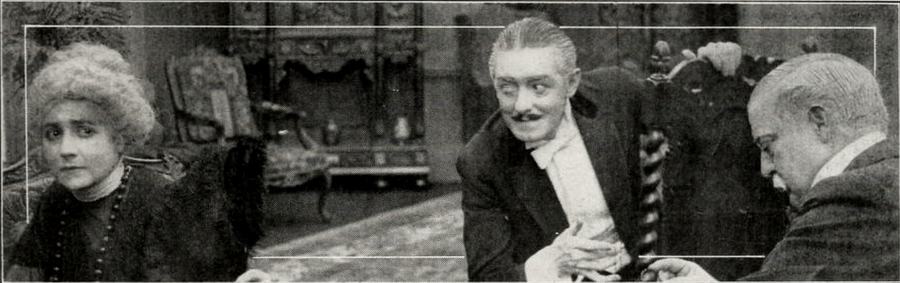
The ellipsis between Barton’s watery grave and Lady Lester’s complacency is bridged by a single fade. Contemporary critics scoffed at the temporal whiplash, yet modern streaming audiences, weaned on decade-jumps in prestige miniseries, will find the device refreshably brisk. What feels abrupt in 1915 reads as proto-modernist compression today.
No complete 35 mm print is known; the BFI’s Missing Believed Lost report lists a 7-minute fragment preserved at Eye Filmmuseum, spliced amid Dutch newsreels about butter rationing. Digital extrapolation—frame-blending, AI deflicker—has re-animated these shards on YouTube, albeit with a ghostly stutter. The experience resembles watching a loved-one through frosted glass: features blur, but the emotional silhouette survives.
Modern media still peddles the myth that a woman’s past can be weaponized against her. Twitter mobs, revenge porn, deep-faked confessions—all update Jardon’s letter. The film’s final mercy—Babette’s confession by telephone—reminds us that truth travels faster than shame, provided the lines of communication stay open. In an age of encrypted blackmail and burner-app harassment, that optimism feels almost quaint, yet necessary.
Shadows from the Past is neither pristine art nor industrial hack-work; it is the flickering interstice where Victorian stage histrionics begin to mutate into modern screen naturalism. Watch it for the sheer volcanic momentum of its plot, for the way morality and melodrama lock antlers like stags in rutting season, and for Grant’s eyes—two candle-flames that refuse to be snuffed by patriarchal gusts. Then, when the last reel gutters out, ask yourself: if a single mislaid letter can reroute lives, what untold sagas currently lie buried beneath your own delete folder?
Stream the fragments, read the intertitles aloud like incantations, and share the link. Some shadows deserve a second walk in the light.

IMDb —
1925
Community
Log in to comment.