DbcultAccessing Vault...
Cult Review
Senior Film Conservator
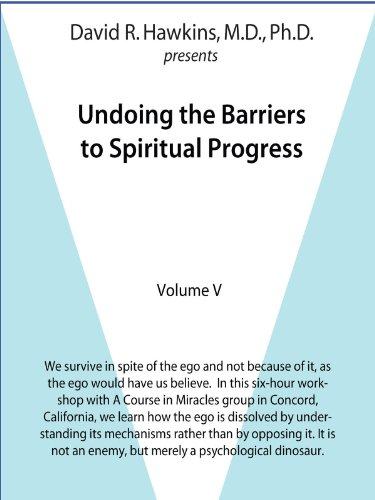
To approach The Kineto Coronation Series: Royal Progress Through London as a mere historical document, a quaint relic of early cinema capturing Edward VII's ceremonial journey, would be to fundamentally misunderstand its profound, almost accidental, philosophical gravitas. This is not simply an actuality film; it is, in its unexpected contemporary reinterpretation, an immersive, visually articulate workshop on the intricate, often grandiose, machinations of the ego. The very title, evoking a 'royal progress,' takes on an entirely new resonance when viewed through the lens of self-inquiry, transforming the external spectacle into an internal landscape for contemplation. We are invited, indeed compelled, to observe the universal human tendency towards self-aggrandizement, not through didactic pronouncements, but through the living, breathing pageantry unfolding before our eyes.
The film, in its original context, aimed to capture and celebrate the apex of societal hierarchy, the consolidation of power and identity around a singular figurehead. Yet, it inadvertently becomes a masterclass in the principles of 'A Course in Miracles,' demonstrating with striking clarity that our survival, our very well-being, is secured not *because* of the ego's insistent demands for recognition and validation, but precisely *in spite* of them. The elaborate costumes, the synchronized movements of the procession, the rigid adherence to tradition, the fervent crowds lining the streets—each element, when deconstructed, serves as a potent illustration of the ego's desperate attempts to assert its reality, to carve out a distinct, superior identity in a world it perceives as inherently threatening. This is the ego in its fullest, most unadulterated public display, a magnificent facade built on the shifting sands of external approval and inherited status.
Consider the meticulous choreography of the royal procession itself. Every soldier, every carriage, every dignitary moves with a precision that speaks to a profound, almost unconscious, collective desire for order, control, and perceived importance. This isn't merely historical accuracy; it's a visual metaphor for the ego's rigid structures, its insistence on hierarchy and its resistance to fluidity. Each individual, from the monarch to the lowliest spectator, plays a role in this grand theater of self-importance, contributing to the illusion of a stable, unassailable reality built on external forms. The camera, a nascent eye of the 20th century, captures this with an almost innocent objectivity, allowing us, the modern viewers, to project our own understanding onto its frames. Unlike the raw, unscripted aggression seen in early fight films such as The Corbett-Fitzsimmons Fight or Reproduction of the Corbett and Fitzsimmons Fight, where ego manifests as direct physical confrontation and dominance, here it is refined, ritualized, and woven into the very fabric of national identity. Both, however, are expressions of the self's drive to assert its primacy.
The true genius of this 'workshop' lies in its non-opposition. The film doesn't preach; it simply *shows*. We are not asked to condemn the ego, but to observe its mechanisms in action. The grandeur of the occasion, intended to inspire awe and loyalty, now serves as a canvas for our own internal work. We see the crowds, their faces upturned, seeking connection, meaning, perhaps even a reflection of their own worth in the reflected glory of the crown. This collective projection, this investment in an external symbol, is a cornerstone of egoic thought. It posits that our happiness, our security, our very identity, resides outside of ourselves, dependent on the approval or presence of others, or in the adherence to established systems. The 'royal progress' then becomes a poignant illustration of humanity's perennial quest for external saviors, a quest that, according to the very principles this film now illuminates, can only lead to further entanglement.
One might draw parallels to other early public spectacles, like 69th Regiment Passing in Review or May Day Parade, which also showcase organized public display. However, the coronation carries an added layer of symbolic weight, representing not just military might or political solidarity, but the very divine right to rule, the ultimate external validation of egoic authority. These parades, while demonstrating collective identity, lack the singular focus on an individual's 'divine' right, making the coronation a unique study in the ego's highest aspirations. The intricate details, from the horses' plumes to the heralds' trumpets, are all carefully curated to impress, to establish an undeniable sense of authority and permanence. Yet, through the workshop's lens, we perceive this permanence as fleeting, this authority as a construct, and this impression as a distraction from the enduring truth within.
The 'dissolution' of the ego, as the plot suggests, is achieved not through direct confrontation or forceful suppression, but through understanding. And what better way to understand something than to see it in its most elaborate, undeniable form? The Kineto filmmakers, in their earnest endeavor to document a significant historical event, unwittingly provided us with an invaluable resource. Each frame, each fleeting glimpse of a royal carriage or a cheering face, becomes a data point in our study of how the ego constructs its elaborate narratives of self. The film's silent nature further enhances this introspective quality; without dialogue or narrative overlay, the viewer is left to interpret, to feel, to intuit the deeper currents beneath the surface pageantry. This allows for a direct, unmediated engagement with the visual information, fostering a truly personal 'workshop' experience.
The concept of 'royal progress' itself is steeped in the ego's desire for linear advancement, for a journey that culminates in a heightened state of being. But the workshop reveals that true progress lies in the unlearning of these very desires, in recognizing that the 'royal' state is not something to be attained externally, but a recognition of the inherent sovereignty already present within. The crowds, surging forward, attempting to catch a glimpse of majesty, mirror our own ego-driven pursuits of external happiness, of seeking completion outside of our own being. The film's enduring power, therefore, is not in its historical accuracy or its depiction of a bygone era, but in its capacity to provoke a profound internal shift, to gently guide us towards an understanding that the spectacle, the pomp, the external validation, are all ultimately distractions from the simple, profound truth of our interconnectedness.
In a curious way, this early actuality film, much like Saída dos Operários do Arsenal da Marinha or Westinghouse Works, captures a slice of life, but a slice imbued with such symbolic weight that it transcends its mundane purpose. While the latter films document industrial processes and daily routines, showcasing humanity's interaction with the material world, 'The Kineto Coronation Series' documents humanity's interaction with its own constructed illusions. It foregrounds the psychological landscape that underpins grand societal events. The workers leaving a factory, the machinery whirring at Westinghouse, represent the physical labor of the world; the coronation represents the psychological labor of maintaining a self-concept, of upholding an identity that is inherently fragile and dependent on external reinforcement.
The very act of filming, of preserving this moment for posterity, also speaks to an egoic desire—the desire for legacy, for immortality through documentation. The Kineto company, perhaps unaware of the deeper implications, was participating in the perpetuation of a narrative that the 'workshop' now seeks to unravel. Yet, it is precisely this earnest, unselfconscious capture that makes the film so potent as a teaching tool. It is an unvarnished record of the ego in full bloom, allowing us to observe its beauty, its complexity, and ultimately, its inherent limitations. The film becomes a mirror, not just for the subjects on screen, but for the viewer, reflecting our own ingrained patterns of seeking identity and security in external forms.
The use of the term 'series' in the title further hints at the ongoing nature of this lesson. Ego dissolution isn't a one-time event; it's a continuous process, a series of insights and awakenings. Each segment of the 'Royal Progress' can be seen as a distinct lesson, building upon the last, gradually revealing the interconnectedness of all egoic manifestations. From the initial anticipation of the crowds to the climactic moments of the monarch's appearance, we are guided through a progression of egoic expressions, each offering a fresh opportunity for understanding and release. This analytical approach transforms the viewing experience from passive observation to active participation, turning the vintage footage into a dynamic meditation.
Even the early technical limitations of the film, its jerky movements, its occasional blurriness, its monochromatic palette, contribute to this introspective quality. They strip away the superficial gloss, forcing us to look beyond the immediate visual fidelity and engage with the underlying essence of the event. The lack of color, far from being a deficit, enhances the symbolic nature of the presentation, allowing the stark contrasts of light and shadow to articulate the interplay between illusion and reality. It's a stark, almost austere, presentation that eschews sensory overload, instead fostering a quiet contemplation that is conducive to the kind of deep learning proposed by the 'Course in Miracles' framework.
In conclusion, to truly appreciate The Kineto Coronation Series: Royal Progress Through London is to transcend its historical context and embrace its unexpected role as a profound philosophical treatise. It is a testament to the enduring power of cinema, even in its nascent form, to inadvertently capture universal truths. This film is not merely about a king; it is about the nature of kingship within each of us, the illusory crown of ego we so often wear. It is a silent, black-and-white invitation to look within, to understand the mechanisms of our own self-importance, and ultimately, to choose a path of peace that lies beyond the transient glory of any earthly 'royal progress.' Its lessons, discovered over a century after its creation, are perhaps more relevant now than ever, offering a timeless guide to navigating the complexities of the human condition and achieving genuine, lasting liberation from the ego's insistent grip. The film, in this light, ceases to be a mere record of past events and becomes a living, breathing testament to the ongoing journey of spiritual awakening. It's a remarkable journey, one that challenges our perceptions and invites us into a deeper understanding of ourselves and the world around us. This unexpected depth, this accidental profundity, solidifies its place not just in cinematic history, but in the broader discourse of human consciousness. What a magnificent, if unintended, legacy for a series of moving pictures from the dawn of film. The Kineto Coronation Series thus emerges as a vital, vibrant text for anyone seeking to unravel the intricate tapestry of the ego and embrace a more expansive, liberated existence. It stands as a silent mentor, guiding us through the very public displays of ego to the quiet, powerful truth of its dissolution.
Community
Log in to comment.