DbcultAccessing Vault...
5.5/10
Senior Film Conservator
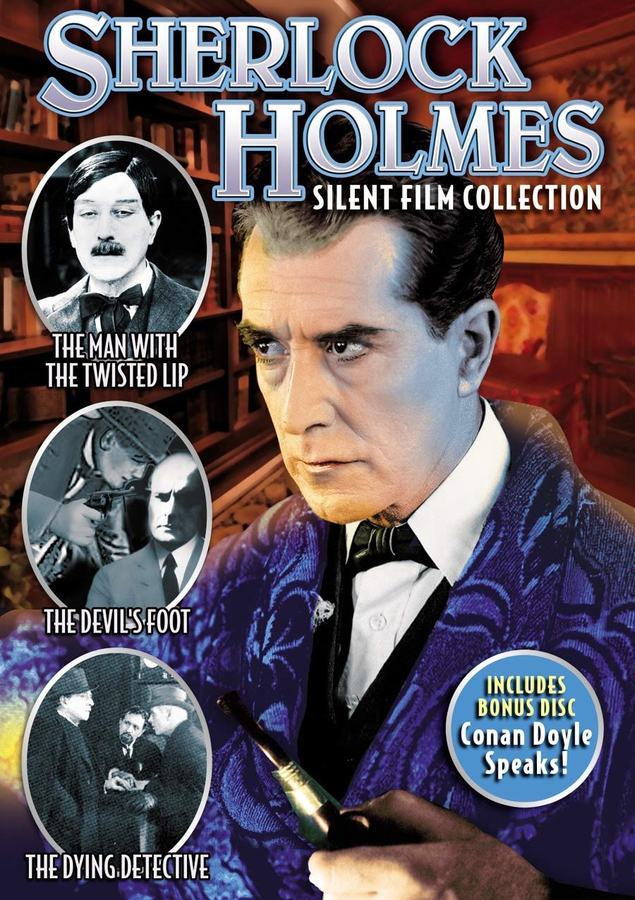
A definitive 5.5/10 rating for a film that redefined the boundaries of cult cinema. The Dying Detective remains a cornerstone of transgressive art.
To witness Eille Norwood in The Dying Detective is to observe a metamorphosis that predates the modern obsession with Method acting. Long before the silver screen was dominated by the manic energy of contemporary iterations, Norwood offered a Sherlock Holmes that was chillingly precise, austere, and profoundly intellectual. In this 1921 production by the Stoll Film Company, we are not merely watching a mystery; we are observing a dissection of the human spirit under the duress of feigned mortality. The film captures a specific British gloom, a post-war malaise that seeped into the celluloid, making the detective’s supposed illness feel uncomfortably tangible. Unlike the more romanticized portrayals found in Romeo and Juliet, this is a story of grit, shadows, and the cold machinery of logic.
Norwood’s performance is a masterclass in stillness. While other actors of the era relied on the grandiloquent gestures typical of silent cinema—often seen in the heightened melodrama of La dame aux camélias—Norwood retreats. He uses the sunken hollows of his eyes and the rhythmic, labored breathing of a dying man to command the frame. It is a subversion of the detective archetype; he is not the hunter here, but the wounded prey, drawing the predator into a sphere of false security. The tension is not derived from a chase, but from the agonizingly slow approach of a villain who believes he has already won.
Director Maurice Elvey, a titan of early British cinema, utilizes the limitations of the 1920s to create an atmosphere of suffocating intimacy. The sickroom of 221B Baker Street becomes a microcosm of the Victorian underworld. The lighting, though primitive by today's standards, achieves a chiaroscuro effect that emphasizes the moral binary at play. We see the influence of European expressionism beginning to take root, creating a visual language that mirrors the internal state of the characters. This isn't the sprawling, adventurous landscape of The Grim Game; it is an internal odyssey, a battle of wits fought in the half-light of a flickering lamp.
The production design deserves significant praise. The clutter of Holmes’s apartment—the chemical retorts, the stacks of papers, the violin case—serves as a reminder of the vibrant mind now supposedly rotting from a Sumatran fever. When we compare this to the pastoral simplicity of Anne of Green Gables, the darkness of Elvey’s vision becomes even more pronounced. The film understands that for Holmes to be truly convincing in his deception, the environment itself must feel infected by his decline.
A detective is only as compelling as the shadow he pursues, and Cecil Humphreys provides a formidable foil as Culverton Smith. Humphreys portrays Smith with a chilling, bureaucratic cruelty. He is not a mustache-twirling villain but a man of science who has perverted his knowledge for malice. His interactions with the "dying" Holmes are laced with a sadistic pleasure that is palpable even without dialogue. There is a specific cruelty in his gaze, a sense of triumph that feels far more dangerous than the physical threats found in The Penalty.
The climax of the film hinges on this dynamic. The moment Smith confesses, believing Holmes is too far gone to testify, the shift in power is instantaneous. The way Norwood sheds the skin of the invalid and reassumes the mantle of the investigator is one of the most satisfying reveals in silent film history. It is a moment of pure catharsis, a restoration of order in a world that briefly seemed to have tilted into chaos. This transition is handled with a subtlety that avoids the histrionics of Leon Drey, maintaining the film’s grounded, somber tone.
Arthur Conan Doyle himself famously praised Eille Norwood, stating that his portrayal was the closest to the Holmes he had envisioned. The Dying Detective stands as a testament to this fidelity. While other adaptations of the era, such as The Pretty Sister of Jose, took broad liberties with their source material to suit the whims of the box office, the Stoll series remained remarkably faithful to the rhythm of Doyle’s prose. The intertitles are used judiciously, allowing the visual storytelling to carry the weight of the plot, much like the sophisticated narrative structure found in The Child of Paris.
This film also explores the theme of loyalty through the character of Dr. Watson, played with earnest devotion by Hubert Willis. The pathos in Willis’s performance is the emotional anchor of the film. His genuine grief over Holmes’s condition provides the necessary stakes; if Watson is fooled, the audience is fooled. This emotional resonance is often missing from procedural mysteries, but here it elevates the film to something akin to a tragic drama, reminiscent of the heavy atmosphere in Journey's End.
One must consider the technical constraints of 1921 to truly appreciate the achievement of The Dying Detective. The cinematography by Geoffrey Faithfull is remarkably steady, focusing on the minute details of the face—the sweat on the brow, the twitch of a finger. This focus on the micro-expression was revolutionary. While films like Ansigttyven I explored the concept of identity through more overt disguises, Norwood’s disguise in this film is internal. He isn't wearing a mask; he is wearing a state of being.
The pacing of the film is deliberate, almost agonizingly so, which serves to mirror the slow progression of a terminal illness. It refuses to rush to the resolution, allowing the dread to seep into the viewer’s bones. This patience is a hallmark of Elvey’s direction, a stark contrast to the often frantic editing found in Out of the Fog. By the time the final confrontation occurs, the audience is as exhausted and desperate for the truth as Watson himself.
In the broader context of 1920s cinema, The Dying Detective occupies a unique space. It lacks the overt sentimentality of Her Secret or the flirtatious energy of Alma, Where Do You Live?. Instead, it is a cold, hard look at the power of the mind over the body. It shares a certain philosophical DNA with Triumph des Lebens, interrogating the will to survive and the lengths to which one will go to achieve a moral victory. Even when compared to the romantic yearning of I Love You, this film stands apart for its rejection of comfort. It is a film about death that celebrates the indomitable nature of the intellect.
Ultimately, the brilliance of The Dying Detective lies in its restraint. It does not need grand sets or thousands of extras to tell a story of epic proportions. The battleground is a single room; the weapons are words and whispers. Eille Norwood’s Holmes remains a benchmark for all who followed, a ghost from the silent era who still haunts our modern interpretations of the Great Detective. To watch this film today is to rediscover the power of visual storytelling in its purest, most potent form. It is a stark reminder that before the sirens and the explosions, Sherlock Holmes was a man who could conquer evil simply by lying still and letting the truth find its way into the light.
A triumph of silent suspense and a definitive chapter in the Holmesian canon.
IMDb —
1926
Community
Log in to comment.