DbcultAccessing Vault...
5.4/10
Senior Film Conservator
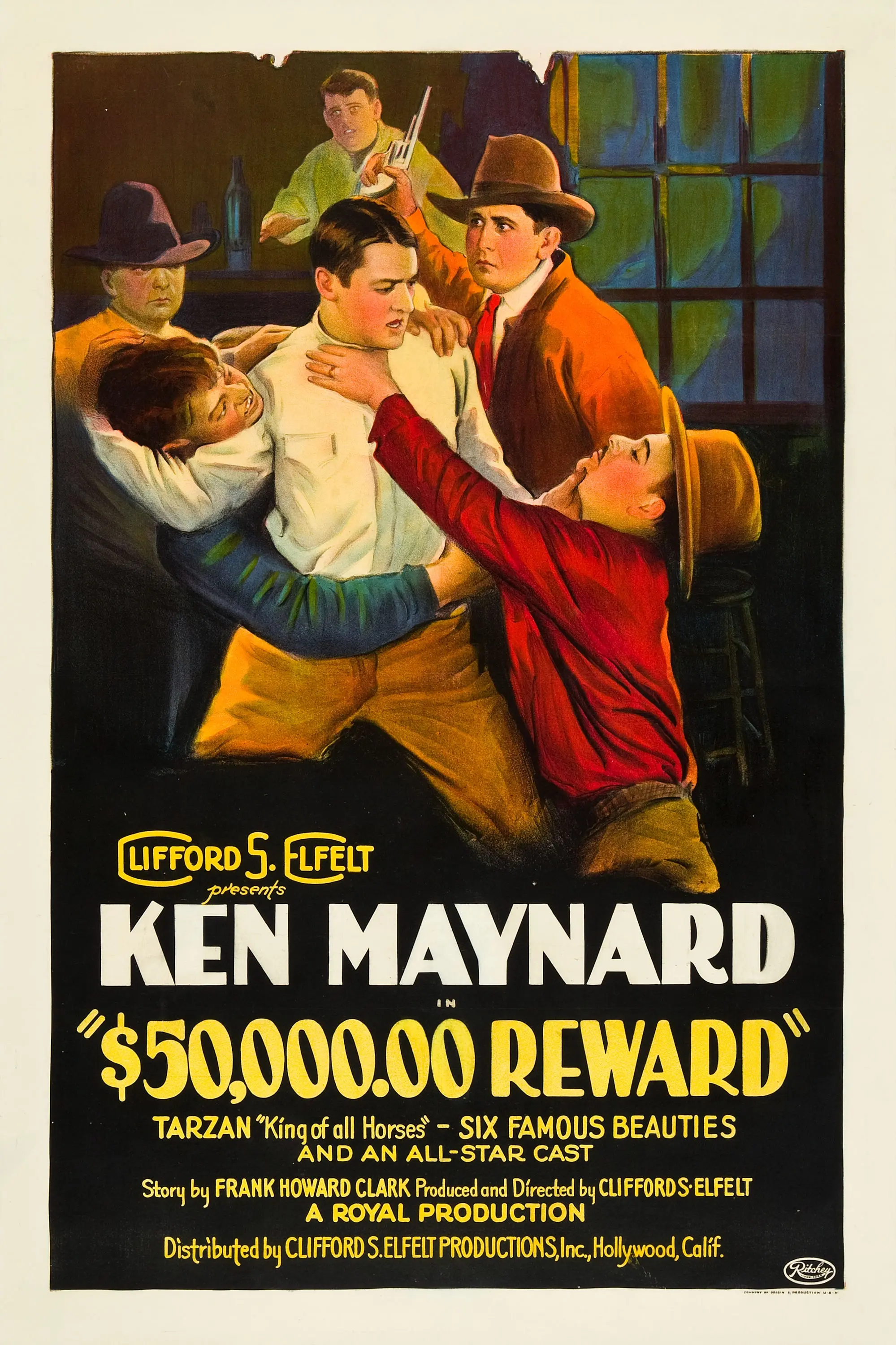
A definitive 5.4/10 rating for a film that redefined the boundaries of cult cinema. $50,000 Reward remains a cornerstone of transgressive art.
The cinematic tapestry of the 1920s, particularly within the nascent Western genre, frequently presented narratives of stark morality, where ambition clashed with integrity, and the promise of prosperity often masked insidious designs. Frank Howard Clark's 1926 silent picture, $50,000 Reward, stands as a compelling artifact of this era, a film that, despite its age, resonates with timeless themes of greed, justice, and the precariousness of fortune in an untamed landscape. It’s a compelling journey into the heart of a conflict born from the very ground beneath one's feet, a classic tale of a man against the machinations of a ruthless system.
At the core of this gripping narrative is Tex Sherwood, portrayed with compelling earnestness by the iconic Ken Maynard, a figure synonymous with the quintessential cowboy hero of the silent screen. Sherwood finds himself in possession of a truly valuable tract of land, not merely for its vastness, but for its strategic positioning – it's slated to be irrigated by a new, transformative dam. This isn't just acreage; it's a future, a promise of fertile fields and burgeoning wealth, a veritable cornerstone of the American dream in its rugged, frontier incarnation. Maynard, with his characteristic blend of physical prowess and understated charm, embodies this vision of honest toil and deserved prosperity, making his subsequent predicament all the more poignant. His presence alone elevates the film, a testament to his star power in an era where charisma often transcended dialogue. The sheer scale of the dam project, though unseen, looms large as a symbol of progress, making Tex's land not just valuable, but pivotal.
However, this burgeoning fortune casts a long shadow, attracting the covetous gaze of Banker Holman, a character whose very title immediately evokes a sense of calculated, institutional malevolence. Holman, keenly aware that Sherwood's deed must be formally registered the very next day to solidify his claim, sees not an opportunity for fair transaction, but a fleeting window for audacious theft. The ticking clock of bureaucracy becomes his weapon, and he wields it with chilling precision, offering a staggering $50,000 reward for Tex's capture. This isn't merely about money; it’s about power, about controlling the very arteries of the burgeoning economy that the dam represents. Holman's actions paint him as a true antagonist of the era, a man who would rather exploit than build, a stark contrast to the pioneering spirit Tex embodies. The reward itself is a testament to the immense value of the land, simultaneously a lure for desperate men and a symbol of Holman's unbridled avarice.
The narrative then plunges into a relentless pursuit, a classic Western trope elevated by the silent film's reliance on visual storytelling and heightened dramatic tension. Tex Sherwood, now a hunted man, must navigate treacherous terrain, outwit opportunists drawn by Holman's substantial bounty, and ultimately ensure his rightful claim is secured before the deadline expires. The stakes are profoundly personal and economically significant, transforming a simple plot point into a desperate fight for survival and legacy. The film, in its silent grandeur, masterfully conveys the urgency through expressive performances and dynamic camera work, characteristic of the era's best Westerns. The landscape itself becomes a character, at once beautiful and unforgiving, a silent witness to the human drama unfolding across its expanse. One might even compare the raw intensity of the chase to similar sequences in other silent thrillers, where the absence of dialogue amplified the visual storytelling, such as the dramatic escapes in The New Exploits of Elaine, though with a distinct Western flavor.
Beyond Maynard's magnetic lead, the film benefits from a robust ensemble cast, each contributing to the rich texture of this frontier saga. Esther Ralston brings a nuanced performance, likely as a sympathetic figure or love interest, adding emotional depth to the high-stakes action. Her presence grounds the narrative, offering a human connection amidst the relentless pursuit. The supporting players, including Augusta Ain, Ananias Berry, Nancy Zann, Katherine DeForrest, William F. Moran, Charles Newton, Olive Trevor, Bert Lindley, Fern Lorraine, Edythe Flynn, Grace Fay, Tarzan (the horse, of course, a loyal companion in many Maynard films), Frank Whitson, Lillian Leighton, and Edward Peil Sr., each contribute to the authentic portrayal of a community grappling with the ramifications of greed and justice. Their collective efforts paint a vivid picture of the diverse personalities inhabiting the frontier, from the unscrupulous to the steadfast. The sheer number of characters, even if some have fleeting screen time, adds to the sense of a populated, living world, a microcosm of society under pressure. This broad cast allows for various reactions to Holman's audacious reward, creating a tapestry of human motivations that range from selfish opportunism to quiet loyalty.
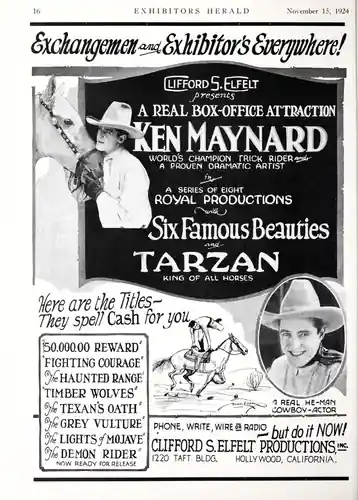
The screenplay by Frank Howard Clark is a testament to the efficient and impactful storytelling prevalent in silent cinema. Clark meticulously constructs a plot that, while seemingly straightforward, is fraught with moral ambiguities and moments of intense suspense. His ability to distill complex motivations into clear, visual actions is commendable, ensuring that the audience remains fully invested in Tex's desperate struggle. The pacing is likely brisk, a hallmark of silent Westerns designed to keep audiences on the edge of their seats without the benefit of spoken dialogue. Clark understands the inherent drama in a ticking clock and a man fighting for his birthright, a theme that resonates deeply within the American ethos. His narrative craftsmanship, though perhaps less overtly intellectual than, say, the structural ambitions of The Life of Richard Wagner, is perfectly suited for the genre, focusing on visceral thrills and clear character arcs.
Beyond the immediate thrills of the chase, $50,000 Reward delves into profound themes relevant to the American West. The dam, a symbol of progress and technological advancement, ironically becomes the catalyst for a regressive act of corporate banditry. The film subtly critiques the unchecked power of financial institutions and the vulnerability of individuals against such forces. It explores the very definition of ownership: is it merely a piece of paper, or is it the sweat and vision invested in the land? Tex Sherwood's struggle is not just for his property, but for the principle of fair play and the integrity of the frontier dream. This thematic depth elevates it beyond a mere action vehicle, inviting reflection on the societal structures that govern prosperity. The conflict between Tex and Holman can be seen as a microcosm of larger battles between individual enterprise and corporate greed that defined much of the era, echoing similar struggles for autonomy and resource control seen in films like The Road o' Strife.
The visual aesthetic of $50,000 Reward, typical of silent Westerns, would have relied heavily on sweeping vistas, dramatic close-ups, and carefully choreographed action sequences. The vastness of the Western landscape, often filmed on location, served as a powerful backdrop, emphasizing the isolation and danger faced by the characters. The expressiveness of the actors, particularly Maynard, would have been paramount, communicating fear, determination, and triumph without words. The use of intertitles, while a necessary convention, would have been judicious, allowing the visuals to carry the brunt of the storytelling. The film's ability to create tension and excitement through purely visual means is a testament to the artistry of silent era filmmakers. One can imagine the dynamic shots of Ken Maynard galloping across plains, or the tense moments of concealment, all underscored by a dramatic musical score that would have been played live in theaters. This visual language, so distinct from modern cinema, holds a unique charm and power, compelling viewers to engage with the story on a more primal, emotional level, much like the evocative imagery in The Kangaroo, though set in a different continent, still relies on the power of landscape.
In the pantheon of silent Westerns, $50,000 Reward holds its own, contributing to a genre that was rapidly defining American cinema. While perhaps not as overtly fantastical as something like Ævintýri Jóns og Gvendar, its grounding in tangible conflict and human ambition gives it a gritty realism. The film's portrayal of a lone hero battling overwhelming odds aligns it with other classic Ken Maynard vehicles, such as The Masked Rider, where individual courage is pitted against systemic corruption or criminal enterprise. The emotional resonance of a man fighting for his future is a universal theme, seen in various forms across cinematic history, from the personal dilemmas in Woman to Woman to the more intimate struggles in His First Honeymoon. The moral quandaries and the struggle for personal agency against powerful adversaries also bring to mind the intricate character dynamics found in films like Alien Souls, albeit within a vastly different genre context. The film's exploration of human nature under duress, and the lengths individuals will go to for perceived justice or gain, makes it a fascinating study, much like the ethical challenges presented in The Scoffer or the more direct confrontations in Choose Your Weapons. Even the subtle nuances of societal expectation and individual desire, as explored in A tanítónö or Nedra, find their echoes in the less overt, yet equally potent, emotional landscape of this Western drama. Furthermore, the theme of vigilant pursuit and the race against time, though presented through a different lens, can be found in the more lighthearted, yet equally determined, spirit of Cupid's Fireman, showcasing the versatility of such narrative engines.
Ultimately, $50,000 Reward transcends its genre confines to offer a resonant commentary on the human condition. It's a reminder that even in an era of silent films, the power of a well-told story, coupled with compelling performances and a clear moral compass, can leave an indelible mark. Frank Howard Clark's direction and Frank Howard Clark's writing, combined with the star power of Ken Maynard and the dedicated efforts of the entire cast, forged a film that embodies the spirit of its time while speaking to universal truths. For enthusiasts of silent cinema and Westerns alike, this film is more than just a historical curiosity; it's a vibrant piece of cinematic heritage, full of dramatic tension, thrilling action, and a timeless battle between right and wrong. Its legacy lies not just in its entertainment value, but in its ability to capture a moment in American history when the promise of the West was both a beacon of hope and a crucible of conflict. The raw energy and clear narrative drive ensure that even today, the film can captivate an audience, proving the enduring power of classic storytelling. It’s a testament to the craft of filmmaking in an era where visual spectacle and emotional clarity were paramount, making every frame count in the absence of spoken words.
A timeless tale of ambition, pursuit, and the unyielding spirit of the West.
IMDb 6
1918
Community
Log in to comment.