DbcultAccessing Vault...
Cult Review
Senior Film Conservator
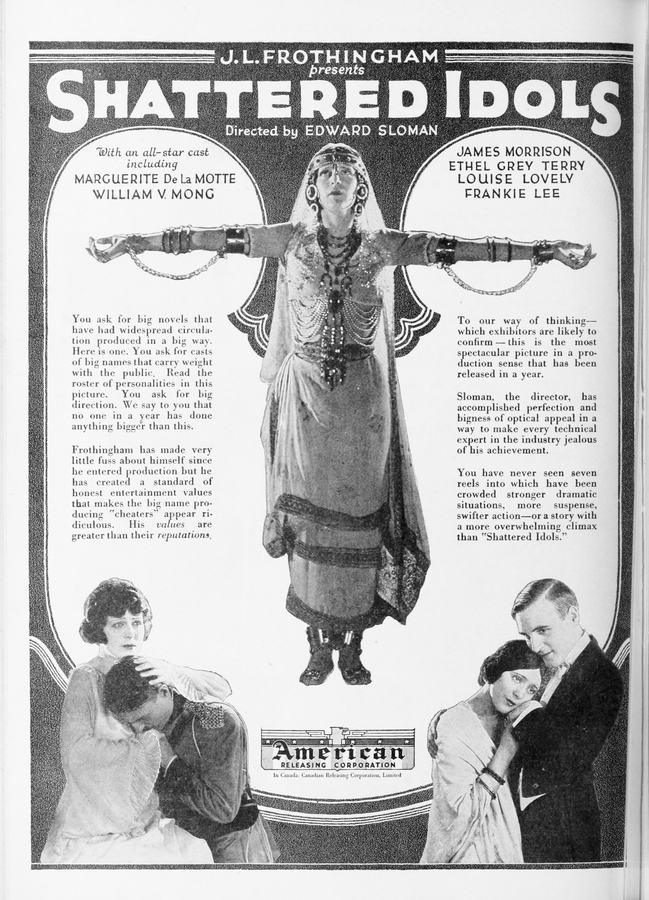
There are films that merely tell stories; then there are celluloid séances that exhale the repressed ghosts of an empire. Shattered Idols, that spectral curio from the annus mirabilis of 1921, belongs to the latter tribe—its nitrate veins pumping a venomous cocktail of maternal bile, racial panic, and erotic idolatry.
Imagine, if you dare, a birth scene lit only by hurricane lamps: the camera dollies in on infant David’s ribcage—so translucent you can almost glimpse the flutter of a humiliated heart—while off-screen memsahibs cluck about “bad blood.” The film’s first reel is a masterclass in ambient cruelty; every cutaway to a vacant punkah or a cracked regimental portrait chisels away at the myth of imperial stoicism. By the time the boy is packed off to England, we have already watched colonial masculinity decompose frame by frame.
William V. Mong—pulling triple duty as co-writer, co-director, and star—plays David with a nervous, almost gestural vocabulary: wrists that shield rather than affirm, eyes that apologize for occupying space. It is a performance pitched at the threshold of sound, the kind that makes you strain to hear a voice that never arrives. Compare it to the bullish swagger Mong would later bring to Treat 'Em Rough and the difference is vertiginous; here he is every inch the empire’s guilty conscience.
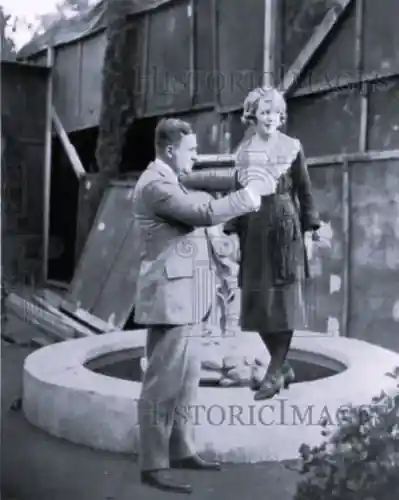
“The camera dollies in on infant David’s ribcage—so translucent you can almost glimpse the flutter of a humiliated heart.”
Mid-film, the narrative pivots into hallucination. David, drenched in gin and Oedipal dread, wanders the bazaar while superimposed Sikhs march through him like mist. This procession—achieved with a staggered double-exposure that predates Maria Magdalena’s more pious superimpositions—lands us at the stone feet of Śiva. Inside the temple, cinematographer Harvey Clark (also memorable as the bumbling vicar in The Way of a Man with a Maid) bathes the idol in chiaroscuro so lascivious it feels like watching a deity undress. The betrothal ritual—oil lamps, Sanskrit mantras, and a garland slithering around Sarasvati’s throat—unfolds with the slow inevitability of a noose tightening.
Louise Lovely’s Sarasvati is the film’s ethical lightning rod. Introduced as a trembling offering, she gradually reverses the gaze: her eyes telegraph the terror of becoming trophy-wife to two civilizations at once. When David rescues her, the elopement is staged not as triumph but as abduction; the intertitle reads, “He carried her across the kala pani—black waters that drown even gods.” One can’t help recalling the more sardonic maritime exile in Stingaree, yet here the tone is tragic, not swashbuckling.
“An empire that cannot metabolize its own shame must, sooner or later, devour its children.”
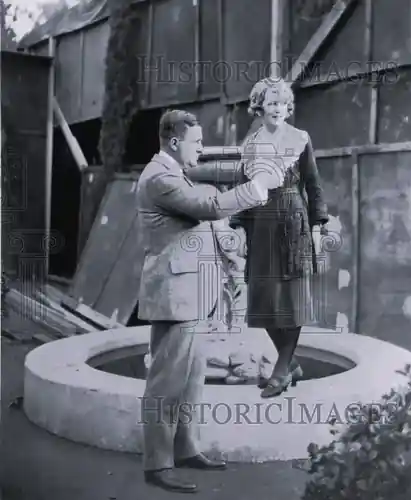
The London act is a symphony of xenophobia in drawing-room minor. Sarasvati’s sari, once a banner of resistance, becomes a curiosity pinned beneath whale-bone corsets. At a soirée, Lady Hurst (a frostbitten Josephine Crowell) forces her to play the pianoforte; the melody morphs into a reedy Indian raga, scandalizing the matrons. Cinematically, Mong overlays a translucent image of temple bells over the parlour, suggesting that empire’s hearth is merely another altar of dislocation.
Meanwhile David, now MP for a rotten borough, delivers speeches about “the white man’s burden” while his wife’s letters—written in Devanagari—pile up unread. The film’s most devastating cut juxtaposes his parliamentary bombast with Sarasvati alone in a Kensington garden, tracing rangoli patterns that the English rain erases mid-pattern. It is a visual sentence that accuses every intertitle David will ever utter.
Enter George Periolat as the velvet-tongued nationalist Kiran, a character equal parts Mephistopheles and comrade. Where Your Obedient Servant played such figures for comic obsequiousness, here the agenda is seduction and repatriation. Kiran’s rhetoric—delivered via tinted flash-cards of saffron—promises Sarasvati a return to “a land where your name is a prayer, not a parlour joke.” The moment she steps aboard the P&O steamer, the film’s color palette shifts from slate-grey to lurid amber, as though India itself is developing a fever.
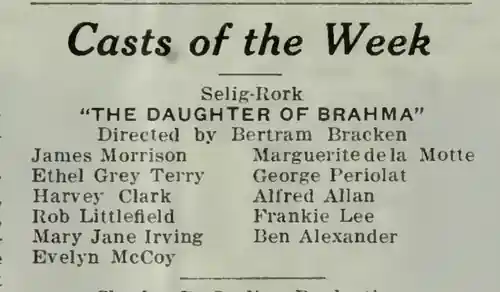
Back on native soil, the 1857 rebellion re-erupts (history be damned, Mong compresses decades for poetic justice). David, tailing his wife, arrives as sepoys torch the very cantonment where daddy once drilled. In a night sequence lit only by revolver flashes and burning thatch, the camera pirouettes 360°—a kinetic frenzy that anticipates the alpine chaos of Scrambles in the High Alps yet bristles with political terror. Assassins corner David; Sarasvati, draped in bridal crimson, intercepts the blade meant for him. Her death is framed in a lingering close-up: blood blossoms on her choli like the lotus of dissolution spoken of in Upanishads.
The final shot—an empire’s flag drooping at half-mast while temple bells toll—offers neither catharsis nor redemption. Over it, the last intertitle simply reads: “Idols shatter, but stone outlives the hand that carved it.”
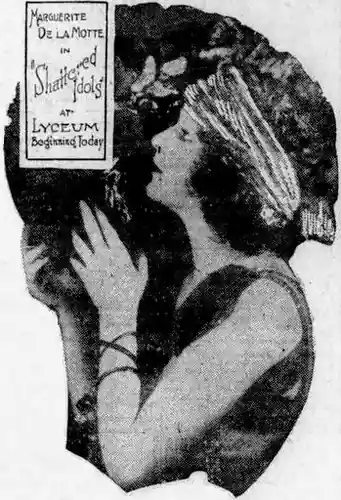
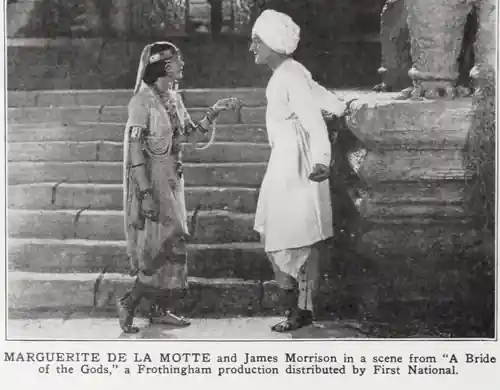
Frankie Lee’s pint-sized street urchin provides Brechtian counterpoint, hawking “Pictures of the heroic lieutenant!” while the adult David squirms—a reminder that imperial myths are peddled first to children. Marguerite De La Motte’s Diana, the childhood sweetheart jilted for Sarasvati, appears sparingly, yet her last glance—watching the couple depart for England—contains a whole novella of bruised entitlement. Alfred Allen’s fire-breathing regimental colonel deserves mention too; his single scene, berating sepoys for “ingratitude,” is shot from a low angle that makes his epaulettes loom like vulture wings.
Mong and cinematographer James Morrison shot on location in the San Gabriel hills, doubling for Indian jungles with the aid of cardboard moonsoon backdrops and a rogue elephant on loan from Universal. The day-for-night temple exteriors were achieved by undercranking and bathing the lens in cigarette smoke—an early diffusion technique that gifts the footage a phosphorescent haze. Compare this to the postcard clarity of How the Telephone Talks and you’ll appreciate how expressionistic early Hollywood could be when budgets were shoestrings and imaginations untamed.
Intertitles, lettered by Ethel Grey Terry, oscillate between Sanskritized English and terse reportage. One card, tinted deep saffron, simply states “Dharma?”—a query hanging like a guillotine over the subsequent reel. It’s the sort of minimalist audacity that prefigures the haiku-like placards of He Leads, Others Follow.
Beneath its exotic veneer, Shattered Idols is a primal scream about miscegenation. The marriage of David and Sarasvati is never accepted as love; it is always trespass. English drawing rooms treat her as souvenir; Indian nationalists view her as defiled. She is, in Gayatri Spivak’s later coinage, “white man’s burden in sari form.” The film’s tragedy lies in recognizing that no geography exists where her body is not contested territory.
David’s mother—Mary Wynn in a performance of glacial contempt—embodies the empire’s subconscious: terrified that its own offspring might go native, might prefer the tactile spirituality of idolatry over the frigid marble of St. Paul’s. Her deathbed scene, cut from many prints, shows her crushing a miniature Union Jack into her dying palm; the flag’s dye stains her nails blood-red, a subtextual confession that imperial purity was always hemorrhage.
“She is white man’s burden in sari form, and no geography exists where her body is not contested territory.”
Contemporary critics balked. Variety dismissed it as “malarial hokum,” while the London Times fretted over its “apologia for mutiny.” Yet the film found fervent disciples in Indian students at Oxford, who pirated prints for underground screenings—an early instance of diaspora cinema as resistance. In 1932, a truncated talkie remake titled Flames of Hind inserted post-dubbed dialogue and a rajah’s song; it bombed, proving that the original’s power lay precisely in its muteness—that caesura where audience imagination floods the gap.
Today, only a 63-minute assemblage survives at BFI’s vault, splice-burnt and nitrate-scented. Even so, every frame vibrates with warnings the 20th century refused to heed: that empires which export gods eventually import ghosts; that idols, once weaponized, will not stay politely in their shrines.
So if you chance upon a rattling 16 mm print in some flea-market crate, buy it, handle the flammable celluloid with reverence, and watch in the dark. You will see Lieutenant Hurst’s ghost still marching, still dying, still asking—across the gulf of a century—whether stone or flesh, colony or republic, can ever be more than shattered idols grinding against the teeth of time.
IMDb 6.7
1927
Community
Log in to comment.