DbcultAccessing Vault...
Cult Review
Senior Film Conservator
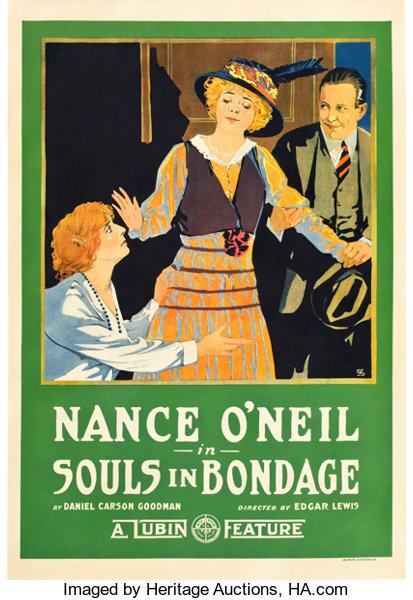
The annals of early cinema are replete with narratives exploring the intricate, often agonizing, tapestry of human relationships. Yet, few manage to etch themselves into the viewer's consciousness with the quiet, persistent ache of Souls in Bondage. This isn't merely a film; it's an immersive experience into the psychological labyrinth of familial neglect and the crushing weight of societal expectations, penned with disarming precision by Daniel Carson Goodman. Goodman, whose work often delved into the complex inner lives of his characters, here crafts a story that, despite its silent medium, reverberates with an almost unbearable emotional resonance. It's a testament to the power of nuanced storytelling, where gestures and expressions speak volumes, rendering spoken dialogue almost superfluous. The film’s genius lies in its ability to take a seemingly simple premise—the rivalry between two sisters—and elevate it into a profound examination of identity, sacrifice, and the often-invisible scars inflicted by those closest to us.
At its core, Souls in Bondage is Rosa's story, a poignant chronicle of a life lived in perpetual shadow. From the opening frames, we are introduced to a young woman whose very presence seems to carry the weight of an unspoken slight. She is not merely overlooked; she is actively marginalized, her innate goodness and quiet strength misinterpreted as awkwardness or a lack of spirit. This dynamic is exacerbated by the vibrant, almost aggressively charming persona of her younger sister, Rita. Rita, portrayed with a captivating blend of youthful exuberance and underlying self-interest, effortlessly commands the attention and affection of their family and social circle. Her every whim is indulged, her every flaw excused, creating a stark contrast with Rosa, who finds herself an unwitting receptacle for the family's anxieties and disappointments. One might draw a parallel to the themes of unrequited devotion and societal pressure seen in Madame Butterfly, where a woman's fate is sealed by external forces and the perceptions of others, though here the tragedy is domestic rather than international.
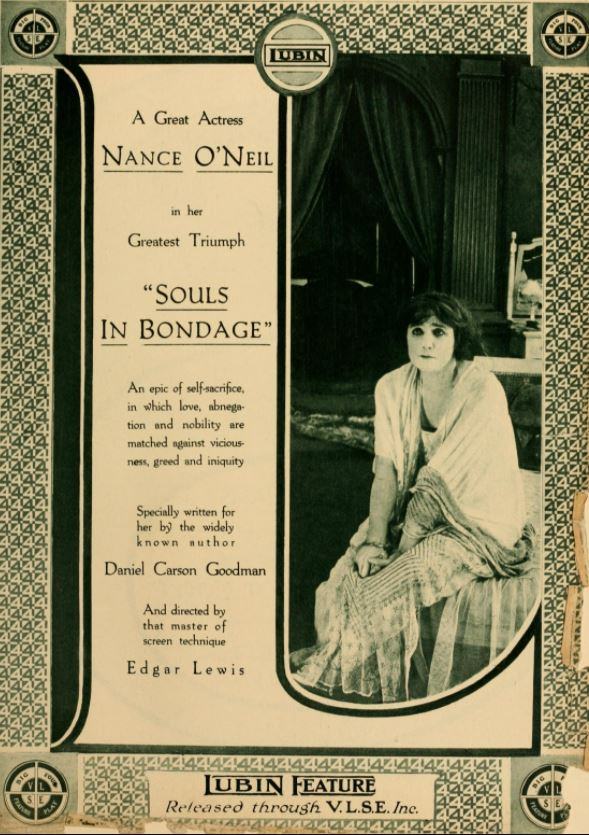
The film excels in illustrating the insidious ways in which this familial favoritism erodes Rosa's self-worth. It's not through overt cruelty, but through a thousand tiny neglects, a million unspoken comparisons, that her spirit is systematically dampened. The camera, with an almost empathic gaze, lingers on Rosa’s expressions – the flicker of hope quickly extinguished, the subtle slump of her shoulders, the poignant longing in her eyes. Nance O'Neil, in her portrayal of Rosa, delivers a masterclass in understated acting. Her performance is a tapestry of micro-expressions, conveying a depth of emotion that transcends the need for intertitles. She embodies the quiet dignity of a soul constantly battling against the tide of indifference, making Rosa’s plight universally relatable to anyone who has ever felt unseen or undervalued.
Rita, on the other hand, is a character designed to provoke a complex reaction. She is not a mustache-twirling villain, but rather a product of her environment, a spoiled darling whose every caprice has been indulged. Ida Stanhope captures this perfectly, imbuing Rita with an irresistible, almost childlike charm that masks a core of profound selfishness. Her beauty is a weapon, her vivacity a shield, deflecting any criticism and ensuring her continued reign as the family's golden child. The narrative skillfully avoids demonizing Rita entirely, instead presenting her as a tragic figure in her own right—a soul so accustomed to privilege that she is incapable of true empathy or self-awareness. Her actions, though often detrimental to Rosa, stem less from malice and more from an ingrained sense of entitlement and a complete blindness to the consequences of her desires.
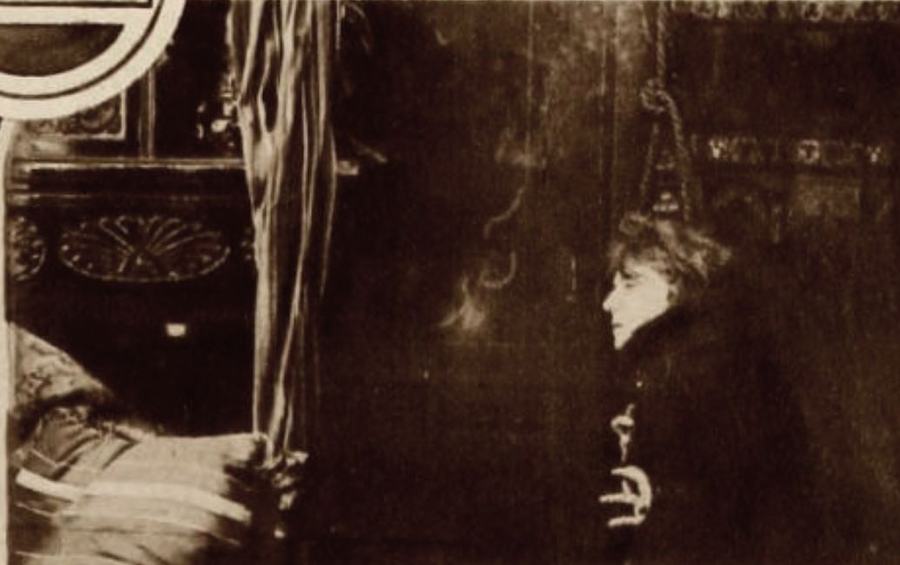
The dynamic between the sisters is the true engine of the film. We witness Rita's casual exploitation of Rosa's good nature, whether it's appropriating Rosa's belongings, taking credit for her sister’s efforts, or, most painfully, drawing away the affections of those who might otherwise see Rosa's true worth. This constant overshadowing reaches its crescendo in a series of events that force Rosa into an ultimate act of self-sacrifice, a decision born not of weakness, but of a profound, albeit perhaps misguided, love for her family and a desperate hope for Rita's happiness. This theme of profound, often unrewarded, sacrifice echoes the sentimental dramas of the era, perhaps even more acutely than something like Hearts and Flowers, which often leaned into more overt romanticism rather than the quiet desperation found here.
The supporting cast, under Goodman's keen eye, further enriches this domestic drama. Mary Carr, as the matriarch, embodies the well-meaning but ultimately flawed parent, whose inability to see beyond Rita's superficial charm perpetuates Rosa's suffering. Mrs. Stuart's portrayal adds another layer to the familial blindness, her character often acting as an unwitting enabler of Rita's indulgences. William Corbett, as the potential suitor or male figure caught in the sisters' orbit, serves as a crucial catalyst, his presence often highlighting the disparities in how the two sisters are perceived and treated. His character's evolving understanding, or perhaps misunderstanding, of Rosa provides a significant emotional arc, forcing the audience to grapple with their own prejudices and assumptions.
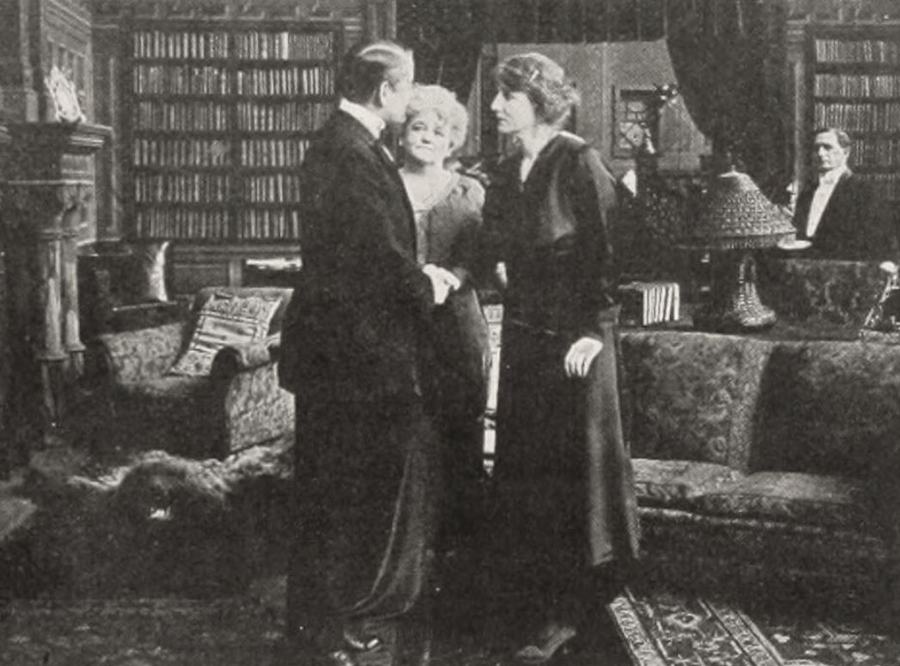
Bernard Siegel, though his role might be smaller, contributes to the film's texture, representing perhaps the broader societal gaze that often judges by appearances. The collective performances create a believable, suffocating environment where Rosa's quiet virtues are consistently overlooked in favor of Rita's more flamboyant, albeit hollow, attributes. It’s a powerful commentary on how readily society embraces superficiality over genuine substance. This exploration of societal judgment and a woman's struggle against it finds a spiritual cousin in films like The Goddess, though the societal pressures in Goodman's work are more intimately woven into the family unit itself.
While Daniel Carson Goodman is credited as the writer, his influence undoubtedly extends to the film's overall aesthetic and narrative rhythm. His understanding of human psychology, so evident in the intricate characterizations, suggests a hand in shaping the visual storytelling as well. The pacing of Souls in Bondage is deliberate, allowing moments of quiet contemplation to breathe, emphasizing the internal struggles of its characters. The use of close-ups on Rosa's face, for instance, is particularly effective, drawing the audience into her emotional world, making her silent suffering palpable. The visual language is rich with symbolism; the constant contrast between light and shadow often mirrors the emotional states of the sisters, with Rita frequently bathed in brighter, more attention-grabbing illumination, while Rosa often recedes into softer, more melancholic tones.
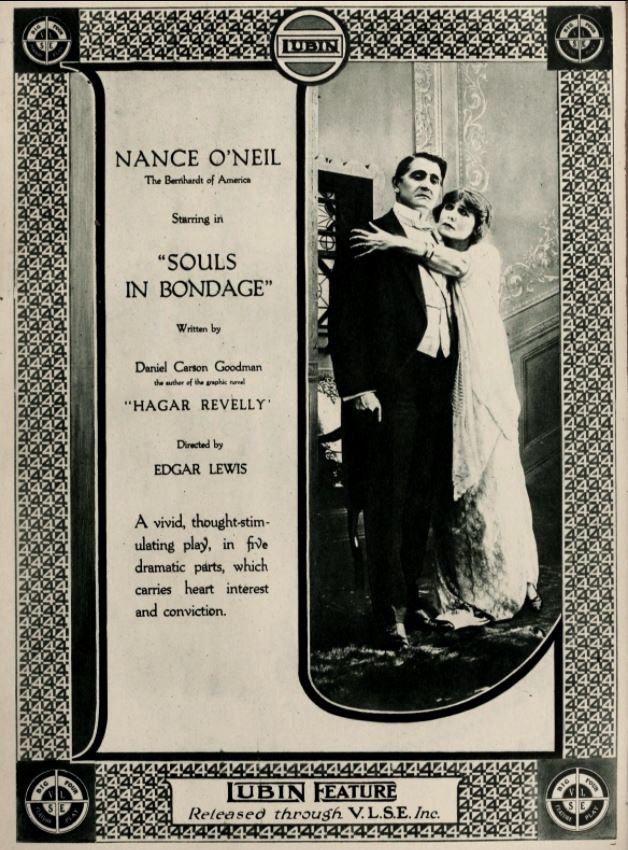
Goodman's narrative structure, though linear, is punctuated by moments of intense emotional weight, building inexorably towards a climax that feels both inevitable and profoundly affecting. He avoids easy resolutions, instead opting for a nuanced exploration of consequence and the enduring impact of choices made under duress. This commitment to psychological realism, even within the melodramatic framework of silent cinema, sets Souls in Bondage apart. It’s a film that demands empathy, challenging viewers to look beyond surface appearances and delve into the complexities of the human heart. One might even find subtle parallels in the way Goodman dissects human motivations to the intricate plot unraveling in The Mystery of the Yellow Room, albeit here the mystery is psychological rather than criminal.
The central theme of sacrifice permeates every frame of Souls in Bondage. Rosa’s life becomes a series of concessions, each one chipping away at her own happiness for the supposed benefit of others, primarily Rita. This isn't a simple tale of good versus evil, but a more intricate examination of how love, duty, and societal pressure can compel individuals to make devastating personal choices. The film questions whether such sacrifices are truly redemptive, or if they merely perpetuate a cycle of unhappiness. Does Rosa find a form of redemption through her suffering, or does her unwavering selflessness ultimately lead to a tragic, unfulfilled existence?
The narrative's power lies in its refusal to offer easy answers. It forces the audience to confront the uncomfortable truth that sometimes, even the purest intentions can lead to profound sorrow. The 'bondage' in the title refers not only to the societal constraints placed upon Rosa, but also to the emotional chains that bind her to her family, preventing her from forging her own path. It's a powerful metaphor for the invisible prisons we construct for ourselves and others. The film's exploration of these internal struggles and the weight of personal oaths sometimes feels as heavy and binding as the commitments explored in A Soldier's Oath, though here the battlefield is the domestic sphere.
Even decades after its release, Souls in Bondage retains a striking contemporary relevance. Its exploration of sibling rivalry, parental favoritism, and the insidious nature of emotional manipulation resonates deeply with modern audiences. The film serves as a powerful reminder that the struggles of the human heart are timeless, transcending the technological limitations of early cinema. It’s a crucial piece for understanding the evolution of psychological drama in film, demonstrating that profound emotional depth was achievable long before the advent of sound.
For silent film aficionados, Souls in Bondage is an essential viewing experience. It showcases the extraordinary talent of actors like Nance O'Neil, whose ability to convey complex emotions without uttering a single word is simply breathtaking. It underscores Daniel Carson Goodman’s prowess as a storyteller, capable of weaving intricate human dramas that feel both intimate and universal. The film stands as a testament to the artistry and expressive power of a bygone era, proving that sometimes, the most profound stories are told in silence, allowing the audience to truly hear the cries of the heart.
In an age where cinematic spectacle often overshadows character-driven narratives, revisiting a film like Souls in Bondage is a refreshing, even necessary, endeavor. It compels us to slow down, to observe, and to truly empathize with its characters, reminding us of the enduring power of human connection and the silent battles fought within the confines of our own families. The film's lasting impact lies in its unwavering commitment to depicting the raw, often uncomfortable, truths about human nature, making it a profound and unforgettable cinematic journey. It's a film that quietly demands your attention and, once it has it, never truly lets go of your soul.
IMDb —
1929
Community
Log in to comment.