DbcultAccessing Vault...
Cult Review
Senior Film Conservator
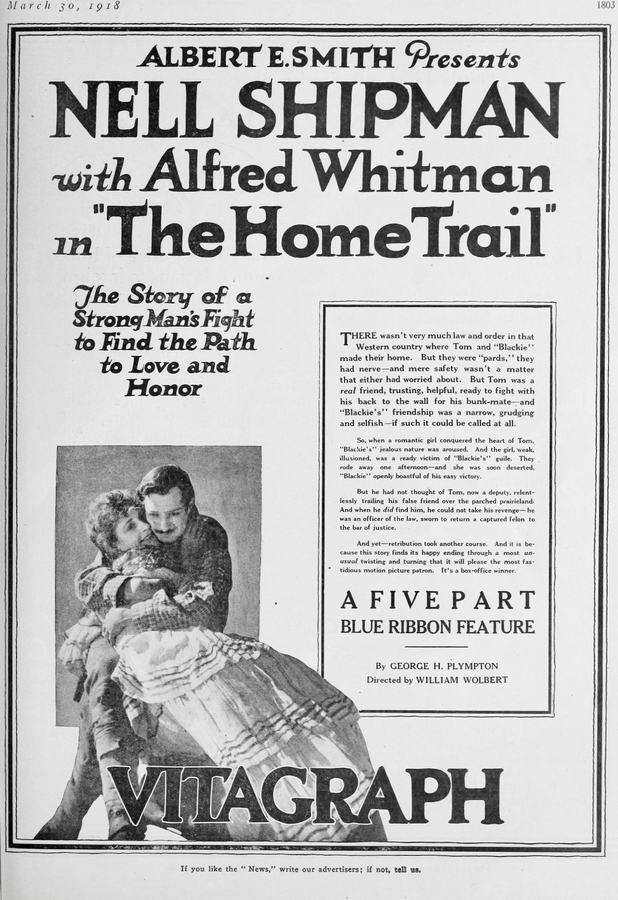
Ah, the early Western. A genre often dismissed by modern audiences as simplistic, a mere parade of cowboys and Indians, yet within its nascent forms lie some of the most profound explorations of human nature, morality, and the relentless grip of fate. The Home Trail, a cinematic artifact from an era when film was still finding its voice, stands as a testament to this complexity. It’s not just a story of the frontier; it’s a searing examination of love’s fragility, betrayal’s bitter sting, and the often-brutal calculus of justice in a land where law was often a personal decree.
At its core, this film, penned by the evocative George H. Plympton, presents a narrative arc as vast and unforgiving as the landscapes it depicts. We are introduced to Tom Evans, portrayed with a stoic intensity by S.E. Jennings, the very embodiment of the Western ideal – a fearless range boss, master of his domain, the Double X Ranch. His world, a tapestry woven from duty, grit, and the stark beauty of the untamed West, is upended by the arrival of Clara, a schoolteacher from the East, brought to life by Patricia Palmer. Her presence introduces a romanticism, a yearning for something softer and more cultured, that contrasts sharply with Tom's rugged reality. Their initial courtship and subsequent marriage hint at a blissful union, a sanctuary forged amidst the wilderness. Yet, this fragile peace is but a prelude to the storm.
The catalyst for the ensuing tragedy is Blackie, Tom’s partner, played by Joe Rickson. Rickson’s portrayal, even through the lens of early cinema, must have conveyed a subtle menace, a predatory charm that preys upon Clara’s inherent restlessness. One can imagine Clara, perhaps disillusioned by the harsh realities of frontier life, finding the romantic ideals she brought from the East clashing with the daily grind. Blackie, sensing this vulnerability, exploits it with a cunning born of self-interest. His persuasion leads Clara down a path of no return, an elopement that shatters Tom’s world and irrevocably alters her own destiny. This act of betrayal is not merely a plot device; it’s a profound exploration of human weakness, both Blackie's avarice and Clara's susceptibility to temptation or perhaps, a misguided search for happiness.
The swiftness of Blackie’s desertion of Clara is particularly brutal, highlighting his utterly selfish nature. He is not a man of commitment or genuine affection, only of fleeting gratification. This abandonment casts Clara into the grim reality of a 'disreputable dance hall,' a tragic descent for the once-romantic schoolteacher. Her journey mirrors the perils faced by women in the West, often left vulnerable to the whims of men and the unforgiving societal structures of the era. It’s a stark reminder of the precariousness of life, especially for those who stray from perceived norms. One might draw parallels to the struggles depicted in films like Wild Women or Life's Whirlpool, where the harsh realities of a male-dominated world frequently led to devastating consequences for female characters seeking agency or simply survival.
Tom’s transformation from a loving husband to a man consumed by a silent, burning quest for retribution is the narrative’s driving force. When Blackie, having descended further into criminality by robbing a stage, reappears, the stage is set for an inevitable confrontation. Tom, having patiently bided his time, gathers a posse, and the ensuing gun battle is depicted as a climactic, visceral sequence. The chaos of the shootout claims Clara’s life, a devastating twist that elevates the tragedy, making her an innocent victim caught in the crossfire of male conflict. Her death is not just a plot point; it’s a poignant commentary on the collateral damage of revenge and the unpredictable nature of violence.
Blackie’s escape only intensifies Tom’s resolve. The pursuit into the desolate desert is where The Home Trail truly delves into the darker recesses of frontier justice. Tom’s act of taking Blackie’s horse, leaving him to die of thirst, is an unvarnished, brutal form of retribution. It's a moment that challenges the audience, forcing us to confront the moral ambiguities of vengeance. Is it justice, or is it a descent into Blackie’s own barbarity? This scene, devoid of fanfare, speaks volumes about the harsh code of the West, where survival often dictated morality and personal grievances were settled with a finality that defied conventional law. It’s a powerful, almost biblical, act of Old Testament justice, a stark contrast to the more nuanced explorations of morality found in later Westerns, yet utterly compelling in its raw simplicity.
Yet, The Home Trail doesn't end in desolation. After the bitter taste of revenge, Tom returns, not to an empty life, but to the quiet, enduring presence of Elsie, played by Nell Shipman. Elsie, the girl who had secretly loved him all along, represents a different kind of love – one built on steadfastness, loyalty, and perhaps a deeper understanding of Tom's true character. Their marriage signifies a new beginning, a redemption not from sin, but from the consuming darkness of grief and vengeance. It’s a powerful, albeit conventional, resolution that offers a glimmer of hope and the promise of a stable future, hinting that even in the most rugged landscapes, true companionship can flourish. This emotional pivot is crucial; it prevents the film from becoming a nihilistic exercise in retribution, instead offering a path toward healing and enduring connection.
The casting, featuring talents like Gayne Whitman and Hal Wilson alongside the principal actors, would have contributed significantly to the film’s texture, adding depth to the ensemble. While specific details of their performances are lost to the mists of time for many, the very structure of Plympton's writing suggests a robust character-driven narrative, allowing these actors to embody archetypes with conviction. The film's ability to convey such complex emotional arcs with the nascent cinematic techniques of its time is truly remarkable. It relies heavily on visual storytelling, the power of expression, and the inherent drama of its setting.
Beyond the dramatic plot, The Home Trail explores themes that resonate far beyond its frontier setting. It delves into the nature of different kinds of love: the passionate, perhaps impulsive love between Tom and Clara, which proves fragile; the deceptive, manipulative affection of Blackie; and finally, the steadfast, unwavering devotion of Elsie. The film also grapples with the concept of loyalty and its profound breach, the consequences of which ripple through every character's life. The brutal landscape itself acts as a character, shaping destinies and dictating the terms of survival and justice. The unforgiving desert, the isolated ranch – these are not just backdrops but active participants in the unfolding drama, mirroring the harsh realities faced by the characters. The absence of formalized law in many frontier territories meant personal codes often superseded legal statutes, leading to outcomes like Blackie's desert fate, a stark example of 'eye for an eye' justice.
Considering other films of the era, The Home Trail holds its own as a compelling drama. While not directly comparable in genre, the raw emotional impact and exploration of human frailty might find echoes in the intense character studies seen in films like Out of the Wreck, where personal betrayals lead to profound consequences, or even the grand sweeps of human emotion in a different cultural context, such as Un romance argentino, which, despite its title, might share thematic underpinnings of romantic entanglement and heartbreak. The narrative’s focus on a woman’s tragic journey after being led astray also brings to mind the social commentaries sometimes subtly embedded in even early features, exploring societal pressures on women.
The Home Trail, with its robust plot and archetypal characters, offers more than just historical curiosity. It presents a timeless narrative of human struggle against both external forces and internal demons. It’s a story of choices and consequences, of the devastating impact of betrayal, and the enduring quest for peace and belonging. The film, even viewed through the prism of a century, speaks to the resilience of the human spirit and the often-circuitous route to true happiness. It's a potent reminder that the Western genre, in its earliest iterations, was far from superficial, instead offering a rich canvas for exploring the fundamental questions of existence, morality, and the complex tapestry of human relationships. Its legacy lies not just in its depiction of cowboys and ranch life, but in its profound emotional resonance, making it a valuable piece of cinematic history that continues to provoke thought and stir the soul of any discerning viewer.
The film’s title, The Home Trail, itself carries layers of meaning. It suggests not just a physical path leading back to the ranch, but also a metaphorical journey back to oneself, to stability, and to a truer sense of belonging after a period of profound upheaval. Tom's ultimate return to Elsie and the Double X Ranch isn't merely a happy ending; it's the culmination of a arduous emotional odyssey, a testament to the enduring power of home and the foundational values it represents. It speaks to the idea that even after straying far, both physically and emotionally, there is always a path, however challenging, that leads back to where one truly belongs. This makes the film a compelling study not only of the frontier but of the human heart's unwavering desire for solace and genuine connection.
IMDb —
1921
Community
Log in to comment.