DbcultAccessing Vault...
Cult Review
Senior Film Conservator
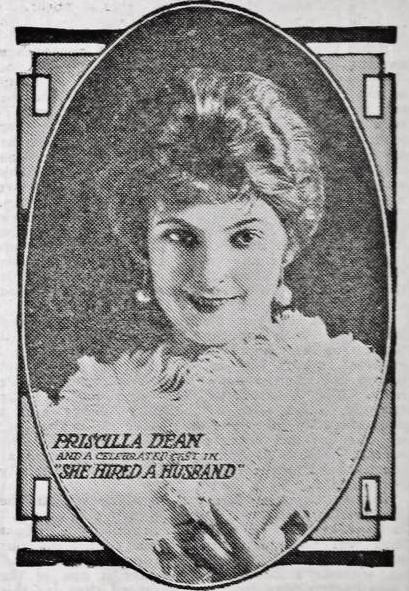
Rex Taylor’s She Hired a Husband is a brittle valentine slipped under the door of 1928 audiences, a film that masquerades as haystack fluff until its serrated edge glints. What begins in drawing-room petulance corkscrews into a backwoods captivity tale, reversing power levers like a child discovering light switches. Pat O’Malley’s Tom, camouflaged beneath a prophet’s beard, embodies the era’s suspicion that masculinity must be earned in exile; Priscilla Dean’s Daphne, eyes flickering between schemer and seeker, weaponizes privilege until privilege disarms her.
Country estates in late-silent cinema usually function as wallpaper for inheritance anxieties; here the estate is a panopticon. Aunt Trowbridge’s surveillance—soft, maternal, poisonous—drives every rash decision Daphne makes. The moment Daphne swaps authentic affection for tactical engagement, Taylor stages a moral relay: love exits stage right, ego storms in, and the forest becomes the only jury left. Notice the hard cut from wedding-dress lace to pine bark: Taylor refuses dissolves, implying no middle ground between social theater and feral truth.
O’Malley’s eyes, the lone visible real estate beneath shrubbery, do the heavy lifting. When he watches Daphne negotiate her ransom of pride, a half-second flicker of amusement surfaces—an actor signaling that Tom comprehends the absurd script they co-write. Dean, meanwhile, pirouettes from flapper defiance to chastened awareness without betraying the core heat that makes Daphne more than a spoiled heiress. Their chemistry is a tinderbox: you sense the off-screen negotiation—two pros deciding how much vulnerability the camera deserves.
Cinematographer George Benoit treats firelight like a liquid secondary character. Interiors of the cabin are Caravaggio in negative space—orange tongues licking at shadows, the couple’s silhouettes merging, separating, merging. Outside, moonlight desaturates the palette, turning forest into pewter. The juxtaposition is ideological: society’s artifice (golden comfort) versus nature’s impartial glow. When Tom thrashes the two predatory lumberjacks, the fight occurs in a charcoal clearing; justice, apparently, requires a colorless arena.
Silent cinema rarely allowed women to buy and sell male agency outright; Daphne’s cash-for-groom transaction is therefore startling. Taylor complicates the empowerment narrative by having the purchased man reassert control through physical removal—abduction reframed as re-education camp. Yet the power pendulum swings again once Daphne’s resourcefulness (and Tom’s latent decency) rewrite the contract. The film anticips Depression-era preoccupations: cash can rent another human, but sustained kinship demands reciprocity.
Though released months before the talkie tsunami, prints circulated with recommended organ scores. The suggested cue sheet pairs Wagner’s Siegfried Idyll for the abduction—an ironic nod to heroic rescue—and sprightly Sousa marches for Daphne’s initial marital scheming. Exhibitors ignored the dissonance at their peril; the clash between aural pageantry and visual captivity drills the comedy until it squeals.
Stack She Hired a Husband beside Captain Swift and you see twin studies in masculine self-exile; swap in The Breaker for mirrored explorations of transactional coupling. Unlike Love Letters, where epistles soften courtship, Rex Taylor’s film distrusts language—contracts are signed, cash exchanges palms, yet meaning lodges in deeds. The movie even glances toward Sapho’s sexual politics, though it ultimately recoils into monogamous restoration, a concession to box-office morality.
No complete 35 mm negative is known to survive; what circulates among archives is a 1.33:1 16 mm reduction print struck in the mid-’50s. The image carries scuffs like barnacle scars—yet the flicker paradoxically heightens the fable. Digital scans reveal Dean’s micro-expressions formerly masked by generations of analog wear. If you locate the 2019 UCLA restoration rip, expect tinting that skews toward pumpkin and teal; purists may decry the anachronism, but the palette dovetails with Taylor’s thematic clash of hearth versus wilderness.
Great stories seduce you into siding with the protagonist before you realize the ethical rot; She Hired a Husband flips that order. Daphne’s cause feels righteous until her whims bruise, Tom’s victimhood tilts into manipulation, and viewer loyalties knot. The film lands where the best silents survive: in the tremor between what was said in intertitles and what bodies betrayed when mouths stayed shut. Ninety-five years on, Rex Taylor’s curio still asks the unanswerable: if you can purchase proximity, what might ransom redemption—and who pockets the change?
If this review stoked your celluloid appetite, stalk our deep-dives on The Mystery Girl or Der Tunnel for more contraband from the vaults.
IMDb 5.1
1934
Community
Log in to comment.