DbcultAccessing Vault...
Cult Review
Senior Film Conservator
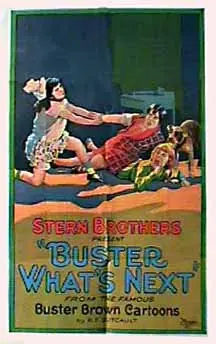
Is “Buster, What's Next?” worth watching today? Short answer: yes, but with the understanding that you’re stepping into a specific, delightful corner of cinematic history. This film is an absolute treat for aficionados of early cinema, silent comedy, and those who appreciate the foundational artistry of physical performance and visual storytelling. It’s decidedly not for viewers who demand modern narrative pacing, complex character arcs, or dialogue-driven plots.
This charming, chaotic short, a testament to the ingenuity of its era, offers a unique window into the genesis of comedic filmmaking. While its narrative simplicity might deter some, its pure, unadulterated joy in slapstick and character interplay is infectious, proving that laughter truly transcends time.
“Buster, What's Next?” is an interesting artifact, a film that showcases both the raw energy and the nascent limitations of early cinematic storytelling. It works. But it’s flawed. Here’s a quick breakdown:
This film works because... it masterfully employs physical comedy and the expressive power of its cast, particularly Arthur Trimble and The Wonder Dog Pal, to create genuinely funny and heartwarming moments without a single spoken word. Its simplicity is its strength, allowing the visual gags and character reactions to shine.
This film fails because... its narrative can feel overly episodic, lacking the cohesive dramatic tension or character development that even some of its contemporaries began to explore. The plot, while charming, is thin, serving merely as a vehicle for gags rather than a driving force.
You should watch it if... you have a deep appreciation for the roots of comedy, silent film performance, and the unique challenges and triumphs of filmmaking in the early 20th century. It’s a perfect palate cleanser for those tired of overly complex modern narratives.
Penned by the influential Richard F. Outcault, a name synonymous with early comic strips, “Buster, What's Next?” feels like a living, breathing cartoon brought to the screen. The plot, as detailed in our summary, is a delightful exercise in escalating absurdity. Buster, played by the agile Arthur Trimble, is a protagonist defined by his earnest, often misguided, attempts to do good, which inevitably lead to him being entangled in a web of hilarious misfortunes. This is classic silent comedy territory, where good intentions meet chaotic execution.
The central conflict, a misunderstanding between Buster and Doreen Turner over the fate of The Wonder Dog Pal, is precisely the kind of low-stakes, high-impact premise that thrived in this era. It allows for a rapid succession of visual gags, chase sequences, and exaggerated reactions without bogging down the pacing with exposition. Outcault’s influence is palpable; the film unfolds with the panel-by-panel precision of a newspaper strip, each scene building upon the last’s comedic potential.
The direction of “Buster, What's Next?” (though uncredited in our records, the hand guiding it is clear) demonstrates a keen understanding of silent film mechanics. The camera is often static, observing the unfolding chaos with a wide lens, allowing the audience to take in the full scope of a physical gag. Consider the scene where Buster, attempting to rescue Pal from a precariously high window ledge, inadvertently triggers a chain reaction involving a fruit vendor’s cart below. The wide shot captures Trimble’s frantic movements, Pal’s nonchalant tail wags, and the eventual cascade of apples, all within a single, perfectly framed shot.
Pacing is vital in silent comedy, and this film nails it. The rhythm is relentless, moving from one predicament to the next with brisk efficiency. There are no wasted frames. Intertitles are used sparingly, serving as concise narrative bridges or punchlines, rather than verbose explanations. This keeps the audience engaged, constantly anticipating the next visual punch. The film understands that in silent cinema, action speaks louder than any title card ever could. This isn't just fast; it's *efficient* storytelling.
Arthur Trimble, as Buster, is the beating heart of this film. His performance is a masterclass in physical comedy, showcasing an elasticity and expressiveness that rivals some of the era's biggest stars. Trimble’s face is a canvas of emotions, transitioning from bewildered innocence to frantic desperation in a blink. His pratfalls are executed with a natural grace, making even the most outlandish spills feel authentic. There’s a particular moment where he attempts to scale a fence, only to get his trousers caught, leaving him dangling upside down. His silent scream of exasperation, conveyed entirely through wide eyes and flailing limbs, is pure comedic gold. He embodies the everyman hero, perpetually out of his depth but never truly defeated.
Doreen Turner, as the initially suspicious yet ultimately charming Doreen, provides an excellent foil to Buster’s bumbling. Her performance is full of spirited indignation and quick-witted reactions. She’s not merely a damsel in distress; she’s an active participant in the chaos, often instigating it through her fierce protectiveness of Pal. Her initial glare at Buster, a perfect blend of suspicion and outrage, is a wonderfully specific example of how silent actors conveyed complex emotions with just a look. Turner’s energy matches Trimble’s, creating a dynamic duo whose on-screen chemistry, even in an adversarial context, is palpable.
And then there’s The Wonder Dog Pal. To call Pal a mere animal actor would be an injustice. Pal is a genuine character, a scene-stealer whose intelligence and charisma are undeniable. The dog’s ability to perform specific actions — from fetching a runaway hat to subtly tripping a pursuing constable (a truly surprising moment that elicits genuine laughter) — adds an incredible layer of charm and humor. Pal isn't just cute; Pal is an active agent in the plot, often inadvertently complicating Buster’s life, but just as often, providing the unexpected solution. The bond between Pal and Doreen, and eventually Pal and Buster, forms an emotional core that grounds the slapstick in something genuinely sweet.
For a film of its vintage, the cinematography of “Buster, What's Next?” is remarkably effective. While not employing the complex camera movements of later eras, it uses its static frames strategically. Deep focus is often utilized to ensure that background gags or reactions are visible, adding layers to the visual humor. For instance, while Buster is frantically trying to untangle himself from a clothesline in the foreground, a bewildered cat can be seen silently judging him from a window in the background, a small detail that enriches the scene.
Lighting is functional, relying on natural light or broad, even illumination to ensure clarity, a common practice for outdoor shoots. The editing is crisp, relying on cuts to maintain momentum and to punctuate gags. There’s a particular sequence where Buster narrowly avoids a series of falling objects – a flower pot, a window shutter, a bucket of water – each near miss punctuated by a rapid cut, building tension and then releasing it with a comedic sigh of relief. This demonstrates a sophisticated understanding of visual rhythm, even without the luxury of sound.
The tone of “Buster, What's Next?” is overwhelmingly lighthearted and whimsical. Despite Buster’s constant predicaments, there’s an underlying innocence and optimism that permeates the film. No matter how dire his situation, Buster’s spirit remains unbroken, a testament to the resilient, almost childlike, quality of the character. The humor is never mean-spirited; it’s the humor of circumstance, of well-meaning individuals caught in absurd situations.
A subtle theme running through the film is the idea of persistence in the face of adversity. Buster never gives up, whether it’s trying to rescue Pal or trying to win Doreen’s trust. This simple message, delivered through relentless physical comedy, is surprisingly resonant. It reminds us that sometimes, sheer tenacity, even if clumsy, can eventually lead to success. The human-animal bond, exemplified by Doreen and Pal, and later Buster and Pal, is another strong undercurrent, demonstrating loyalty and companionship as powerful forces.
Yes, absolutely, but with specific caveats. “Buster, What's Next?” is a fantastic piece of early cinema that offers pure, unadulterated comedic joy. It’s a perfect entry point for those curious about silent film, showcasing its unique strengths. It demands an appreciation for foundational filmmaking techniques and physical performance. If you're open to a different kind of storytelling, one that relies on visual wit and expressive acting rather than dialogue or complex plots, you'll find it incredibly rewarding. It’s a brisk, charming, and genuinely funny experience that reminds us of the timeless appeal of a good gag.
“Buster, What's Next?” stands as a charming example of the kind of short-form, gag-driven cinema that dominated the early years of the movie industry. It shares DNA with countless other early comedies, emphasizing physical prowess and visual wit. One might draw parallels to the early works of figures who would later become titans, like the slapstick precision found in the shorts that preceded Charlie Chaplin’s more character-driven features, or the inventive stunts seen in Harold Lloyd’s early output.
While it may not possess the grand narrative ambition of a The Napoleonic Epics or the dramatic tension of The Right of Way, its contribution to the comedic landscape is undeniable. It’s a foundational piece, demonstrating how filmmakers were learning to manipulate the medium for laughter, exploring timing, reaction, and the sheer joy of visual spectacle. Its directness and simplicity set it apart from more complex narratives like The Place Beyond the Winds, proving that sometimes, less is indeed more.
An unconventional observation here: the film, despite its age, feels surprisingly fresh in its depiction of animal agency. The Wonder Dog Pal isn't just a pet; the dog is an active, almost sentient participant in the unfolding farce. This level of integration for an animal character was quite advanced for its time, predating many of the more famous animal co-stars in cinema. It’s a detail that elevates the film beyond mere slapstick.
“Buster, What's Next?” is more than just a relic; it’s a vibrant, entertaining snapshot of a pivotal moment in film history. While it won't satisfy those craving modern narrative complexity or dialogue, it offers a pure, undiluted dose of comedic joy. Its strength lies in its simplicity, its relentless pacing, and the incredible physicality of its lead performers, both human and canine. Arthur Trimble is a revelation, and The Wonder Dog Pal is an absolute star, proving that charisma knows no species.
This film deserves to be rediscovered, not just as an academic exercise, but as a genuinely fun experience. It’s a testament to the enduring power of visual storytelling and the universal language of laughter. For those willing to adjust their expectations to the era, “Buster, What's Next?” delivers charm, chuckles, and a healthy dose of cinematic history. It’s a small film with a big heart, and a worthwhile watch for anyone who appreciates the roots of screen comedy. Go on, give it a shot. You might just find yourself smiling, wondering, what *is* next for Buster?
IMDb 7.2
1928
Community
Log in to comment.