DbcultAccessing Vault...
Cult Review
Senior Film Conservator
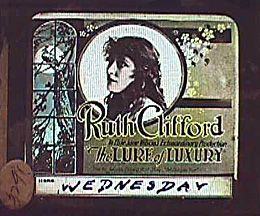
Stepping back into the cinematic reverie of the early 1920s, one finds 'The Lure of Luxury' (1922) to be a film that, despite its vintage, resonates with a striking contemporaneity in its exploration of human desire, societal stratification, and the often-perilous journey of self-discovery. This cinematic offering, penned by the collaborative talents of Nalbro Bartley and Fred Myton, delves into the intricate dance between inherent affection and the alluring, yet often superficial, trappings of elevated social standing. It’s a narrative that, even without the benefit of spoken dialogue, eloquently articulates the profound conflicts that arise when personal truth clashes with external expectations, particularly within the rigid social constructs of its era.
At its core, the film presents Dale Aldis, portrayed with a compelling blend of innocence and burgeoning strength by Ruth Clifford, as a figure navigating a world profoundly altered by the recent loss of her mother. Having spent her formative years within the contemplative confines of a convent, Dale emerges into a society where her family's entrenched snobbery is a pervasive undercurrent. Yet, her convent upbringing, ironically, seems to have inoculated her against these inherited prejudices, leaving her with an unvarnished capacity for genuine connection. This purity of spirit is immediately evident in her renewed bond with John Coventry, played by Edward Hearn. Their childhood sweetheart dynamic, rekindled by circumstance, blossoms into a mature love, unmarred by John's familial connection to the town's drunkard – a social stigma that, for anyone else in Dale's milieu, would be an insurmountable barrier. This initial setup brilliantly establishes the central conflict: the authentic, unpretentious love between Dale and John, pitted against the invisible, yet potent, forces of class distinction and social decorum.
The arrival of Philip Leswing, the family attorney, masterfully embodied by Harry von Meter, injects a potent dose of worldly sophistication into Dale’s relatively sheltered existence. Fresh from his travels abroad, Philip represents everything John is not: urbane, affluent, and effortlessly charming. His enchantment with Dale is immediate and palpable, an attraction not merely to her beauty but to her untouched grace and perhaps, too, the challenge of molding her into the grand dame he envisions. Philip’s persuasive overtures, initially subtle, gradually chip away at Dale’s resolve, painting a vivid picture of a life brimming with wealth, cultural refinement, and metropolitan allure – a stark contrast to the rustic simplicity and perceived limitations of her life with John. This pivotal turn in the narrative, where Dale begins to question the sufficiency of love alone against the backdrop of societal ascent, is handled with a nuanced hand, allowing the audience to empathize with her dilemma rather than merely judge her choices. It's a classic cinematic trope, yet here it feels fresh, propelled by the compelling performances.
One cannot help but draw parallels to other films of the era that grapple with similar themes of social mobility and romantic sacrifice. Consider, for instance, The Price of Silence, where characters often find themselves at the mercy of their economic circumstances, or even the more melodramatic Sangue blu, which also explores the aristocratic world's demands. 'The Lure of Luxury' distinguishes itself by placing the agency, albeit conflicted, squarely within Dale's hands, making her journey of self-realization all the more impactful. The writers, Nalbro Bartley and Fred Myton, demonstrate a keen understanding of the human heart's susceptibility to both genuine affection and the glittering promise of a more 'elevated' existence. They avoid simplistic villainy, presenting Philip not as a malevolent force, but as a man genuinely smitten, perhaps blinded by his own desires and the societal norms that dictate what constitutes a 'desirable' match.
The narrative gains considerable emotional gravity as Dale, swayed by Philip’s vision, makes the agonizing decision to break her engagement with John. This act, a watershed moment, plunges John into a profound despair, manifesting in a destructive spiral of heavy drinking. Hearn's portrayal of John's rapid deterioration is heartbreakingly authentic, a testament to the power of silent acting to convey deep emotional turmoil through gesture and expression alone. This descent serves as a stark, visceral counterpoint to the supposed 'luxury' Dale has embraced. It is in witnessing the devastating consequences of her choice – the ruination of the man she truly loves – that Dale undergoes her most significant transformation. The initial allure of sophistication and wealth, once so potent, begins to dissipate, revealing its hollow core. She realizes with piercing clarity the true depth of her love for John, a love that transcends superficial societal approval and material comfort.
This moment of epiphany is crucial, allowing Ruth Clifford to showcase Dale's growth from a somewhat impressionable young woman to one who understands the profound difference between transient glamour and enduring affection. Her subsequent plea for John’s forgiveness is not merely an act of contrition but a powerful affirmation of her awakened understanding. It’s a scene that, even a century later, retains its emotional punch, speaking to the universal human capacity for error, regret, and ultimately, redemption. The film, in this regard, shares thematic echoes with The Awakening of Helena Ritchie, where a woman's journey through societal judgment leads to a profound personal re-evaluation, or even Sold, which often depicts characters grappling with the true cost of their life choices.
Perhaps one of the most compelling arcs in 'The Lure of Luxury' belongs not to the central lovers, but to Philip Leswing. His character, initially presented as a potential antagonist to true love, evolves into a figure of surprising grace and selflessness. Upon witnessing the profound sincerity of Dale’s renewed affections for John, and the genuine remorse that drives her, Philip performs an act of noble relinquishment. He understands, with a clarity that transcends his own desires, that his pursuit of Dale is futile against such an elemental bond. This act of stepping aside, of prioritizing Dale's genuine happiness over his own romantic aspirations, elevates Philip beyond the conventional 'other man' archetype. It transforms him into a symbol of mature, albeit unrequited, love – a love that is capable of sacrifice for the beloved's well-being. Von Meter's performance here is understated but powerful, conveying Philip's inner conflict and eventual acceptance through subtle shifts in posture and expression. His final gesture is not one of defeat, but of profound understanding and respect.
This theme of noble sacrifice and the eventual triumph of authentic love is a recurring motif in cinema, particularly in the silent era. One might recall the poignant self-effacement seen in films like The Kiss, where unspoken emotions drive the narrative, or the dramatic choices made in The River of Romance. 'The Lure of Luxury' adds its own unique flavor to this tradition by emphasizing the journey of self-realization for all three principal characters, not just the romantic leads. It’s a testament to the script's depth that it allows for such complex emotional growth, even within the confines of a relatively straightforward plot. The strength of the narrative lies in its ability to strip away the superficial, revealing the enduring power of true connection.
Beyond its compelling narrative, 'The Lure of Luxury' offers a fascinating glimpse into the visual storytelling techniques prevalent in the early 20th century. The cinematography, though perhaps simplistic by today's standards, effectively uses framing and lighting to convey mood and character psychology. The contrast between the rural setting, often depicted with a rustic charm, and the implied grandeur of the city, likely suggested through costume and set design, is a visual metaphor for Dale’s internal struggle. The performances by Ruth Clifford, Edward Hearn, and Harry von Meter are exemplary of the silent film era, relying heavily on exaggerated but expressive facial gestures and body language to communicate emotion. Janet Sully, Elizabeth Janes, and George Hupp, while in supporting roles, contribute effectively to the overall fabric of the story, fleshing out the societal backdrop against which the central drama unfolds. Harry von Meter, in particular, manages to convey a nuanced performance, portraying Philip not as a one-dimensional antagonist, but as a man of depth and ultimately, honor.
The film serves as a potent reminder that the 'lure' of anything – be it luxury, status, or even a perceived better life – can often be a deceptive mirage. True contentment, the film suggests, lies not in external validation or material accumulation, but in the unwavering commitment to one's authentic self and the relationships that truly nourish the soul. It’s a message that transcends the specific social anxieties of the 1920s, remaining relevant in an age where external pressures continue to shape, and sometimes distort, personal choices. The collaborative efforts of writers Nalbro Bartley and Fred Myton are evident in the well-paced emotional beats and the satisfying, albeit bittersweet, resolution of the love triangle. Their script avoids cheap sentimentality, opting instead for a more grounded portrayal of human fallibility and redemption.
In a crowded field of silent dramas, 'The Lure of Luxury' manages to carve out its own distinct identity. It doesn't possess the grand scale of an epic like The Plunderer, nor the stark realism of some social commentaries, but it offers a deeply human story, rich in emotional resonance. It’s a film that speaks volumes about the choices we make, the paths we stray from, and the ultimate wisdom gained when we listen to the quiet, insistent voice of our own hearts. It stands as a testament to the enduring power of silent cinema to tell compelling stories that continue to captivate and provoke thought, proving that the most luxurious possession is often not wealth or status, but genuine, unadulterated love.
IMDb 4.5
1916
Community
Log in to comment.