DbcultAccessing Vault...
Cult Review
Senior Film Conservator
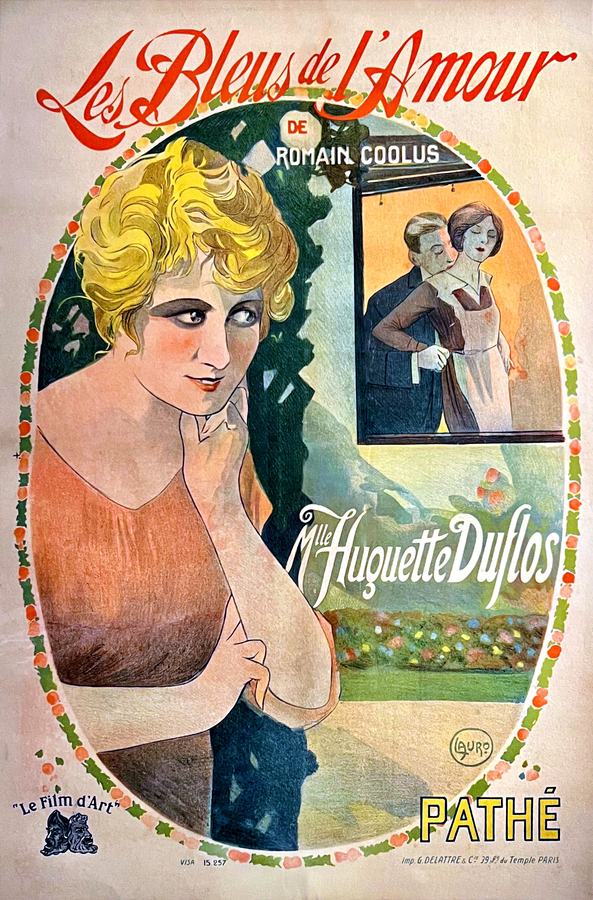
There are certain cinematic works that, irrespective of their vintage, manage to articulate the ineffable currents of the human spirit with an enduring resonance. Henri Desfontaines's 'The Blues' stands as one such creation, a profound exploration of sorrow, artistic expression, and the often-elusive quest for solace. It is a film that, even a century removed from its genesis, speaks volumes about the internal landscapes we inhabit, the shadows we cast, and the glimmers of light we desperately seek. The title itself is a masterstroke, immediately evoking a sense of profound melancholy, a musical and emotional state that permeates every frame, every nuanced gesture, and every lingering glance within this compelling narrative.
From its very outset, the film immerses the viewer in a world where emotion is paramount. We are introduced to Jean-Luc, portrayed with exquisite, understated intensity by Henry Laverne. Laverne's performance is a masterclass in silent suffering, his eyes conveying volumes of unspoken pain, his posture a testament to the heavy burden he carries. Jean-Luc is not merely a character; he is an embodiment of the artist whose creativity is inextricably linked to his personal anguish. His music, while undeniably beautiful, is steeped in a sadness so profound it almost becomes a tangible entity within the film's atmospheric mise-en-scène. This is not the flamboyant angst often seen in later romantic dramas; instead, it is a quiet, persistent ache, a soul-deep weariness that defines his very existence. The screenplay, a collaborative effort by Romain Coolus, Henri Desfontaines, and Paul Garbagni, crafts Jean-Luc's internal world with a delicate precision, avoiding melodrama in favor of a more introspective, psychological realism that was quite progressive for its time.
The arrival of Geneviève, brought to life with captivating vibrancy by Huguette Duflos, serves as the narrative's pivotal counterpoint. Duflos radiates an almost incandescent energy, a stark and vital contrast to Laverne's somber introspection. Her portrayal of Geneviève is not merely that of a love interest; she is a force of nature, a beacon of effervescent spirit in Jean-Luc's otherwise monochromatic world. The chemistry between Duflos and Laverne is palpable, a delicate dance of attraction and apprehension. One observes Geneviève’s earnest attempts to coax Jean-Luc from his self-imposed emotional exile, her every gesture infused with a genuine desire to bring joy back into his life. This dynamic echoes the intricate interpersonal struggles found in other period dramas, perhaps even hinting at the societal constraints and emotional sacrifices explored in films like The Common Law, where personal desires often clash with external pressures and expectations. The elegance of their interactions, often wordless, speaks volumes about the power of human connection to challenge entrenched sorrow.
However, no journey towards happiness is without its obstacles, and 'The Blues' introduces a compelling antagonist in Madame Dubois, chillingly embodied by Blanche Ritter. Ritter’s performance is a masterclass in subtle villainy; her jealousy and unrequited affections for Jean-Luc manifest not in overt histrionics, but in a series of calculated, reputation-damaging maneuvers against Geneviève. This insidious undercurrent of social manipulation adds a layer of tension that elevates the film beyond a simple romance, transforming it into a commentary on societal cruelty and the fragility of reputation. The supporting cast further enriches this tapestry. Louis Baron fils provides a grounding presence as Maurice, Jean-Luc’s pragmatic and loyal friend, offering a much-needed anchor of realism amidst the emotional maelstrom. Denise Grey, as Geneviève’s confidante, offers a sympathetic ear and a voice of reason, her presence underscoring the importance of female solidarity in a world often dominated by male anxieties. The contributions of Guyon Fils, Anthony Gildès, Jacques Vitry, Jeanne Grumbach, and Géo Lastry, though perhaps less central, collectively build a rich, believable Parisian milieu, each character adding another brushstroke to the film's detailed canvas.
Desfontaines's direction is characterized by an acute sensitivity to visual storytelling, a hallmark of early cinema's most accomplished practitioners. He masterfully uses composition, lighting, and the subtle movements of his actors to convey complex emotional states without the crutch of extensive dialogue. There are moments of breathtaking beauty, particularly in the scenes where Jean-Luc is consumed by his music, the visual language mirroring the ebb and flow of his internal anguish and inspiration. The film's pacing, deliberate and contemplative, allows the audience to fully absorb the emotional weight of each scene, a stark contrast to the often frenetic energy of some contemporary productions. One might draw parallels to the atmospheric depth found in a work like Impressioni del Reno, where landscape and mood become integral characters, or the intricate character studies within Tangled Lives, where every character's decision ripples through the narrative with profound consequence. This careful construction ensures that 'The Blues' is not merely watched, but deeply felt.
The thematic depth of 'The Blues' extends far beyond a simple love story. It is a profound meditation on the nature of artistic creation itself – the idea that true art often springs from profound personal experience, from joy as much as from sorrow. Jean-Luc's struggle to reconcile his artistic identity, so deeply rooted in his melancholy, with the possibility of personal happiness forms the core of the film's philosophical inquiry. Can an artist truly shed their 'blues' without sacrificing the very source of their inspiration? This existential dilemma is explored with remarkable nuance, presenting no easy answers but rather a complex interplay of personal choice and artistic integrity. The film challenges the romanticized notion of the suffering artist, instead offering a more humanistic portrayal of a man yearning for both creative fulfillment and emotional peace. This exploration of the artist's psyche is as relevant today as it was then, a timeless question posed with elegant simplicity.
Furthermore, 'The Blues' subtly critiques the societal pressures and expectations of its era. Madame Dubois's machinations highlight the judgmental and often cruel aspects of society, where reputation could be easily sullied by rumor and envy. This social commentary, woven seamlessly into the personal drama, elevates the film from a mere romance to a broader reflection on the human condition within a specific cultural context. The film's depiction of Parisian life, while romanticized, also hints at the underlying currents of class, expectation, and the delicate dance of social interaction. In this regard, it shares a certain observational quality with films that delve into the intricacies of social structures, perhaps even echoing the subtle societal critiques found in a film like Mrs. Balfame, which, despite its mystery elements, also paints a vivid picture of social mores and hidden agendas. The film's ability to blend personal struggle with broader societal observations is a testament to the sophistication of its screenplay and direction.
The aesthetic sensibilities of 'The Blues' are also worthy of extensive commendation. The set designs, though perhaps simple by today's standards, effectively evoke the Parisian atmosphere, from the intimate confines of Jean-Luc's studio to the bustling energy of the city's cafes and boulevards. The costumes, elegant and period-appropriate, further immerse the audience in the film's historical setting, contributing to its overall authenticity. While a silent film, one can almost hear the melancholic strains of Jean-Luc's compositions, the vibrant music of Geneviève’s performances, and the hushed whispers of Parisian society. The film’s visual poetry compensates for the absence of synchronized sound, relying instead on the universal language of expression and movement. This mastery of visual storytelling is what truly cements its place as a significant work of early cinema, demonstrating how powerful narratives could be conveyed long before the advent of sound.
The climax of 'The Blues' is a masterfully orchestrated emotional release. Jean-Luc's final performance, a synthesis of his past sorrows and newfound hopes, is profoundly moving. It is not a sudden, unrealistic transformation, but rather a poignant acceptance of life's complexities – that joy and sorrow can, and often do, coexist. This nuanced resolution avoids the pitfalls of saccharine sentimentality, opting instead for a bittersweet realism that feels earned. The film suggests that while the 'blues' may never entirely disappear, they can be transmuted, transformed into something beautiful and redemptive. It is a testament to the enduring power of art to process, express, and ultimately transcend human suffering. In this regard, its thematic depth might be compared to the profound emotional journey depicted in The Lesson, where characters grapple with pivotal life choices that redefine their understanding of self and purpose.
In retrospect, 'The Blues' emerges not merely as a historical artifact, but as a timeless piece of cinematic art. It is a film that demands quiet contemplation, rewarding the attentive viewer with its rich emotional landscape and its profound insights into the human heart. The performances by Huguette Duflos and Henry Laverne are particularly memorable, anchoring the film with their compelling portrayals. The collaborative genius of Coolus, Desfontaines, and Garbagni in crafting such a resonant narrative is undeniable. It is a film that subtly reminds us that even in the deepest despair, there remains the possibility of connection, of art, and of a fragile, hard-won hope. For those who appreciate cinema that delves into the intricacies of human emotion and the enduring power of artistic expression, 'The Blues' is an essential viewing experience, a testament to the profound capabilities of early French cinema to stir the soul and provoke thoughtful reflection. Its enduring legacy lies in its ability to articulate the universal language of sorrow and the persistent human drive towards beauty and connection, making it a film that truly transcends its era to speak to all generations.
IMDb 6.1
1924
Community
Log in to comment.