DbcultAccessing Vault...
Cult Review
Senior Film Conservator
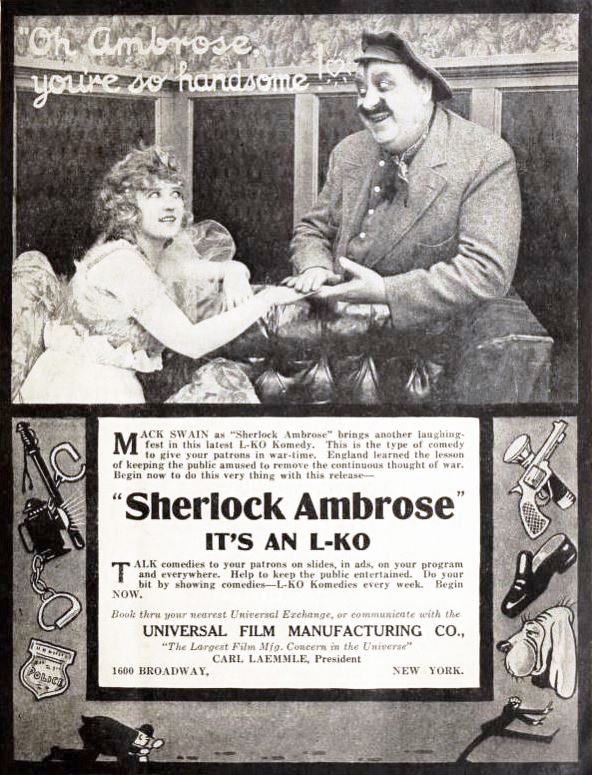
Stepping into the world of Sherlock Ambrose feels akin to unearthing a forgotten treasure, a cinematic artifact from an era when the language of film was still largely gestural, expressive, and imbued with an almost childlike wonder. This silent-era gem, with its deceptively simple premise, manages to weave a narrative tapestry rich in comedic irony, poignant social commentary, and surprisingly nuanced character dynamics. At its heart lies Ambrose, an immigrant figure whose very presence challenges the established order, albeit in the most unassuming and accidental of ways. The film masterfully exploits the trope of mistaken identity, transforming a vulnerable outsider into an unwitting hero, all within the genteel, yet ultimately rigid, confines of a girls' school.
The genius of Sherlock Ambrose doesn't reside in intricate plot twists or groundbreaking special effects – indeed, such expectations would be anachronistic for a film of its vintage. Instead, its brilliance is found in the meticulous crafting of its central conceit and the stellar performances that breathe life into its characters. Jack Pearson, as Ambrose, delivers a performance that is both understated and profoundly resonant. His portrayal eschews the broad, often exaggerated histrionics common to some silent film actors, opting instead for a more subtle, almost bewildered charm. We see in Ambrose a man adrift, navigating a new world with a quiet dignity, only to be swept up in a tide of misinterpretation that ultimately elevates him. This accidental ascent from anonymity to perceived authority is where much of the film's comedic and thematic power lies. It’s a delightful paradox: the less Ambrose tries to be a detective, the more convincing he becomes to those around him, a testament to the power of perception over reality.
The setting, a girls' school presided over by Lily Butler's formidable character, provides a superb backdrop for this comedic ballet of errors. The juxtaposition of Ambrose’s working-class immigrant status with the sheltered, privileged environment of the academy creates a fertile ground for humor. Butler, as the school president, embodies a certain societal rigidity, a character whose faith in appearances and preconceived notions makes her ripe for misunderstanding Ambrose’s true nature. Her conviction that Ambrose is a seasoned sleuth is palpable, a testament to Butler's ability to convey character through subtle gestures and expressions, a hallmark of excellent silent film acting. The dynamic between her unwavering belief and Ambrose's quiet confusion is a comedic goldmine, driving much of the film’s narrative momentum.
The 'mystery' of the lost diamond ring, while seemingly trivial, serves as a masterful MacGuffin. It’s not the ring itself that holds the narrative weight, but what its disappearance and subsequent recovery reveal about the characters and the society they inhabit. The ring symbolizes value, status, and perhaps even the innocence of youth within the school. Its loss creates a palpable tension, a miniature crisis that allows Ambrose’s accidental heroism to shine. The film doesn't rely on complex clues or intricate deductions, but rather on the sheer serendipity of Ambrose stumbling upon the item. This simplicity is its strength, allowing the audience to revel in the irony of the situation rather than getting bogged down in forensic details. It's a reminder that sometimes, life’s solutions emerge not from intellectual rigor, but from pure, unadulterated happenstance.
Beyond Pearson and Butler, the ensemble cast contributes significantly to the film's charm. Mack Swain, Bill Smithens, Hughie Mack, and Ray Godfrey, though perhaps in more supporting roles, each bring a distinctive energy to their characters, adding layers to the bustling environment of the school. Their reactions to Ambrose’s perceived detective work, their subtle anxieties, and their collective relief at the ring's recovery all serve to amplify the central comedic premise. Silent cinema, by its very nature, demands a heightened sense of physical expression, and this cast delivers. Every gesture, every facial contortion, every movement is imbued with meaning, communicating emotions and intentions without the aid of spoken dialogue. It's a testament to their craft that the audience can so readily grasp the intricacies of the plot and the emotional states of the characters through purely visual storytelling.
The film’s pacing, typical of the era, allows for moments of sustained visual comedy, building gags with a leisurely yet effective rhythm. This isn’t a film that rushes its jokes; it savors them, allowing the audience to fully appreciate the absurdity of Ambrose’s predicament and the reactions of those around him. The camerawork, while perhaps not revolutionary, is functional and effective, always serving the narrative and highlighting the key performances. It’s a masterclass in how to tell a compelling story with limited technical resources, relying instead on the power of human expression and situational comedy.
Viewed through a contemporary lens, Sherlock Ambrose offers subtle, yet profound, insights into the social fabric of its time. The immigrant experience, often fraught with challenges and prejudice, is gently explored through Ambrose’s character. He is an outsider, initially viewed with a degree of suspicion or perhaps simply overlooked, only to gain acceptance and reward through an accident of fate. This narrative arc, however comedic, speaks to broader themes of integration, the nature of perception, and the arbitrary ways in which individuals can find their place within a society that initially seems to have no room for them. It subtly critiques the class distinctions prevalent in society, where a polished appearance or a prestigious title can often overshadow genuine character or accidental competence. The film suggests that heroism isn't always found in the traditionally valorized figures, but can emerge from the most unexpected corners, often cloaked in humility and happenstance.
The notion of an 'accidental detective' is a trope that has resonated throughout cinematic history, touching upon our collective fascination with hidden talents and the thrill of discovery. While Sherlock Ambrose approaches this with a lighthearted touch, it shares a thematic lineage with other films that explore identity and perception. For instance, one might draw a comparison to the intricate web of mistaken identity and societal expectations found in films like Who Was the Other Man?, albeit with a dramatic rather than comedic emphasis. The idea of an immigrant finding unexpected success or overcoming adversity through unconventional means can also be seen, in a vastly different tone, in the struggle for survival depicted in Küzdelem a Létért, highlighting the diverse ways cinema has explored the immigrant narrative. Even the theme of sudden fortune or finding a valuable object, though comedic here, echoes the more serious implications in films like One Million Dollars, where the discovery of wealth radically alters lives.
The comedic timing in Sherlock Ambrose is impeccable, relying heavily on visual gags and the expressive power of its actors. The film doesn't need intertitles to explain every nuance; the reactions, the physical comedy, and the carefully choreographed movements speak volumes. Consider the scene where Ambrose, in his clumsy attempt to blend in or perhaps genuinely search, inadvertently creates more chaos than order, yet is somehow perceived as making progress. This kind of visual humor is the bedrock of silent comedy, and Sherlock Ambrose executes it with a charming finesse that feels both classic and surprisingly fresh. The entire narrative functions as an extended, multi-layered gag, sustained by the sheer earnestness of Ambrose and the unwavering credulity of the school's president.
The film's exploration of perception versus reality is particularly compelling. The president sees a detective; the audience sees an immigrant stumbling through a fortunate misunderstanding. This dichotomy is where the film finds its intellectual resonance, inviting viewers to ponder how easily we construct narratives about others based on limited information or our own biases. The reward Ambrose receives at the end is not just for finding a ring, but implicitly for fulfilling a role, for being perceived as competent and heroic. It’s a delightful, almost philosophical, commentary on the nature of reputation and the serendipitous paths to success.
In an era teeming with cinematic experimentation, Sherlock Ambrose stands as a testament to the enduring power of simple, well-executed storytelling. It’s a film that doesn't overstay its welcome, yet leaves a lasting impression through its warmth, its wit, and its gentle humanity. The performances are captivating, the premise ingenious, and the execution remarkably polished for its time. It’s a film that reminds us that sometimes, the greatest heroes are those who don’t even realize they’re playing the part. It's a delightful experience for anyone interested in the foundational elements of cinematic comedy and the subtle art of silent film performance. Its charm is timeless, proving that good humor and a compelling character can transcend the decades, offering as much delight today as it did upon its initial release. The film doesn't just entertain; it gently invites reflection on how we perceive others and how circumstance can sculpt our destinies, making it far more than just a fleeting comedic diversion.
The legacy of Sherlock Ambrose lies not in grand pronouncements or earth-shattering revelations, but in its quiet, persistent ability to charm and provoke thought. It's a film that, much like its protagonist, might initially appear unassuming but reveals layers of delightful complexity upon closer inspection. Its place in the pantheon of early cinema is secured by its clever script, its memorable characters, and its enduring ability to elicit genuine smiles. For aficionados of silent film or newcomers curious about the era, Sherlock Ambrose offers a perfect entry point, showcasing the best of what this unique art form had to offer: visual storytelling at its most eloquent, humor at its most innocent, and character development at its most endearing. It's a film that continues to speak volumes without uttering a single word, a true cinematic treasure.
IMDb 3.3
1919
Community
Log in to comment.