DbcultAccessing Vault...
Cult Review
Senior Film Conservator
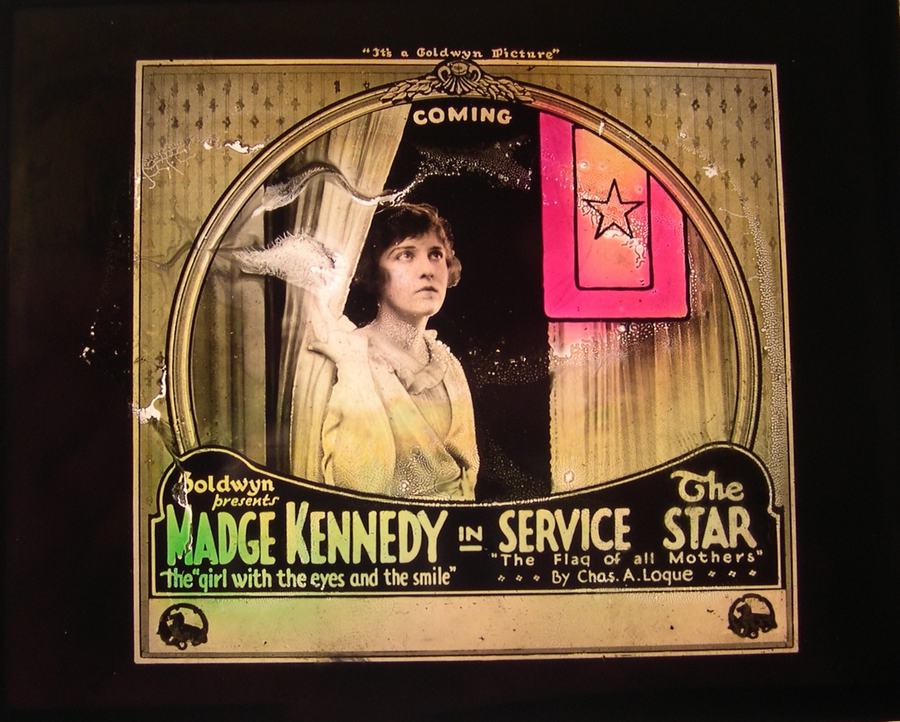
Loneliness has always been a silent co-star in American war pictures, but Charles Logue’s screenplay makes it the marquee attraction.
In 1918, while Doughboys sprayed Verdun with cordite, a quieter battle raged on the home-front: the struggle to matter. The Service Star—now resurrected on 2K scans—wagers its entire emotional treasury on that premise, and the payoff is shattering. Director William Wolbert keeps his frames static, almost Ozu-like, so when Mabel Ballin’s tremulous Mary Spivins steps into a parlor packed with swaggering sweethearts, the empty space around her screams louder than any intertitle.
Ballin’s performance is a masterclass in micro-gesture: the way her thumb worries the cheap lace of her cuff, the half-swallow that precedes every lie. She never begs the lens for pity; instead she manufactures it in the spectator by refusing to meet our gaze.
The film’s visual grammar is thrift-shop sophistication. Resources are scarce—this was Triangle’s penultimate wheeze—so Wolbert re-uses a single drawing room, a single street, a single birch-lined lane, but he torques them through season and sentiment. Winter fog smothers the set when Mary first fabricates her romance; cherry blossoms explode across the same space once the town has embraced her fantasy. The blossoms aren’t poetic indulgence—they’re ticking metronomes, reminding us that petals, like lies, fall.
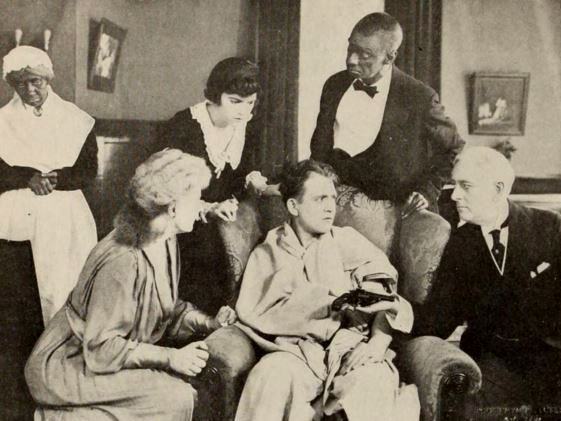
Victory Bateman, as the aviator’s mother Mrs. Alden, provides the film’s bruised moral compass. Watch her in the telegram scene: the paper trembles, her pupils dilate, yet her spine elongates as though grief itself were a corset.
Comparisons to East Lynne are inevitable—both pivot on maternal substitution—but The Service Star refuses the catharsis of a deathbed recognition. Instead it opts for the ache of ongoingness: Mary remains in town, branded but unbanished, her penance to live inside the myth she authored.
The male ensemble is deliberately cardboard. John A. Hemmingway’s Lt. Alden appears only in cigarette-card flashbacks, a smirking revenant. The vacuity is strategic: men here are projection surfaces, not agents.
Listen to the intertitles—Logue’s prose is terse, almost haiku. When Mary confesses, the card reads: "I wanted to be like them—for once." Nine words, but the ellipsis wounds deeper than any courtroom monologue.
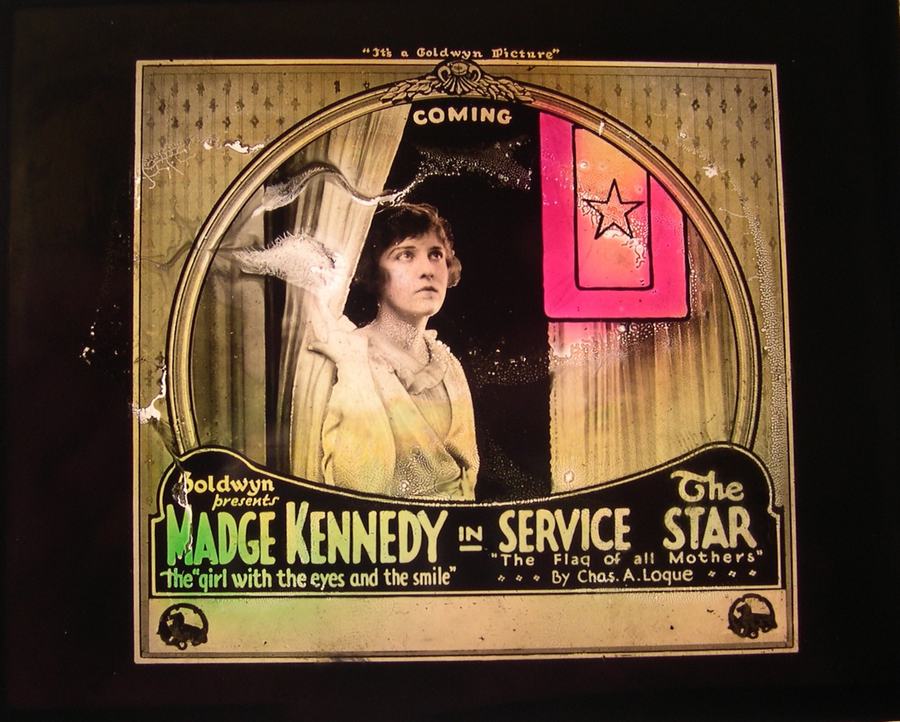
Technically, the 1918 release prints carried a hand-tinted sequence: Mary’s hallucination of marching soldiers bathed in arsenic-green. That reel is lost; the restoration presents it in high-contrast grayscale, which paradoxically heightens the surrealism. Without the distraction of sickly dye, we focus on Ballin’s face superimposed over silhouetted troops—an early, inadvertent essay on PTSD.
Criticism? The middle act sags under repetitive tea-party chatter, and Zula Ellsworth’s comic sidekick veers into minstrel excess. Yet even these blemishes feel period-authentic, scar-tissue of a culture learning to walk upright after gorging on propaganda.
Should you stream it? Absolutely—especially if you’ve sobbed through Nina, the Flower Girl or gnawed your knuckles over Whose Wife?. The Service Star occupies the same intersection of desire and desperation, but it lands punches you don’t see coming because its gloves are crocheted, not leather.
Final toast: raise it to the liars, the wallflowers, the ones who invent love because nobody else will loan it. This film clasps them to its grainy heart and refuses, against every tenet of melodrama, to let go.
Running time: 68 minutes. Source: Library of Congress 35mm nitrate negative. Score by Mont Alto Motion Picture Orchestra on the Kino Blu-ray.
IMDb —
1927
Community
Log in to comment.