DbcultAccessing Vault...
Cult Review
Senior Film Conservator
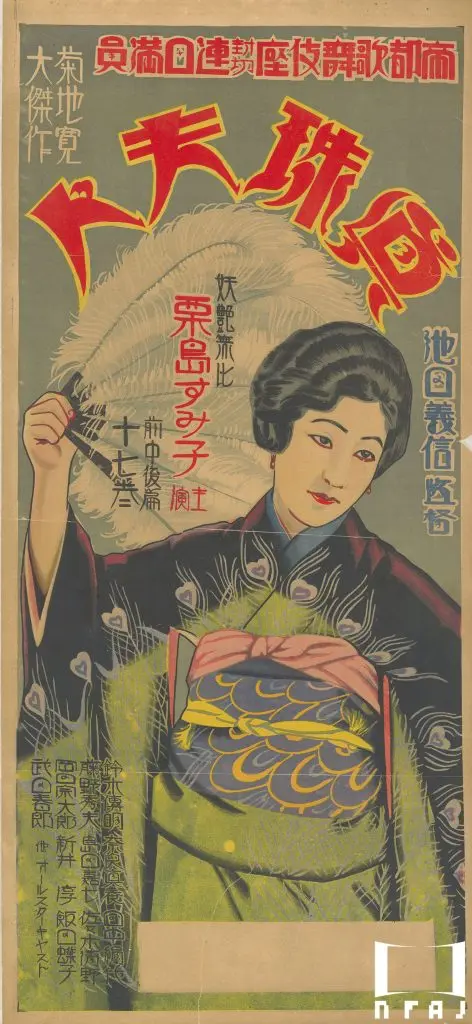
Is "Shinju fujin" worth watching today? For most casual viewers, probably not. This 1924 Japanese silent film, adapted from Kan Kikuchi’s novel, is a slow, often ponderous melodrama that demands a specific kind of patience. It’s a film for the dedicated cinephile, the student of early Japanese cinema, or those with a genuine interest in the evolution of visual storytelling. Anyone expecting modern pacing or easily accessible emotional arcs will find themselves adrift.
The answer hinges entirely on your expectations and appetite for historical cinema. It’s not a film that leaps off the screen with immediate charm or narrative propulsion.
This film works because... it offers a stark, unflinching look at societal constraints on women in 1920s Japan, elevated by Sumiko Kurishima's nuanced performance. The visual grammar, though sometimes rudimentary, finds moments of genuine pathos through careful framing and expression. It’s a valuable document of a particular era and a popular literary adaptation.
This film fails because... its narrative unfolds at a glacial pace, relying heavily on intertitles and a melodramatic sensibility that can feel overwrought to contemporary eyes. The emotional impact is often diluted by repetition and a lack of dynamic visual flair that would have helped transcend the limitations of the silent era.
You should watch it if... you are deeply invested in silent film history, Japanese cultural studies, or the early career of its stars like Kurishima and a young Kinuyo Tanaka. It requires a willingness to engage with its historical context and appreciate its artistic merits on its own terms, rather than expecting a universal, timeless appeal.
Tokusaburō Murakami, adapting Kan Kikuchi's popular novel, crafts a narrative centered on Noriko (Sumiko Kurishima), a woman whose life is dictated by duty and sacrifice. The "pearl" of the title, one suspects, refers less to precious adornment and more to the burdensome purity or hidden sorrow she carries. Kurishima, a prominent actress of the era, embodies this tragic figure with a quiet dignity that anchors the film. Her performance is largely internal, conveyed through subtle shifts in posture, the downcast gaze, and the occasional, restrained burst of emotion that feels earned, if a little too infrequent.
The story, as it unravels, is a familiar one for the period: a woman trapped by circumstance, her true affections thwarted by familial obligations. The film spends considerable time establishing Noriko's initial contentment, only to systematically dismantle it. One particularly effective sequence involves the juxtaposition of her hopeful, youthful interactions with her eventual, somber entry into a loveless marriage. The camera lingers on her face during these transitions, allowing the audience to read the slow erosion of her spirit, though it demands a patient observer to fully register the shift.
Denmei Suzuki, often cast as the romantic lead, here plays a figure who represents either Noriko's lost love or the stern hand of fate, depending on the interpretation of surviving fragments. His presence, even if brief, adds a layer of longing to Kurishima's stoicism. It’s in these unspoken interactions, or the memories they evoke, that "Shinju fujin" occasionally transcends its melodramatic trappings, hinting at a deeper emotional current beneath the surface.
Murakami's direction is competent for its time but rarely innovative. The camera is mostly static, capturing scenes in wide or medium shots, emphasizing the theatricality of the performances. There's a noticeable reliance on intertitles to convey crucial plot points and internal monologues, a common practice for the era, but one that undeniably slows the narrative momentum. This isn't necessarily a fault of the film itself, but a characteristic that requires modern audiences to adjust their viewing rhythm. The film's pacing feels less like a deliberate artistic choice and more like a concession to the technological and narrative conventions of the early 1920s.
The visual language, while lacking the kinetic energy of a G.W. Pabst or the poetic grandeur of a F.W. Murnau, does manage to create a sense of oppressive realism. Shots of Noriko framed against stark, traditional Japanese interiors effectively convey her confinement. The film struggles, however, to break free from its stage-bound origins, often presenting scenes as if viewed from a theatre seat. This makes the emotional beats, when they arrive, feel somewhat distant, requiring more intellectual engagement than visceral reaction. It simply isn't as visually dynamic as some of its international contemporaries, or even later Japanese works like Two Women.
One debatable opinion: while many early Japanese films are lauded for their unique blend of kabuki influence and Western cinematic techniques, "Shinju fujin" leans too heavily on the former without fully embracing the latter's potential for visual storytelling. It feels like a filmed play rather than a fully realized cinematic experience, a criticism that can be leveled at many films from this transitional period.
What truly endures from "Shinju fujin" are the faces. Sumiko Kurishima’s Noriko is a striking figure, her beauty tinged with a palpable sadness that the camera captures well. Even in the relatively brief appearances, a young Kinuyo Tanaka leaves an impression, hinting at the powerhouse she would become. Her presence, however fleeting, injects a youthful energy that momentarily brightens the somber mood. Hideo Fujino and Kashichi Shimada fill out the supporting roles, solidifying the societal pressures that box Noriko in.
The film’s power lies not in grand gestures or complex camera movements, but in its quiet observation of human resilience under duress. A scene depicting Noriko performing a mundane domestic task, her face devoid of expression, yet her eyes conveying a world of unspoken grief, is far more impactful than any dramatic confrontation. These are the moments where the film truly breathes, where the artistry of the silent actor shines through the limitations of the medium. It's a film that asks you to lean in, to interpret, to fill in the emotional blanks.
Another debatable point: while invaluable for historical preservation, the artistic merit of "Shinju fujin" is often overemphasized. Its true value lies more in its cultural significance as a popular adaptation and a record of early Japanese acting styles than as a work of groundbreaking cinematic art. It’s a good film for its time, but not necessarily a great one for all time.
"Shinju fujin" is a film that exists more as a point of academic interest than a truly captivating viewing experience for a broad audience. Its historical context and the quiet power of Sumiko Kurishima's performance offer enough to merit a watch for those with a specific appreciation for early cinema. However, its deliberate pace and conventional direction mean it’s far from an essential watch for casual viewers. Approach it with patience and an understanding of its era, and you might find a quiet resonance in its portrayal of enduring human sorrow. Otherwise, you’ll likely find it a chore.

IMDb 7.8
1930
Community
Log in to comment.