DbcultAccessing Vault...
7/10
Senior Film Conservator
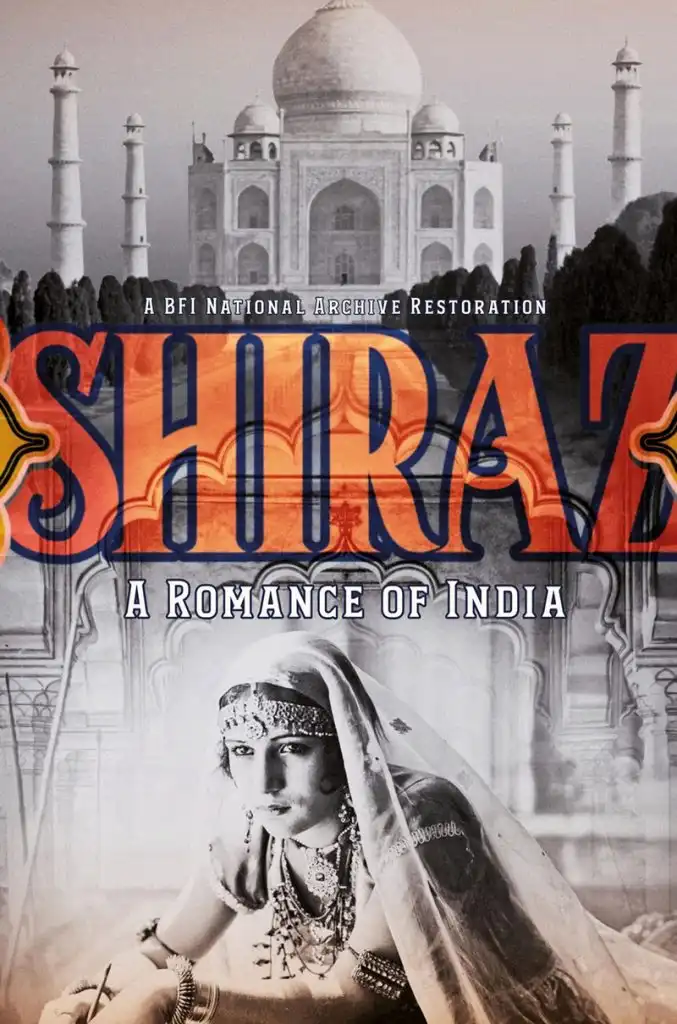
A definitive 7/10 rating for a film that redefined the boundaries of cult cinema. Shiraz remains a cornerstone of transgressive art.
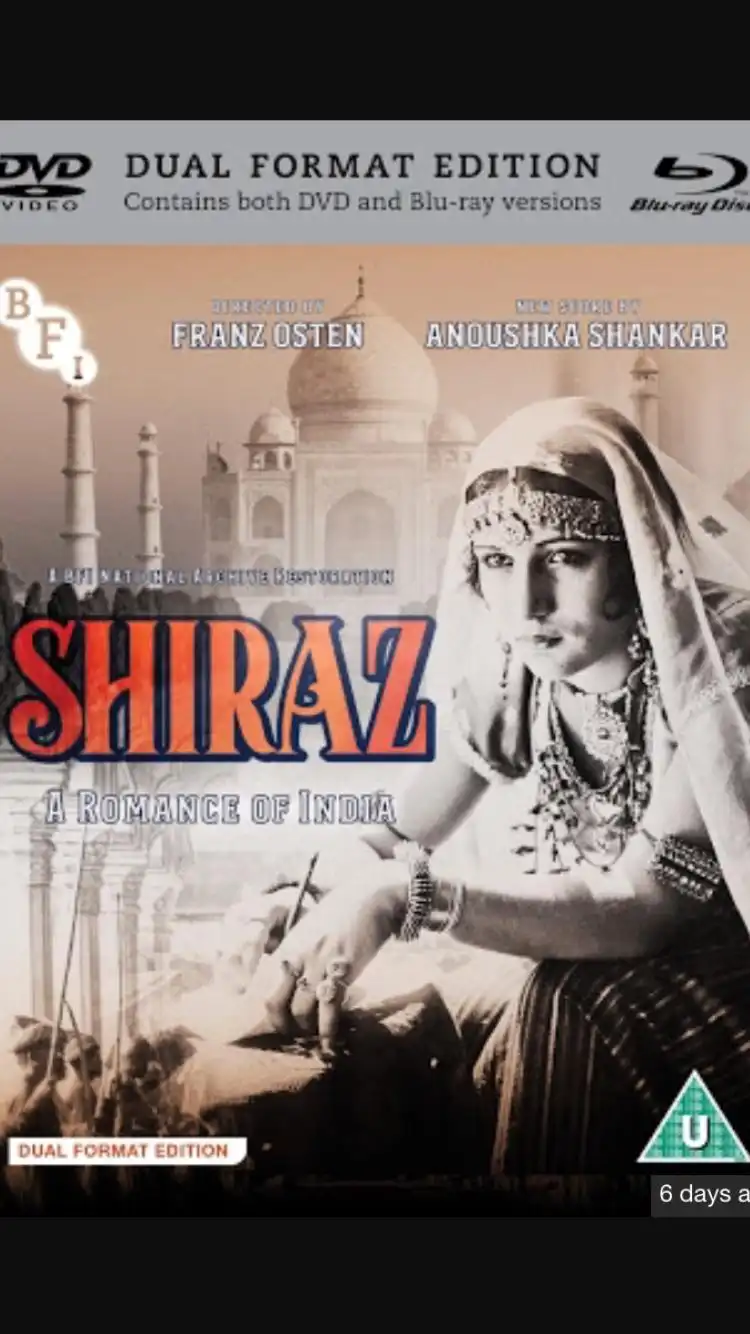
For cinephiles with an appreciation for silent epics and historical spectacle, F.P. Pal's 1928 film Shiraz is absolutely worth seeking out. This Anglo-Indian co-production, recently restored, offers a fascinating window into early cross-cultural filmmaking and the grand, romantic storytelling of its era. It's a visually ambitious production that attempts to bring the legendary origins of the Taj Mahal to life with genuine passion. Viewers accustomed to modern pacing and subtle character work might find its melodrama broad and its narrative beats occasionally ponderous, but those willing to immerse themselves in its unique rhythm will discover a surprisingly bold and often breathtaking piece of cinema. It's particularly for those interested in the visual language of silent film and the representation of Indian history through a 1920s lens, but probably not for anyone looking for a quick, easily digestible historical romance.
The acting in Shiraz, as with many silent films, relies heavily on physical expression and exaggerated facial cues. Yet, within this framework, certain performances manage to carve out genuine moments. Enakshi Rama Rao as Selima, the princess-foundling who becomes Empress Mumtaz Mahal, carries much of the film’s emotional weight. Her journey from a humble potter's daughter to a regal empress is conveyed through a subtle shift in posture and gaze, even as her initial expressions of love for Prince Khurram (Charu Roy) are quite effusive. There’s a particular scene where she first encounters Khurram in the slave market, her eyes wide with a mix of fear and an undeniable spark of attraction; it’s a standard trope, but Rama Rao sells the immediate, almost fated connection.
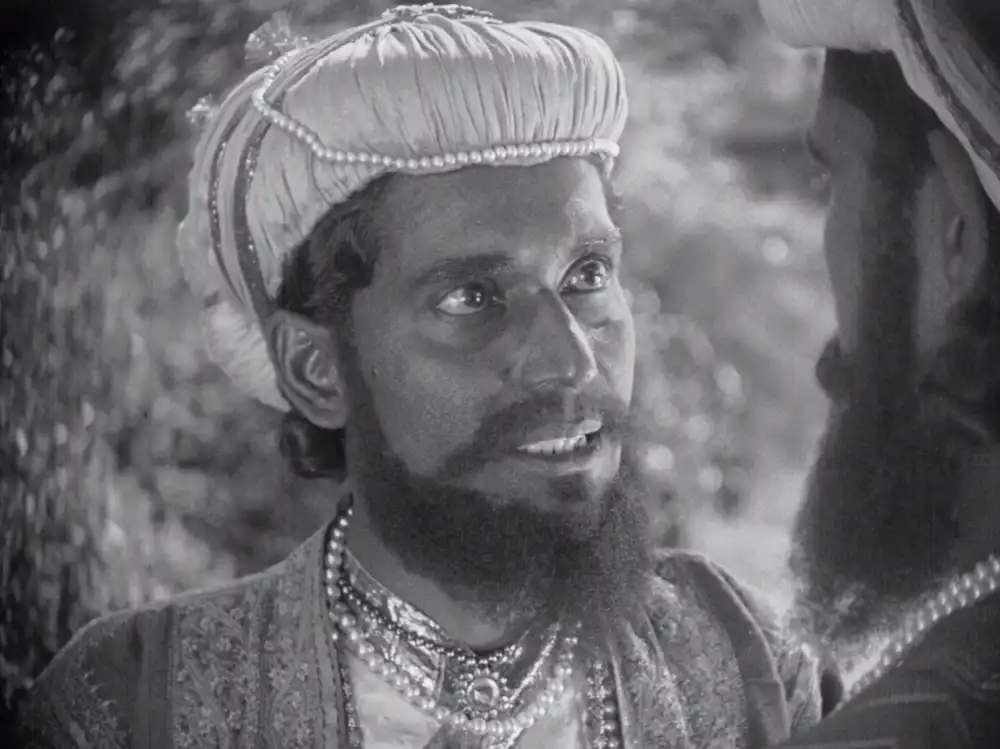
Charu Roy, as Prince Khurram/Shah Jehan, embodies the regal bearing required of his character. He projects authority and a deep, almost boyish infatuation. His scenes with Selima often feel genuinely tender, culminating in some remarkably passionate kissing scenes that stand out for their frankness, especially considering the film’s period and cultural context. These aren't chaste pecks; they are full, lingering embraces that communicate a profound physical attraction, pushing boundaries for 1928 cinema.
Himansu Rai as Shiraz, Selima's adoptive brother and later the architect of the Taj Mahal, delivers a performance that grows in emotional resonance. His initial, unrequited love for Selima is portrayed with a quiet dignity, and his later transformation into a blind, grief-stricken artist is surprisingly affecting. The scene where he is condemned to be trampled by an elephant, his face a mask of stoic despair, is particularly potent, relying entirely on his expressive eyes and the brutal visual of the approaching beast.
The villainous Dalia, played by Seeta Devi Jr., is perhaps the most overtly theatrical, a necessary evil in silent melodrama. Her sneering glances and manipulative gestures are clear, leaving no ambiguity about her intentions. While she serves her purpose in driving conflict, her character doesn’t offer much in the way of nuance, existing purely as an antagonist to Selima’s purity.
Shiraz is a film of grand ambitions, and its pacing often reflects this. It takes its time establishing the world and its characters, particularly in the opening sequences depicting Selima's childhood and the simple life in the potter's village. While these scenes are visually rich, they can feel a touch leisurely, especially for modern viewers expecting a quicker narrative hook. The film truly picks up speed once Selima is abducted and enters the bustling, dangerous world of the slave market, then the opulent but treacherous royal court.
The tonal shifts are quite pronounced. We move from bucolic innocence to harrowing abduction, then to courtly romance and political intrigue, before settling into a tragic, monumental conclusion. There’s a specific awkwardness in the scene where Selima, having just been rescued from a near-death experience, is almost immediately thrust into the romantic attentions of Prince Khurram. The transition feels abrupt, perhaps skipping over some emotional processing that a modern film would dwell on. Similarly, the rapid discovery of Selima’s royal pendant, conveniently just before Shiraz’s execution, feels like a sudden narrative contrivance, albeit one that propels the plot forward with dramatic urgency.
The film excels in its spectacle, particularly the crowd scenes and the lavish court settings. These moments feel genuinely epic, with hundreds of extras, elaborate costumes, and intricate set designs. However, these large-scale sequences sometimes overshadow the more intimate emotional beats, making the film feel less like a character study and more like a historical tableau. The final act, focusing on the construction of the Taj Mahal, shifts into a more contemplative, mournful tone, relying heavily on the visual power of the growing monument and the quiet grief of Shah Jehan and Shiraz.
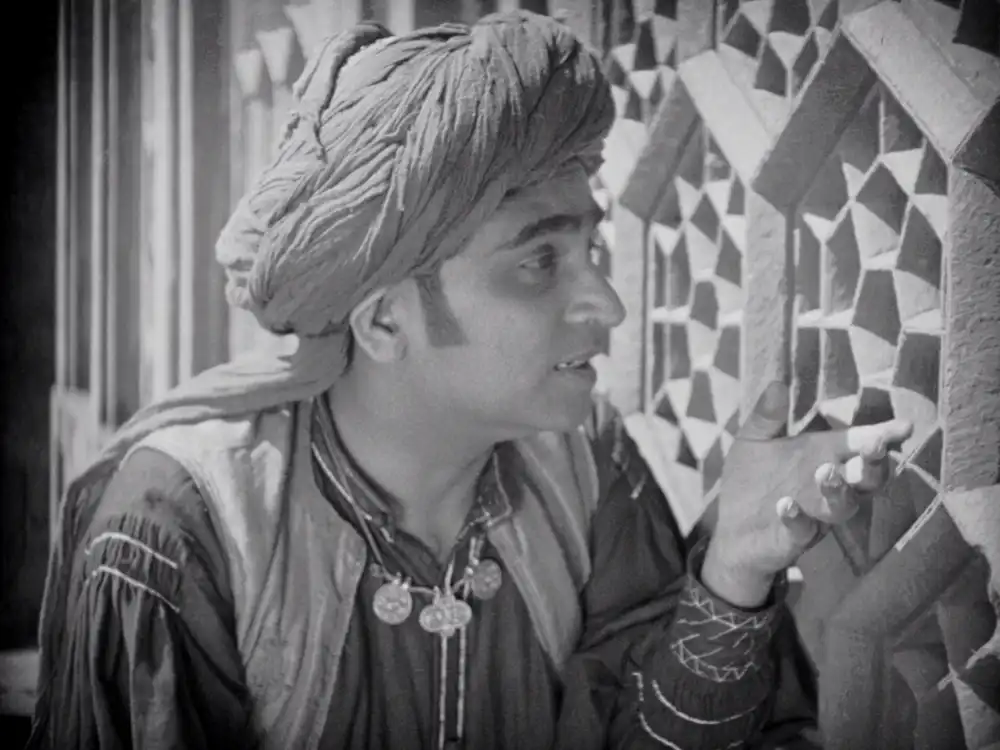
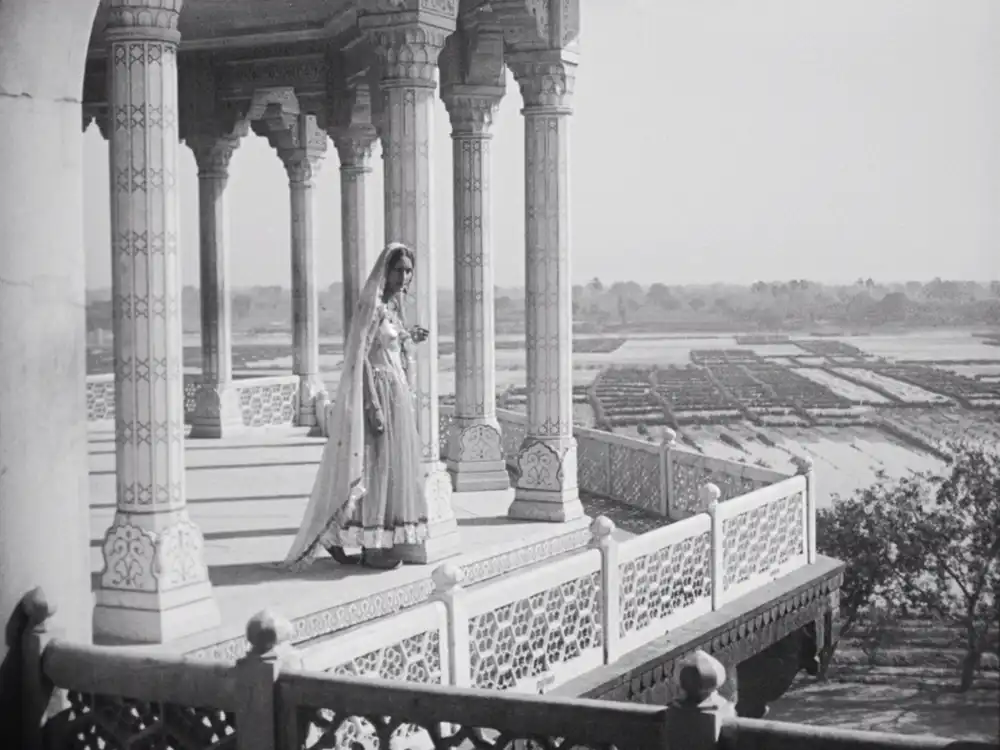
Visually, Shiraz is a triumph for its era, especially considering it was a co-production between British and Indian filmmakers. The cinematography, by Emil Schünemann and Henry Harris, frequently captures the grandeur of the Mughal setting. There are sweeping long shots of palace exteriors and bustling market squares that genuinely evoke a sense of scale. The lighting, particularly in the interior scenes, often uses dramatic chiaroscuro to highlight the opulence of the court or the tension of a clandestine meeting. The costumes are richly detailed, from the humble attire of the villagers to the intricate silks and jewels of the royalty, adding significantly to the film’s immersive quality.
One specific detail that stands out is the use of real elephants in the execution scene. This isn't CGI or clever editing; it's a massive animal, captured with alarming proximity, creating a palpable sense of danger and brute force. The camera holds on the elephant's slow, deliberate advance, emphasizing the terror of Shiraz's predicament. Another striking visual is the gradual reveal of the Taj Mahal’s construction. While not a constant presence, the intermittent shots of the monument taking shape, growing from foundations to its iconic dome, effectively convey the passage of time and the enormity of the emperor’s grief-fueled ambition. The final shot, a majestic view of the completed Taj, is genuinely breathtaking, a fitting crescendo to the visual journey.
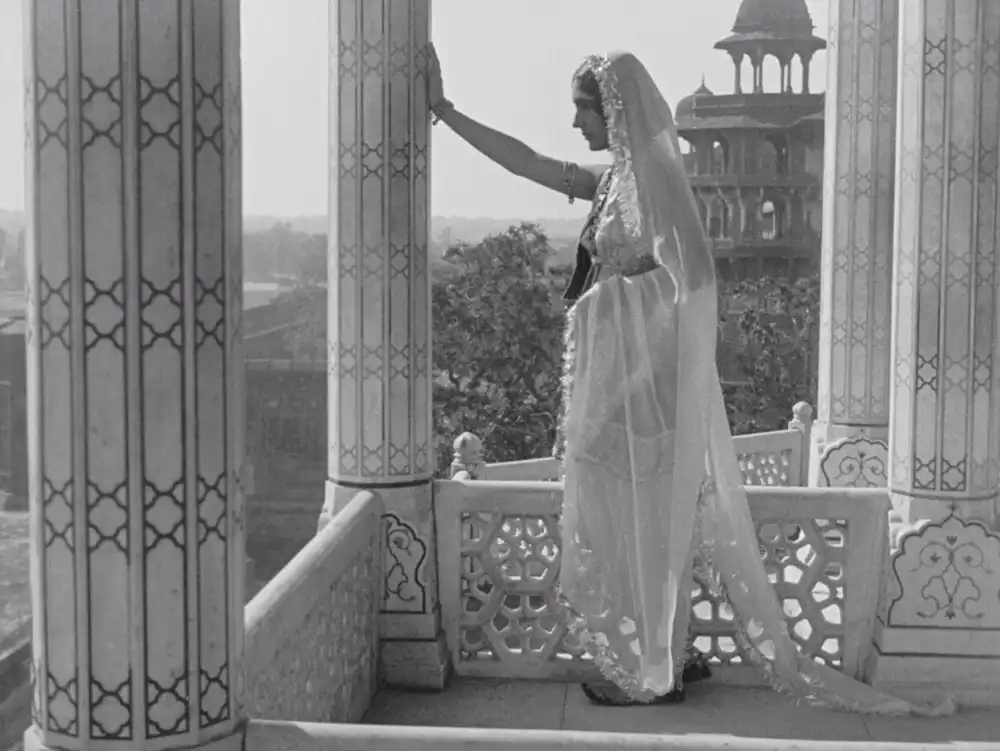
The film also makes effective use of its locations, blending studio sets with what appear to be authentic Indian landscapes and architecture, lending a sense of realism to its fantastical romance. The marketplace scenes, in particular, feel vibrant and chaotic, filled with background movement and an array of characters that make the world feel lived-in.
Shiraz is not a perfect film, nor does it pretend to be. It is a product of its time, embracing the sweeping melodrama and grandiosity inherent in silent cinema. Its narrative can be clunky, its character motivations occasionally simplistic, and its pacing uneven. However, to dismiss it on these grounds would be to miss the forest for the trees. This is a film brimming with visual ambition, a genuine attempt to capture a timeless love story on an epic scale, and it largely succeeds in creating a memorable spectacle.
For those interested in the evolution of cinema, particularly the intersection of Eastern and Western filmmaking in the silent era, Shiraz is an invaluable document. It’s a film that demands patience but rewards it with moments of surprising beauty, bold romance, and undeniable historical significance. It’s a testament to the power of a story, told mostly through images, that still resonates almost a century later. Watch it not just as a historical artifact, but as a vibrant, if sometimes quaint, piece of storytelling that laid groundwork for future epics.
IMDb 5
1929
Community
Log in to comment.