DbcultAccessing Vault...
Cult Review
Senior Film Conservator
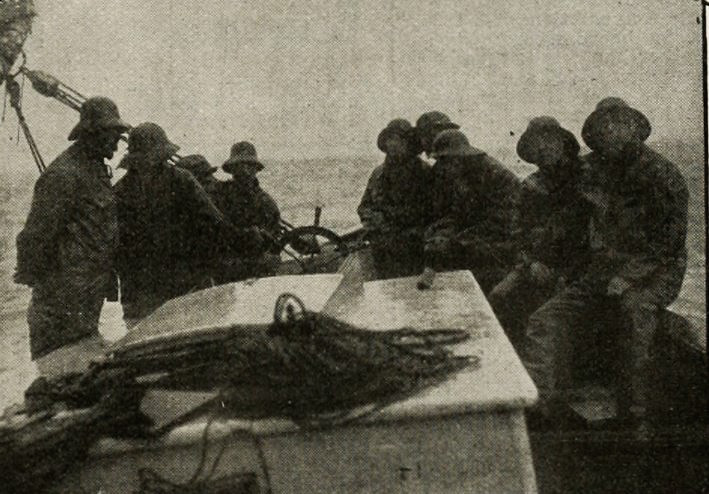
Shore Acres arrives like driftglass half-buried in dune sand: frosted by sea-spray, clouded with century-old emulsion scars, yet catching stray light in ways that still prick the retina. Shot in 1914 against the actual granite ribs of the Maine coastline, the film is less a rustic curiosity than a weather report from the American psyche—an era when lighthouses were Google Maps, mortgages were handshakes, and a man’s word could still detonate a family.
Nathaniel Berry—played by Edward Connelly with the stooped gravity of a man who has read too many burial psalms—embodies the archetype of the elder who leaves the farm so the world can bleed on his cuff. His sacrifice is not monetary but chivalric: he abdicates both acreage and amour once he deciphers the tilt of the shared sweetheart’s gaze toward Martin. Violet Horner’s unnamed belle flickers only briefly onscreen, yet her absence becomes a negative space around which the brothers orbit like binary stars locked in mutual resentment.
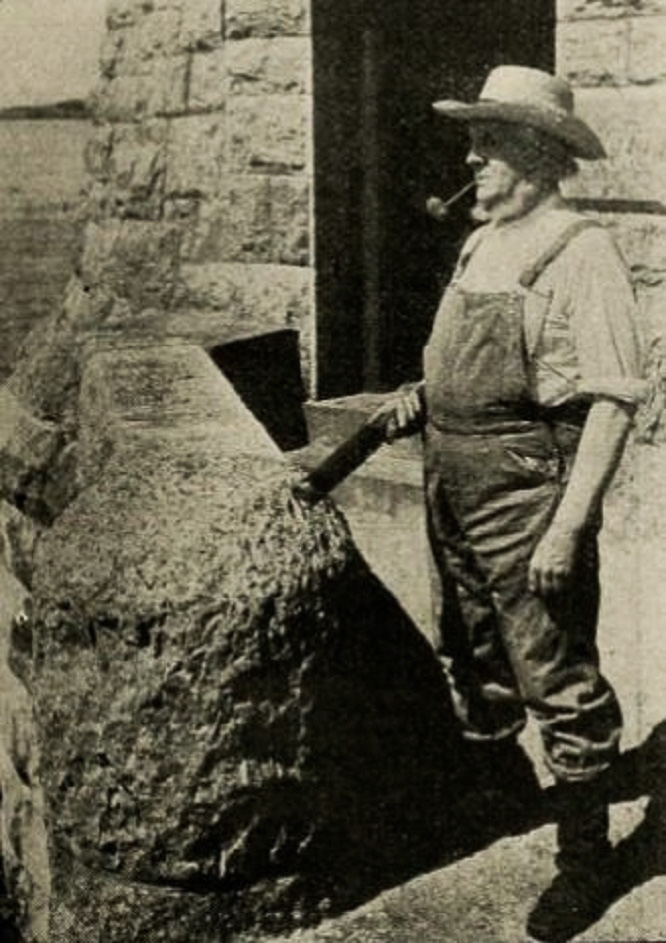
Martin, limned by Conway Tearle with a chin that vacillates between tenderness and truculence, is the younger who mistakes appetite for ambition. Blake’s pitch is Faust on an abacus: carve the pasture into plots, import city money, trade spruce for shingles. The camera lingers on Martin’s hand hovering above the mortgage parchment as though it were a hot stove, and in that hesitation you can almost hear the celluloid itself breathing.
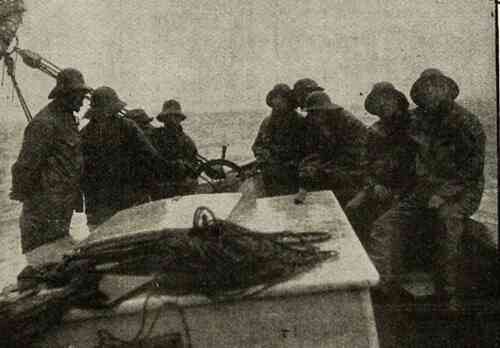
Berry Light, a working beacon perched on a fang of basalt, is not backdrop but dramatis personae. Cinematographer Philip Traub tilts his hand-cranked Bell & Howell into the lantern-room so that the Fresnel lens becomes a crystal ball refracting destiny. When Nathaniel climbs the spiral stairs, each footfall lands like a verdict: the higher he ascends, the more sin is scraped off the soul. The storm sequence—intercutting model boats sloshing in a washtub with full-scale deck shots—achieves a primitive vertigo that predates The Golem by almost a decade.
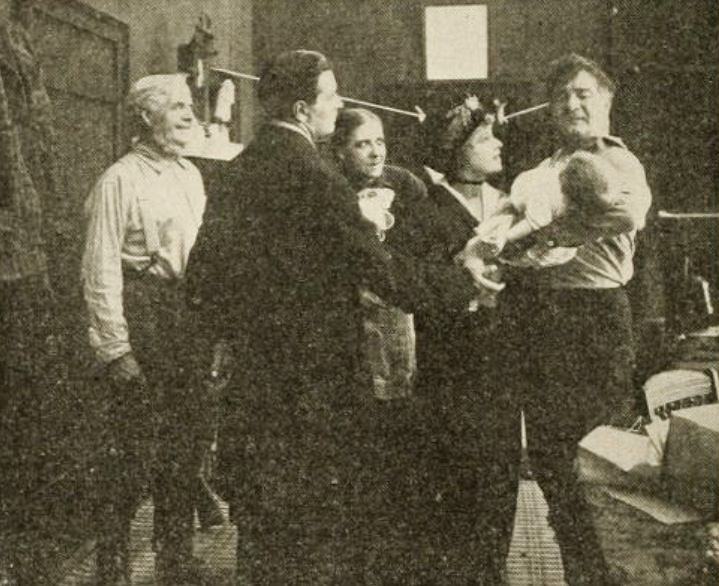
Martin’s frantic dash across headland gorse, rifle winking in the gale, is cross-cut with Nell’s white-knuckled grip on Sam’s greatcoat aboard Captain Wilson’s skiff. The montage obeys Griffith’s law of moral simultaneity: when the lamp ignites, salvation and damnation occupy the same frame, the same heartbeat.
Madge Evans, barely sixteen during production, gives Nell a flinty luminosity that sidesteps the consumptive fragility common to ingénues of the period. Her plea to Sam—“Take me where the land forgets the sea”—is delivered in a medium close-up against a painted sunset so brazenly orange it feels like a challenge to Technicolor itself. The line also foreshadows the westward tug that would, within a decade, lure thousands of Mainers to Oregon apple orchards and Detroit assembly lines. Nell’s agency is circumscribed yet resonant: she cannot stop the mortgage, but she can exile herself from its consequences.
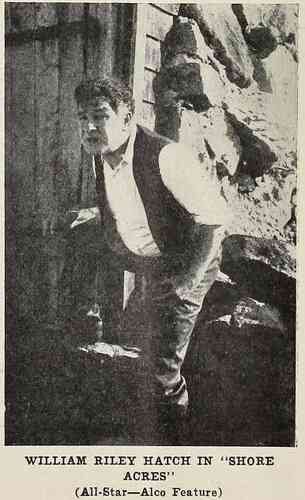
Riley Hatch essays Blake with the oleaginous grin of a man who keeps receipts for souls. His costume evolves from checkered waistcoat to fur-collared overcoat as the plot metastasizes, each sartorial upgrade a visual ledger of extracted value. Blake’s courtship of Nell is filmed like a hunting sequence: he corners her against a barn door, the camera peering through wagon-wheel spokes that cage her in V-shaped diagonals. The moment is proto-noir, a template for the predatory banker in The Third Degree four years later.
The eighteen-month ellipsis between storm and Christmas is elided by a single fade-to-black, a narrative blackout that feels almost modernist. When the iris reopens on snow-bent spruces and a sleigh-bell score (added by Kino’s 2022 restoration), the homestead has shrunk—Martin’s speculation collapsed, Blake long gone, the lighthouse now state property. The return of Nell and Sam with an infant in tow is staged with the hushed reverence of a nativity: the child, swaddled in a quilt stitched by the same hands that once held a mortgage quill, becomes the deed reconveyed.
Connelly’s performance in the stocking-stuffing scene is a masterclass in calibrated regret. His fingers hesitate over a wooden toy sailboat, the same shape as the skiff that nearly sank; a flicker of a smile, half apology, half benediction, and he hangs it on the mantel. The moment is wordless yet voluble, a rebuttal to the intertitle that precedes it: “The heart has pockets deeper than any debt.”
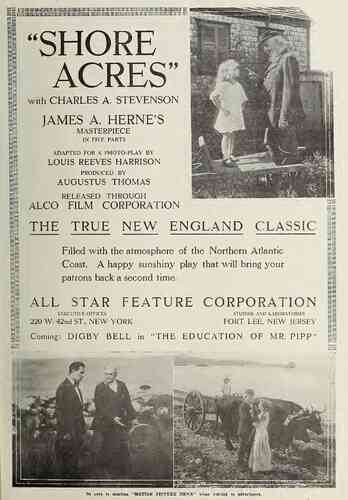
The scenario credits three scribes—Louis Reeves Harrison, James A. Herne, and Augustus Thomas—each a veteran of Broadway melodrama. Their script trims the four-act stage play into a brisk 65-minute reel, sacrificing subplots (a temperance crusader, a Portuguese fisherman) but retaining the Greek scaffolding of sin, exile, and restoration. Dialogue titles are mercifully sparse, allowing the coastal tableaux to exhale. Compare this to the logorrhea of A Victim of the Mormons released the same year, where intertitles squat on the image like caption-barnacles.
Traub’s cinematography favors diurnal realism: fishing dories smeared with guano, granite wet like obsidian, cedar shakes curling like old parchment. The lighthouse interior was shot on location at Two Lights, Cape Elizabeth, with magnesium flares substituting for the beacon—an occupational hazard that reportedly singed the cinematographer’s eyebrows and infused the negative with solarized halos. These accidents grant the beam an ectoplasmic shiver, as though the light itself were a ghost of future absolution.
The acting style straddles Victorian declamation and emergent cinematic naturalism. Connelly’s eyes telegraph interior monologue rather than semaphore it; Tearle’s Martin collapses from bravado to blubber without the histrionic knee-drop common in The Fatal Wedding. Madge Evans, in an interview for Picture-Play Magazine (June 1915), recalled director Edison’s instruction: “Play the scene as if the camera were a confidant, not an audience.” The advice anticipates Stanislavski’s public reception in America by a full decade.
For decades the sole surviving element was a 9.5 mm Pathéscope abridgment sold to French schools. In 2022 the Eye Filmmuseum combined a 35 mm nitrate print discovered in a Bergen attic with the Pathé footage, yielding a 4K restoration that debuted at Pordenone. The tints—amber for lamplight, viridian for storm—follow the original continuity notes preserved in the Library of Congress. Streaming rights are currently held by Kino Cult, with a Blu-ray slated for December that will include the 1918 reissue short The Lighthouse Keeper’s Christmas.
Where The Avenging Conscience spirals into Poe-inspired hallucination, Shore Acres keeps its boots salted and its psychology earthbound. The fraternal tension anticipates the Cain-Abel substrata of In the Prime of Life, while the lighthouse-as-moral-pivot predates the expressionist angles of The Port of Doom by a decade. Yet its most uncanny echo may be with Scotland (1920), where fog-bound crags also serve as confessional booths.
Shore Acres endures because it understands that every lighthouse is built as much from guilt as from granite. The film’s closing tableau—three generations circling a candle-power Christmas tree—projects a curvature of mercy wide enough to embrace both speculator and speculated, exile and return. In the flicker of that restored print you sense the medium itself trying to atone for the acres of celluloid it has already lost to nitrate rot and studio bonfires. And like a keeper who trims the wick so the light may carry twenty miles instead of ten, the film whispers that the past is not a reef to wreck upon, but a beam to steer by.
IMDb —
1927
Community
Log in to comment.