DbcultAccessing Vault...
Cult Review
Senior Film Conservator
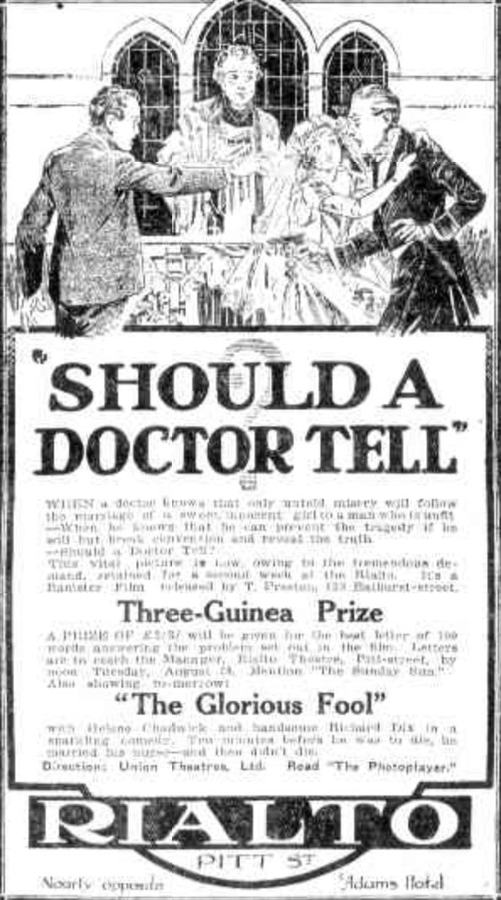
In the annals of cinematic history, certain films stand as stark, unwavering mirrors reflecting the most profound moral quandaries of the human condition. 'Should a Doctor Tell?', a poignant drama from the pens of Walter Summers, G.B. Samuelson, and P.J. Ramster, is precisely such a picture. It masterfully dissects an ethical dilemma so excruciating, so deeply personal, that it transcends its era to remain strikingly relevant even today. The film plunges us into the life of a respected physician, Dr. Robert Thorne, whose professional integrity and familial devotion are violently pitted against each other by a single, devastating revelation. The narrative doesn't merely present a problem; it vivisects the soul of a man caught between an unyielding oath and the visceral instinct to protect his own blood.
From its opening scenes, the film establishes a world governed by societal expectations and personal honor. Dr. Thorne, portrayed with understated gravity by Bert Daley, is not merely a medical practitioner; he is a pillar of his community, a man whose word is his bond, whose judgment is trusted implicitly. This foundation of trust is precisely what makes his impending crisis so devastating. When a young woman, Thelma Newling, arrives at his surgery, seeking his professional counsel for a delicate matter – a pregnancy out of wedlock – the stage is set for a drama of epic proportions. Her vulnerability, conveyed with subtle pathos by Newling, immediately garners our sympathy, even as we sense the brewing storm.
The true gut-punch arrives when the doctor discovers the identity of the young woman's fiancé: his own son. This twist is not a cheap narrative trick; it is the very engine of the film's profound emotional resonance. Imagine the seismic shock, the immediate, overwhelming conflict that erupts within Thorne. His Hippocratic oath demands absolute confidentiality, a sacred trust between physician and patient. Yet, his paternal heart screams for the protection of his son, for the preservation of his family's reputation, and for the prevention of what he perceives as a catastrophic mistake. This isn't merely a dilemma; it's a spiritual crucible. The writers, Summers, Samuelson, and Ramster, deserve immense credit for crafting a scenario so potent, so inherently human, that it forces the audience to grapple with their own moral compasses. What would you do?
The film excels in its exploration of the collateral damage of secrets. Much like the intricate web of deception in Stage Fright, where hidden truths dictate the fate of its characters, 'Should a Doctor Tell?' demonstrates how a single concealed fact can unravel lives. Dr. Thorne’s internal struggle is palpable; Bert Daley imbues him with a quiet desperation, a man visibly aging under the weight of his impossible choice. We see the sleepless nights, the strained conversations, the agonizing glances that convey more than any dialogue ever could. His performance is a masterclass in restrained anguish.
The supporting cast, though perhaps less prominent, provides crucial texture to this emotional landscape. Moyna MacGill, as a figure of societal expectation or perhaps a confidante, adds another layer to the domestic tension. Lillian Hall-Davis and Anne Parsons contribute to the tapestry of reactions and subtle judgments that permeate the community, highlighting the era's rigid social codes. Henry Vibart and Hugh Dempster, the latter presumably playing the unwitting son, navigate their roles with a sensitivity that underscores the gravity of the situation. Dempster's portrayal of a man on the precipice of a life-altering commitment, unaware of the storm brewing around him, creates a powerful sense of dramatic irony.
The film, while deeply rooted in its time, presents a dilemma that remains perennial. The conflict between personal ethics and professional duty is a theme explored in various forms, from the stark choices presented in moralistic dramas like Are They Born or Made? to the more sensationalized struggles of films such as The Devil's Daughter. What sets 'Should a Doctor Tell?' apart is its unwavering focus on the interiority of the moral actor. It's less about the scandal itself and more about the crushing weight of the decision-making process. The camera often lingers on faces, allowing the audience to read the unspoken torment, the silent pleas for guidance that can never truly be answered.
The directorial hand, likely Walter Summers, given his prolific output and genre versatility, exhibits a commendable restraint. There are no histrionics, no exaggerated melodrama, which might have been tempting given the explosive nature of the plot. Instead, the film builds its tension through quiet accumulation, through meaningful glances and loaded silences. The screenplay, credited to Summers, Samuelson, and Ramster, is taut and efficient, stripping away unnecessary exposition to focus squarely on the emotional core. Each line of dialogue, each narrative beat, serves to heighten the central conflict, pushing Dr. Thorne further into his agonizing corner. This is a testament to strong writing, where every element contributes to the overarching dramatic purpose.
The film also subtly critiques the societal pressures of its era. The very notion of a 'scandalous' pregnancy, the societal judgment that would inevitably fall upon the young woman and, by extension, the doctor's son, is a powerful undercurrent. It's a reminder of a time when reputation was paramount, and a single misstep could irrevocably alter one's standing. This adds another layer to Dr. Thorne's dilemma; he's not just protecting his son from personal heartbreak, but from public shame and ostracism. This societal backdrop provides a compelling contrast to the more personal struggles seen in films like A Kentucky Cinderella or The Bride of Fear, where social status and reputation also play pivotal roles in shaping destinies.
Beyond the central performances, the smaller roles contribute significantly to the film's texture. Teddy Austin, Jerrold Robertshaw, Verna Haines, and Fred Oppey, though perhaps in fleeting appearances, help populate the world of Dr. Thorne, offering glimpses into the community that both supports and judges him. Their collective presence reinforces the idea that Thorne's dilemma is not just private but echoes within the societal framework he inhabits. The film captures the essence of a bygone era, where small-town life meant that secrets were hard to keep, and gossip could be as destructive as any direct accusation. This makes the doctor's burden even heavier; the potential for his revelation to ripple outwards, affecting more than just his immediate family, is ever-present.
Thematically, 'Should a Doctor Tell?' delves into the very nature of truth and its consequences. Is ignorance truly bliss, or is a painful truth always preferable? The film doesn't offer easy answers, nor should it. Instead, it invites the audience to ponder the nuanced complexities of ethical decision-making. It challenges the simplistic notion that there is always a 'right' path, illustrating instead the agony of choosing between two deeply problematic options. This commitment to moral ambiguity is what elevates the film beyond mere melodrama into a profound character study.
In an age where information is constantly shared and confidentiality often seems a quaint notion, 'Should a Doctor Tell?' serves as a powerful reminder of the sanctity of trust, both professional and personal. It forces us to consider the limits of loyalty and the boundaries of ethical responsibility. The film's power lies not just in its dramatic premise but in its universal appeal. Who among us hasn't faced a situation where honesty conflicts with kindness, or where duty clashes with personal affection? This is the enduring legacy of the film: its ability to tap into fundamental human struggles that transcend generations and technological advancements.
While some might find the pacing of older films deliberate, here it serves a purpose, allowing the emotional weight of each scene to fully settle. The performances, particularly Daley's, are nuanced and impactful, drawing the viewer into his personal hell. The film doesn't preach; it presents a situation and allows the audience to bear witness to the profound human cost of such a dilemma. It's a testament to the power of classic storytelling, proving that compelling drama doesn't require elaborate special effects or convoluted plots, but rather a deep understanding of the human heart and its myriad complexities. In its quiet intensity, 'Should a Doctor Tell?' poses a question that continues to echo in the corridors of ethics and morality, making it a film well worth revisiting and reflecting upon.
IMDb —
1925
Community
Log in to comment.