DbcultAccessing Vault...
4.5/10
Senior Film Conservator
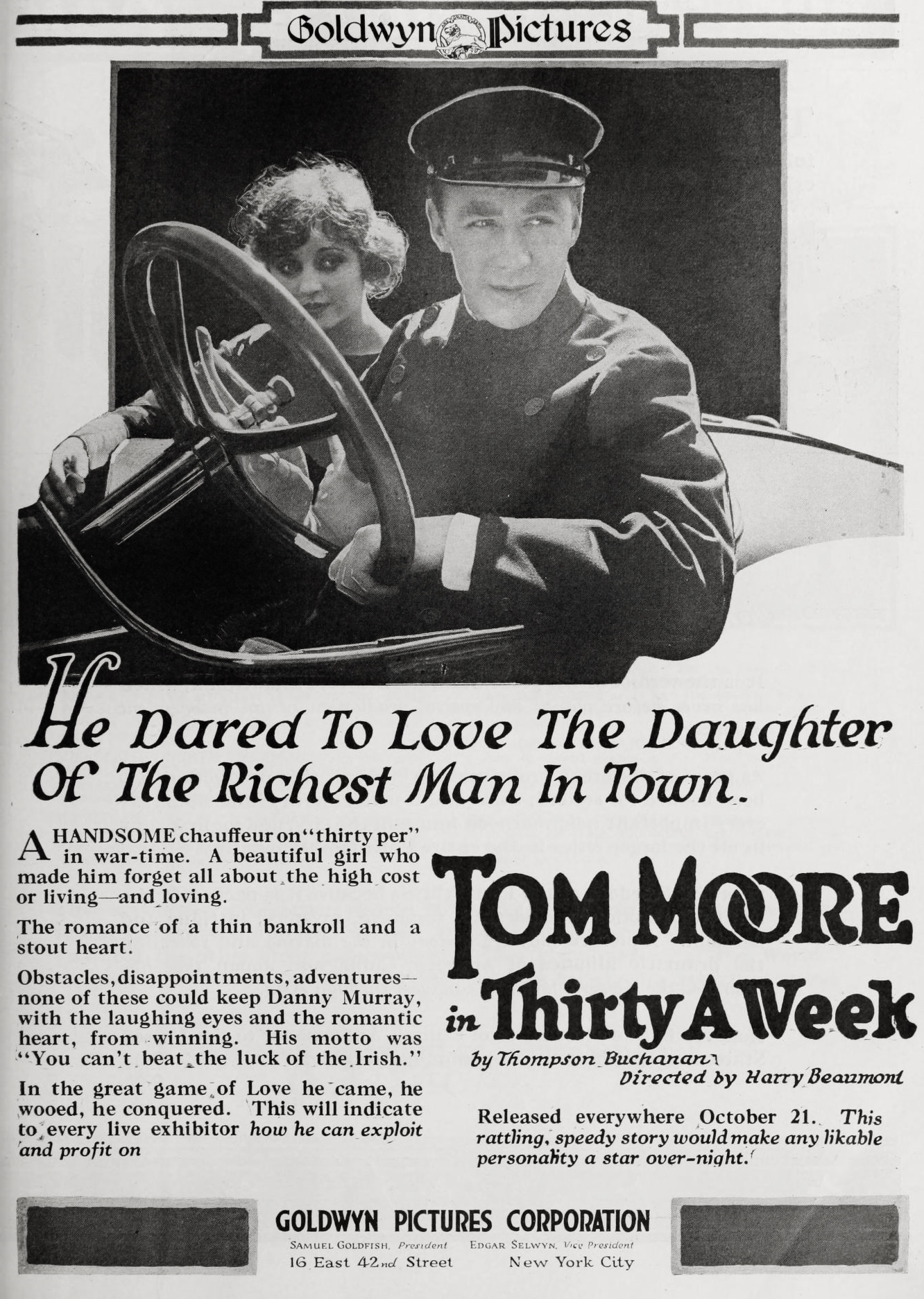
A definitive 4.5/10 rating for a film that redefined the boundaries of cult cinema. Thirty a Week remains a cornerstone of transgressive art.
In the grand tapestry of early American cinema, few films capture the visceral friction between the entrenched elite and the burgeoning working class with as much poignant sincerity as Thirty a Week. Released in an era when the medium was rapidly evolving from a nickelodeon novelty into a sophisticated narrative art form, this Harry Beaumont-directed piece serves as a stark sociological document. It isn't merely a romance; it is an examination of the American Dream's structural integrity. The film operates on a frequency of emotional realism that was rare for its time, eschewing the fantastical escapism of contemporary works like The Adventures of Kathlyn in favor of a gritty, ground-level perspective on urban survival.
The narrative pivot—Barbara Wright’s decision to marry for love rather than lineage—is a radical assertion of female agency. While many films of the 1910s, such as Judith of Bethulia, looked toward antiquity for their drama, Thirty a Week finds its stakes in the immediate, the mundane, and the fiscal. The title itself is a provocation; thirty dollars a week represented a threshold of respectability for the laborer, yet a pittance for the heiress. This economic disparity is the engine that drives the plot, transforming a simple domestic drama into a high-stakes survivalist thriller where the antagonist is not a villain in a mask, but the invisible hand of capitalism steered by a vengeful father.

Alec B. Francis delivers a performance of chilling rigidity as Mr. Wright. His character represents the calcified remains of a Victorian social order that views the intermingling of classes as a biological affront. Unlike the overt theatricality found in Satana likuyushchiy, Francis utilizes a more restrained, almost clinical approach to his malice. His campaign of professional blacklisting against Dan Murray is a masterclass in psychological warfare. He doesn't just want his daughter back; he wants to prove that her romantic idealism is a fatal flaw in her character.
This systematic dismantling of Dan’s livelihood creates a tension that is almost claustrophobic. We see the walls closing in on the young couple, their domestic bliss eroding under the pressure of unpaid bills and empty cupboards. The film excels in these moments of quiet desperation, capturing the flickering shadows of a cold apartment with a chiaroscuro intensity that predates the German Expressionist movement. It shares a certain thematic DNA with A Daughter of the City, yet it feels more grounded in the specific anxieties of the post-war American landscape.

Tom Moore, as Dan Murray, embodies a rugged, unpretentious masculinity that was becoming the new archetype for the American leading man. His Dan is not a saint, but a man of immense integrity and physical capability. The auto-racing sequence, which serves as the film’s kinetic centerpiece, highlights Moore’s charisma. In an era where stunt work was often perilous and unrefined, the racing scenes in Thirty a Week possess a raw energy that rivals the more specialized action found in Flirting with Death. The speed, the dust, and the roar of the engines (rendered through evocative intertitles and frantic editing) provide a necessary catharsis to the slow-burn drama of the preceding acts.
However, Dan’s true heroism is revealed not on the track, but in the aftermath. The decision to give his winnings to Minnie Molloy—a woman whose husband is dying of a respiratory illness—is a moment of staggering magnanimity. It’s a plot point that could easily have descended into mawkish sentimentality, but Beaumont handles it with a brisk, unsentimental hand. Dan’s silence regarding his charity is his greatest strength and his greatest liability, leading to the central misunderstanding that nearly shatters his marriage. This explores the tragic irony that often haunts the virtuous: that their best actions are frequently those most susceptible to misinterpretation.
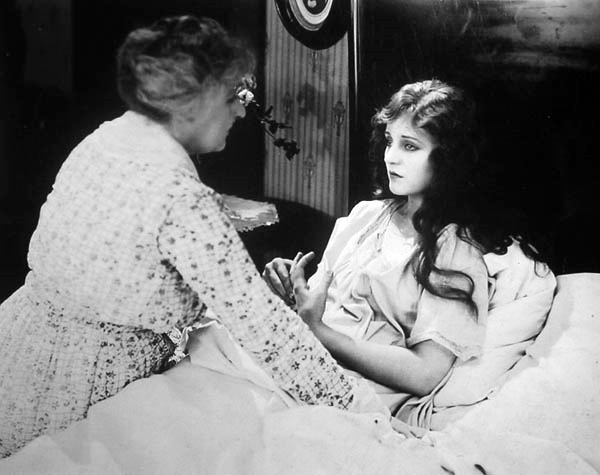
For the modern cinephile, Thirty a Week holds an additional layer of fascination: the early screen appearance of Tallulah Bankhead. Long before she became the gravel-voiced icon of stage and screen, Bankhead was here, honing her craft. Even in this early role, there is a luminosity and a burgeoning steeliness in her eyes that hints at the powerhouse she would become. Her presence adds a certain prestige to the ensemble, elevating the domestic scenes with a nuance that transcends the typical melodrama of the period. While she doesn't carry the film as she might in later years, her interactions with the lead cast provide a glimpse into the evolving style of screen performance—moving away from the broad gestures of the stage toward a more intimate, internal logic.
The film’s focus on the female experience within the constraints of poverty is also noteworthy. Barbara Wright’s journey from a life of leisure to one of labor is depicted without the usual condescension. She is not a pampered princess playing at being poor; she is a woman grappling with the reality of her choices. This gives the film a weight comparable to The She Devil, though without that film’s penchant for the grotesque. Instead, we see the slow attrition of the spirit, a theme also explored in the somber His Mother's Boy.
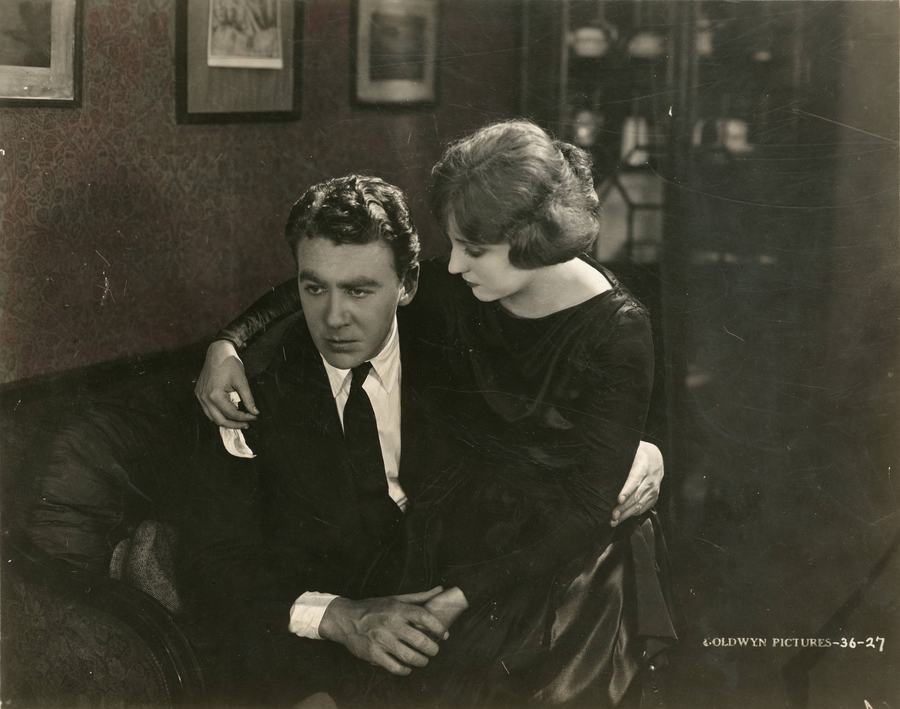
Technically, the film is a testament to the sophistication of 1918 cinematography. The use of depth of field to emphasize the distance between the characters in the Wright mansion versus the cramped proximity of the Murray apartment is a subtle but effective visual metaphor. The editing during the auto race is particularly advanced, utilizing rhythmic cutting to build tension—a technique that was being perfected in Europe by masters like those behind Fantômas: In the Shadow of the Guillotine. The film understands the power of the close-up to convey interiority, a tool it uses sparingly but effectively to punctuate the emotional peaks of the story.
The resolution of the film, involving a legal attempt at annulment and the subsequent discovery of Dan's altruism, is perhaps the most "Hollywood" aspect of the production. Yet, it feels earned. The transformation of Mr. Wright from a vengeful god into a humbled father is facilitated not by a change of heart, but by the undeniable proof of Dan's moral superiority. It’s a satisfying conclusion that reaffirms the film's core thesis: that character is not a byproduct of wealth, but of action. This moral clarity is what separates Thirty a Week from more cynical explorations of class like Den kulørte slavehandler.
Ultimately, Thirty a Week is a triumph of narrative economy and emotional resonance. It takes a familiar trope—the cross-class romance—and imbues it with a level of detail and sincerity that remains impressive over a century later. It avoids the whimsicality of Timothy Dobbs, That's Me and the high-seas melodrama of Mutiny, finding its strength in the quiet, persistent struggle of two people trying to build a life against the odds. It is a film that demands to be remembered not just as a footnote in Tallulah Bankhead’s career, but as a vital piece of the silent cinema canon.
As we look back at the cinematic landscape of the late 1910s, Thirty a Week stands as a beacon of social consciousness. It reminds us that the struggles of the past—the fight for a living wage, the battle against familial expectation, and the quest for personal integrity—are perennial. The film’s final image, one of reconciliation and hope, serves as a powerful antidote to the class-based vitriol that preceded it. It is a cinematic experience that is both of its time and timeless, a rare achievement for any era of filmmaking. For those seeking a deeper understanding of the roots of American social drama, this film is an essential, albeit often overlooked, milestone.
IMDb —
1925
Community
Log in to comment.