DbcultAccessing Vault...
Cult Review
Senior Film Conservator
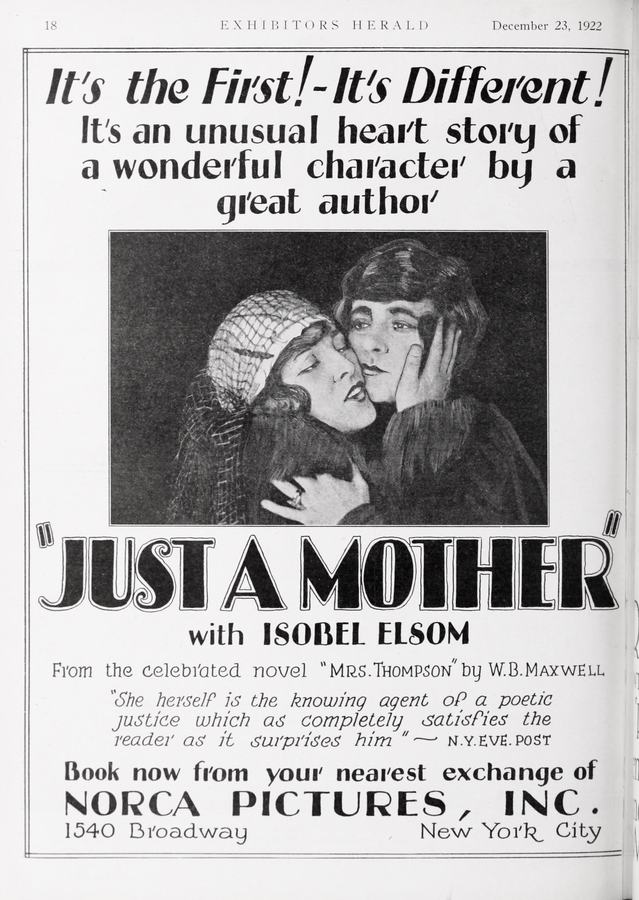
There's a particular kind of melancholic beauty in early cinema, an almost stark realism that, despite its technical limitations, often cuts straight to the heart of human experience. William Babington Maxwell's Mrs. Thompson is precisely one such film, a somber, yet profoundly compelling, exploration of trust, betrayal, and the devastating consequences of misplaced affection. It’s a narrative that eschews grand theatrics for the more insidious drama of domestic collapse, painting a picture of a world where virtue is not always its own reward, and a charming smile can mask the most destructive intentions. This isn't a story of heroes and villains in the traditional sense, but rather a cautionary fable etched onto celluloid, a stark reminder of how easily a life's foundation can be eroded by the wrong partnership.
At its core, Mrs. Thompson is a character study, not just of the titular figure, but of the societal forces and personal weaknesses that conspire to bring about her downfall. We witness the trajectory of a shopkeeper's daughter, a figure emblematic of modest industry and honest living, whose world is turned upside down by the arrival of a man who promises much but delivers only ruin. The film, though originating from an era often caricatured for its melodramatic flourishes, possesses a quiet dignity in its portrayal of suffering, allowing the audience to feel the slow, agonizing squeeze of financial and emotional despair. It's a testament to the script by Maxwell and the performances of the cast, particularly Minna Grey and Isobel Elsom, who embody the various facets of the protagonist, that this narrative resonates with such enduring poignancy.
The plot of Mrs. Thompson is deceptively simple, yet it holds a mirror to universal truths about human vulnerability and the corrosive nature of unchecked ambition. We are introduced to the serene world of a thriving shop, a bastion of stability and community, diligently maintained by its proprietor and his devoted daughter. This daughter, whose name we infer through the film’s title, represents the inheritor of a legacy, a future proprietor poised to continue a tradition of honest commerce. Her life, however, takes an irreversible turn with her marriage to a man, portrayed with insidious charm by James Lindsay and Wyndham Guise, who is less interested in upholding the family business and more in exploiting its assets for his own profligate desires. This narrative arc, though common, is handled with a nuanced precision that prevents it from descending into mere cliché. The 'cad' figure is not a cartoonish villain but a more insidious presence, his actions driven by a blend of self-interest and a profound disregard for the welfare of others, making his betrayal all the more chilling.
The film excels in illustrating the gradual, almost imperceptible, slide into financial desolation. It's not an overnight catastrophe but a slow bleed, a series of poor decisions, escalating debts, and broken promises that chip away at the shop's solvency and the daughter's peace of mind. This meticulous depiction of economic ruin sets it apart, offering a socio-economic commentary that might resonate with audiences familiar with the financial anxieties of any era. The shop, once a symbol of security and prosperity, slowly transforms into a metaphor for shattered hopes, its shelves emptying, its ledgers bleeding red. The emotional toll on the daughter, who witnesses her inheritance and her future being systematically dismantled by the very man she chose to share her life with, is palpably conveyed through subtle gestures and expressions, a hallmark of silent era acting at its most effective.
The ensemble cast of Mrs. Thompson delivers performances that, even across the chasm of a century, manage to convey profound emotional depth. Minna Grey and Isobel Elsom, in their portrayal of the central character at different stages, capture the essence of a woman caught in a maelstrom of circumstances beyond her control. Their expressions, often subtle yet always eloquent, communicate the journey from naive optimism to crushing disillusionment. It’s a masterclass in silent film acting, where every glance, every tremor of the hand, every slump of the shoulder tells a story that words might fail to capture. The burden of her husband's recklessness, the weight of a dying business, and the sorrow of a love betrayed are all etched onto their faces with heartbreaking clarity.
James Lindsay and Wyndham Guise, as the 'cad' figure, are equally compelling. They manage to imbue the character with just enough charm to make his initial appeal believable, slowly peeling back layers to reveal the callous opportunist beneath. It’s a delicate balance, portraying a character who must first win over the audience's (and the protagonist's) trust before betraying it. This nuanced approach prevents the character from becoming a one-dimensional villain, instead presenting a more complex, and therefore more terrifying, representation of human failing. Their performances lend a chilling realism to the film's central conflict, making the husband's actions feel less like a plot device and more like an authentic, albeit tragic, human failing. The supporting cast, including Bertram Burleigh, Tom Reynolds, C.M. Hallard, and Marie Wright, contribute to the film’s rich tapestry, each adding texture to the community affected by the central drama, reinforcing the devastating ripple effect of the husband's actions.
William Babington Maxwell's writing transcends the simple plot summary, delving into themes that remain remarkably pertinent. The film is, first and foremost, a powerful commentary on the precariousness of economic stability and the vulnerability of small businesses in the face of unscrupulous dealings. The shop, a symbol of generational effort and community trust, becomes a casualty of individual greed. This thematic thread resonates with other films of the era that explored similar anxieties, such as the struggles depicted in The Port of Doom, where external forces or internal corruption threaten livelihoods and societal order. The destruction of the shop isn't just a plot point; it's a metaphor for the destruction of a way of life, a community pillar, and the very identity of the protagonist.
Beyond economics, Mrs. Thompson is a poignant exploration of gender roles and societal expectations. The daughter, as a woman in that era, likely had limited agency once married, her financial fate intrinsically tied to her husband's. Her struggle to salvage what remains of her family's legacy speaks volumes about the challenges faced by women attempting to navigate a male-dominated economic landscape. This aspect of the narrative offers a fascinating, if heartbreaking, glimpse into the social fabric of the time, where a woman's destiny was often inextricably linked to the character and financial prudence of her spouse. The film quietly critiques this imbalance, showing the devastating personal cost when such a system is exploited.
The film also touches upon the insidious nature of deception and the slow erosion of trust. The 'cad's' actions are not sudden, explosive betrayals but a series of calculated steps that lead to inevitable ruin. This slow-burn approach to villainy makes the character more chillingly realistic. It's a reminder that not all antagonists wear their malice on their sleeves; some operate with a smile and a convincing facade. This psychological realism elevates Mrs. Thompson beyond simple melodrama, positioning it as a thoughtful examination of human frailty and malevolence. In this regard, it shares a thematic kinship with works like Blindfolded, where the perils of trust and hidden agendas drive the central conflict, leaving characters grappling with the aftermath of deceit.
While detailed directorial credits for such early films can sometimes be elusive, the coherence and emotional impact of Mrs. Thompson speak to a clear artistic vision. The cinematography, though characteristic of its era with static shots and a focus on performance within the frame, effectively conveys the mood and narrative progression. The use of close-ups, where they occur, is particularly potent, highlighting the emotional turmoil on the actors' faces and drawing the audience into their inner worlds. The pacing, deliberate and measured, allows the tragedy to unfold organically, giving weight to each setback and moment of despair. This careful construction ensures that the audience feels the full impact of the protagonist's journey, rather than being rushed through a series of plot points.
William Babington Maxwell's contribution as the writer is significant. His ability to craft a narrative that, despite its era's conventions, feels remarkably modern in its psychological depth and social commentary, is commendable. The story avoids easy resolutions or overly simplistic moralizing, instead presenting a stark, often bleak, reality. This commitment to portraying the complexities of human nature, even in the context of a seemingly straightforward tale of betrayal, is what gives Mrs. Thompson its lasting power. It’s a narrative that, while rooted in its specific time, explores universal themes of love, trust, and the devastating consequences of their erosion. The film, in its quiet power, reminds us that the human heart, and the structures we build around it, are fragile things indeed.
Comparing it to other films of the period, Mrs. Thompson stands out for its unwavering focus on the personal cost of financial ruin and marital betrayal. While films like Brewster's Millions might explore financial themes through comedy or grand spectacle, Mrs. Thompson grounds its narrative in the intimate, devastating reality of a single family's collapse. This contrast highlights the film's dedication to a more grounded, emotionally resonant form of storytelling. It’s not about the thrill of the chase or the spectacle of wealth, but the quiet, agonizing loss of everything built on honest foundations.
In conclusion, Mrs. Thompson is more than just a historical curiosity; it is a profoundly moving piece of early cinema that continues to speak to contemporary audiences. Its depiction of a woman's struggle against overwhelming odds, her resilience in the face of profound betrayal, and the stark reality of economic collapse, ensures its place as a significant work. It’s a film that asks us to consider the true cost of human avarice and the enduring strength required to rebuild when everything has been taken away. The film serves as a potent reminder that some stories, even without spoken dialogue, possess an undeniable, timeless power to move and inform.

IMDb 7
1921
Community
Log in to comment.