DbcultAccessing Vault...
Cult Review
Senior Film Conservator
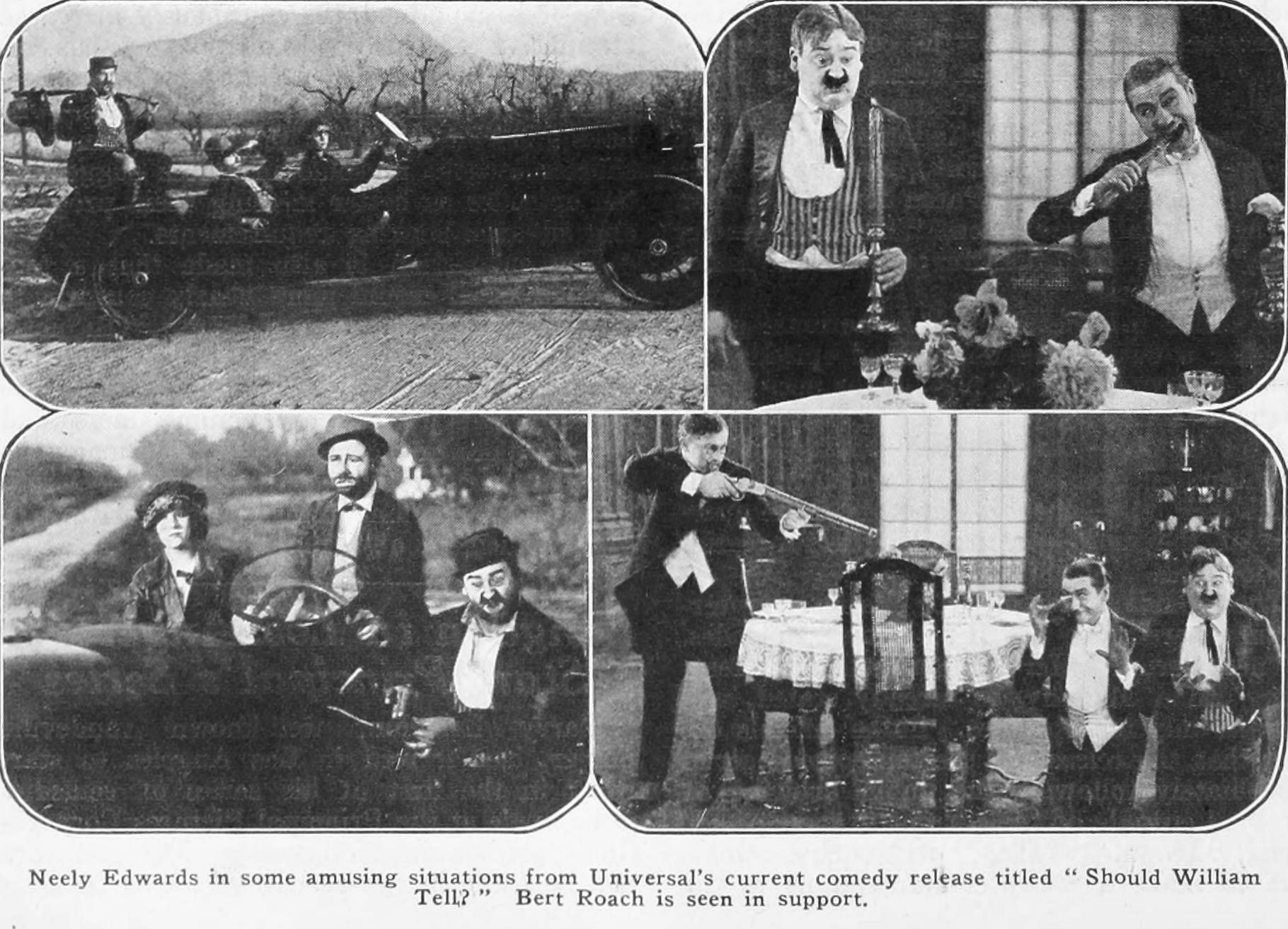
When Should William Tell? opens, the camera captures a bustling city street awash with the clamor of early twentieth‑century traffic. In the midst of this mechanical cacophony, Nervy Ned (Bert Roach) and his diminutive valet, Jasper (Neely Edwards), appear like two conniving sprites, poised to exploit the nascent automobile craze. Their venture—ostensibly a modest parking service—quickly reveals a duplicitous core: a clandestine rental operation that preys on motorists desperate for a safe spot.
Roach, already celebrated for his elastic facial gymnastics, delivers a performance that oscillates between swagger and desperation. His eyes, perpetually darting, betray a mind constantly calculating profit margins. Edwards, meanwhile, embodies the archetype of the faithful sidekick, yet his physical comedy—characterized by exaggerated pratfalls and rapid‑fire slapstick—elevates Jasper from mere subordinate to a co‑architect of chaos. The chemistry between the two is palpable; each gesture, each glance, feels rehearsed yet spontaneous, a hallmark of silent‑era duos such as those seen in The Birthday.
The film’s narrative arc follows a deceptively simple structure: exposition of the scheme, escalation via victim retaliation, climax in the form of an absurd archery contest, and a resolution that either restores order or leaves the protagonists in comedic ruin. The inciting incident—when a wealthy patron discovers his vehicle missing—propels the story into a realm where personal vendetta supplants legal recourse, reflecting societal anxieties about the unchecked rise of automobile culture.
The apple‑shooting sequence, a direct homage to the William Tell legend, functions as both satire and spectacle. The set design—a rustic clearing juxtaposed against the urban backdrop—creates a visual dissonance that underscores the absurdity of transplanting a medieval myth into a modern capitalist setting. The tension is amplified by intertitles that alternate between witty quips and ominous warnings, a technique reminiscent of the narrative pacing in The Bromley Case.
Cinematographer William Watson employs a stark contrast between the dimly lit parking garage and the sun‑drenched archery clearing. The use of chiaroscuro not only highlights the moral ambiguity of Ned’s enterprise but also serves a practical purpose: it accentuates the actors’ exaggerated expressions, essential in a medium bereft of spoken dialogue. The camera often lingers on the glint of the arrowhead as it hovers over the apple, a visual metaphor for the precarious balance between cunning and hubris.
A recurring motif is the recurring presence of a yellowed newspaper headline—"Car‑Parking Scandal Rocks City!"—which appears in the background of several scenes, reinforcing the public’s growing awareness of Ned’s misdeeds. This subtle prop work adds depth to the world‑building, echoing the meticulous set design seen in Napoleon Not So Great.
At its core, Should William Tell? interrogates the ethics of entrepreneurship during a period when the automobile symbolized progress and freedom. Ned’s exploitation of parking scarcity mirrors contemporary concerns about urban congestion and the commodification of public space. Moreover, the film satirizes the romanticization of heroic myth; by forcing Ned into an archaic contest, it questions whether modern profiteers can ever truly embody the noble virtues of legendary figures.
The narrative also touches upon class tensions. The affluent victim, whose name remains deliberately vague, represents the entrenched elite, while Ned and Jasper embody the working‑class opportunist. Their clash is less about personal grievance and more about a broader power struggle, a theme echoed in other silent comedies such as Riding with Death, where socioeconomic disparity fuels the plot.
Roach’s timing is impeccable; his pauses before delivering a mischievous grin allow the audience to anticipate the impending gag. Edwards’ physicality—particularly his exaggerated recoil when the arrow narrowly misses the apple—elicits genuine laughter, a testament to his mastery of slapstick. The supporting cast, though limited, contributes effectively: a stern police officer (played by an uncredited actor) delivers a deadpan intertitle that reads, "You’ll pay for this, gentlemen," before being comically outwitted by Ned’s quick‑draw distraction.
When juxtaposed with The Ninety and Nine, which leans heavily on melodramatic pathos, Should William Tell? opts for a lighter, more irreverent tone. Yet both films share a common thread: they employ a central moral dilemma to drive character development. Similarly, the pacing of the apple‑shooting segment recalls the climactic showdown in Trilby, where tension is built through repetitive close‑ups and a crescendo of musical accompaniment (albeit conveyed through live theater cues in the silent era).
While the film itself is silent, original screenings featured a live piano score that blended jaunty ragtime with ominous brass motifs during the archery scene. This auditory dichotomy heightened the comedic absurdity while underscoring the underlying threat. Modern restorations often pair the footage with a reconstructed score, preserving the intended emotional beats.
Though not as widely discussed as Chaplin’s oeuvre, Should William Tell? occupies a niche in the silent‑comedy canon for its daring blend of social commentary and slapstick. Its influence can be traced to later works that satirize corporate greed, such as the 1930s short Amateur Night on the Ark. The film’s daring use of a mythic reference to critique modern capitalism foreshadows the meta‑humor found in later mid‑century comedies.
In sum, Should William Tell? delivers a richly textured narrative that balances witty satire with physical comedy. Its visual storytelling, anchored by Roach’s charismatic mischief and Edwards’ kinetic energy, remains compelling nearly a century after its debut. The film’s thematic relevance—questioning the moral cost of entrepreneurial ambition—resonates in today’s gig‑economy landscape, granting it a timeless quality that transcends its silent origins.
For aficionados of early cinema, the film offers a rewarding study in how silent filmmakers leveraged mythic allusion to critique contemporary societal shifts. For casual viewers, the relentless humor and the climactic apple‑shooting set piece provide an entertaining romp that rewards repeated viewings. Whether you appreciate the film for its historical significance or its comedic brilliance, Should William Tell? stands as a testament to the ingenuity of silent‑era storytellers.
IMDb —
1921
Community
Log in to comment.