DbcultAccessing Vault...
Cult Review
Senior Film Conservator
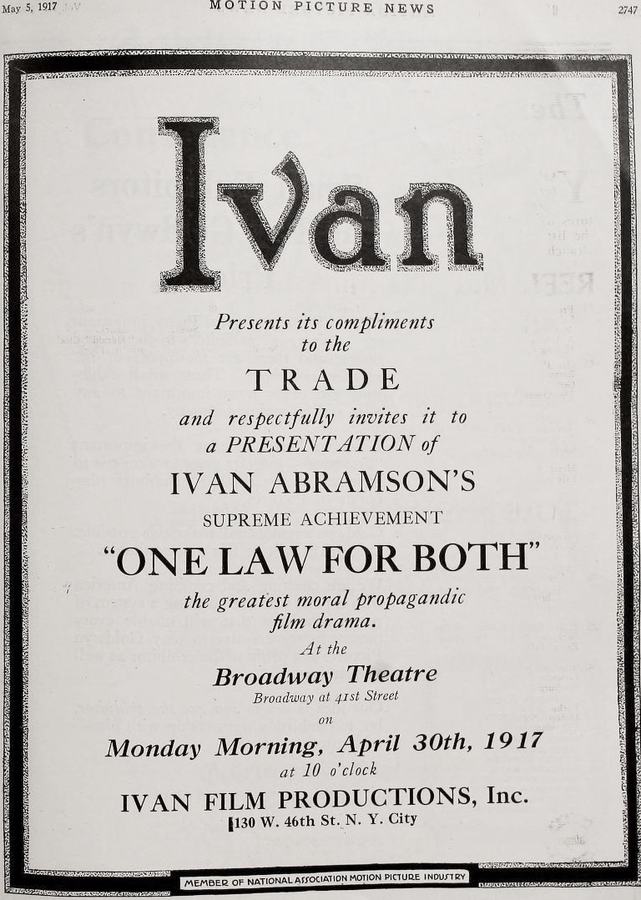
Stepping back into the cinematic annals of 1915, one encounters a fascinating tapestry of storytelling, where the nascent art form of film wrestled with grand narratives of human folly and triumph. Ivan Abramson’s ‘One Law for Both’ emerges from this era not merely as a relic, but as a vibrant, if often overlooked, testament to the power of early cinema to tackle complex themes of political intrigue, personal betrayal, and the enduring quest for redemption. It’s a film that, despite its silent nature, speaks volumes about the human condition, resonating with an intensity that transcends the passage of a century.
The narrative plunges us headfirst into the politically charged atmosphere of early 20th-century Warsaw, a city simmering under the oppressive thumb of the Romanoff dynasty. Here, we meet Elga Pulaski, portrayed with a compelling blend of vulnerability and steely resolve by the remarkable Leah Baird, and her brother Ossip, brought to life by James Morrison. They are not merely inhabitants of this volatile landscape; they are active participants in its clandestine undercurrents, members of a secret society dedicated to the monumental task of liberating both Poland and Russia. Their cause is noble, their commitment unwavering, yet the stakes are astronomically high. This backdrop of revolutionary fervor immediately distinguishes the film, setting it apart from more conventional melodramas of the period. It imbues the personal struggles of Elga and Ossip with a gravitas that feels both timely for its historical context and timeless in its exploration of freedom’s cost. The film doesn't shy away from depicting the inherent dangers of such a life, where every shadow might conceal an enemy, and every trust placed could be a fatal error. This sense of pervasive threat is expertly conveyed, even without dialogue, through the actors' expressions and the carefully constructed mise-en-scène. One might draw parallels to the heightened stakes and moral ambiguities explored in later political thrillers, demonstrating that even in its infancy, cinema was capable of crafting intricate socio-political narratives. The film’s opening acts are particularly effective in establishing this atmosphere of quiet desperation and defiant hope, drawing the viewer into a world where ideals are worth dying for, and betrayal lurks around every corner.
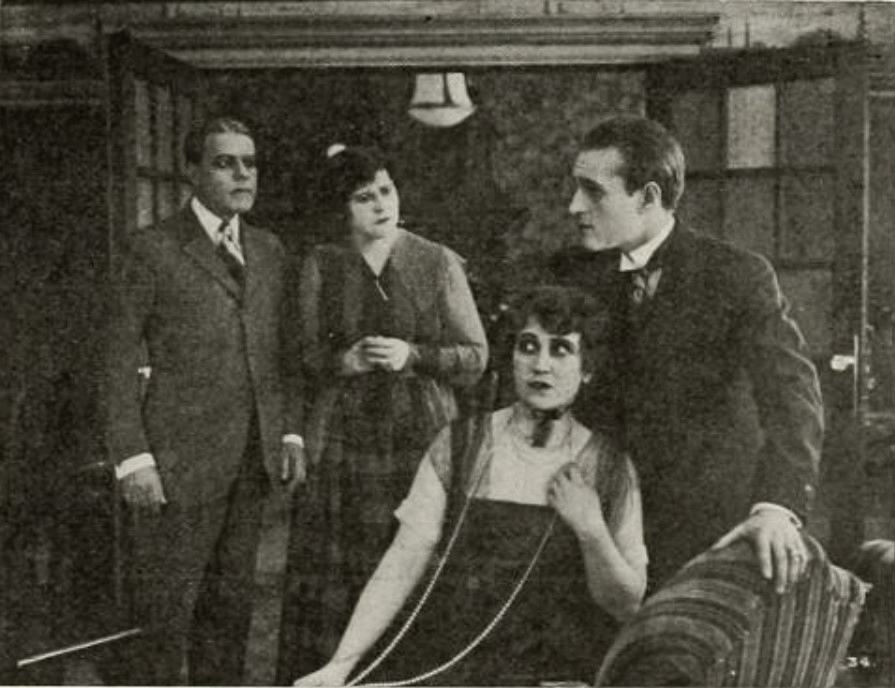
Elga’s world, already fraught with danger, takes a devastating turn with the introduction of Baron Jan Slozek, played with a captivating blend of charm and menace by Vincent Serrano. Slozek enters Elga’s life as a suitor, a figure of romance and potential solace amidst the turmoil. However, his affections are a cruel deception, a meticulously crafted facade concealing a far darker agenda. Slozek is, in fact, a spy, an agent of the very powers Elga and Ossip seek to overthrow. His betrayal is swift and brutal, leading directly to the arrest of Ossip and other vital members of their clandestine network. This pivotal moment is a masterclass in silent film acting, with Leah Baird conveying Elga’s shock, heartbreak, and dawning horror through nuanced facial expressions and gestures that transcend the need for spoken words. The impact of this betrayal is profound, not just on a personal level for Elga, but for the entire revolutionary movement, highlighting the devastating consequences of misplaced trust. The film then escalates the drama further: Slozek is slain, and the finger of suspicion points squarely at Ossip. This development transforms the narrative from one of political intrigue into a high-stakes crime drama, forcing the siblings into a desperate flight for their lives. The tension built during these sequences is palpable, reminiscent of the gripping escapes and pursuit narratives seen in films like The Seven Pearls, where protagonists are constantly on the run from an omnipresent threat. The swift shift in genre elements demonstrates Abramson's adeptness at weaving multiple narrative threads into a cohesive and engaging whole. The moral ambiguity surrounding Slozek's death—was it an act of justice, revenge, or self-preservation?—adds another layer of complexity, preventing the story from devolving into a simplistic good-versus-evil dichotomy. It forces the audience to grapple with the difficult choices made under extreme duress, making the characters’ plight all the more resonant.
The siblings’ escape to America marks a significant geographical and thematic pivot in the film. The vastness of the ocean separating them from their past symbolizes a desperate hope for a new beginning, a chance to shed the heavy mantle of their revolutionary lives. This theme of seeking refuge and forging a new identity in a foreign land is a powerful one, often explored in early cinema, reflecting the mass migrations of the era. Similar narratives of characters attempting to outrun their past are subtly echoed in films like McVeagh of the South Seas, where new environments offer both challenges and opportunities for reinvention. In America, Elga encounters Norman Hutchinson, and a new chapter of her life begins, one seemingly devoid of the shadows of espionage and murder. She marries Hutchinson, choosing to keep the turbulent saga of her European past a closely guarded secret. This decision, while understandable given the trauma she has endured, sets the stage for the inevitable conflict that forms the emotional core of the film’s latter half. The weight of this secret, the constant fear of its discovery, hovers over Elga’s new life like a specter, creating a pervasive sense of dramatic irony. The audience is privy to her past, making Hutchinson’s blissful ignorance all the more poignant. This narrative device, where a character builds a new life on a foundation of omission, is a powerful tool for exploring themes of identity, trust, and the burden of history. It raises questions about whether one can truly escape their past, or if it is an indelible part of who they are, destined to resurface. The film handles this transition with a delicate touch, allowing the audience to empathize with Elga’s desire for normalcy while also understanding the precariousness of her deception. The new setting, while offering a semblance of peace, also introduces a different kind of tension, one rooted in the fragility of a love built on an incomplete truth.
The tranquility of Elga’s new life is, of course, unsustainable. The truth, as it often does in compelling narratives, eventually surfaces. When Hutchinson discovers the full, harrowing extent of Elga’s past—the revolutionary activities, the betrayal, the murder, the flight—his reaction is one of profound shock and disillusionment. He leaves her, unable to reconcile the woman he married with the shadowed figure from a violent, clandestine world. This moment is a powerful exploration of the societal expectations and moral judgments prevalent in the era. Hutchinson’s departure is not merely a personal slight; it represents the punitive societal response to a woman with a 'past,' especially one involving violence and political extremism. Here, the film touches upon themes of societal judgment and the unforgiving nature of a world that often refuses to see beyond surface appearances, much like the rigid social structures depicted in films such as For the Queen’s Honor or A Man's Prerogative. The 'one law' in the title begins to reveal its multifaceted meaning, perhaps hinting at the double standards applied to men and women, or the unforgiving nature of legal and moral codes when confronted with extraordinary circumstances. Elga is left to confront the wreckage of her new life, a poignant echo of the devastation she experienced in Warsaw. The film masterfully portrays her despair, but also her inherent strength. Leah Baird’s performance during these scenes is particularly moving, conveying the depth of Elga’s suffering and her unwavering spirit. The narrative doesn’t allow her to simply wallow; it propels her towards action, towards a direct confrontation with the man who has judged her.
The film reaches its emotional crescendo when Elga, refusing to surrender to her fate, makes a passionate appeal to Hutchinson. This is not merely a plea for reconciliation, but a powerful articulation of her truth, a demand for understanding rather than blind condemnation. It is in this sequence that the film truly earns its dramatic weight. Elga lays bare the circumstances that shaped her, the impossible choices she faced, and the profound love she still holds for Hutchinson. Her appeal is a testament to the resilience of the human spirit and the inherent desire for empathy. The pivotal moment arrives when Hutchinson, confronted with the raw honesty and pain of Elga’s narrative, finally 'sees the light.' This epiphany is not a sudden, unearned shift, but the culmination of the film’s exploration of prejudice, judgment, and the capacity for compassion. It is a moment of profound recognition, where he transcends his initial shock and societal conditioning to truly understand the depth of her character and the extraordinary circumstances that defined her past. This resolution, while perhaps fitting for the era’s narrative conventions, also carries a timeless message about forgiveness and the complexity of human experience. It suggests that true love and understanding require looking beyond surface facts and embracing the entirety of a person's journey, including their scars. The film concludes on a note of hope, affirming that even the most profound betrayals and darkest secrets can be overcome by empathy and the willingness to truly see another. The journey from the revolutionary cells of Warsaw to the quiet domesticity of America, punctuated by espionage, murder, and exile, ultimately culminates in a deeply human story of acceptance. The film, in its final acts, posits a powerful argument for compassion, suggesting that 'one law' should indeed be a law of understanding, applied to all, regardless of their past. It’s a message that, despite the passage of a century, remains remarkably relevant in a world still grappling with judgment and forgiveness, much like the moral complexities explored in films such as The Masked Heart or Dollars and the Woman, where characters must navigate intricate ethical landscapes.

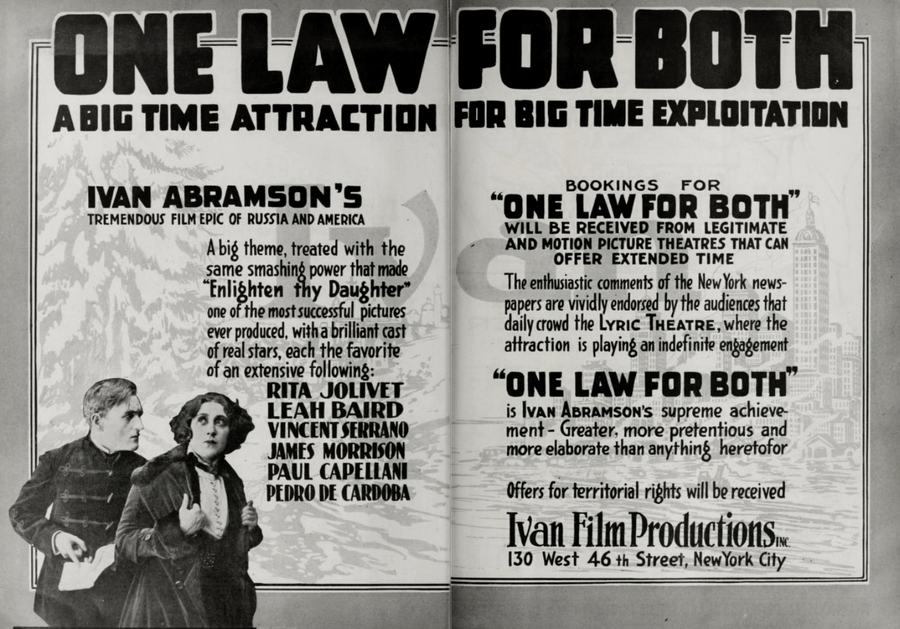
The success of 'One Law for Both' hinges significantly on the caliber of its performances, a common thread in silent cinema where actors were the primary conduits of emotion and plot. Leah Baird, as Elga Pulaski, delivers a truly captivating performance. Her range is remarkable, transitioning seamlessly from the fiery revolutionary to the heartbroken lover, and finally to the resilient woman seeking understanding. She conveys Elga's inner turmoil and strength through subtle expressions and powerful gestures, embodying the complex character with a depth that belies the absence of spoken dialogue. Her portrayal is a testament to the artistry required in silent acting, where every movement and glance must be imbued with meaning. One can see echoes of the strong, determined female leads in other contemporary films, such as those navigating difficult choices in Lola or facing moral quandaries in Chimmie Fadden Out West. James Morrison, as Ossip, provides a solid, supportive presence, conveying his character’s loyalty and distress effectively. His partnership with Baird anchors the initial revolutionary plotline. Vincent Serrano, as the treacherous Baron Jan Slozek, is wonderfully villainous, his charm making his eventual betrayal all the more chilling. He embodies the classic silent film antagonist, whose duplicity is clear to the audience even as the protagonist remains ensnared. These performances, combined with Ivan Abramson’s direction, create a compelling human drama that allows the audience to fully invest in the characters’ fates. The director’s ability to elicit such nuanced performances without the aid of dialogue speaks volumes about his understanding of the medium and his skill in guiding his cast. The visual storytelling, reliant on close-ups, intertitles, and carefully choreographed physical action, ensures that the emotional beats land with precision and impact. The film serves as an excellent example of how early cinematic artists mastered the craft of non-verbal communication, making the audience feel every twist and turn of Elga's tumultuous journey.
Beyond the thrilling plot and compelling performances, 'One Law for Both' delves into a rich tapestry of thematic concerns that remain pertinent even today. The concept of justice, for instance, is explored from multiple angles. Is justice served by political revolution, by personal vengeance, or by societal forgiveness? The film doesn't offer simplistic answers, instead inviting the audience to ponder the complexities of moral codes in extraordinary circumstances. The theme of identity, particularly for immigrants, is also powerfully portrayed. Elga's struggle to shed her past and forge a new identity in America speaks to the universal experience of those who leave everything behind in search of a better life, only to find that their history is an inseparable part of who they are. This resonates with similar struggles for self-definition and belonging seen in films such as Kentucky Brothers, which explores familial ties and new beginnings. Furthermore, the film subtly addresses gender roles and societal expectations placed upon women. Elga’s agency, her involvement in a dangerous political movement, and her subsequent efforts to rebuild her life, challenge conventional portrayals of women in early cinema. She is not merely a damsel in distress; she is a protagonist who actively shapes her destiny, even when confronted with overwhelming odds. The film's title itself invites contemplation: what is this 'one law' that applies to both? Is it a law of universal morality, a law of consequence, or perhaps a plea for a single standard of understanding and compassion for all human beings, irrespective of their past or origin? The ambiguity is a strength, allowing for multiple interpretations and sustained engagement. It forces viewers to consider the implications of judgment versus empathy, and the enduring power of love to bridge seemingly insurmountable divides. In an era where global conflicts and personal struggles for freedom continue to dominate headlines, the core messages of 'One Law for Both' feel remarkably fresh and thought-provoking, proving that great storytelling, even without sound, possesses an timeless quality that transcends its historical context.
In an age saturated with cinematic spectacle and rapid-fire dialogue, revisiting a silent film like 'One Law for Both' offers a unique and enriching experience. It reminds us of cinema's foundational power to tell compelling stories through visual narrative, emotional performance, and the evocative use of intertitles. Ivan Abramson, though perhaps not as widely celebrated as some of his contemporaries, demonstrates a clear vision and a keen understanding of dramatic pacing. The cinematography, while reflective of the era’s technical limitations, effectively captures the grim atmosphere of Warsaw and the more hopeful, if still troubled, landscapes of America. The use of light and shadow, framing, and editing all contribute to a cohesive and immersive viewing experience. For enthusiasts of early cinema, particularly those interested in films that tackle substantial social and political themes alongside personal drama, 'One Law for Both' is an essential watch. It stands as a testament to the ingenuity of filmmakers who, armed with rudimentary technology, managed to craft narratives of profound emotional resonance and intellectual depth. It’s a film that encourages us to look beyond the surface, to understand the motivations and circumstances that drive individuals, and to consider the profound implications of our judgments. This film, much like a newly discovered artifact, offers invaluable insight into the historical and cultural anxieties of its time, while simultaneously delivering a timeless narrative of human struggle and eventual, hard-won understanding. Its quiet power leaves a lasting impression, proving that even a century later, its 'one law' for both humanity and storytelling continues to hold true.

IMDb 7.5
1932
Community
Log in to comment.