DbcultAccessing Vault...
5.5/10
Senior Film Conservator
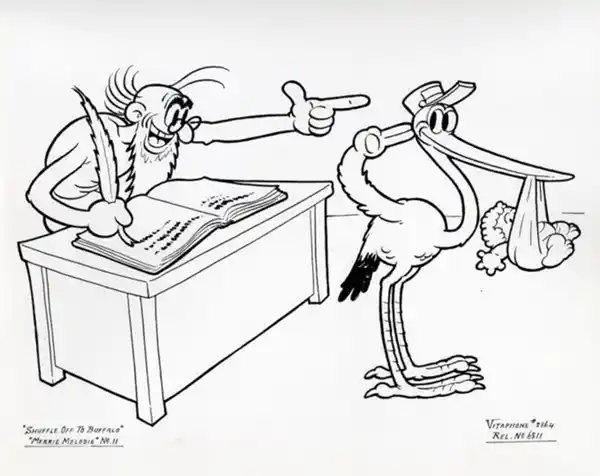
A definitive 5.5/10 rating for a film that redefined the boundaries of cult cinema. Shuffle Off to Buffalo remains a cornerstone of transgressive art.
If you like old cartoons that feel like a fever dream, you should watch this. It is weird and very much a product of 1933.
People who love animation history will find it fascinating. People who get offended by old-timey stereotypes will probably want to skip the middle three minutes.
It starts with a bunch of storks leaving a nest, which is pretty standard. But then we see the logistics of baby delivery.
There is an old man sitting at a big ledger book who looks like he has been working overtime for forty years. He is taking phone calls and checking lists like a grumpy accountant.
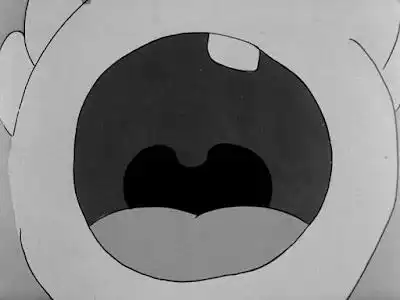
One request comes in for twins for Nanook of the North. The old guy just walks over to a refrigerator and pulls two babies out.
I guess because they are going to the Arctic, they need to be pre-chilled? It is a strange bit of logic that I actually laughed at.
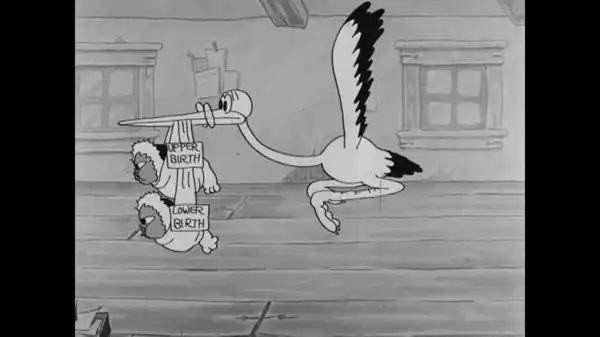
The babies get put into slings marked "upper birth" and "lower birth." It is a pun on train sleeping cars, but it feels a bit clunky now.
Then things get a little uncomfortable. A request comes in written in Hebrew, and the baby that comes out is a very thick Jewish caricature.

He gets a KOSHER stamp right on his backside. It is the kind of thing you only see in these pre-war shorts where nobody had a filter.
The cartoon really gets moving when we see the assembly line. It is run by dwarves for some reason.
They are all wearing little uniforms and working with a lot of energy. It reminds me of the frantic energy in No Noise, just constant movement.
The babies go through a literal washing machine. They get scrubbed and then moved along a conveyor belt to get dried.
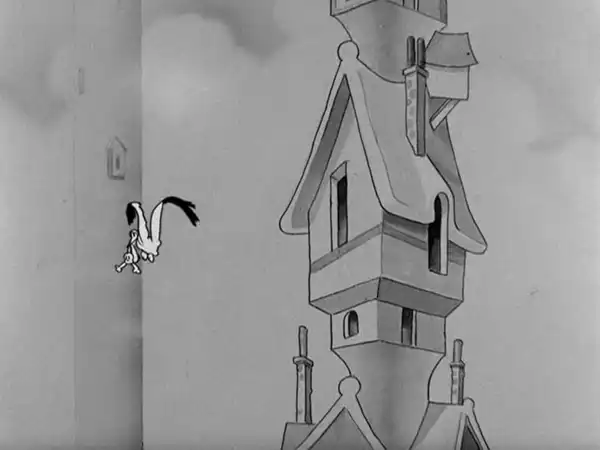
One baby gets hit with a huge puff of powder and just disappears for a second. It looks like a small explosion.
Then they get diapered with paper towels. Paper towels.
That sounds incredibly scratchy and uncomfortable. I felt bad for the little animated drawings.
The babies are all shouting for "Cantor" throughout the whole thing. They sound like a tiny, hungry mob.
Eventually, one of the dwarves pulls off a mask and he was actually Eddie Cantor the whole time. Well, a cartoon version of him with the big eyes.
They all start singing the title song and shuffling around. The music is actually pretty catchy, even if the lyrics are just about going to Buffalo.
It has that 1920s party vibe you might find in The Wild Party, but with more diapers. It is all very rhythmic and bouncy.
The way the babies move their heads in sync is kind of creepy if you look at it too long. They all have the exact same expression.
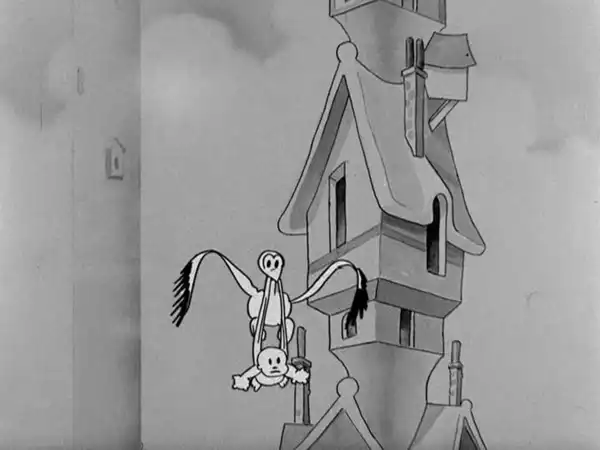
I noticed a small detail where one baby tries to grab a bottle and misses. It was probably a mistake in the drawing but it made it feel more real.
The whole thing is only about seven minutes long. It feels longer because so much stuff is happening in every corner of the screen.
Rudolf Ising, the director, really liked to fill the frame with tiny actions. You can see a dwarf in the background just spinning a wrench for no reason.
The ending is just more singing. It does not really conclude, it just sort of stops when the song is over.
If you want to see how people in the 30s imagined the "miracle of life," this is a very industrial version of it. It’s basically a Ford factory but for humans.
It is definitely more interesting than some of the other shorts from that year. It has a bit more personality, even if that personality is a bit confused.
Just be ready for the stereotypes. They hit you pretty fast in the middle of the film.
Overall, it is a decent watch if you want to see some smooth animation and hear a good tune. I might have the song stuck in my head for the rest of the day now.
IMDb —
1918
Community
Log in to comment.