DbcultAccessing Vault...
Cult Review
Senior Film Conservator
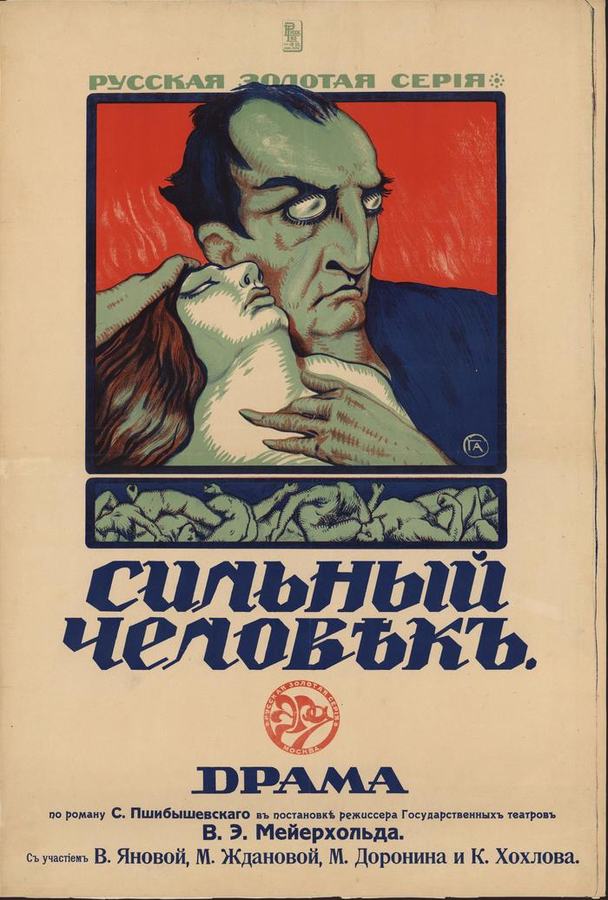
In the annals of cinema, few narratives confront the insidious allure of unearned glory with such unflinching intensity as Silnyi chelovek. This cinematic masterpiece plunges viewers into the murky depths of human ambition, where the lines between aspiration and depravity blur into a horrifying smear. It’s a stark, almost clinical examination of a soul’s disintegration, framed by the seemingly glamorous world of literature. The film doesn't just tell a story; it dissects a moral pathology, inviting us to witness the agonizing birth of a monster from the mundane clay of mediocrity.
At its core lies Henryk Bielecki, a figure who embodies the tragic paradox of a man utterly devoid of talent yet consumed by an insatiable hunger for recognition. He is a writer in name only, a hollow vessel yearning for the accolades reserved for true genius. This fundamental inadequacy, rather than prompting self-reflection or a change of course, instead fuels a malevolent envy that festers into a deadly resolve. His inability to conjure original thought or craft compelling prose becomes the very catalyst for a crime so audacious it beggars belief. The film masterfully portrays this internal struggle, not with grand pronouncements, but through subtle visual cues and the palpable tension in Gregori Chmara's compelling portrayal of Henryk, whose eyes betray a simmering resentment long before his hands commit the ultimate betrayal.
The premeditated murder of his more gifted friend is not merely a plot device; it is the fulcrum upon which Henryk’s entire existence pivots. It’s an act born of desperation and a chilling pragmatism, a calculated strike against the very notion of meritocracy. The friend’s unpublished manuscript, “A Strong Man,” becomes the coveted prize, a symbol of the literary prowess Henryk so desperately craves but cannot genuinely possess. The ironic title itself foreshadows the film’s central thematic question: what truly constitutes strength? Is it the brute force of a murderer, the cunning of a thief, or the moral fortitude to resist such temptations? The screenplay, credited to Vitold Akhramovich and Stanislaw Przybyszewski, constructs this moral labyrinth with meticulous care, allowing the audience to feel the crushing weight of Henryk’s choice, even as he attempts to rationalize it away.
Enter Lucja, Henryk’s enigmatic partner, the sole confidante to his darkest secret. Her role is not simply that of a silent accomplice; she is the mirror reflecting Henryk’s decaying soul, a constant, living reminder of his transgression. Mikhail Doronin’s portrayal of Lucja imbues her with a quiet complexity, a woman trapped in a web of her own making, bound by a shared guilt that corrodes their relationship from within. Their interactions are charged with an unspoken tension, a dance of complicity and resentment that speaks volumes without needing overt exposition. Her presence underscores the isolating nature of their crime, creating a psychological pressure cooker that threatens to erupt at any moment. This dynamic is reminiscent of the suffocating secrets explored in films like Silence of the Dead, where hidden truths gnaw at the characters' psyches until their very foundations crumble.
The subsequent success of “A Strong Man” transforms Henryk into an overnight sensation, a celebrated author lauded for a brilliance that is not his own. The film brilliantly juxtaposes his public triumph with his private torment. We see him basking in the glow of adoration, accepting accolades, and enjoying the material fruits of his fraud, yet beneath the veneer of success, a profound disquiet festers. The fame and fortune he so desperately sought become a gilded cage, trapping him in a lie that grows heavier with each passing day. This exploration of the corrosive nature of unearned success resonates deeply, questioning the very fabric of celebrity and the often-fragile foundations upon which it is built. It forces us to ponder: what is the true cost of a life lived in deception?
The narrative delves into the intricate psychological landscape of a man haunted by his own actions. Henryk’s paranoia becomes a character in itself, a relentless shadow that dogs his every step. Every glance from Lucja, every casual conversation, every review of his stolen work becomes a potential trigger for his fear of exposure. Konstantin Khokhlov and Vsevolod Meyerhold, though perhaps in smaller roles, contribute to this atmosphere of subtle dread, their characters often serving as unwitting catalysts for Henryk’s escalating anxiety. The film doesn’t rely on jump scares or overt horror; instead, it crafts a slow-burn psychological thriller, where the true terror lies in the protagonist’s internal decay and the constant threat of his world collapsing around him. This sustained tension, the feeling of an impending reckoning, is a testament to the film’s masterful storytelling.
One cannot discuss Silnyi chelovek without acknowledging its profound commentary on artistic integrity and the ethics of intellectual property. In an era where originality is often prized above all else, the film presents a chilling scenario of its ultimate violation. It asks us to consider the value of a work divorced from its true creator, and whether genius can truly be appropriated. Is the book still great if its author is a fraud? The narrative implies that while the work itself may retain its inherent quality, the act of theft irrevocably taints the legacy and the individual who claims it. This theme feels particularly relevant today, in a world grappling with authenticity and ownership in the digital age. The film serves as a timeless cautionary tale against the seductive power of plagiarism and the moral bankruptcy it entails.
The performances across the board are understated yet powerful. Gregori Chmara, in particular, delivers a tour de force as Henryk Bielecki. He doesn't portray a cartoon villain, but a deeply flawed, desperate man whose ambition curdles into evil. His descent is gradual, punctuated by moments of fleeting triumph and gnawing despair, making his character tragically human despite his monstrous acts. Mikhail Doronin's Lucja, on the other hand, is a study in quiet suffering and complicity, her subtle expressions conveying a world of regret and fear. The ensemble cast, including the contributions of Konstantin Khokhlov and Vsevolod Meyerhold, collectively builds a world that feels both authentic and fraught with hidden dangers, each interaction adding another layer to the intricate tapestry of deceit.
The thematic richness extends beyond individual guilt to societal critique. The film subtly critiques a society that is often too eager to celebrate superficial success without scrutinizing its origins. It highlights how easily public perception can be manipulated, how easily a charismatic facade can mask a horrifying truth. Henryk’s rise is facilitated by a public hungry for new literary heroes, a public that, in its unwitting embrace, becomes complicit in his deception. This aspect of the film draws interesting parallels with the social climbing and moral compromises depicted in narratives like Vanity Fair, where characters navigate complex social landscapes through a mixture of charm and cunning, often at the expense of others.
Akhramovich and Przybyszewski’s screenplay is a masterclass in psychological realism. They forgo sensationalism in favor of a deep dive into the human psyche, exploring the motivations, rationalizations, and inevitable consequences of Henryk’s actions. The dialogue is sparse yet impactful, often relying on subtext and implication to convey the characters’ inner turmoil. This minimalist approach allows the visual storytelling and the actors’ performances to carry significant weight, creating an immersive and unsettling experience. The pacing is deliberate, allowing the tension to build organically, much like the slow tightening of a noose around Henryk’s neck. This deliberate construction of narrative and character makes the film feel profoundly modern, despite its historical context, speaking to universal truths about human nature.
The film’s exploration of moral compromise and the slippery slope into depravity also finds echoes in other cinematic works. Consider As Ye Repent, where characters are forced to confront the consequences of their past misdeeds, often finding redemption or further damnation in the process. While Henryk’s path seems set on a trajectory of self-destruction, the film doesn't offer easy answers or clear-cut moralizing. Instead, it invites the audience to wrestle with the complexities of his situation, to understand the forces that drive a seemingly ordinary man to commit an extraordinary crime. It’s a testament to the film’s nuanced approach that it doesn't simply condemn Henryk but seeks to understand the tragic arc of his downfall.
Ultimately, Silnyi chelovek stands as a powerful and enduring cinematic achievement. It is a stark reminder that true strength lies not in the acquisition of fame or fortune through deceit, but in the integrity of one’s character and the courage to face one’s own limitations. The film leaves an indelible mark, prompting introspection long after the credits roll. It’s a chillingly relevant narrative for any age, a timeless exploration of ambition’s darkest corners and the heavy price of a stolen legacy. This isn’t just a story about a crime; it’s a profound meditation on identity, authenticity, and the inescapable burden of guilt. A true masterpiece that continues to resonate with its audacious narrative and its unwavering gaze into the human soul.
IMDb 6.2
1935
Community
Log in to comment.