DbcultAccessing Vault...
Cult Review
Senior Film Conservator
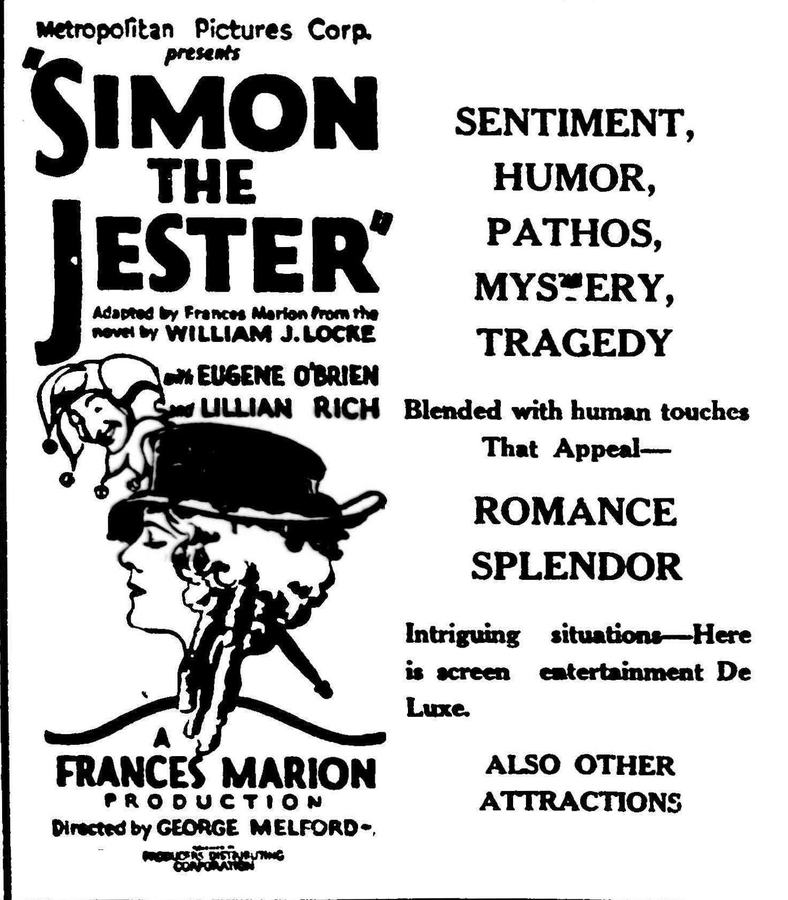
William J. Locke’s fin-de-siècle novella always read like a fever dream soaked in absinthe; George B. Seitz transmutes that hallucination into celluloid moonshine, tinting each reel with bruised violets, bile greens, and arterial reds. The result—Simon, the Jester—is a 1925 phantasmagoria that treats mortality not as tragedy but as a debauched costume party where Death himself is the reluctant guest of honor.
Edgar L. Davenport’s Simon enters swaddled in vicuña and self-contempt, a man whose blood cells apparently liquefied into gold plate. The physician’s verdict—six months—lands like a guillotine, yet Simon’s eyes ignite with perverse glee. He does not yearn for bucket lists or Himalayan monasteries; he wants to detonate his fortune like dynamite in a cathedral. The engagement ring he rips from Eleanor’s gloved finger becomes the first shard of shrapnel.
What follows is a picaresque of self-immolation: rooftop champagne orgies, midnight carriage races through Hyde Park fog, and a clandestine pact with a dwarf whose silhouette could hide inside a top hat. Locke’s prose excelled at gallows whimsy; Seitz translates it into visual shorthand—low-angle shots that elongate Simon into a skeletal monarch looming over a toy-city London.
The assassination sequence—filmed on location in Montmartre back alleys—plays like an Expressionist woodcut. Crauford Kent’s deserting husband skitters across wet cobblestones, pursued by the dwarf’s glinting stiletto. Simon watches from the shadows, face strobed by neon pharmacy signs, half-grinning as though death were an after-dinner cabaret. When the blade finds its mark, Seitz cuts to a close-up of rain diluting blood into rose watercolor—an image that prefigures the later, more intimate hemorrhaging inside Simon’s own body.
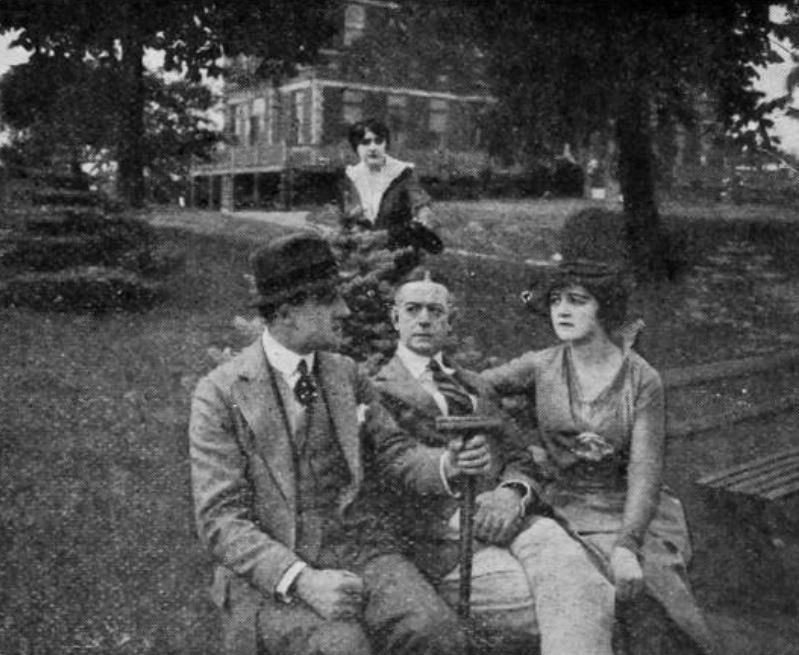
Yet murder offers no catharsis; Simon collapses, lungs rattling like cracked porcelain. Lola—introduced earlier in a Hippodrome act where she coaxes Bengal tigers through flaming hoops—becomes his deus ex machina. Irene Warfield plays her with a bruised swagger: eyes that have watched men die nightly under the big top, a mouth that smiles only when the spotlight hits. She drags the ailing plutocrat into her garret, spoon-feeds him broth, and tells him bedtime stories about circus trains derailed by love.
Simon convalesces, but the social chasm yawns. Eleanor and Dale (the secretary, equal parts valet and vampire) invade Lola’s dressing room, sniffing the air for cheap perfume and moral decay. Their disdain is a velvet-gloved slap; Lola, biting back tears, reclaims her sequined leotard and returns to the ring. Seitz frames her exit through a cracked mirror—seven fractured reflections of a woman dissolving into spectacle.
Meanwhile, medicine stages its own coup. A German surgeon—billed only as “Herr Doctor”—performs a procedure so audacious the intertitles refuse description. We glimpse only Simon’s eyes snapping open beneath ether fumes, pupils dilated like solar eclipses. The message: science can unwrite fate, but only if the patient pays in humility.
Reborn, Simon embarks on a continent-wide search. Trains slice through Alpine snow; steamships exhale into Marseille dusk. Seitz overlays these travels with double-exposures of Lola’s face hovering like a migratory moon. When Simon finally discovers her in a Brussels cabaret, she is no longer the feral cat-trainer but a vedette draped in peacock feathers—yet the spotlight cannot hide the scar tissue across her eyes.
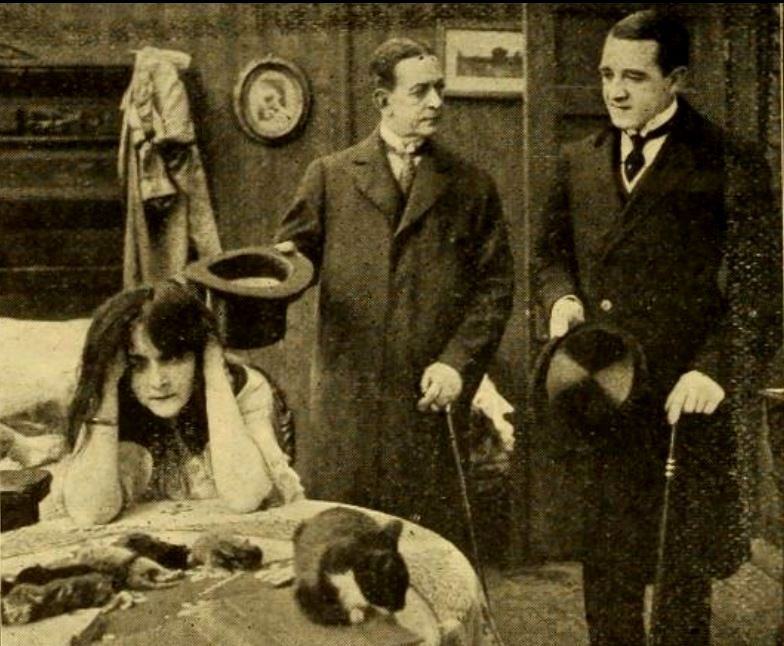
The dwarf’s re-entrance is operatic: he erupts from a trapdoor beneath the stage, acid flask in hand. In the ensuing scuffle, glass shatters, and Lola’s corneas sizzle into opaque milk. Blindness here is not mere pathos; it is tragic irony calcified—the woman who once commanded beasts with a glance now gropes through darkness she helped author.
Simon’s penance is to become Lola’s seeing-eye angel. He reads her Baudelaire, describes sunrise in Pantone swatches, and finances a second operation—this one pioneered by a Viennese ophthalmologist whose spectacles reflect entire galaxies. The surgery sequence, shot in surgical-white tint, is intercut with flashbacks of tigers leaping through hoops: a metaphor for the human heart defying its cage.
When bandages unravel and Lola’s pupils contract back into starlight, she confronts the mirror. Sight restores not merely the world but her right to choose. Only now does she accept Simon’s ring—not as charity from a guilty banker, but as contract between equals who have both clawed back from the underworld.
Davenport’s Simon is a study in patrician erosion—voiceless yet eloquent in the silent grammar of eyebrow arches and trembling cigar ash. Watch the moment he pockets the dwarf’s blood-spattered handkerchief: a flicker of nausea quickly smothered by aristocratic decorum. Warfield’s Lola counterbalances with feral grace; her fingers ripple as though permanently conducting invisible music. In the hospital cot scene she hums a lullaby off-camera, and the intertitle simply reads: “She sang the way tigers dream of grass.”
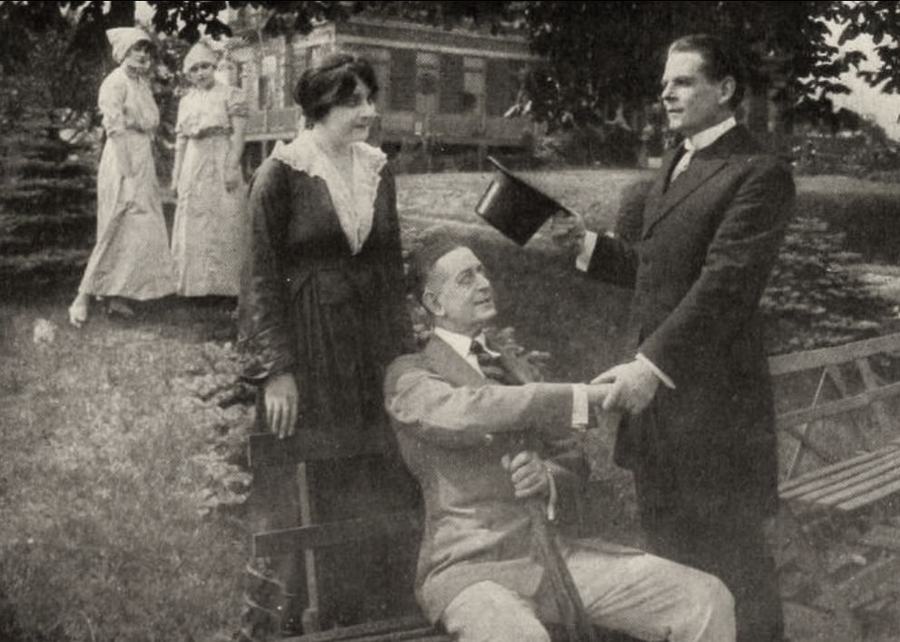
Jerold T. Hevener’s dwarf is the film’s id unchained—part jester, part avenging fury. His limp, caused by a botched circus leap, becomes a choreographic motif: every third step syncopates with the film’s tension strings, a metronome of impending doom.
Seitz and cinematographer Edwin Arden eschew monochrome realism. Night scenes drip with cyanotype blues, suggesting moonlight infected by melancholy. Interiors bloom in amber, as though every parlor were a beeswax cathedral. Paris exteriors alternate between viridian and sickly lavender, evoking absinthe hallucinations. The acid-attack moment is hand-painted in scarlet directly on the 35 mm—each frame a wound.
Compositions favor verticality: skyscrapers, cathedral spires, circus tents piercing clouds. Humans appear as ornate parasites clinging to monuments. This visual hierarchy foreshadows Simon’s realization that wealth is merely scaffolding; love is the edifice, fragile but upright.
Though released two years before synchronized dialogue, the film toured with a custom score for chamber quintet—harp, clarinet, violin, timpani, and musical saw. Cues were timed to reel changes: a habanera when Simon plots murder; a lullaby in lydian mode during Lola’s convalescence. Contemporary critics compared the effect to Griffith’s Avenging Conscience, yet Seitz’s score is less Wagnerian bombast, more debauched cabaret.
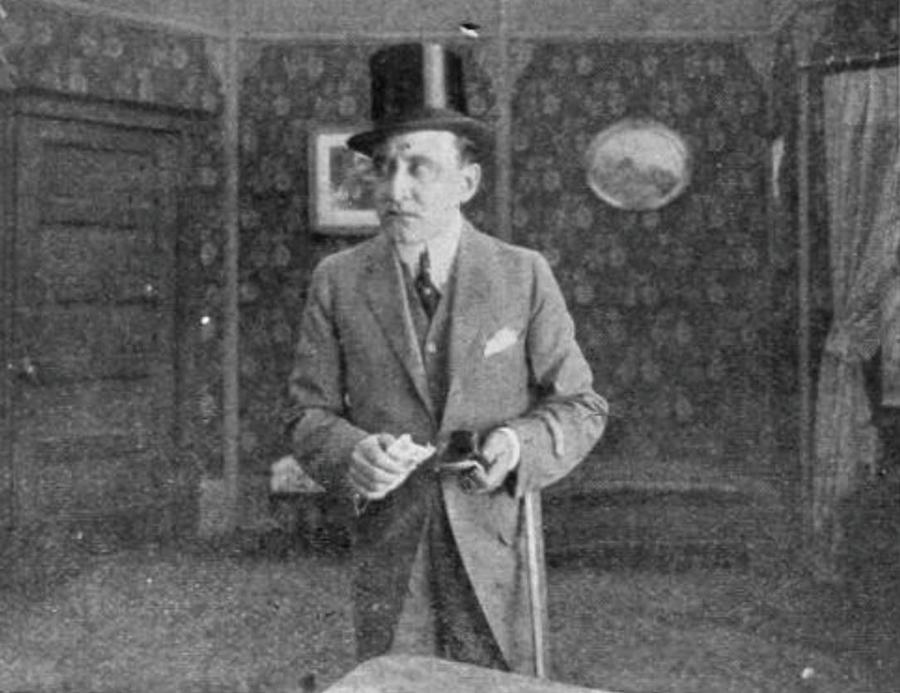
Simon’s death-rebirth arc rhymes with Pathé’s Passion tableaux, yet his miracles are purchased, not prayed for. Lola’s blindness parallels the sacrificial sightlessness in Satyavan Savitri, though here the gods are scalpels, not deities. Meanwhile, the circus milieu invites comparison with The Circus Man and Fanchon, the Cricket, yet Seitz’s big top is a moral Colosseum rather than a sentimental playground.
For decades the film was presumed lost—one more casualty of nitrate bonfires. A 16 mm reduction print surfaced in a Slovenian monastery in 1998, missing the Paris murder reel. The Cineteca di Bologna restored it in 2019 using a Czechoslovak export negative, reinstating the blood-blue tint. Current home-video editions (Region-free Blu, Kino.de) include a new score by Minuit Avant and an audio essay on Locke’s atheist mysticism.
Simon, the Jester is neither cautionary sermon nor melodramatic tearjerker; it is a baroque danse macabre that laughs at the abyss until the abyss laughs back, then pays for its dental reconstruction. It argues that charity without empathy is just another currency, and that redemption is meaningless unless it bankrupts the redeemer. Watch it at midnight with absinthe and a tourniquet—because some silents still bleed in Technicolor.
“To jest at death is human; to love while jesting—divine.”
—Simon De Gex, final intertitle
For further fever dreams, explore Man of the Hour for more clock-race melodrama, or Breaking the News for another tale where media vultures circle human tragedy.

IMDb 6.3
1914
Community
Log in to comment.