DbcultAccessing Vault...
3.6/10
Senior Film Conservator
A definitive 3.6/10 rating for a film that redefined the boundaries of cult cinema. Robbery Under Arms remains a cornerstone of transgressive art.
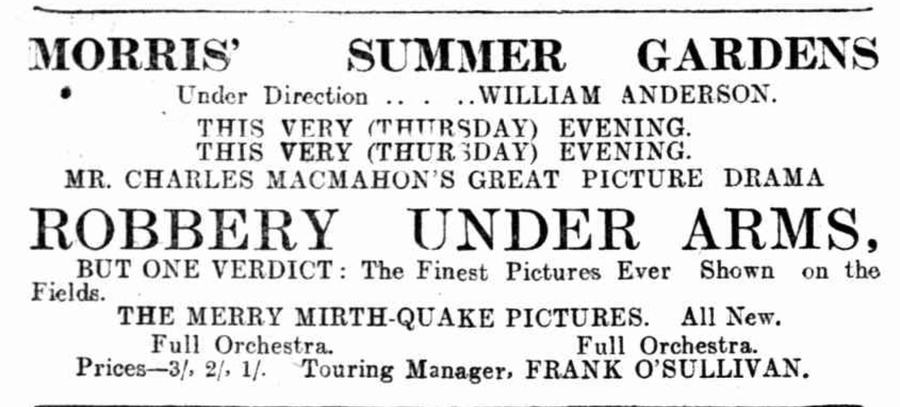
Stepping back into the nascent days of cinema, a period often characterized by fleeting actualities and theatrical adaptations, we encounter ‘Robbery Under Arms’ (1907), an Australian cinematic endeavor that, despite its potential obscurity to modern audiences, represents a crucial waypoint in the evolution of narrative filmmaking. This ambitious production, penned by Rolf Boldrewood and Charles MacMahon, and directed by the latter, sought to translate the sprawling, iconic Australian bushranging novel onto the silver screen. In an era where the very language of film was still being articulated, a project of this scope was nothing short of audacious, a testament to the burgeoning creative spirit of early Australian cinema.
The year 1907 was a fascinating juncture in cinematic history. Just a year prior, Australia had already laid claim to producing what is widely considered the world's first feature-length narrative film, ‘The Story of the Kelly Gang’ (1906). This set a precedent, establishing Australia as an early innovator in long-form storytelling through moving images. It was against this backdrop that ‘Robbery Under Arms’ emerged, another pivotal entry in the nascent bushranger genre that so captivated the Australian imagination. Unlike many of its global contemporaries, which were often short, single-shot actualities documenting everyday life or public events – think of the spectacle of ‘The Corbett-Fitzsimmons Fight’ or the industrial documentation of ‘Westinghouse Works’ – ‘Robbery Under Arms’ committed to a sustained, complex narrative arc. This commitment alone elevates it beyond mere historical curiosity, marking it as a significant cultural artifact.
The film’s very existence underscores a profound desire within a relatively young nation to see its own myths, its own heroes, and its own struggles reflected back from the flickering screen. The bushranger, a figure simultaneously reviled and romanticized, embodied a particular strain of Australian identity – one of rebellion, rugged individualism, and a complicated relationship with authority. To adapt Boldrewood’s novel, a literary cornerstone of this mythology, was to engage directly with the national psyche, offering audiences a cinematic mirror to their collective consciousness.
Rolf Boldrewood’s novel, first serialized in 1882 and published in book form in 1888, is a sprawling epic that captures the essence of colonial Australia. Its narrative, told from the perspective of Dick Marston, one of the eponymous robbers, offers a nuanced portrayal of bushranging life, replete with thrilling escapades, moral dilemmas, and tragic consequences. For Charles MacMahon and his team, the challenge of condensing such a rich, multi-faceted story into a silent film of 1907 was immense. The cinematic grammar of the time was rudimentary; close-ups were rare, elaborate editing techniques were still embryonic, and sound was a distant dream. Narration relied heavily on intertitles, and performances were often theatrical, designed to convey emotion through exaggerated gesture rather than subtle expression.
One can only imagine the creative decisions made to translate the novel's intricate plot, its vivid characterizations, and its sweeping descriptions of the Australian landscape into a series of tableau-like scenes. The novel’s portrayal of Captain Starlight, a figure of compelling charm and dangerous charisma, would have required a powerful performance from William Duff, who took on the role. Similarly, the journey of Dick and Jim Marston, played by George Merriman and Lance Vane respectively, from innocent youths to hardened outlaws, would have been conveyed through broad strokes, relying on the audience’s familiarity with the source material and the actors’ ability to project archetypal emotions. Jim Gerald, another key cast member, would have contributed to this ensemble, each performer working within the confines of a still-developing art form.
The directorial vision of Charles MacMahon, alongside the acting talents of William Duff, George Merriman, Lance Vane, and Jim Gerald, must be appreciated within the historical context of early cinema. Acting in 1907 was a far cry from the nuanced naturalism we expect today. Performers, often drawn from the stage, tended towards pantomime, utilizing grand gestures and facial expressions to communicate emotional states across the proscenium arch of the screen. This style, while perhaps jarring to contemporary viewers, was the lingua franca of silent film, a necessary exaggeration to convey narrative without dialogue.
MacMahon’s direction would have focused on staging scenes effectively, ensuring that the key actions and emotional beats were clear, even if the subtleties of character development were largely left to the audience’s imagination or pre-existing knowledge of the novel. The vast, untamed Australian landscape, so central to Boldrewood’s narrative, would have served as a powerful, if static, backdrop. The very act of filming on location, capturing the raw beauty and harshness of the outback, would have been a logistical challenge, yet crucial for imbuing the film with an authentic sense of place. This commitment to location shooting, rather than relying solely on painted backdrops, signifies an early understanding of cinema’s unique ability to transport viewers to real environments.
The technical capabilities of 1907 cinema imposed significant constraints on any filmmaker, yet they also fostered remarkable ingenuity. Cameras were bulky, stationary affairs, often recording from a fixed vantage point, akin to watching a stage play. Editing was rudimentary, primarily used to transition between scenes rather than to manipulate time, space, or perspective in the dynamic ways we now take for granted. The concept of parallel editing, cross-cutting between different locations to build suspense, was still in its infancy, popularized later by figures like D.W. Griffith. Therefore, a film like ‘Robbery Under Arms’ would have relied on a series of carefully composed, self-contained shots, each conveying a distinct narrative beat.
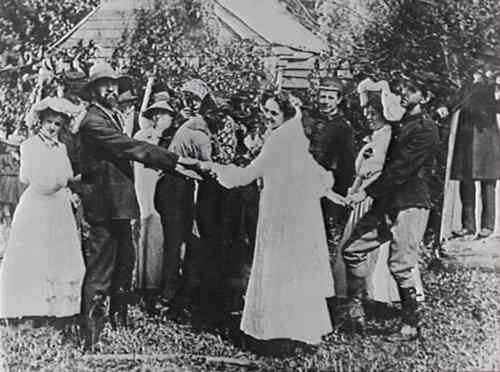
Action sequences, crucial to a bushranging tale, would have been choreographed with a theatrical flair, emphasizing movement and spectacle within the frame. Horse chases, shootouts, and daring escapes, while perhaps lacking the kinetic dynamism of later action cinema, would have been presented with a directness that, for audiences of the time, was undoubtedly thrilling. The use of intertitles, often hand-lettered, would have been paramount in explaining complex plot points, conveying dialogue, and guiding the audience through the narrative’s twists and turns. These textual interventions were not mere interruptions but integral components of the storytelling, bridging the gaps that purely visual narration could not yet span.
The significance of ‘Robbery Under Arms’ extends far beyond its individual artistic merits, which are difficult to fully assess given the film's age and potential incompleteness (many early films are lost or only partially preserved). Its true legacy lies in its contribution to establishing a distinct Australian cinematic identity. Alongside ‘The Story of the Kelly Gang’, it cemented the bushranger narrative as a foundational genre, a cinematic equivalent to the American Western. These films were not merely entertainment; they were cultural affirmations, articulating a particular vision of Australian history and character.
The themes explored in ‘Robbery Under Arms’ – the struggle against authority, the allure of freedom, the unforgiving nature of the land, and the complex morality of those who live on its fringes – have resonated throughout Australian cinema for over a century. From the earliest silent features to contemporary dramas, the echoes of Boldrewood’s narrative and MacMahon’s pioneering vision can be felt. It’s a lineage that speaks to a persistent fascination with the frontier, with figures who defy convention, and with the unique challenges of forging a society in a vast and often hostile environment.
To fully appreciate ‘Robbery Under Arms,’ it’s helpful to contextualize it within the broader landscape of global cinema in the early 20th century. While Australia was busy crafting its bushranger epics, other nations were exploring different facets of the new medium. In France, pioneers like Georges Méliès were enchanting audiences with fantastical trick films, while the Lumière brothers continued to perfect their actualities. In America, narrative filmmaking was gaining traction, moving beyond simple vignettes towards more complex storytelling, though often still in shorter forms than the Australian features. Films like ‘Life and Passion of Christ’ (and its various international iterations such as ‘S. Lubin’s Passion Play’ or ‘The Life and Passion of Jesus Christ’) represented ambitious narrative undertakings, often with a religious focus, demonstrating a global move towards longer, more involved stories. However, few were tackling secular, nationalistic epics of the scale seen in Australia.
The contrast with many contemporary films is stark. While the world was captivated by short boxing matches like ‘Jeffries-Sharkey Contest’ or travelogues such as ‘Trip Through Ireland’, Australia was pushing the boundaries of what cinema could achieve as a storytelling medium. The ambition to adapt a popular novel, with its multiple characters, locations, and dramatic confrontations, placed ‘Robbery Under Arms’ firmly in the vanguard of cinematic development. It represented a bold assertion that film was capable of more than novelty; it was a potent vehicle for cultural expression and national myth-making.
It's an unfortunate truth that much of early cinema, particularly productions from over a century ago, has been lost to the ravages of time, neglect, and the inherent fragility of early film stock. While fragments or even full prints of ‘Robbery Under Arms’ may exist in archives, detailed critical analysis based on a complete viewing is often impossible. This means our appreciation must often be filtered through historical accounts, production notes, and an understanding of the cinematic conventions of the era. Yet, even in its absence or fragmentation, the film holds immense power as a concept, as a testament to the aspirations of its creators and the cultural hunger of its audience.
The very act of attempting such a complex narrative in 1907 speaks volumes. It signifies a belief in cinema’s potential, a willingness to invest resources and creative energy into a medium that was still finding its footing. The performances of Duff, Merriman, Vane, and Gerald, guided by MacMahon, were part of this grand experiment, contributing to a nascent acting tradition that would evolve dramatically over the coming decades. Their work, even if imperfect by later standards, laid crucial groundwork for future generations of Australian filmmakers and performers. The film’s contribution to the Australian national identity, its exploration of the bushranger archetype, and its pioneering spirit ensure its place in cinematic history, regardless of its physical survival.
‘Robbery Under Arms’ (1907) stands as more than just an early film; it is a time capsule of ambition, a testament to the pioneering spirit of Australian cinema, and a vivid reflection of a nation grappling with its own identity. Through the lens of Charles MacMahon and the performances of William Duff, George Merriman, Lance Vane, and Jim Gerald, the epic tale of Captain Starlight and the Marston family was brought to life, captivating audiences with its daring escapades and poignant human drama. It exemplifies the audacious spirit of early narrative filmmaking, demonstrating a profound commitment to storytelling that transcended the technical limitations of its era.
Even if its full glory remains largely unseen by modern eyes, its historical and cultural significance cannot be overstated. It is a foundational stone in the edifice of Australian cinema, a bold declaration that local stories, rooted in the unique landscape and history of the continent, were worthy of the grandest cinematic treatment. As we reflect on the genesis of film, ‘Robbery Under Arms’ reminds us that true innovation often lies not just in technological advancement, but in the courage to tell compelling stories, to capture the heart of a nation, and to project it onto the silver screen for generations to come. It’s a film that, even in its ghostly presence, continues to resonate with the echoes of a wild, untamed past and the enduring power of narrative art.
IMDb 6.1
1926
Community
Log in to comment.