DbcultAccessing Vault...
Cult Review
Senior Film Conservator
Spoiler-rich excavation below; enter the boarding-house at your own peril.
I still feel the splinters of that parlour floor under my fingernails—proof that Ivan Abramson’s 1916 atrocity exhibition Sins of the Parents refuses to stay politely archival. The film arrives like a sulphur match struck in a mausoleum: the first image is a parlour gas-jacket guttering, its halo wobbling across Laura Henderson’s cheekbones while Angelo’s violin saws out a lied that promises forever but smells of wormwood. One cut later, the camera glides past lace doilies, over cracked plaster, and settles on Laura’s pupils—two black novas absorbing the audience like antimatter. In that instant you realise this is not the genteel uplift so many silents proffer; it is a scalpel prizing open the American family album to reveal gangrene beneath.
Abramson’s screenplay folds time like a paper funeral bell. Act I is an idyll shot through the keyhole: moonlit boardwalks, a mandolin plucked on a fire-escape, an engagement ring that catches the nickelodeon spotlight like a coin dropped in a cesspool. Act II detonates the illusion—Angelo’s letter from Italy arrives, its envelope sliced open by the same aunt who once rocked Laura’s cradle; the paper trembles, the soundtrack (a lone piano, slightly flat) hits a discordant cluster, and the heroine’s silhouette collapses into a silhouette of ash. The montage that follows—childbirth in a tenement bedroom, abandonment on a depot bench, the baby’s hand grasping air where a mother should be—plays out in less than four minutes, yet the after-burn lasts the remaining hour.
Jump nineteen years. New York is now a grid of klieg-light chiaroscuro: elevated trains vomit sparks above Ruth’s bobbed hair, and the Hudson River becomes a black mirror reflecting neon ads for pomade and painless dentistry. The city is no backdrop; it is a pimp, promising everything, delivering debt. Abramson’s cross-cutting anticipates Griffith’s later intolerance spectacles but swaps epic Babylon for the city’s subterranean economy—white slavery, dance-hall extortion, the municipal meat-grinder that chews immigrant daughters.
Cinematographer John W. Brown, saddled with orthochromatic stock that turns red lips nicotine-yellow, weaponises contrast until every frame feels like a daguerreotype soaked in iodine. Note the sequence where Ruth, lured by Tony, crosses the threshold of his “aunt’s” townhouse: the door yawns like a coffin lid, interior darkness bleeds into the camera lens, and for a full second the screen is almost pure black save for the glint of Tony’s incisors. That negative space is the moral vacuum at the heart of the film, a place where predation masquerades as rescue.
The courtroom crescendo is staged in cavernous low-angle: the judge’s bench looms like a mausoleum slab, jury members are carved silhouettes, Angelo’s face—half-lit from below—becomes a death-mask. When Laura bursts in, her white veil streams behind her like a comet tail, the only ivory note in an obsidian sea. The moment is pure operatic excess, yet the emotional torque is undeniable; the camera, once static, suddenly dollies forward, swallowing Laura’s fractured expression in an iris that closes like a bruised eye.
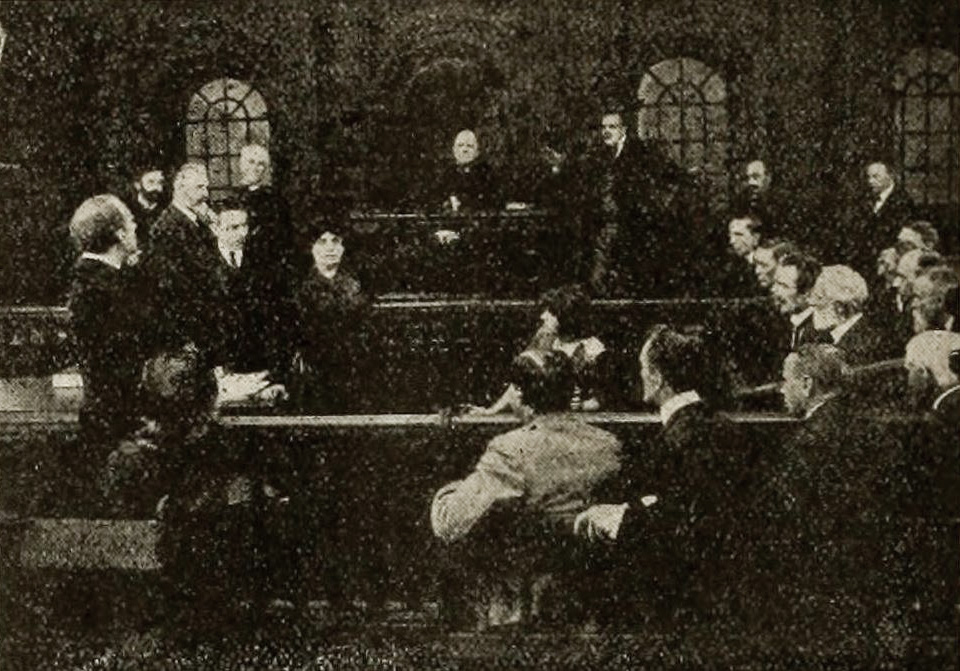
Louise Corbin’s Laura is a masterclass in micro-gesture: watch the tremor at the corner of her mouth when she pockets the first money order for Ruth—guilt, pride, and a sliver of self-congratulation flicker across her lips like heat lightning. Later, as sanity frays, Corbin’s eyes acquire a fixed, phosphorescent stare; she seems to look past the lens into the auditorium, accusing every spectator of voyeuristic complicity.
Sarah Adler’s Ruth, by contrast, is all kinetic desperation. She hurls herself against locked doors, claws at windowpanes, and in the struggle with Tony her body arcs like a bow drawn for war. The fatal gunshot is not a cutaway; we see the recoil jolt through her wrist, the powder-flash bloom across her cheekbones, the instant realisation that liberty and damnation now share the same calibre.
John Webb Dillon’s Angelo/Angell carries the oily charm of a Caravaggio satyr. In close-up his violinist fingers tap along the witness-stand rail as though still counting cadenzas; the digits that once coaxed cantatas now drum out the death-roll of his own offspring.
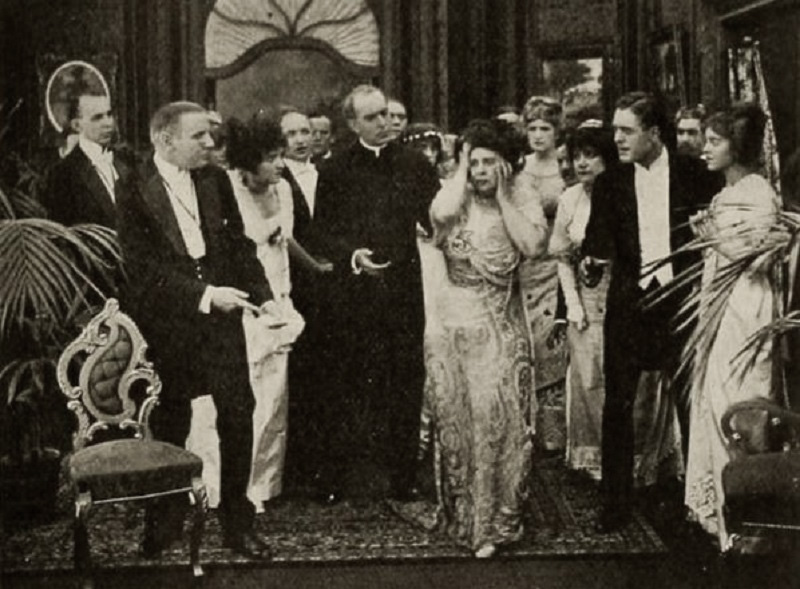
What sears the memory is the film’s refusal to distribute absolution evenly. Laura’s sin is omission, Angelo’s is predation, Tony’s is entrepreneurial cruelty, yet the narrative damns them all via a relay of consequences. Even Reverend Bradley—morally stainless by melodramatic standards—pays with the corpse of Aline, his legitimate daughter, whose suicide feels less like tragedy than ritual expiation for communal guilt.
The title card, flashed after Aline’s body is discovered, reads: “The sins of the parents are visited upon the children—even unto the third and fourth generation.” The typography is Gothic, the ink crimson; the quotation is biblical, but the film treats it as a forensic equation, not a homily. In 1916, when progressive reformers preached environment over heredity, Abramson’s fatalism lands like a sulphuric rebuttal.
Viewed today, the white-slavery panic feels both quaint and nauseatingly contemporary; substitute Instagram grooming for dance-hall entrapment and the plot could headline tomorrow’s podcast. Yet the film’s true propulsion is not social hysteria but the terror of misclassified identity—birth certificates forged, surnames swapped, bloodlines scrambled. In an era of DNA databanks and ancestry kits, the dread still vibrates.
Compare it to Griffith’s The Betrothed (1913), where virtue is rewarded with narrative amnesty; or to the flapper freedoms in Alone in New York (1915). Abramson will have none of it. His city is a carnivorous organism, his women both currency and collateral damage, his men either feckless or fiendish. Only the minister stands apart, and even he must descend into the Tombs to earn grace.
Archival evidence suggests the original road-show employed a violinist in the orchestra pit—an on-screen/off-screen echo of Angelo’s instrument. When Ruth reads Tony’s slavery contract, the accompaniment was instructed to pivot into a dissonant Hungarian czardas, bow hair loosened to create guttural rasp. Modern screenings often substitute a lacrimose piano; resist. Insist on a live string trio, and demand the final chord resolve not in major uplift but in a minor add-9 that suspends redemption indefinitely.
No complete print is known to survive; what cinephiles circulate is a 42-minute condensation struck circa 1922 for the South-American market, Spanish intertitles intact. Even in truncated form, the condensation is a bruise that blooms across the retina. Rumours persist of a 35mm negative discovered in a Franciscan monastery outside Lima—awaiting restoration funds. Until then, we piece the narrative together via stills in Motography, cue sheets in the Library of Congress, and the fever dreams of archivists.
Because it refuses the narcotic of nostalgia. Because every time you convince yourself that pre-code cinema was “innocent,” Sins of the Parents crawls from the sewer to bite your ankle. Because its ethical algebra—sin begets sin, love demands restitution, identity is a wound—feels eerily predictive of the 21st-century identity wars. And because, in an age when streaming algorithms flatten history into comfort-food playlists, this orphan print still bleeds.
Seek it out in whichever basement revival house dares to thread the sprockets. When the final iris closes on Laura and Ruth folded into Bradley’s embrace, notice the tremor in the minister’s right hand—he is not blessing them; he is clinging to them, lest the abyss he has catalogued swallows him whole. That tremor is the last frame, and it continues long after the house lights rise.
For further excursions into moral vertigo, pair with The Path Forbidden (1916) or From Gutter to Footlights (1915). But prepare to sleep with the lights on.
IMDb 7.2
1932
Community
Log in to comment.