DbcultAccessing Vault...
Cult Review
Senior Film Conservator
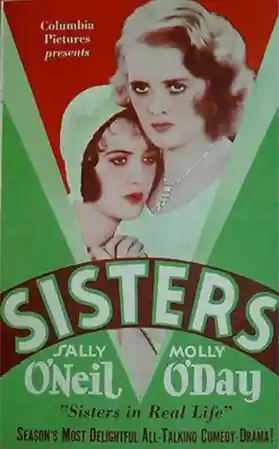
If you like movies that feel like you’re eavesdropping on a loud apartment next door, Sisters is worth a look. You should watch it if you enjoy early sound films where everyone talks way too fast and the drama is messy.
Modern audiences who want a clean plot or good audio will probably hate this one. It’s clunky and the sound hiss is constant.
Sally O'Neil plays Molly, a model in Manhattan who seems to be the only person with a brain in her entire family. She’s trying to help her sister, Rose, who is played by Molly O'Day.
Rose is married to this guy who is a total deadbeat. He’s jobless and just kind of hangs around being a burden, which feels surprisingly modern if you’ve ever had a relative marry a loser.
The movie is at its best when it's just the two sisters talking. You can tell they actually liked each other in real life, or they were just really good at pretending.
Then the movie decides it needs a romantic interest, so enter the census taker. His name is Bill and he’s a total country hick from the middle of nowhere.
Russell Gleason plays him with this 'aw shucks' energy that is so thick you could trip over it. It’s hard to believe a savvy city model would fall for him, but hey, it's 1930.
The census scene itself is actually pretty funny because of how awkward it is. He’s just asking questions and she’s looking at him like he’s a different species.
If you've seen The Wild Party, you know how these early talkies love to have people crowded into small rooms. This movie does that too, and it feels very claustrophobic in a way that I kind of liked.
The plot takes a weird turn when a gangster from Chicago shows up. His name is Johnson and he’s played by Morgan Wallace with a lot of grease.
It feels like the writers realized the family drama wasn't enough, so they threw in some crime. It doesn't really fit with the rest of the movie, to be honest.
One minute they are worrying about the rent, and the next minute there's a guy with a gun. It’s jarring.
I found myself more interested in the sister's struggling marriage than the gangster stuff. It felt more honest.
The husband is just so useless. He’s one of those characters you love to hate because everyone knows someone exactly like him.
The movie doesn't really have a big message. It’s just a slice of life that gets interrupted by a crime plot that feels like it belongs in Raffles, the Amateur Cracksman instead.
The ending comes up pretty fast. It doesn't really resolve the family stuff in a way that felt satisfying to me.
It’s definitely better than something like The Hand Invisible, mostly because the acting feels a bit more natural. But it's still a bit of a relic.
I think the director, James Flood, was just trying to keep the camera still long enough to catch the dialogue. You can tell the actors are trying not to move too far from the hidden microphones.
There’s a scene where they are eating and the sound of the forks hitting the plates is louder than the talking. It made me laugh out loud.
It's not a masterpiece, but it’s interesting as a time capsule. It shows how people were actually living—or at least how movies thought they were living—right at the start of the Great Depression.
If you can get past the scratchy audio, Sally O'Neil is actually really charming. She has this spark that a lot of other actresses from that era lacked.
Overall, I'd say give it a shot if you're bored on a Sunday. Just don't expect it to change your life or anything.
It's just a movie about two sisters and the various idiots they have to deal with. And sometimes, that's enough.
IMDb 5.8
1927
Community
Log in to comment.