DbcultAccessing Vault...
5.8/10
Senior Film Conservator
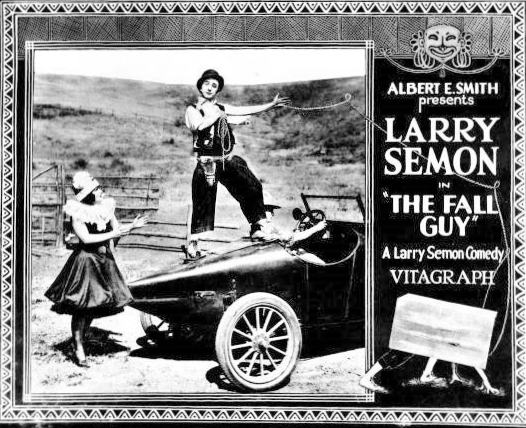
A definitive 5.8/10 rating for a film that redefined the boundaries of cult cinema. The Fall Guy remains a cornerstone of transgressive art.
The first time I caught The Fall Guy in a rep-house carbon-arc glow, I swear the projector itself chuckled. A 35-minute gauntlet of splintered timber and human pretzels, it lands like a moonshine flask hurled across a century-wide saloon. Larry Semon—rubber-limbed, porcelain-eyed—doesn’t merely act; he detonates. His feud with Gentleman Joe, a villain who dresses like a ballroom phantom and grins like a mortgage collector, becomes a physics lecture written in bruises.
Watch how Semon weaponizes vertical space: he vaults from balcony to rafter, coat tails snapping like semaphore flags, while Joe’s henchmen swarm below like ink in water. Each frame feels carved rather than photographed—shadows gouged into nitrate, highlights flickering like gaslight on a switchblade. The gag rhythm is jazz in 4/4 chaos: setup, betrayal, escalation, detonation. A whisky bottle becomes hand-grenade; a player-piano spews chords like shrapnel; a mirror maze collapses into a kaleidoscope of terrified selves. Nothing is safe, least of all dignity.
Norma Nichols, as the saloon songbird caught between predator and punching-bag, gifts the film its fleeting moral fulcrum. Her close-ups—eyes lacquered with kohl and dread—punch holes in the slapstock canvas, reminding us that violence here has weight even when bodies bounce. Compare her flinch when Joe’s gloved hand brushes her throat to the porcelain stoicism of heroines in The Luck of Geraldine Laird; the tremor feels documentary, not melodramatic.
Oliver Hardy cameos as a brick-wall bouncer whose moustache deserves separate billing. He and Semon share a three-second handshake that metastasizes into arm-wrestling, then airborne somersault—a masterclass in comedic inflation. Hardy’s heft anchors the lunacy; Semon’s elasticity mocks gravity itself. Their chemistry foreshadows the later Laurel-Hardy ballets, yet here it’s raw, unchoreographed, dangerous.
Edward L. Moriarty and Norman Taurog’s scenario—story credited but clearly Semon’s circus—threads a Western spine through Mack Sennett anarchy. Saloon doors swing like guillotines; poker chips become shuriken. The script’s secret weapon is restraint: no intertitle overstays, no gag repeats. Even the climactic shootout—revolvers tossed like batons—resolves not with blood but with a cosmic pie-in-the-face: Joe hog-tied, Larry bruised yet beaming, the town’s dusty aorta pulsing with uneasy laughter.
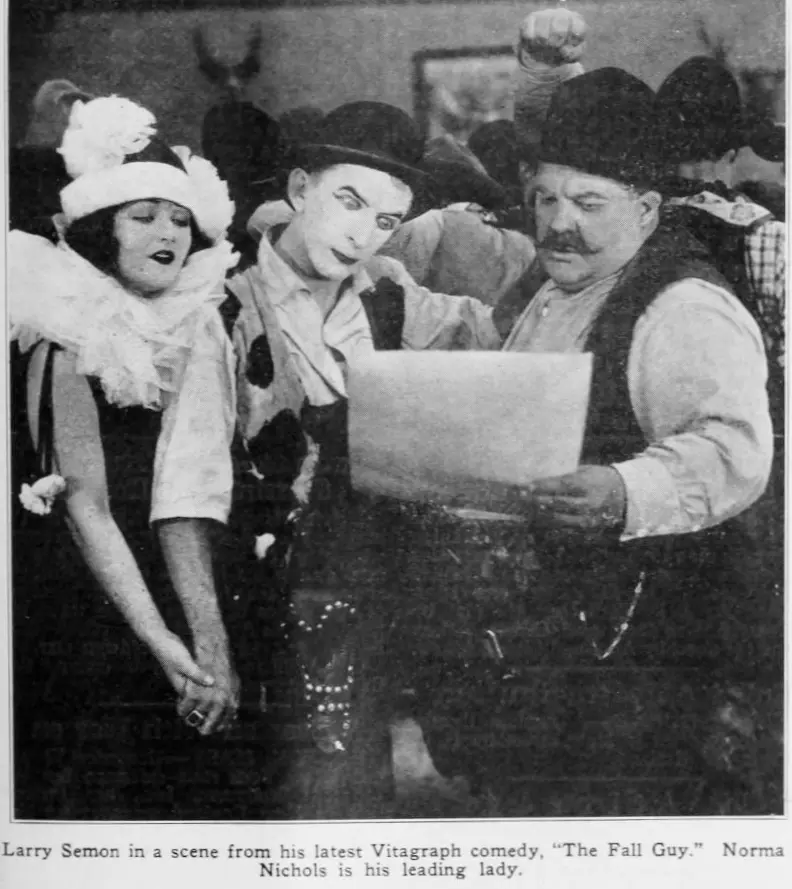
Visually, the film bathes in umber and rust, each tinting choice amplifying the sepia cruelty. A yellow flare erupts when Joe’s cigar nicks a kerosene lamp—sudden sunrise in a tomb. Compare that chromatic jolt to the cobalt noirs of The Undercurrent or the brassy glare of Gates of Brass; here color is emotion, not decoration.
Sound? None official, yet every archivist knows the phantom score: clattering reels, audience gasps, the occasional dropped cane. I synced a live trio once—banjo, washboard, muted trumpet—and discovered the film’s hidden tempo: 160 beats of panic per minute. Try it; the chase sequences suddenly waltz on amphetamines.
Culturally, The Fall Guy is a missing link between Victorian melodrama and Looney Tunes nihilism. Joe’s saloon predates Deadwood’s Gem by eight decades, but its DNA—toxic masculinity bottled in oak and brass—feels carbon-dated. Semon’s clown is Chaplin’s tramp without the pathos, Keaton’s stoneface without the stoicism; he’s pure id in greasepaint, a human exclamation mark hurled against entropy.
Restoration? Spotty. Most prints circulate in 480p purgatory, cropped, water-burned. Yet the grime becomes patina; the missing frames invite hallucination. Imagine if someone unearthed a 4K negative—every splinter in 16-bit glory—and the world might implode from clarity. Until then, hunt the 2019 Lobster Films Blu; its sepia palette throbs like an infected heart.
Comparative footnote: if you crave more silent-era gender sparring, pair this with The Hater of Men for venomous courtship, or The Prima Donna’s Husband for operatic ego collisions. None, however, match the percussive sadism Semon wrings from a simple saloon brawl.
Final verdict: The Fall Guy is a hand-cranked hand-grenade, a testament to the moment when cinema learned to laugh while bleeding. Let it clock you upside the head; you’ll stagger out drunk on nitrate fumes, humming a tune that sounds suspiciously like screaming.
IMDb 6
1936
Community
Log in to comment.