DbcultAccessing Vault...
Cult Review
Senior Film Conservator
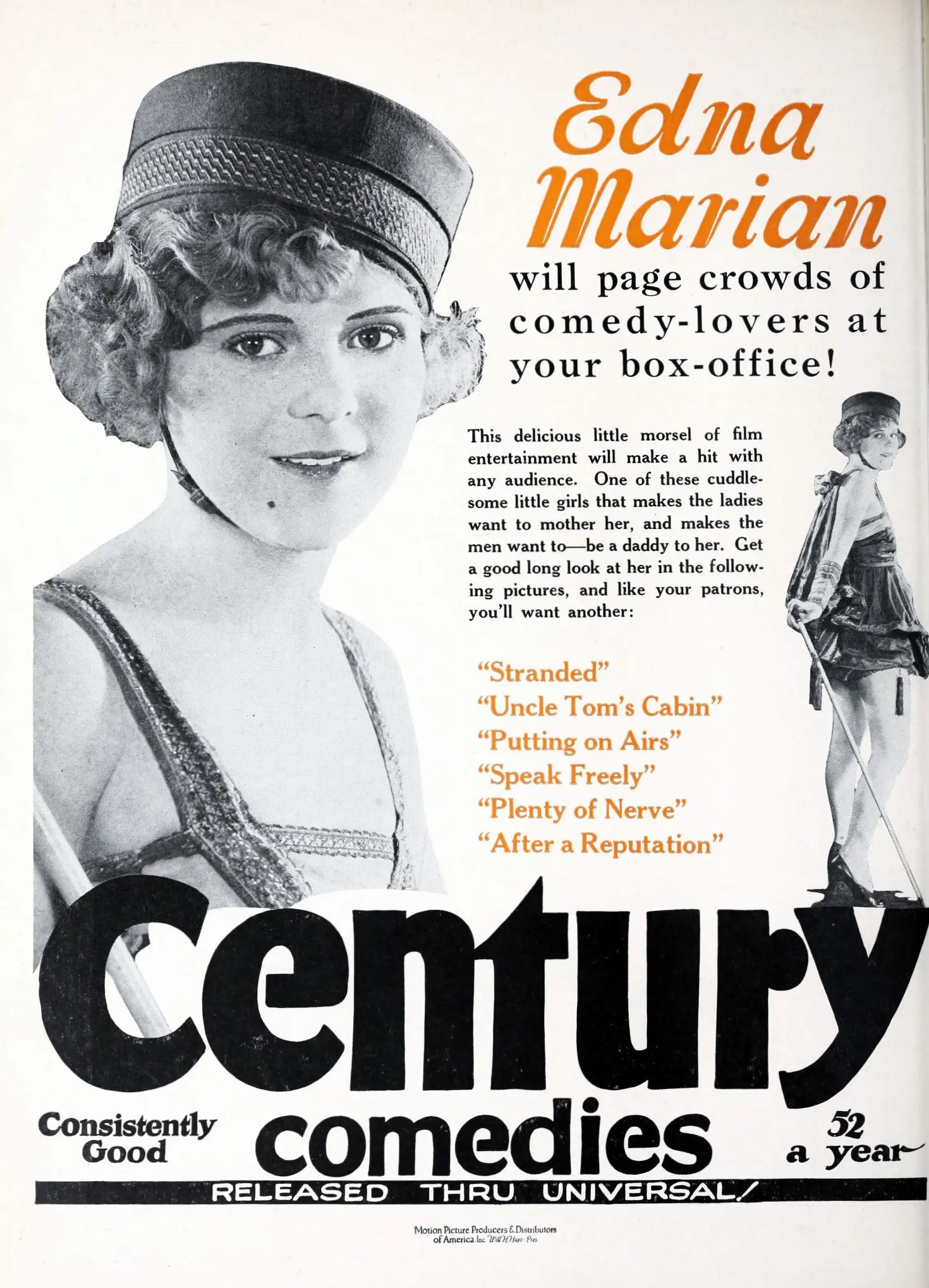
Is Putting on Airs a hidden gem of the silent era or a forgotten relic of a bygone humor style? Short answer: It is a delightful, if predictable, time capsule that serves as a masterclass in the 'fake it until you make it' trope of the 1920s.
This film is for enthusiasts of early American slapstick and those fascinated by the sociological shifts of the Jazz Age. It is most certainly not for viewers who demand complex character arcs or modern pacing, as the plot relies heavily on the kind of coincidences that only exist in the vacuum of a 1924 soundstage.
Before diving into the technical weeds, let's establish the baseline for this production. The film operates on a logic of social anxiety that remains surprisingly relatable today, even if the execution feels dated.
1) This film works because: The central set-piece—the 'jazzy party' in a stolen home—is choreographed with a chaotic energy that perfectly captures the rebellion of 1920s youth culture.
2) This film fails because: The convenience of the ending feels unearned, relying on a 'small world' coincidence that undermines the stakes of the girl's deception.
3) You should watch it if: You want to see the early work of Arthur Lake before he became a household name in the Blondie series, or if you enjoy the 'imposter' subgenre of silent film.
At its core, Putting on Airs is an exploration of the performative nature of wealth. Edna Marion plays the 'poor girl' with a frantic desperation that moves beyond simple comedy. When she dolls herself up, the camera lingers on her transformation, emphasizing that class in the 1920s was often just a matter of the right fabric and a confident stride.
The film shares a thematic DNA with The Ghost of Rosy Taylor, where a woman assumes a false identity to navigate a world that would otherwise ignore her. However, where Rosy Taylor leans into the mystery, Putting on Airs leans into the farce.
The direction by Edward Ludwig is surprisingly nimble. Ludwig, who would later find success in more rugged genres, shows an early aptitude for spatial comedy. He uses the mansion not just as a backdrop, but as a character. The way the girl moves through the 'swell home'—tentative at first, then with a mock-ownership—tells us more about her character than any intertitle could.
Arthur Lake brings a specific kind of 'youthful chap' energy that was the hallmark of 1920s leading men. He isn't the stoic hero; he is the excitable, somewhat naive counterpart to Marion's calculating protagonist. Their chemistry is built on a shared delusion.
Consider the scene where they first meet. The lighting is soft, almost romantic, contrasting sharply with the harsh, flat lighting of the girl's actual home life. This visual distinction reinforces the idea that the 'rich' world is a dreamscape, a place where the rules of the real world don't apply.
Lake’s performance is a fascinating precursor to the bumbling but well-meaning characters he would play later. He has a way of using his entire body to express enthusiasm, which works perfectly during the party sequence. It’s a performance that feels less like acting and more like a physical manifestation of the decade's optimism.
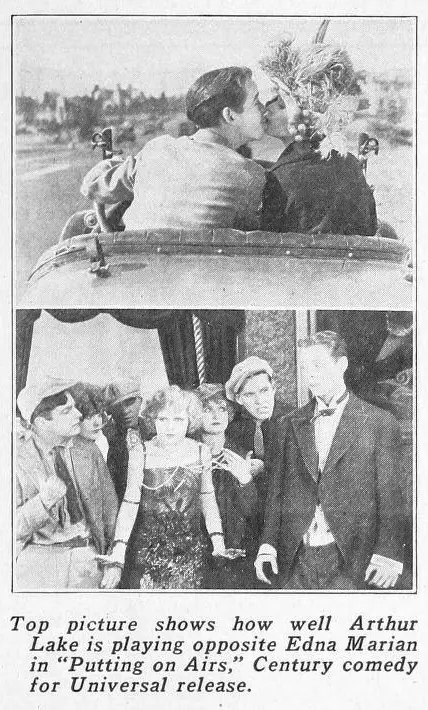
The film’s climax hinges on the party. In 1924, 'jazz' was a shorthand for modernism, rebellion, and a break from Victorian morality. By staging this party in a home that isn't hers, the protagonist isn't just stealing a house; she’s stealing a lifestyle.
The cinematography during this sequence becomes more kinetic. We see flashes of flappers and dancing that feel genuinely uninhibited. It is the peak of the girl's bluff. For a few minutes, the film asks the audience to root for the lie. We want the party to succeed because the alternative—returning to the reality of poverty—is too grim for a comedy.
This tension is what makes the film more than just a simple gag reel. There is a palpable fear of being 'found out' that drives the pacing. It’s a similar tension found in Lady Windermere's Fan, though handled with much less subtlety here.
Is Putting on Airs worth a spot on your watchlist today? If you are a student of film history, the answer is a resounding yes. It provides a clear window into how the silent era handled the transition from the innocent 'boy-meets-girl' plots of the 1910s, seen in films like Puppy Love, to the more cynical, class-conscious stories of the mid-20s.
However, if you are looking for a laugh-a-minute comedy, you might find the humor a bit thin. The 'parents returning' trope was already becoming a cliché even in 1924. What saves it is the sheer earnestness of the cast. They play the stakes as if it’s a life-or-death drama, which only makes the comedy land harder.
It works. But it’s flawed. The resolution is far too tidy. The reveal that the homeowners are the boy's parents is a narrative coincidence that feels like a cheat. It robs the girl of a true moment of reckoning. Instead of facing the consequences of her deception, she is essentially rewarded for it. It’s a bizarrely optimistic take on fraud.
The pacing of Putting on Airs is its greatest strength. At a time when many films struggled with 'middle-act drag,' Ludwig keeps the momentum moving toward the inevitable confrontation. The transition from the girl's humble beginnings to the mansion is handled with a series of quick, efficient scenes that establish her motivation without lingering on the pathos.
The tone, however, is a bit of a rollercoaster. It shifts from a lighthearted romance to a high-stakes farce, and finally to a sentimental family reunion. While this was common for the era, modern viewers might find the shifts jarring. One moment we are laughing at a physical gag involving a vase, and the next we are meant to feel the weight of social rejection.
The set design deserves a mention. The 'swell home' is depicted with an opulence that feels oppressive. It’s filled with high ceilings and ornate furniture that dwarf the characters, visually reinforcing the idea that they are out of their league. This is a subtle touch that elevates the film above standard slapstick fare.
Pros:
Cons:
Putting on Airs is a charming, if lightweight, entry in the silent comedy canon. It doesn't have the emotional depth of A Certain Rich Man or the sophisticated wit of Lubitsch, but it possesses a raw, infectious energy. It is a film that perfectly illustrates the 'Jazz Age' obsession with surface-level beauty and the fear of the reality beneath.
While the ending is a bit of a cop-out, the journey there is filled with enough visual invention and genuine charm to make it worth the watch. It is a film about the masks we wear, and while it doesn't quite take those masks off, it has a lot of fun painting them. It’s a minor work, but a memorable one. It’s dated, yes. But it’s also undeniably alive.
IMDb —
1916
Community
Log in to comment.