DbcultAccessing Vault...
Cult Review
Senior Film Conservator
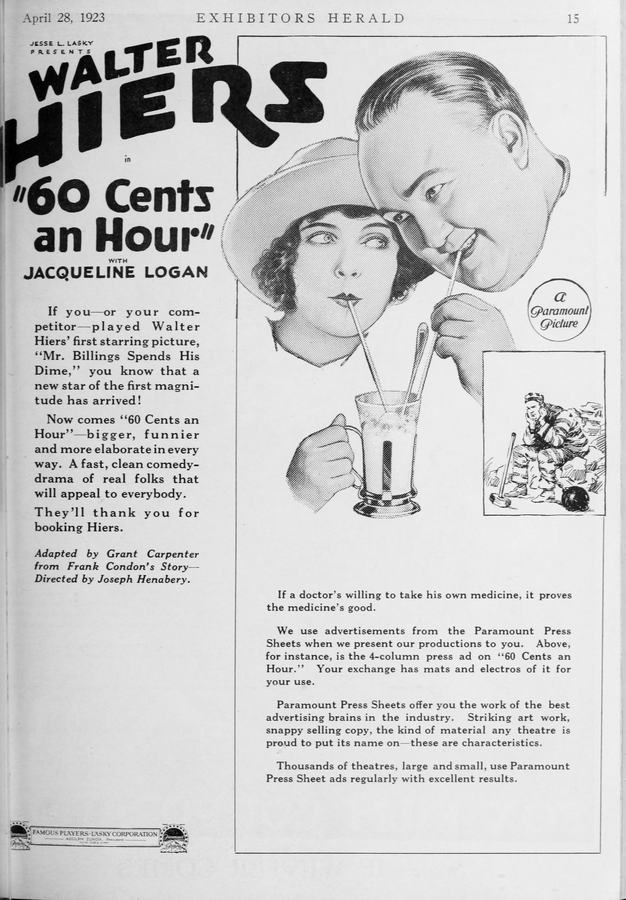
Ah, the silent era! A time when narratives unfurled not through booming dialogue but through the eloquent pantomime of performers, the evocative swell of an orchestra, and the stark, beautiful chiaroscuro of black and white. Within this hallowed period, a gem like Sixty Cents an Hour emerges, a delightful confection of wit, romance, and a distinctly American brand of ingenuity that feels as fresh today as it must have nearly a century ago. For those who harbor a fondness for tales where resourcefulness trumps inherited wealth, where love blossoms against improbable odds, and where a good laugh is never far away, this cinematic offering is an absolute treasure. It reminds us that sometimes, the most profound statements are made without a single spoken word, articulated instead through the nuanced expressions of actors and the sophisticated visual storytelling that defined an entire epoch of filmmaking. The film doesn't just tell a story; it dances and winks, inviting its audience into a world where the underdog, armed with little more than cunning and an unwavering spirit, can indeed conquer the loftiest of societal barriers.
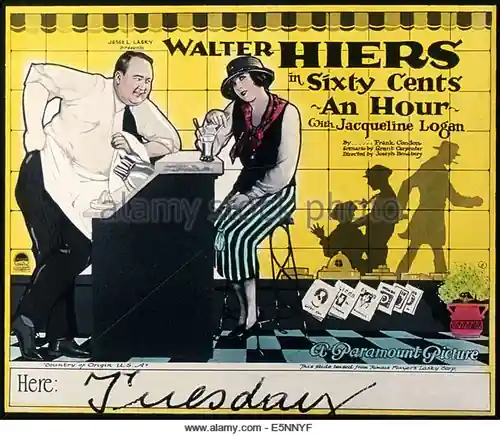
At the heart of this charming narrative is Jimmy Kirk, portrayed with an endearing blend of earnestness and nascent mischief by Cullen Tate. Jimmy is, to put it mildly, a man of modest means. His daily grind as a soda jerk at a local establishment nets him a paltry $7.50 a week, a sum that in 1923 was barely enough to keep body and soul together, let alone fuel grand romantic ambitions. Yet, Jimmy is no ordinary soda jerk. He possesses a fire, an unyielding ambition that burns brighter than the polished chrome of his soda fountain. His gaze is fixed not on the next tip, but on Mamie Smith, the radiant daughter of the formidable bank president, James Smith. This, dear readers, is where the narrative truly ignites. The chasm between Jimmy's economic standing and Mamie's gilded cage is vast, a social divide that in the early 20th century often felt insurmountable. Yet, Jimmy, with the audacious self-belief of a true romantic hero, refuses to be deterred. His love for Mamie is not a fleeting infatuation but a driving force, propelling him to defy the unwritten rules of class and status. This initial setup immediately establishes a classic, timeless conflict, reminiscent of countless narratives where true affection seeks to bridge the seemingly unbridgeable gaps created by societal structures. The film, right from its opening frames, positions itself as a delightful exploration of social aspiration, romantic yearning, and the inherent belief in the American dream, however humble its origins.
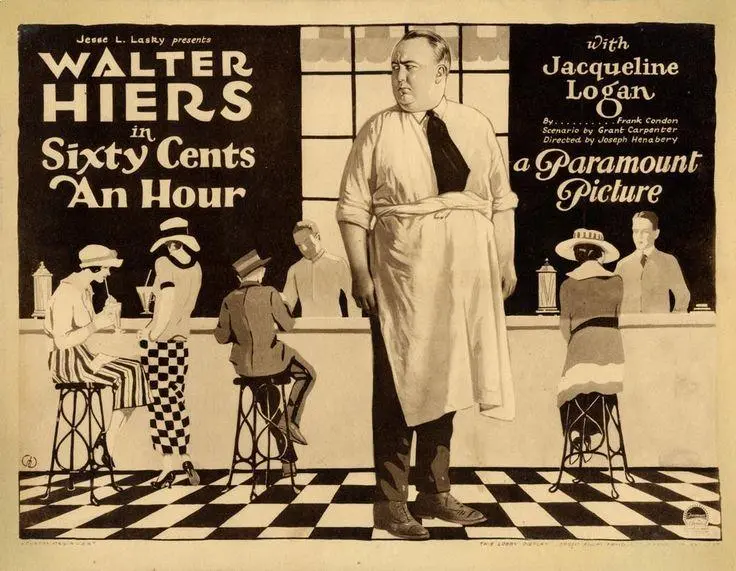
Jimmy's ambition isn't merely a passive longing; it's a catalyst for action. He meticulously saves every penny, a testament to his discipline and foresight, until he accumulates enough to rent a car. This act, seemingly a simple indulgence, becomes the pivotal moment upon which the entire plot hinges. It's a classic cinematic trope, the unexpected discovery, but here, it's executed with a crispness that keeps the audience utterly captivated. Within the rented vehicle, Jimmy stumbles upon a significant sum of money – a substantial cache that, as fate would have it, has been pilfered from the very bank presided over by Mamie's father. This twist injects a thrilling dose of high-stakes drama into the romantic comedy, transforming Jimmy from a mere suitor into a key player in a burgeoning financial scandal. The discovery isn't just a plot device; it's a moral quandary, a test of character. Will Jimmy succumb to temptation, or will he uphold his integrity? His decision to report the find sets in motion a chain of events that pit his humble honesty against the entrenched power of the elite. This dynamic is where the film truly shines, presenting a David-and-Goliath struggle that resonates deeply with audiences who champion the underdog. The narrative deftly navigates this shift, transitioning from a charming romance to a clever caper, all while retaining its inherent lighthearted spirit. It's a masterclass in weaving multiple genres into a cohesive, engaging whole, proving that early cinema was adept at complex narrative construction.
Enter James Smith, Mamie's father, portrayed with a suitable air of paternalistic authority by Ricardo Cortez, who often excelled in roles requiring a certain gravitas, sometimes tinged with villainy as seen in films like The Cold Deck where he might embody a formidable antagonist. Upon learning of the recovered funds, Smith, rather than celebrating Jimmy's honesty, attempts to maneuver him out of the rightful reward
IMDb —
1916
Community
Log in to comment.