DbcultAccessing Vault...
Cult Review
Senior Film Conservator
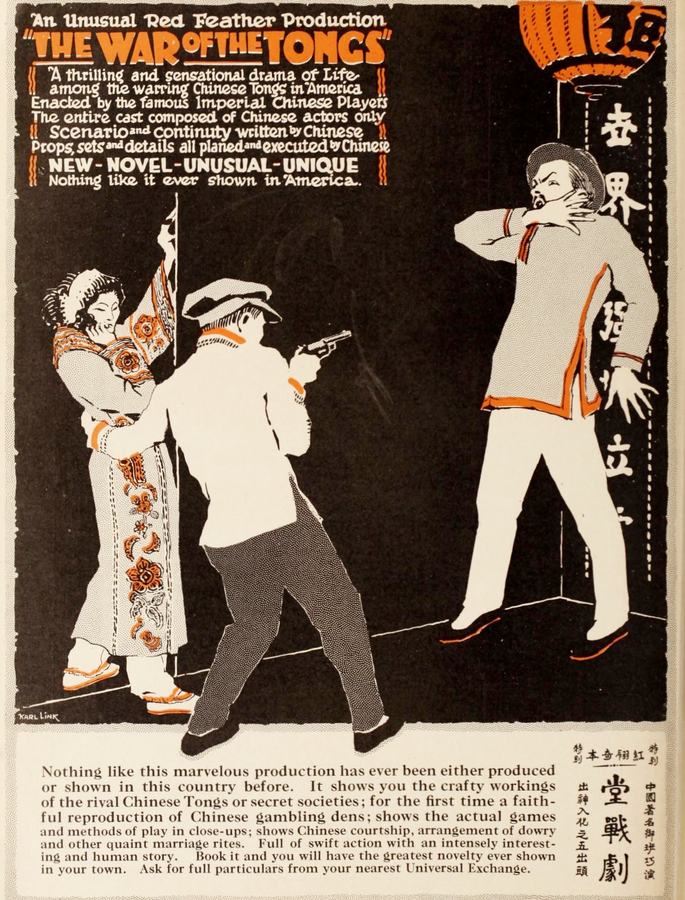
Stepping back into the formative years of cinematic storytelling, one unearths treasures like 'The War of the Tongs,' a film that, despite its potential obscurity to modern audiences, offers a potent glimpse into the societal anxieties and romantic ideals of its era. This isn't merely a quaint historical artifact; it's a narrative tapestry woven with threads of power, passion, and the perennial struggle for autonomy against overwhelming odds. The film’s simple yet profound premise—a potentate’s covetous gaze falling upon a tenant’s daughter, whose heart belongs to another—serves as a timeless crucible for examining themes that resonate even today.
At its core, 'The War of the Tongs' is a stark portrayal of class disparity and the brutal realities of power dynamics. The wealthy landlord, simultaneously a formidable tong leader, embodies the unchecked authority that often accompanied such positions in certain historical contexts. His desire for the tea-shop merchant's daughter is not merely romantic; it's an assertion of dominion, a testament to his belief that anything within his sphere, including human affection, is his for the taking. This possessive impulse, unbridled by moral compunctions, sets the stage for a dramatic conflict that feels both intimately personal and broadly societal.
The young woman, whose name we are left to imagine, becomes a pivotal figure, not as a passive object of desire, but as an agent of her own destiny. Her refusal of the tong leader’s proposal is an act of extraordinary courage, a quiet revolution against an oppressive system. It's a moment that elevates the narrative from a simple love triangle to a profound examination of individual agency. Her beloved, a humble employee, further complicates this dynamic. His declaration of love and intent to marry, uttered directly to the face of the menacing tong leader, is an act of sheer audacity, a direct challenge to the established order that few would dare to undertake. This defiance is the true engine of the film’s dramatic tension, promising a clash of wills that transcends mere personal vendetta.
The emotional weight of such a narrative rests heavily on its performers. Lin Neong, in what one can only assume was a nuanced portrayal, likely brought a compelling gravitas to the role of the formidable tong leader. It’s not enough for such a character to be merely villainous; there must be an underlying magnetism, a terrifying self-assurance that makes his actions believable and his threats palpable. One imagines Neong imbuing the character with a complex blend of power, perhaps a touch of misguided honor, and ultimately, a chilling ruthlessness when defied. This type of antagonist, driven by wounded pride as much as lust, is a classic archetype, often seen in films exploring societal friction, much like the powerful figures in Pillars of Society.
Hoo Ching, presumably portraying the spirited daughter, would have been tasked with conveying both vulnerability and an inner steel. Her refusal of the tong leader requires an actress capable of projecting quiet strength and unwavering conviction, making her a sympathetic and admirable protagonist. Her love for the humble employee, perhaps played by Tom Hing, would need to be portrayed with an earnest sincerity that justifies the risks they both undertake. Hing’s character, the 'upstart boy,' is the embodiment of hope and defiance. His performance would necessitate a delicate balance of youthful idealism and a nascent understanding of the dangerous world he is challenging. Lee Gow, in a supporting role, likely contributed to the film's texture, perhaps as the anxious tea-shop merchant father, caught between the demands of a powerful landlord and the love for his daughter. The interplay between these actors would have been crucial in selling the film's high stakes and emotional core.
The narrative structure of 'The War of the Tongs', even without direct knowledge of its original screenplay (the writers remain uncredited, a common occurrence in early cinema, where story concepts often evolved collaboratively or were adapted from existing tales), appears to follow a classic arc of escalating conflict. The initial infatuation, the bold rejection, the subsequent declaration of rival love, and the tong leader's vengeful determination form a clear, compelling progression. This kind of dramatic escalation keeps audiences engaged, particularly in an era where visual storytelling was still developing its lexicon. The film leverages fundamental human emotions – love, jealousy, pride, fear – to drive its plot forward, a technique that remains effective across all cinematic epochs.
The central theme of defying an entrenched, powerful antagonist for the sake of love and personal freedom is a universal one. It echoes across many cinematic landscapes, from the grand historical epics to intimate dramas. One might draw parallels to the spirited resistance against oppressive forces seen in films like Civilization, or the individual's battle against a rigid social order as depicted in The Moral Fabric. The specific context of a tong leader adds a layer of cultural specificity, grounding the universal struggle in a particular socio-historical milieu, making the threat feel immediate and real.
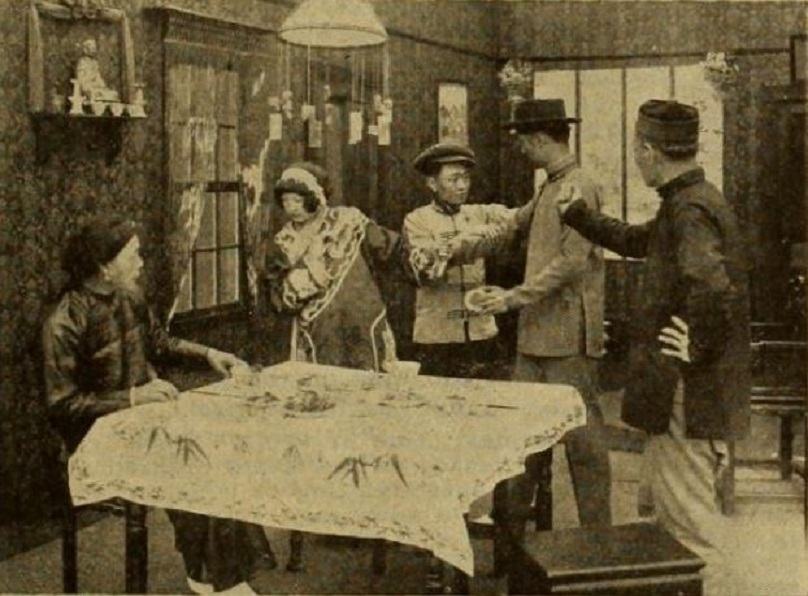
While specific directorial choices are lost to time, one can infer certain stylistic approaches common to films of this period. The visual language would have relied heavily on broad gestures, expressive facial work, and clear staging to convey emotion and plot points without the benefit of extensive dialogue or sophisticated camera movements. Close-ups, if employed, would have been used sparingly but effectively, perhaps to highlight the tong leader's menacing glare or the daughter's tearful defiance. The contrast between the opulent settings of the tong leader's domain and the humble tea shop would have been visually striking, underscoring the class divide. The tension inherent in the narrative could have been amplified through the use of dramatic lighting, creating stark shadows to symbolize the lurking danger and the moral darkness of the antagonist.
Consider the scene where the poor employee confronts the tong leader. This moment, pivotal to the plot, would have demanded careful staging. The visual representation of one man standing against another, despite vast differences in power, would have been a powerful image. The framing, perhaps placing the tong leader in a position of literal or metaphorical height, with the young suitor defiantly looking up, would visually communicate the power imbalance and the courage required for such an act. The emotional intensity, often conveyed through the actors' physicality, would have been paramount. This kind of visual rhetoric, though rudimentary by today's standards, was profoundly effective in engaging early cinema audiences.
To fully appreciate 'The War of the Tongs,' it's helpful to place it within the broader landscape of early 20th-century cinema. Many films of this era grappled with similar themes of social injustice, forbidden love, and the individual's struggle against fate or society. For instance, the plight of a vulnerable woman caught in dire circumstances is a recurring motif, seen in films like The Hunted Woman or Gold and the Woman, though 'The War of the Tongs' imbues its female protagonist with a stronger sense of agency through her direct refusal. The very concept of a powerful figure wielding influence over personal lives resonates with the aristocratic manipulations often found in European dramas of the period, such as The Student of Prague, albeit with a distinct cultural flavor.
The film's exploration of defiance against an oppressive system also finds echoes in stories of individuals fighting for their place or dignity, a theme that pervades narratives from A Child of the Wild to A Welsh Singer, where protagonists often navigate challenging social landscapes. The dramatic confrontation between the young lovers and the formidable tong leader speaks to universal anxieties about power and helplessness, a tension often explored in tales of grand societal shifts or personal crises, from Potop to Obozhzhenniye krylya, which often depict individuals caught in overwhelming circumstances. Even the subtle nuances of human emotion and moral quandaries, though presented differently, can be found in films like The Heart of Jennifer, where personal choices have far-reaching consequences.
What truly makes 'The War of the Tongs' compelling is its unflinching commitment to depicting the consequences of challenging authority. The tong leader's determination to 'teach this upstart boy a lesson about defying the leader's wishes' suggests a violent, perhaps tragic, resolution. This refusal to shy away from the darker aspects of human nature and societal power structures gives the film a certain gravitas. It's not a saccharine romance but a gritty portrayal of love’s struggle against a ruthless world. This realism, even in the melodramatic framework of early cinema, ensures its lasting impact. The narrative promises a climax fraught with tension, where the fate of the lovers hangs precariously in the balance, a classic dramatic setup that keeps audiences on the edge of their seats.
The film, in its essence, is a testament to the enduring power of storytelling to reflect and critique the human condition. It reminds us that while the technologies of filmmaking have evolved exponentially, the fundamental conflicts of love, power, and defiance remain timeless. 'The War of the Tongs' stands as a fascinating artifact of early cinema, not just for its historical value, but for its continued ability to provoke thought and emotion, demonstrating that even in its nascent stages, cinema was capable of delivering powerful, resonant narratives. It’s a compelling reminder that the 'war' for personal freedom against societal constraints is a battle fought in every generation, and every cinematic portrayal, no matter how old, contributes to our understanding of that eternal struggle. The film, much like Alexander den Store, explores the complexities of power, albeit on a far more intimate and personal scale, rather than a geopolitical one. Its focus on the individual's fight against a dominating force, mirroring themes in The Danger Signal or The Pillory, solidifies its place as a significant piece of cinematic history.
In conclusion, 'The War of the Tongs' is more than just an early film; it's a vibrant echo from the past, showcasing the nascent art form's capacity to tackle complex moral dilemmas and universal human experiences. Its rich tapestry of love, power, and defiance continues to captivate, offering a window into both a specific cultural moment and the timeless struggles of the human heart.
IMDb —
1927
Community
Log in to comment.