DbcultAccessing Vault...
Cult Review
Senior Film Conservator

In the grand tapestry of cinematic achievement, certain works emerge not merely as entertainment but as profound meditations on the human condition, challenging perceptions and lingering in the psyche long after the credits roll. "Skazka mira" stands as such a monument, an audacious, allegorical odyssey that transcends conventional storytelling to deliver an experience both viscerally engaging and intellectually stimulating. From the initial frames, a palpable sense of desolation permeates the screen, a world stripped bare not just of its physical structures but of its very memory, following an unspecified, cataclysmic event known only as the 'Great Silence.' This isn't merely a post-apocalyptic narrative; it's a profound exploration of collective amnesia, the burden of history, and the desperate, often futile, human yearning for truth in a landscape where truth itself has become a forgotten language.
The writers, A. Martov and Sergey Veselovsky, have crafted a narrative that is less about what happened and more about what remains: the echoes, the fragments, the innate human drive to reconstruct meaning from the rubble of forgotten eras. Their screenplay for "Skazka mira" is a masterclass in evocative minimalism, allowing the desolate landscapes and the tortured psyches of its characters to speak volumes without explicit exposition. The film's strength lies in its refusal to spoon-feed answers, instead inviting the viewer into a collaborative act of interpretation, much like the protagonist's own quest to piece together the shattered remnants of the past. This narrative approach, while demanding, rewards immense patience with layers of thematic richness that unfold with each viewing.
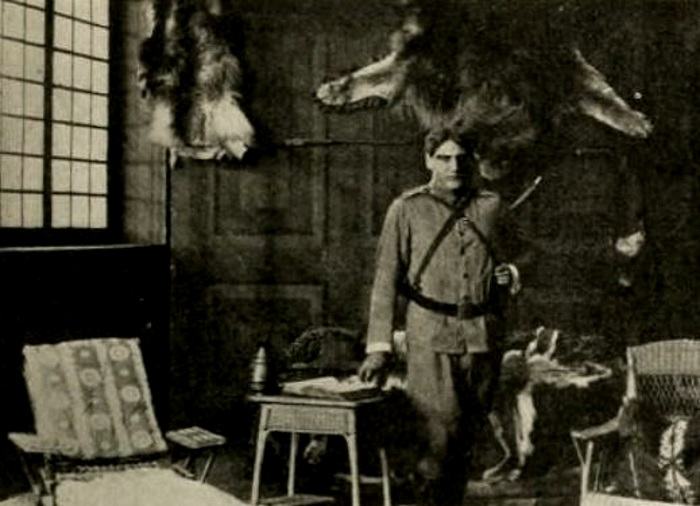
M. Petini, as Elara, delivers a performance of astounding depth and nuance. His Elara is not a conventional hero, but a man burdened by visions, a solitary figure haunted by spectral flashes of a vibrant, lost world. Petini conveys this inner turmoil with an almost unbearable fragility, his eyes reflecting both the terror of his fragmented memories and the burning conviction that these visions are not madness, but keys to unlocking the world's true 'Skazka Mira' – its original story. One cannot help but draw comparisons to the quiet, introspective intensity seen in films like The Man of Shame, where the protagonist's internal struggle becomes the driving force of the narrative, albeit with a far more fantastical and allegorical bent here. Petini’s portrayal is a delicate dance between sanity and obsession, making Elara’s quest feel both deeply personal and universally resonant.
L. Nevtonova, as Kael, provides a vital counterpoint to Elara’s ethereal pursuits. Kael is the embodiment of pragmatic survival, a leader whose feet are firmly planted in the harsh, unforgiving realities of their present. Nevtonova imbues Kael with a fierce, weary resolve, her initial skepticism towards Elara’s visions a natural defense mechanism born of necessity. Her journey from cynicism to a reluctant, then committed, belief in Elara's quest is one of the film's most compelling arcs. It's a performance that grounds the fantastical elements, reminding us of the human cost of grand ambitions and the sacrifices demanded by hope. Her portrayal echoes the stoic resilience found in characters facing dire circumstances, perhaps even drawing a parallel to the fortitude observed in narratives like The Weakness of Strength, where human endurance is tested to its limits, though Kael's strength is less about physical might and more about unwavering leadership in the face of despair.
Rimsky-Kurmashyov, as The Chronicler, is a figure shrouded in an almost mythological aura. His performance is a masterclass in understated power, conveying immense knowledge and ancient burdens through subtle gestures and a gaze that seems to pierce through time itself. The Chronicler is not merely a character; he is a living archive, a guardian of truths too potent for the uninitiated. His cryptic guidance and warnings serve as narrative anchors, hinting at the deeper complexities of the 'Great Silence' and the stakes involved in Elara's quest. There's an almost shamanistic quality to his presence, reminiscent of the wise, often ambiguous, mentors found in grand allegories. His role is critical in shaping the philosophical undertones of "Skazka mira," pushing the audience to question the nature of history and the responsibility of bearing witness to it.
Amo Bek-Nazaryan, portraying Finn, injects a much-needed spark of youthful idealism and restless energy into the ensemble. Finn represents the generation born into the silence, untainted by direct memory of the past but possessing an innate curiosity and a yearning for something more than mere subsistence. His burgeoning belief in Elara’s visions, contrasting sharply with Kael’s initial pragmatism, signifies the enduring power of hope and the innate human drive to seek meaning. Bek-Nazaryan captures this youthful fervor with an infectious authenticity, making Finn a relatable conduit for the audience's own burgeoning understanding of the world. His journey is one of awakening, mirroring the collective awakening the film itself seeks to inspire.
A. Butler-Rudkovskaya, in the spectral role of Lyra, is a haunting, ethereal presence. Appearing primarily in Elara’s visions, she is less a character and more a symbol—a muse from the forgotten era, a silent guide whose poignant presence underscores the beauty and tragedy of what was lost. Her performance is largely non-verbal, relying on evocative imagery and a profound sense of melancholy to convey the weight of history and the enduring power of memory. Lyra is the whisper of the past, the visual manifestation of the 'Skazka Mira' itself, constantly drawing Elara deeper into his quest. Her scenes are visually stunning, often bathed in a soft, otherworldly glow that contrasts sharply with the desolation of the waking world, providing some of the film's most breathtaking moments.
The visual language of "Skazka mira" is nothing short of breathtaking. The cinematography paints a desolate yet strikingly beautiful canvas, utilizing stark, wide-open spaces to convey both the vastness of the forgotten world and the isolation of its inhabitants. The color palette, predominantly muted grays and browns, is punctuated by bursts of vibrant, almost hallucinatory hues during Elara's visions, creating a powerful visual dichotomy between the present and the past. The ruins of the old world are not merely set dressing; they are characters in themselves, silent witnesses to a forgotten grandeur, imbued with a melancholic poetry. The use of light and shadow is particularly masterful, crafting an atmosphere that is at once oppressive and profoundly spiritual. This film shares a visual poetry with works like Vingarne, where the aesthetic becomes an intrinsic part of the narrative, elevating the emotional resonance to an art form.
Sound design plays an equally crucial role in immersing the viewer in this meticulously crafted world. The desolate silence is often broken by subtle, unsettling ambient noises – the whisper of wind through forgotten structures, the distant cries of unseen creatures, or the sudden, jarring intrusion of a vision's soundscape. This creates an auditory landscape that is as potent as the visual, enhancing the sense of isolation and the fragile beauty of existence. The score, when it appears, is sparse and haunting, utilizing ethereal melodies and deep, resonant tones to underscore the film's emotional weight without ever becoming overbearing. It’s a testament to the filmmakers’ understanding that in a world of silence, even the smallest sound carries immense significance.
The thematic core of "Skazka mira" revolves around the profound implications of memory and history. What happens when a society forgets its past, not just its triumphs but its failures? Is it liberation or a sentence to repeat cycles of destruction? The film suggests that true progress requires an honest reckoning with history, however painful. The journey to the 'Nexus of Echoes' is not merely a physical quest but a spiritual excavation, forcing Elara and his companions to confront not just the ruins of the past, but the very nature of their own identities forged in its absence. This exploration of collective consciousness and the weight of ancestral memory resonates deeply, inviting introspection on our own relationship with history.
Furthermore, the film delves into the dichotomy between hope and despair. Kael's initial pragmatism, bordering on cynicism, represents a form of self-preservation, a shield against the crushing weight of a desolate world. Elara's unwavering belief, fueled by his visions, is a dangerous, almost reckless hope. "Skazka mira" doesn't offer easy answers, instead portraying hope as a fragile, hard-won commodity, often requiring immense sacrifice. Finn's youthful optimism serves as a bridge between these two extremes, suggesting that a new generation might be capable of forging a future that integrates the lessons of the past without being entirely consumed by its shadows. This nuanced portrayal elevates the film beyond a simple tale of survival, into a philosophical inquiry about the very essence of human resilience.
The allegorical nature of "Skazka mira" is one of its greatest strengths. It functions on multiple levels: as a poignant human drama, a visually stunning spectacle, and a profound philosophical treatise. The 'Great Silence' can be interpreted as myriad forms of societal collapse – environmental, political, or even spiritual. The 'Nexus of Echoes' becomes a metaphor for truth, enlightenment, or even the collective unconscious. This open-endedness allows the film to resonate with a broad audience, inviting personal interpretation while maintaining a universal emotional core. This kind of evocative, symbolic storytelling can be seen in the enduring impact of films such as Nobleza gaucha, which, despite its different setting and context, uses its narrative to explore deeper societal truths and human values through archetypal figures.
The collaborative genius of writers A. Martov and Sergey Veselovsky is evident in every frame. They have not just written a script; they have architected a world, a mythology, and a moral dilemma that feels both ancient and alarmingly contemporary. Their ability to weave together grand, sweeping themes with intimate character moments is what gives "Skazka mira" its indelible power. They challenge the audience to consider not just what we remember, but what we choose to forget, and the profound implications of those choices for the future. The narrative's pacing is deliberate, allowing moments of quiet reflection to breathe, interspersed with sequences of intense emotional or visual impact. This rhythmic ebb and flow ensures that the film's profound messages are absorbed rather than merely observed.
The journey undertaken by Elara, Kael, and Finn through the desolate lands is filled with symbolic encounters and visual metaphors. Relics of the old world are not just debris; they are echoes, each whispering a fragment of the forgotten narrative. The challenges they face are not just physical obstacles but represent the internal struggles of confronting inconvenient truths and overcoming ingrained prejudices. The climax at the 'Nexus of Echoes' is not an explosive battle, but a deeply internal revelation, a confrontation with the full, unvarnished truth of the 'Great Silence'—not just a physical cataclysm, but a societal amnesia, a deliberate, collective forgetting of both past glories and profound failures. This moment demands a choice: to embrace the painful, complete truth, or to allow the new world to forge its own, unburdened, yet potentially ignorant, future.
Ultimately, "Skazka mira" is more than just a film; it is an experience, a meditation, a call to introspection. It asks us to consider our own relationship with history, memory, and the stories we choose to tell ourselves about who we are and where we come from. The performances are uniformly excellent, the visuals stunning, and the thematic depth resonant. It is a work that will undoubtedly spark debate and discussion, cementing its place as a significant contribution to allegorical cinema. The film leaves us with a sense of fragile hope, but also with the immense weight of rediscovered knowledge, a powerful reminder that while the past may be forgotten, its echoes persist, shaping the present and demanding an accounting. This is essential viewing for anyone who believes cinema can be both art and a mirror to the soul, a true masterpiece of profound storytelling.

IMDb 7.2
1934
Community
Log in to comment.