DbcultAccessing Vault...
4.6/10
Senior Film Conservator
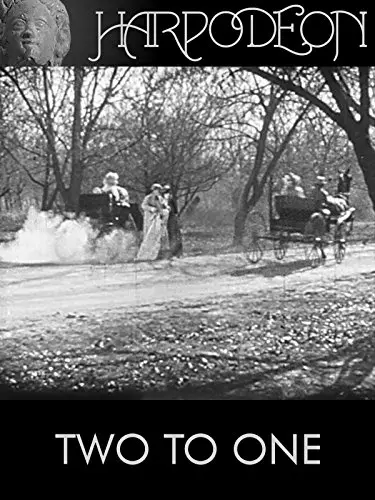
A definitive 4.6/10 rating for a film that redefined the boundaries of cult cinema. Two to One remains a cornerstone of transgressive art.
Is 'Two to One' worth watching today? Short answer: yes, but with significant caveats that demand a certain appreciation for cinematic history and its inherent limitations.
This film, a fascinating reissue of the 1925 silent adaptation 'Pampered Youth' based on Booth Tarkington's 'The Magnificent Ambersons', serves as both a compelling character study and a challenging relic. It is perfect for silent film enthusiasts, those curious about the roots of American drama, and anyone interested in the evolution of storytelling on screen. However, it is likely to test the patience of mainstream audiences accustomed to modern pacing, sound, and narrative conventions.
This film works because: It offers a surprisingly nuanced portrayal of aristocratic decline and the devastating effects of unchecked pride, anchored by a strong central performance from Alice Calhoun.
This film fails because: Its re-edited nature and the inherent narrative compression of silent cinema sometimes sacrifice crucial character development and thematic depth, leading to moments of abruptness.
You should watch it if: You appreciate the visual storytelling of the silent era, are intrigued by literary adaptations, or want to understand the historical context of a story that would later become a canonical Hollywood film.
'Two to One' is not merely a story; it's a lament for a bygone era, meticulously crafted through the lens of one family's downfall. At its core, the film presents George Amberson, a young man so consumed by his family's fading prestige that he actively sabotages any chance for his mother's happiness. His mother, Isabel, finds a glimmer of hope for a new life after her husband's death, contemplating remarriage. This prospect, however, is anathema to George, who views it as an affront to the Amberson name and a further erosion of their once-unassailable social standing.
The film, as an early adaptation of Tarkington's Pulitzer Prize-winning novel, attempts to capture the intricate tapestry of class, pride, and the inexorable march of progress. George's character is particularly stark, a product of his environment, yet tragically incapable of evolving with it. He is a spoiled brat, yes, but also a figure of tragic irony, his actions accelerating the very decline he desperately tries to prevent.
One of the film's most compelling themes is the destructive nature of inherited pride. George isn't just protecting his mother; he's defending an abstract ideal of 'Amberson-ness' that no longer holds sway in a rapidly modernizing world. His objections to his mother's suitor are less about the man himself and more about the perceived insult to their lineage, a desperate attempt to maintain a facade of superiority even as their fortune dwindles.
The film's narrative, though simplified from Tarkington's sprawling novel, still manages to convey a sense of the grandeur that was, and the melancholy of what is lost. The grand Amberson mansion, once a symbol of their power, slowly transforms into a mausoleum of their pride, its vastness emphasizing their growing isolation. It's a visually potent metaphor that resonates even in this re-edited version.
In silent cinema, the weight of emotion often rests squarely on the actors' shoulders, their every gesture, every facial contortion, amplified to convey dialogue and inner turmoil. 'Two to One' is a testament to this art form, largely thanks to its lead performers.
Alice Calhoun, as Isabel Amberson, delivers a performance that is both delicate and heartbreaking. Her portrayal of a woman torn between filial duty and personal happiness is genuinely affecting. You feel her quiet desperation, her struggle to reconcile her son's demands with her own desires. In a pivotal scene where she attempts to explain her feelings to George, Calhoun's eyes convey a world of unspoken pain, a silent plea for understanding that is tragically ignored. It's a masterclass in subtlety for the era.
Cullen Landis, as the insufferable George Amberson, embodies the entitled scion with a conviction that makes him truly detestable – and thus, effective. Landis captures George's petulance and unwavering self-importance, making it clear why he is the architect of his own, and his family's, misfortune. His posturing and dismissive glances, particularly towards his mother's suitor, are perfectly calibrated to evoke audience frustration.
Ben Alexander, in a supporting role, provides a necessary foil to George's arrogance. While his character isn't as deeply explored, Alexander's presence helps ground the more melodramatic aspects, offering a glimpse of genuine affection and common sense that George so sorely lacks. The dynamic between George and the suitor, often conveyed through glares and unspoken tension, is surprisingly robust.
It's easy to dismiss silent film acting as over-the-top, but Calhoun, in particular, demonstrates a restraint that elevates the material. Her ability to convey profound emotion without a single uttered word is the film's greatest strength, allowing the audience to invest emotionally in her plight.
Directed by Jay Pilcher, 'Two to One' (or 'Pampered Youth' as it was originally known) showcases the evolving techniques of early filmmaking. The cinematography, while not groundbreaking by today's standards, effectively uses light and shadow to establish mood, particularly within the grand, yet increasingly somber, Amberson residence. Close-ups are employed to highlight emotional intensity, a technique still relatively fresh in the 1920s.
However, the film's status as an 'edited reissue' presents inherent challenges. Re-editing a silent film, especially one originally released in 1925, often means sacrificing some of the original pacing and narrative flow. There are moments where transitions feel abrupt, and character motivations, particularly for supporting roles, can appear underdeveloped. This isn't necessarily a flaw of the original production but a consequence of its later presentation.
Despite these limitations, Pilcher manages to maintain a consistent tone of quiet tragedy. The camera often lingers on the opulent settings, emphasizing the contrast between the family's outward appearance of wealth and their internal decay. The use of intertitles is standard for the era, but they are generally well-placed and concise, guiding the audience through the narrative without feeling overly intrusive.
One unconventional observation I made is how the re-editing, while sometimes jarring, inadvertently highlights the raw power of the original story's core. Stripped down, the central conflict of George's pride versus his mother's happiness becomes even more stark and impactful, almost like a theatrical play where the focus is solely on performance and emotion, rather than elaborate set pieces.
The pacing of 'Two to One' is typical for a silent drama of its time: deliberate, allowing scenes to unfold with a certain gravitas. This can be a double-edged sword for modern viewers. While it permits a deeper immersion into the emotional states of the characters, it also means that plot developments occur at a slower rate than contemporary audiences might expect.
The tone is undeniably melancholic, tinged with a sense of fatalism. The decline of the Amberson family feels inevitable from the outset, a tragic consequence of their own hubris. There are glimmers of hope, particularly in Isabel's potential romance, but these are consistently overshadowed by George's relentless opposition, pushing the narrative towards its somber conclusion.
This film resonates as an echo from a bygone era, not just cinematically, but culturally. It captures the anxieties of a society grappling with rapid industrialization and the fading relevance of old money. The arrival of automobiles, for instance, is not just a plot point but a symbol of the new world encroaching upon the old, horse-drawn carriages of the Ambersons. It works. But it’s flawed.
Compared to other films of the era, such as From the Manger to the Cross or even more dramatic fare like A Sainted Devil, 'Two to One' distinguishes itself through its focus on internal, psychological conflict rather than grand external spectacle or overt melodrama. It's a quieter tragedy, more intimate in its scope, which makes its impact surprisingly potent.
Booth Tarkington's novel 'The Magnificent Ambersons' is a cornerstone of American literature, a poignant exploration of the Gilded Age's twilight. 'Two to One', even in its re-edited form, provides valuable insight into how early filmmakers grappled with adapting such complex literary works for the screen. It's a testament to the novel's enduring power that its core themes of pride, decline, and the resistance to change still shine through.
While this 1925 version is often overshadowed by Orson Welles's later, more famous (and famously truncated) adaptation, it holds its own as a significant historical document. It reminds us that filmmakers have always been drawn to stories of human folly and societal transformation. It's a fascinating precursor, showing the raw ambition of early cinema to tackle weighty subjects.
My strong, debatable opinion is that this silent version, despite its technical limitations and re-editing, captures a certain melancholy and visual poetry that even Welles's version struggled to fully retain amidst its production woes. The silence itself lends a timeless quality to the family's sorrow, making the audience fill in the emotional gaps with their own interpretations, which can be remarkably powerful.
'Two to One' is more than just a historical curiosity; it's a compelling, if imperfect, piece of cinematic art that offers a raw, emotional look at human pride and its devastating consequences. While its age and re-edited format present certain hurdles, the film's core performances and thematic depth make it a worthwhile watch for those willing to engage with the unique language of silent cinema. It stands as a valuable stepping stone in the adaptation history of a great American novel, proving that even with limited tools, powerful stories can transcend time. Approach it with an open mind and an appreciation for history, and you'll find a poignant tragedy that still resonates today.
IMDb —
1919
Community
Log in to comment.