DbcultAccessing Vault...
7.4/10
Senior Film Conservator
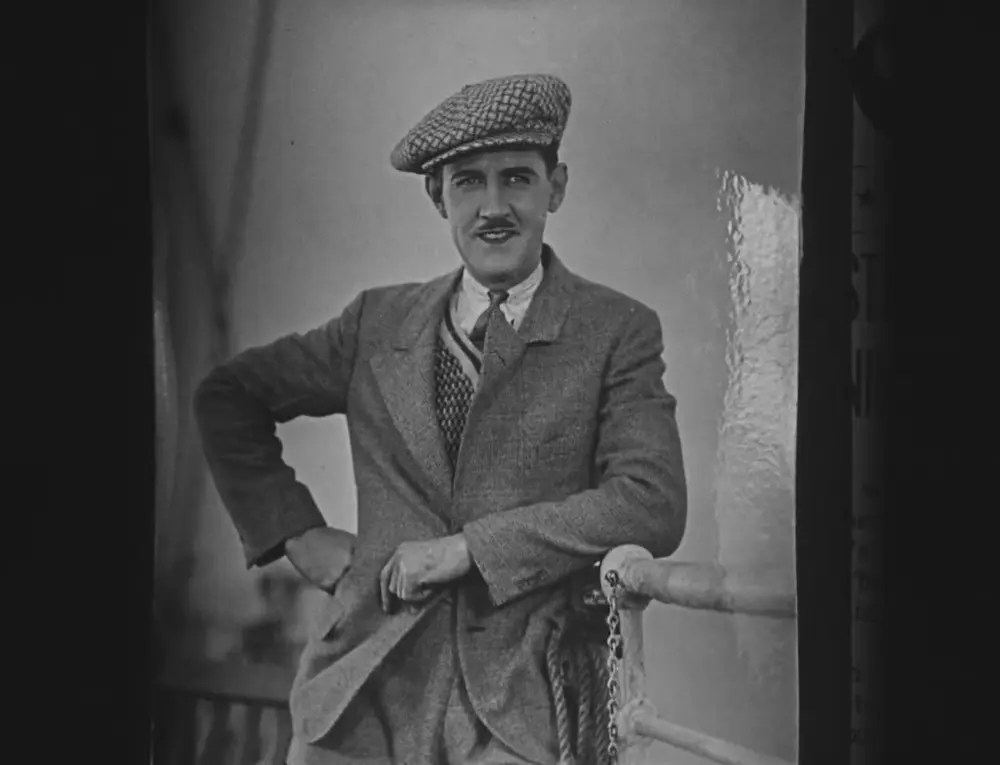
A definitive 7.4/10 rating for a film that redefined the boundaries of cult cinema. A One Mama Man remains a cornerstone of transgressive art.
Is A One Mama Man worth your time in the modern era? Short answer: yes, but only if you appreciate the specific brand of 'embarrassment comedy' that Charley Chase perfected during the silent era. This isn't the high-octane stunt work of Buster Keaton or the pathos-heavy slapstick of Chaplin. It is a refined, domestic chaos that feels surprisingly modern in its social observations.
This film is for enthusiasts of the Hal Roach studio style and those who enjoy seeing the 'little guy' navigate the absurdities of the upper class. It is NOT for viewers who find the static camera work of the late 1920s tedious or those who require a fast-paced, plot-heavy narrative to stay engaged.
This film works because it utilizes Charley Chase’s unique ability to look perfectly composed while his world falls apart. Unlike many of his contemporaries, Chase played an 'average' man—well-dressed, polite, and slightly anxious—which makes the eventual eruption into violence much more satisfying.
This film fails because the initial setup regarding the mother's marriage to the Count is rushed. We are told about the social dynamics rather than seeing them play out, which leaves the first five minutes feeling like a prologue that hasn't quite started yet.
You should watch it if you want to see one of the best examples of a 'gentleman's brawl' in silent cinema. The way Charley defends himself without losing his hat is a masterclass in character-driven action choreography.
A One Mama Man tackles the 1920s obsession with European nobility. During this era, wealthy American families often sought to 'buy' prestige through marriage, a theme also explored in films like The Fates and Flora Fourflush. Here, the satire is directed at both the mother’s vanity and the MacIntosh family’s insecurity.
The dinner party scene is the highlight of the film's social commentary. Mrs. MacIntosh is so blinded by Charley's title that she ignores his obvious discomfort. The way Burr McIntosh plays the husband is equally brilliant; he represents the 'self-made' man who has no patience for the perceived softness of the aristocracy. It is a classic clash of American grit versus European (or in this case, faux-European) refinement.
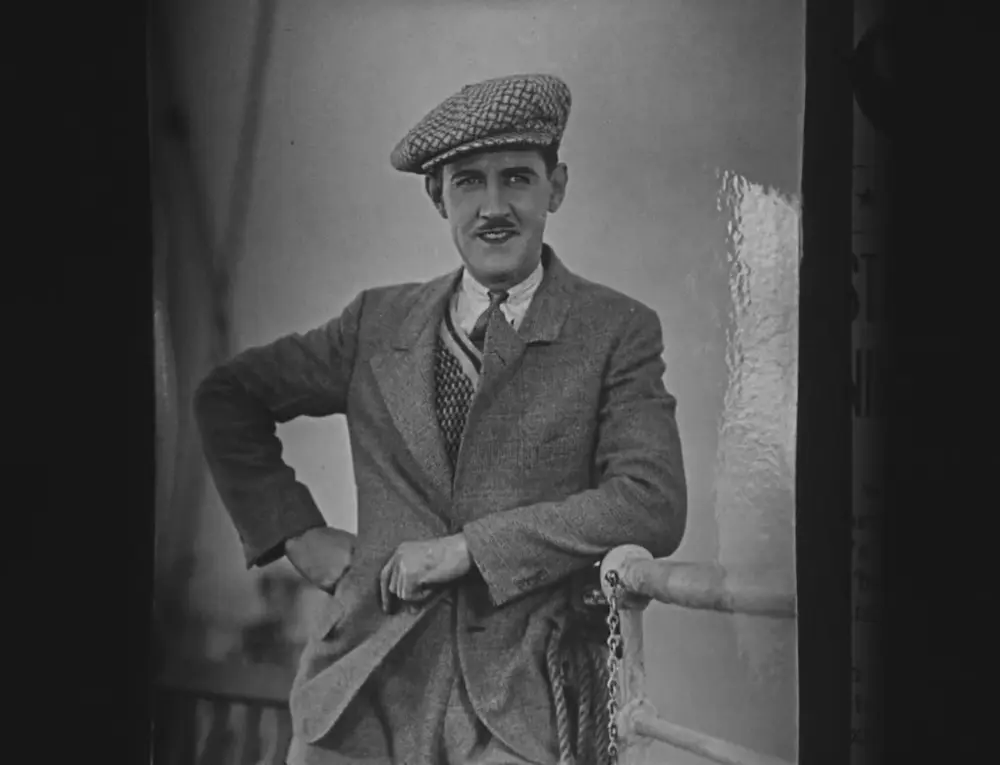
One specific moment that stands out is when Charley first enters the MacIntosh home. He isn't playing a buffoon; he is playing a man trying desperately to be what everyone expects him to be. This 'imposter syndrome' is what makes Chase such a relatable lead. He is the original 'cringe' comedian, long before the term existed.
The direction by Leo McCarey (who often worked uncredited or in a supervisory role at Roach) is invisible but effective. The camera stays wide to allow the physical comedy to breathe. In many ways, it shares the rhythmic pacing of Good Morning, Nurse, where the humor builds through repetition and escalation.
The cinematography doesn't take risks. It doesn't need to. The focus is entirely on the actors' faces and their spatial relationship to the set. When the goons arrive, the blocking becomes intricate. You have four or five men moving in a confined space, yet the action is never confusing. This clarity is something modern action directors could learn from.
The pacing in the second act is where the film truly shines. The transition from a stiff dinner party to an all-out brawl is handled with a gradual increase in tension. It starts with a look, then a shove, and finally, a flurry of fists. It’s a crescendo of chaos that feels earned rather than forced.
Vernon Dent and Harry Tenbrook provide the necessary physical threat to make Charley’s victory feel meaningful. Tenbrook, in particular, has a face made for silent-era villainy. He doesn't need dialogue to convey a sense of 'hired muscle.' His presence alone raises the stakes.
Eugenia Gilbert, as the daughter, is unfortunately given less to do than the men. However, her reaction shots during the fight are crucial. She isn't just a damsel in distress; she is the audience's surrogate, watching in awe as the 'dandy' turns into a 'destroyer.' Her chemistry with Chase is palpable, even in the brief moments they share.
If you are looking for a deep, philosophical exploration of the human condition, look elsewhere, perhaps toward something like Umanità. However, if you want twenty minutes of perfectly calibrated comedy that mocks the rich and rewards the righteous, A One Mama Man is essential viewing.
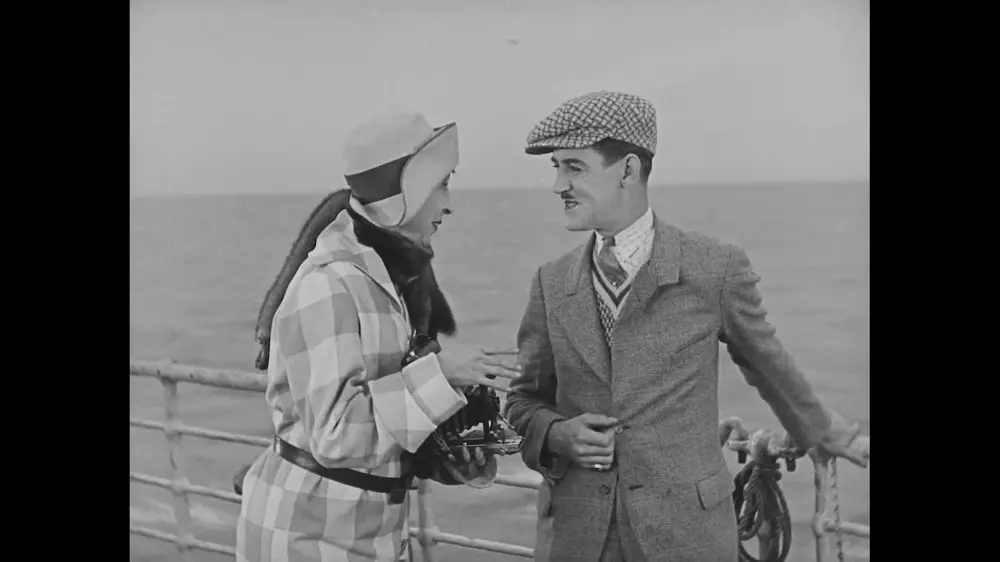
The film captures a specific moment in American history where the old world was being dismantled by the new. It does so with a light touch and a heavy fist. It’s a reminder that Charley Chase was, in many ways, the most 'human' of the silent clowns. He felt like someone you might actually know, rather than a cartoon character.
Pros:
- Charley Chase’s impeccable comedic timing.
- A satisfying ending that subverts the 'weak aristocrat' trope.
- Excellent use of physical space during the climax.
- A lean runtime that doesn't overstay its welcome.
Cons:
- The female characters are largely relegated to the background.
- Some of the social satire feels dated by modern standards.
- The print quality of surviving versions can be grainy.
The brawl in the MacIntosh household is the film's raison d'être. What makes it work is not the violence itself, but Charley's reaction to it. He fights with a sense of annoyance rather than rage. It is as if the goons are an inconvenience on par with a spilled drink. This nonchalance is the hallmark of Chase's 'dapper' persona.
Compare this to the more earnest heroics in The Smilin' Kid. While both films feature a protagonist overcoming odds, A One Mama Man does it with a wink to the audience. It acknowledges the absurdity of the situation. Charley knows he shouldn't be a fighter, and he seems just as surprised as we are when his punches land.
The use of props—chairs, vases, and dinnerware—is inventive. Every object in the room becomes a potential weapon or a punchline. This density of gags is what kept the Hal Roach studio at the top of the industry. They understood that a fight isn't just a fight; it's an opportunity for a dozen mini-stories to play out simultaneously.
A One Mama Man is a minor gem in the Charley Chase filmography. It isn't as structurally perfect as some of his later sound films, but it possesses a raw energy and a cynical edge that is deeply refreshing. It works. But it’s flawed. The flaws, however, are overshadowed by Chase's sheer charisma and the film's refusal to take its own high-society setting seriously.
"A One Mama Man proves that a tuxedo is no barrier to a good old-fashioned fistfight. It is a delightful subversion of class expectations that remains punchy nearly a century later."
Final Thought: If you’ve only ever seen the 'Big Three' of silent comedy, do yourself a favor and spend some time with Charley Chase. He offers a different flavor of humor—one that is rooted in social anxiety and the desperate desire to remain dignified in an undignified world. A One Mama Man is the perfect entry point for that journey.
IMDb —
1916
Community
Log in to comment.