DbcultAccessing Vault...
Cult Review
Senior Film Conservator
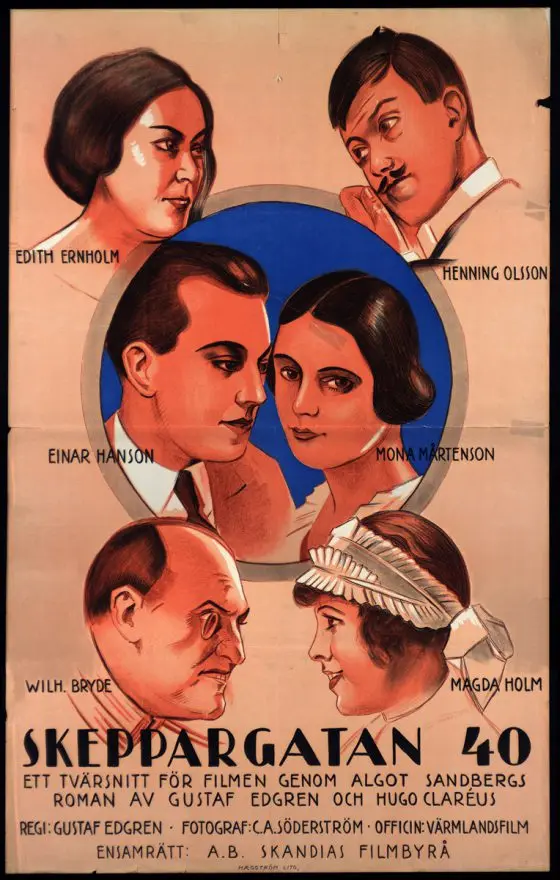
The year 1925 marked a fascinating juncture in the history of Swedish cinema. The 'Golden Age' of the early 1920s, dominated by the titans Victor Sjöström and Mauritz Stiller, was beginning to wane as Hollywood beckoned its brightest stars. Yet, in the wake of this transition, directors like Gustaf Edgren stepped into the light, crafting stories that were perhaps less mystical than The Phantom Carriage, but infinitely more grounded in the social realities of a modernizing Stockholm. Skeppargatan 40 stands as a testament to this era of 'domestic realism,' offering a narrative that is as structurally sound as the engineering diagrams its protagonist studies.
At the center of the film is Erhard Malm, played with a brooding, intellectual intensity by Einar Hanson. Hanson, whose career would tragically end just two years later in a California car accident, possesses a screen presence that feels remarkably modern. Unlike the exaggerated pantomime often associated with silent cinema, Hanson uses his eyes to convey a sense of internal calculation and longing. Erhard is not merely a romantic lead; he is a symbol of the 'New Sweden.' As an engineering student, he represents the technical progress that would eventually define the nation’s 20th-century identity. However, to fund this future, he must serve the past, acting as a tutor within the opulent walls of the Frendin household.
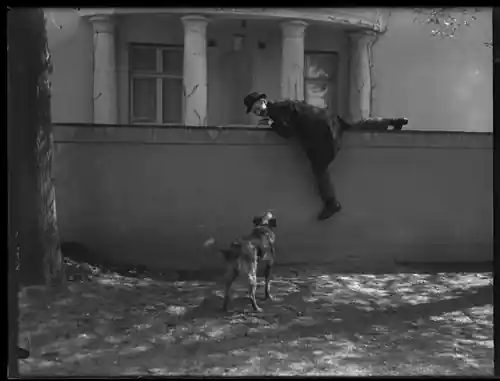
The choice of the address, Skeppargatan 40, is not accidental. In 1925, as today, this area of Stockholm was synonymous with the upper-middle class. The film does an extraordinary job of making the house itself a character. Through the cinematography of Axel Lindblom, the heavy curtains, ornate moldings, and vast libraries of the Consul’s home feel both aspirational and claustrophobic. It is in these rooms that Erhard must navigate the delicate balance between being a 'hired hand' and an intellectual equal.
Magda Holm delivers a nuanced performance as Ruth, the Consul’s daughter. While the 'rich girl falls for the poor student' trope is well-worn, Edgren and screenwriters Sölve Cederstrand and Gustaf Edgren imbue the relationship with a specific kind of Swedish reserve. There are no grand, sweeping declarations of love here. Instead, the romance is built on the shared silence of the study room. Ruth is not a bored socialite looking for a thrill; she is portrayed as a woman genuinely intrigued by Erhard’s drive and the world of logic and steel he represents, which stands in stark contrast to the stagnant wealth of her father’s circle.
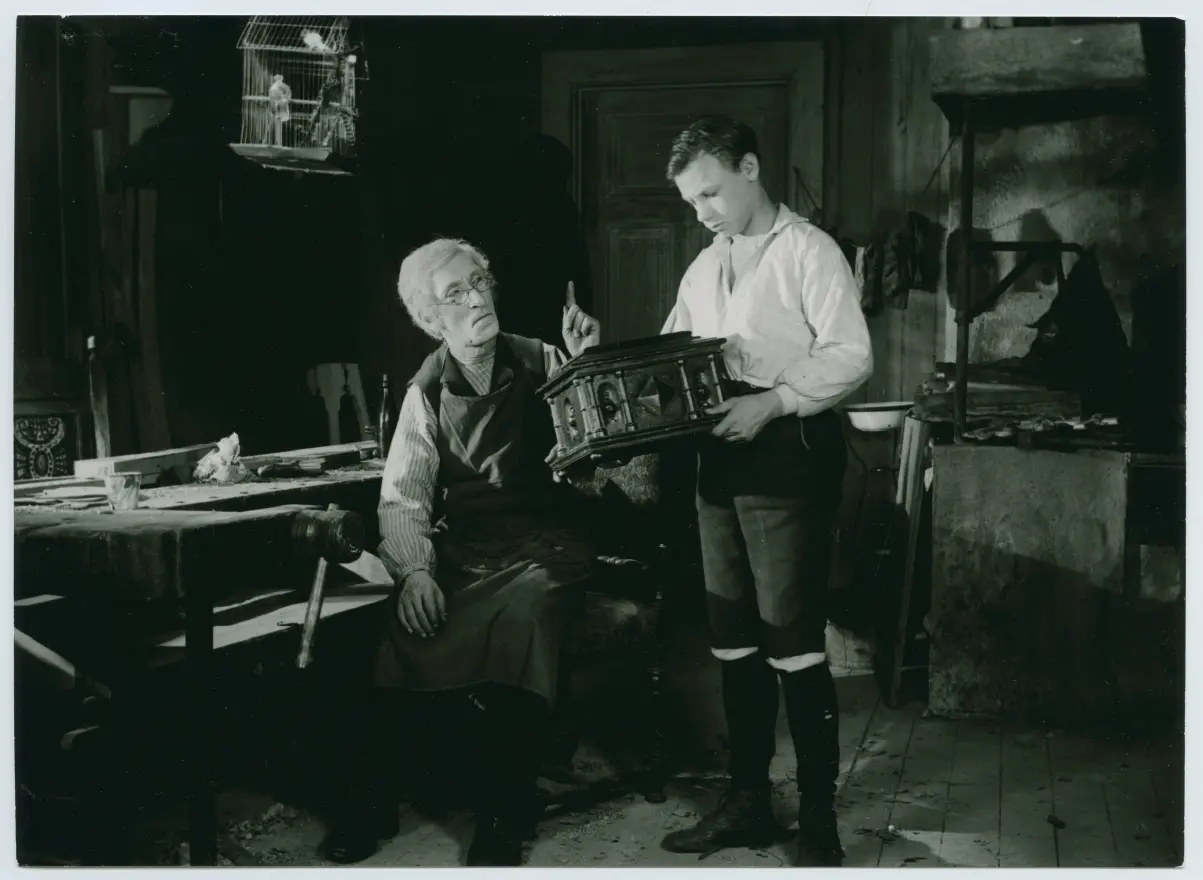
"The film’s domestic intimacy is its greatest asset, proving that Swedish cinema didn’t need supernatural ghosts to be haunting; the specter of class was more than enough to create tension."
Gustaf Edgren is often unfairly dismissed by film historians as a purely 'commercial' director compared to the poetic Sjöström. However, Skeppargatan 40 demands a reevaluation of that stance. Edgren’s pacing is deliberate, allowing the tension to simmer. He understands that in a silent film, the geography of a room dictates the emotional stakes. Notice how the camera often places Erhard in the corner of the frame when the Consul is present, emphasizing his marginal status. This visual storytelling is as effective as any dialogue found in contemporary talkies.
When compared to other films of the period, such as En ung mans väg, which also dealt with the journeys of youth, Skeppargatan 40 feels more mature. It lacks the saccharine sentimentality of The Heart of a Child or the farcical leanings of The Chicken in the Case. Instead, it occupies a middle ground of earnest melodrama that feels deeply human.
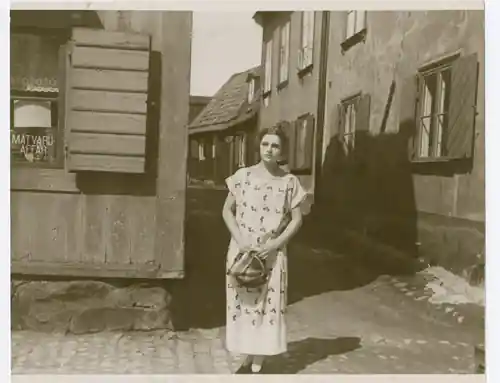
The technical aspects of the film are surprisingly robust for a 1925 production. The lighting, particularly in the night scenes, uses shadows to articulate Erhard’s internal struggle. There is a specific sequence where Erhard walks through the streets of Stockholm at night that rivals the German Expressionism of the time, though it remains firmly rooted in reality rather than the fantastic. The editing by Edgren himself keeps the narrative focused, avoiding the sprawling, episodic nature of earlier silent epics like The Broken Coin or The Adventures of Robinson Crusoe.
I will state this plainly: Skeppargatan 40 is a superior film to many of its more famous contemporaries because it refuses to lean on artifice. While films like The Slave Auction or Whitechapel relied on exoticism or crime to hook the audience, Edgren finds the drama in a tutor’s paycheck and a daughter’s rebellious heart. It is a 'quiet' film, but its quietness is its strength.
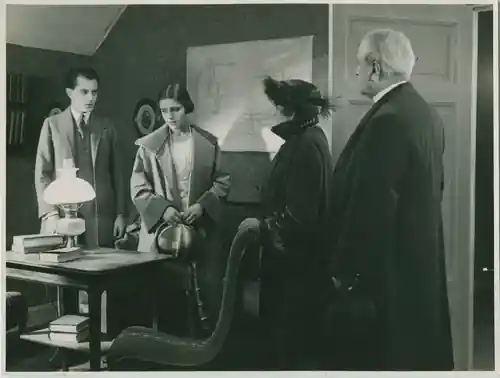
Secondly, Einar Hanson was the greatest 'what if' of the silent era. Watching him in this film, one sees the DNA of the modern leading man—the vulnerability hidden behind a stoic mask. If he had survived his move to Hollywood, he likely would have transitioned to sound as successfully as Greta Garbo. In Skeppargatan 40, he isn't just acting; he is inhabiting the frustration of an entire generation of young Swedes looking to break free from the rigid structures of the 19th century.
The supporting cast also deserves significant mention. Karin Swanström, a powerhouse of the Swedish industry who would later become a high-ranking executive at Svensk Filmindustri, brings a formidable presence to the film. Her character, though not the lead, serves as the gatekeeper of the social order Erhard is trying to navigate. The interactions between the seasoned professionals like Swanström and the younger leads create a friction that keeps the film’s second act from sagging.
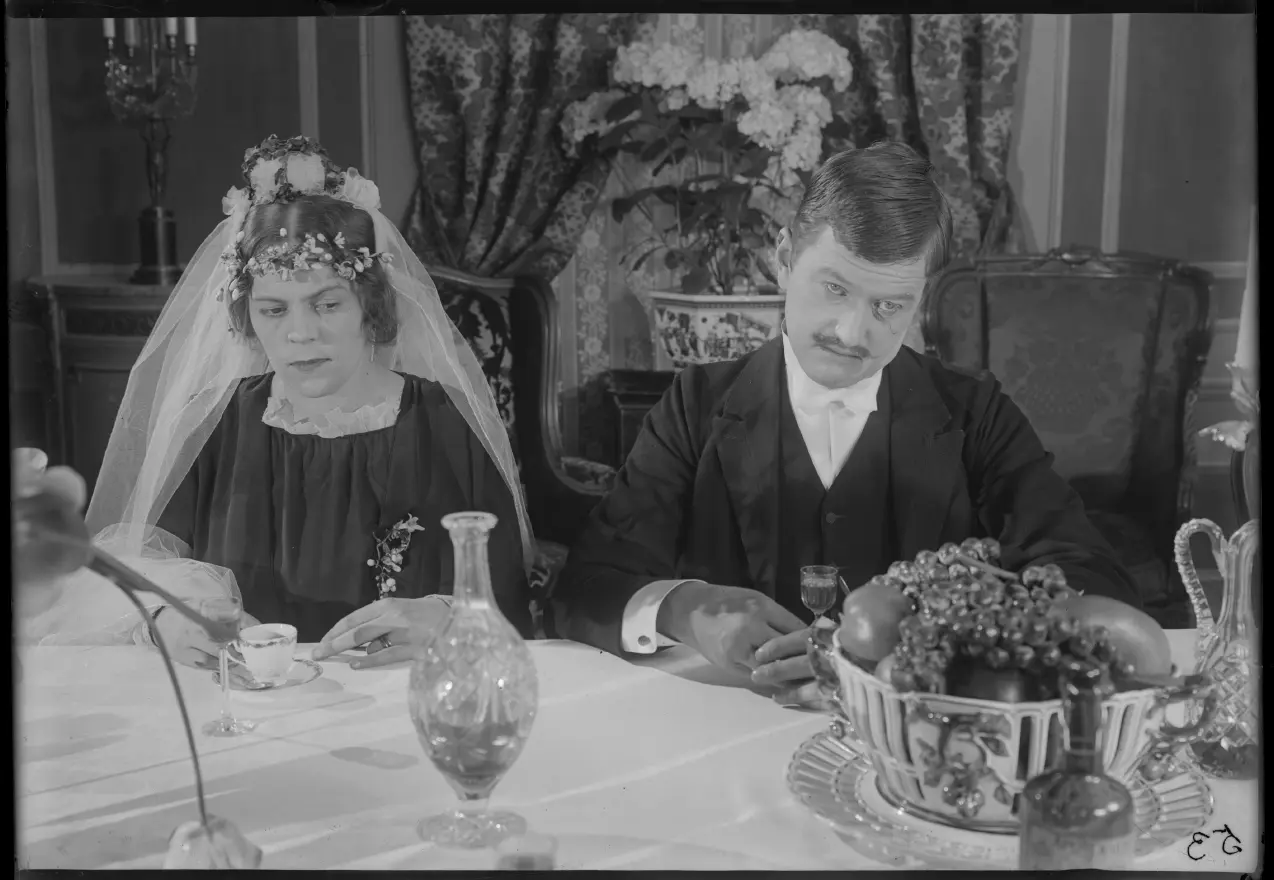
In the context of the 1920s, where films like Their Baby or Die platonische Ehe often treated domesticity with a light, almost dismissive touch, Skeppargatan 40 treats the home as a battlefield. Every dinner scene is a tactical maneuver. Every tutoring session is a negotiation. This level of psychological depth is what elevates the film from a simple romance to a sociological study.
For the modern viewer, Skeppargatan 40 offers more than just historical curiosity. It is a beautifully preserved slice of life from a vanished Stockholm. While the technology has changed—we no longer have engineering students tutoring the daughters of Consuls to pay for their degrees—the underlying themes of ambition, the desire for belonging, and the pain of being 'almost' enough are universal. It lacks the frantic energy of Let-'Er-Go Gallagher or the pulp thrills of One Dark Night, but it offers something far more lasting: an honest reflection of the human condition.
If you are looking for a film that captures the soul of the 1920s without the flapper-girl caricatures, this is it. It is a work of precision, much like Erhard’s engineering, and it deserves a place in the pantheon of great European silent dramas. Whether you are a fan of Help Wanted - Male or the austere works of the later Swedish masters, Skeppargatan 40 is a vital link in the chain of cinematic history. It is a film about the spaces we inhabit and the people we hope to become within them, told with a confidence that few modern directors could hope to match.
Ultimately, Gustaf Edgren’s work here is a reminder that the most compelling stories don't need an eye for figures or grand spectacles; they only need a keen eye for the truth. Skeppargatan 40 is, quite simply, essential viewing for anyone who believes that cinema’s primary duty is to hold a mirror up to the world, even if that mirror is nearly a century old.
IMDb 6.3
1936
Community
Log in to comment.