DbcultAccessing Vault...
7.2/10
Senior Film Conservator
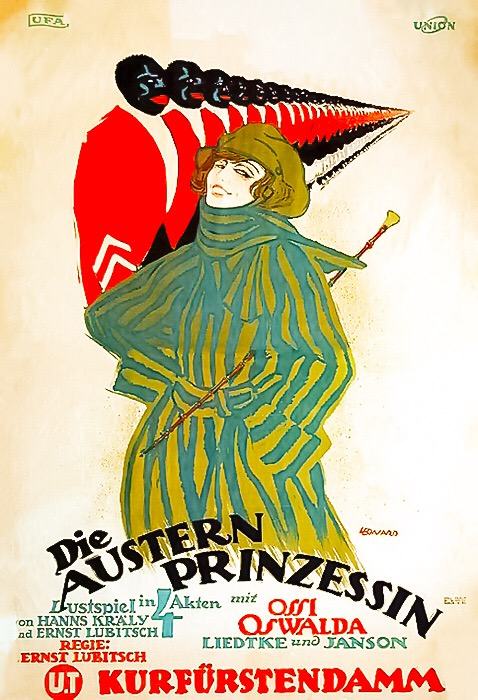
A definitive 7.2/10 rating for a film that redefined the boundaries of cult cinema. The Oyster Princess remains a cornerstone of transgressive art.
Ernst Lubitsch’s 1919 silent masterpiece, The Oyster Princess (Die Austernprinzessin), stands as a gargantuan achievement in visual comedy, marking the precise moment where the director’s slapstick roots began to coalesce into the sophisticated 'Lubitsch Touch.' It is a film that breathes through its production design, a satirical broadside against the nouveau-riche that feels as biting today as it did in the hyper-inflationary landscape of post-WWI Germany. While contemporaries like War Is Hell were grappling with the visceral trauma of the trenches, Lubitsch turned his lens toward the absurdity of wealth, creating a world so ostentatious it borders on the hallucinogenic.
The first thing that strikes the modern viewer is the sheer scale of the mise-en-scène. Mister Quaker’s office isn't merely a room; it is a cavernous hall of capitalist worship. The furniture is scaled to make the human inhabitants look like scurrying ants, a visual metaphor for how the accumulation of capital eventually swallows the individual. Unlike the more grounded domestic dramas found in To Honor and Obey, The Oyster Princess utilizes expressionist geometry to emphasize the rigidity of the social ladder. Every doorway is a portal to a new level of excess, every servant a cog in a machine designed to satisfy the most trivial whims of the Oyster King.
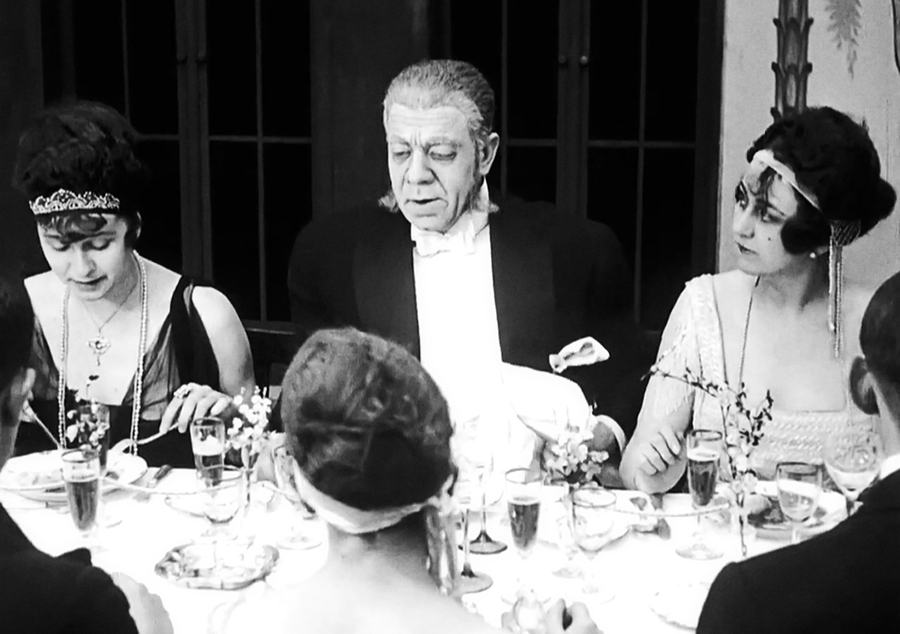
Lubitsch uses this space to choreograph movement with the precision of a clockmaker. The scene where Quaker is assisted by a literal army of servants—each responsible for a single task like holding a cigar or wiping a brow—is a pinnacle of comedic timing. It subverts the solemnity of the wealthy, transforming their daily rituals into a rhythmic, mechanical farce. This preoccupation with the mechanics of status is a recurring theme in early German cinema, often handled with more gravity in films like The Alster Case, but here it is treated with a joyous, anarchic irreverence.
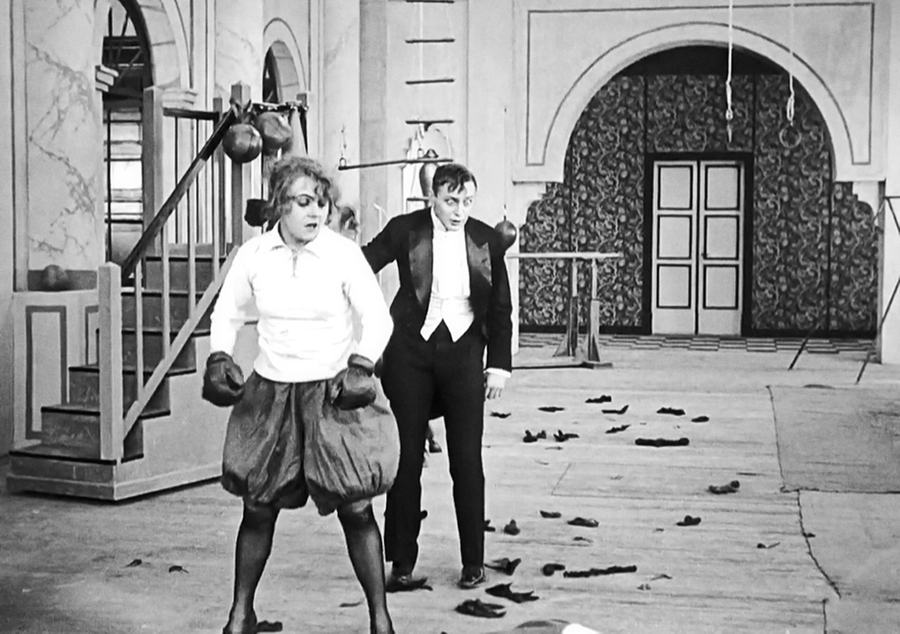
At the center of this hurricane is Ossi Oswalda. Often dubbed the 'German Mary Pickford,' Oswalda’s performance here is anything but demure. She is a whirlwind of spoiled entitlement, a proto-flapper who treats the world as her personal dollhouse. When she learns that her rival has married into the aristocracy, her tantrum is not merely a domestic disturbance; it is a demolition derby. She smashes vases and upends furniture with a primal energy that feels dangerously modern. Her performance provides a stark contrast to the more reserved female leads in The Cigarette Girl or the ethereal presence in Il giardino del silenzio.
Oswalda’s chemistry with the ensemble—particularly the hapless Prince Nucki and his valet Josef—is the engine that drives the second act. The central conceit, wherein Ossi inadvertently marries the valet believing him to be the Prince, allows Lubitsch to play with the signifiers of class. If a valet can pass for a prince simply by wearing the right clothes and standing in the right room, then the entire concept of nobility is revealed as a performative sham. This theme of deceptive identity was a staple of the era, seen in various forms from The Spy (1917) to the lighthearted Whose Baby Are You?, but Lubitsch elevates it through a lens of biting social critique.
Perhaps the most famous sequence in the film is the 'Fox Trot' dance. In a fit of boredom and celebratory excess, the entire household—from the kitchen staff to the wedding guests—succumbs to the infectious rhythm of the jazz-age dance. It is a moment of pure cinematic joy, but one tinged with Lubitsch’s characteristic cynicism. The dance serves as a great equalizer; the rigid hierarchies established in the first act dissolve into a chaotic, sweating mass of movement. It is a premonition of the 'Roaring Twenties,' a decade that would see the total collapse of old-world values in favor of a frenetic, consumer-driven present.

The rhythmic editing during this sequence is decades ahead of its time. Lubitsch cuts with the music (even in a silent medium, the rhythm is palpable), creating a sensory experience that mirrors the intoxication of the characters. This level of technical sophistication is what separates The Oyster Princess from more standard fare like Winning Grandma or A Bit o' Heaven. It isn't just telling a story; it is using the medium of film to create a new language of humor.
Critics often point to The Oyster Princess as the birth of the 'Lubitsch Touch'—that elusive quality of wit, suggestion, and visual irony. You see it in the way he uses doors to hide and reveal information, or in the lingering shots of inanimate objects that speak volumes about the characters' internal states. While Lola Montez would later explore the tragedy of the fallen woman in high society, Lubitsch here finds only the comedy in the climb. He doesn't ask us to sympathize with Ossi or Nucki; he asks us to observe them as specimens in a gilded cage.
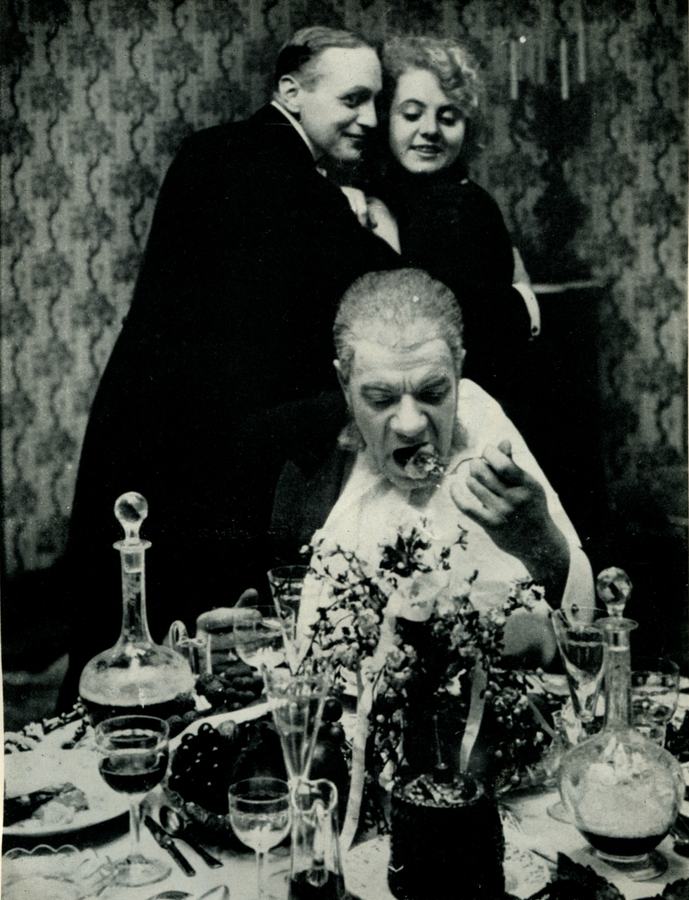
The film’s ending, a drunken reconciliation that prioritizes comfort over truth, is a masterstroke of ambiguity. It suggests that in a world governed by the 'Oyster King,' the only thing that matters is that the check clears and the party continues. This cynical pragmatism was a hallmark of Weimar culture, reflected in the propaganda-heavy Mit Herz und Hand fürs Vaterland or the moralizing tones of The Flower of Faith, yet Lubitsch avoids both extremes. He is neither a patriot nor a preacher; he is a voyeur of the highest order.
In the broader context of silent cinema, The Oyster Princess remains an outlier. It lacks the sentimentality of The Lad and the Lion and the overt heroism of The Joan of Arc of Loos. Instead, it offers a crystalline, almost cruel clarity. It is a film about people who have everything and value nothing, directed by a man who understood that the best way to expose a fool is to give them a larger stage. Even the subplot regarding the 'Marriage Ring'—a trope explored with more gravity in The Marriage Ring—is played for laughs here, as the ring becomes just another accessory in a life of performative wealth.
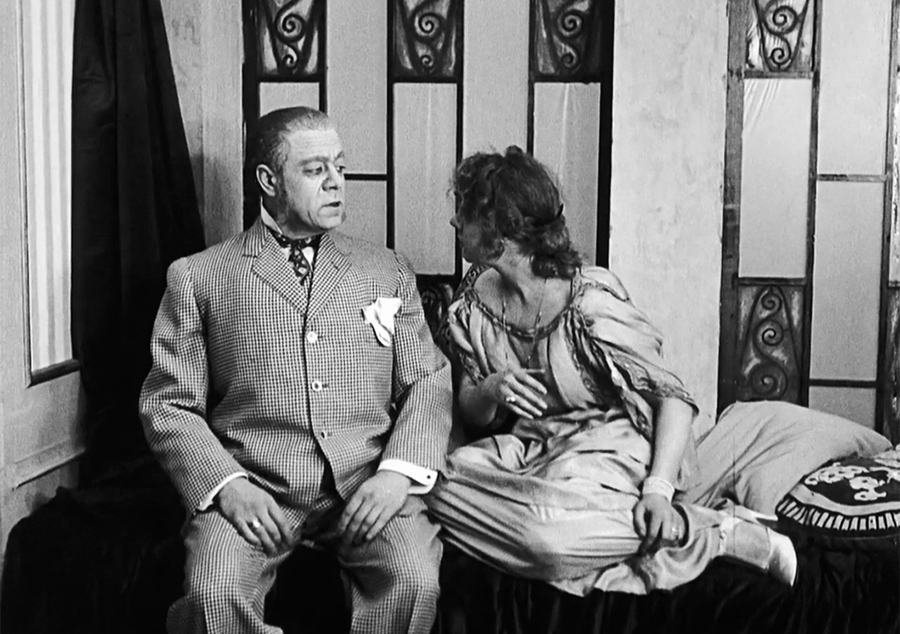
The cinematography by Theodor Sparkuhl deserves immense credit for realizing Lubitsch's vision. The use of deep focus allows the viewer to see the intricate details of the sets while the actors perform in the foreground, creating a layered visual experience that was quite revolutionary for 1919. The lighting, too, avoids the high-contrast shadows of typical German Expressionism in favor of a bright, flat 'commercial' look that underscores the artificiality of the Quaker estate. It is a aesthetic of abundance that perfectly mirrors the thematic content.
To watch The Oyster Princess today is to witness the blueprint for the modern romantic comedy. Every 'fake dating' trope, every mistaken identity plot, and every satire of the 1% owes a debt to this film. Lubitsch understood that the audience doesn't need to like the characters to be enthralled by their antics; they simply need to be fascinated by the world they inhabit. By the time the credits roll, the viewer feels like a guest at a party that has gone on slightly too long—exhausted, slightly tipsy, and thoroughly entertained by the spectacle of it all.
Ultimately, The Oyster Princess is a triumph of style over substance, but in the most deliberate and brilliant way possible. It argues that in the modern world, substance is a myth and style is the only currency that matters. It is a loud, proud, and profoundly funny piece of cinema that remains a vital part of the Lubitsch canon, proving that even a century later, the Oyster King still reigns supreme over the world of satirical comedy.
IMDb —
1918
Community
Log in to comment.