DbcultAccessing Vault...
7.3/10
Senior Film Conservator
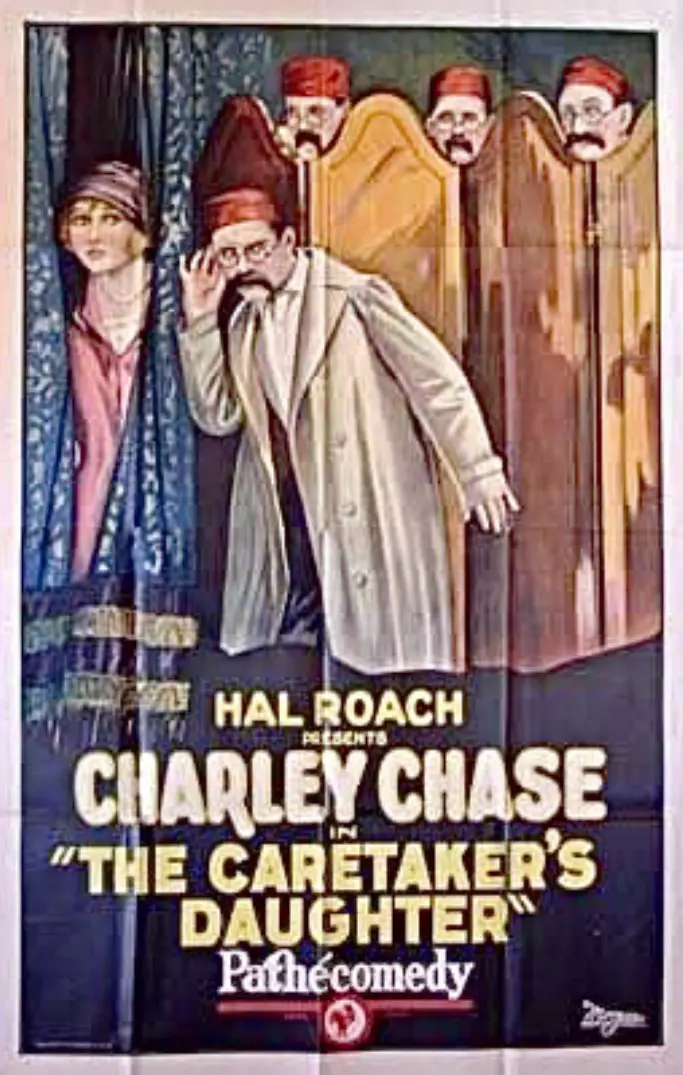
A definitive 7.3/10 rating for a film that redefined the boundaries of cult cinema. The Caretaker's Daughter remains a cornerstone of transgressive art.
The year 1925 remains a pivotal epoch in the annals of silent cinema, a time when the grammar of visual storytelling was being refined with surgical precision. While many enthusiasts point toward the heavy-handed drama of The Unholy Three or the historical grandeur of Dorothy Vernon of Haddon Hall, the true heartbeat of the era often pulsed within the short-form comedies of the Hal Roach Studios. The Caretaker's Daughter stands as a testament to this, featuring the incomparable Charley Chase in a role that epitomizes the 'urban everyman' caught in a web of escalating catastrophes.
The premise is deceptively simple, yet it serves as a scaffold for a complex architecture of comedic timing. Charley is tasked by his philandering employer with a task that would make any modern HR department shudder: sequestering the wife of a recently paroled convict in a secluded cabin to avoid a scandalous confrontation. This setup immediately establishes a precarious equilibrium. Unlike the more slapstick-heavy antics found in The Wildcat, Chase’s humor is derived from a psychological desperation. He is the architect of his own misfortune, a man whose inherent politeness and professional subservience become his undoing.
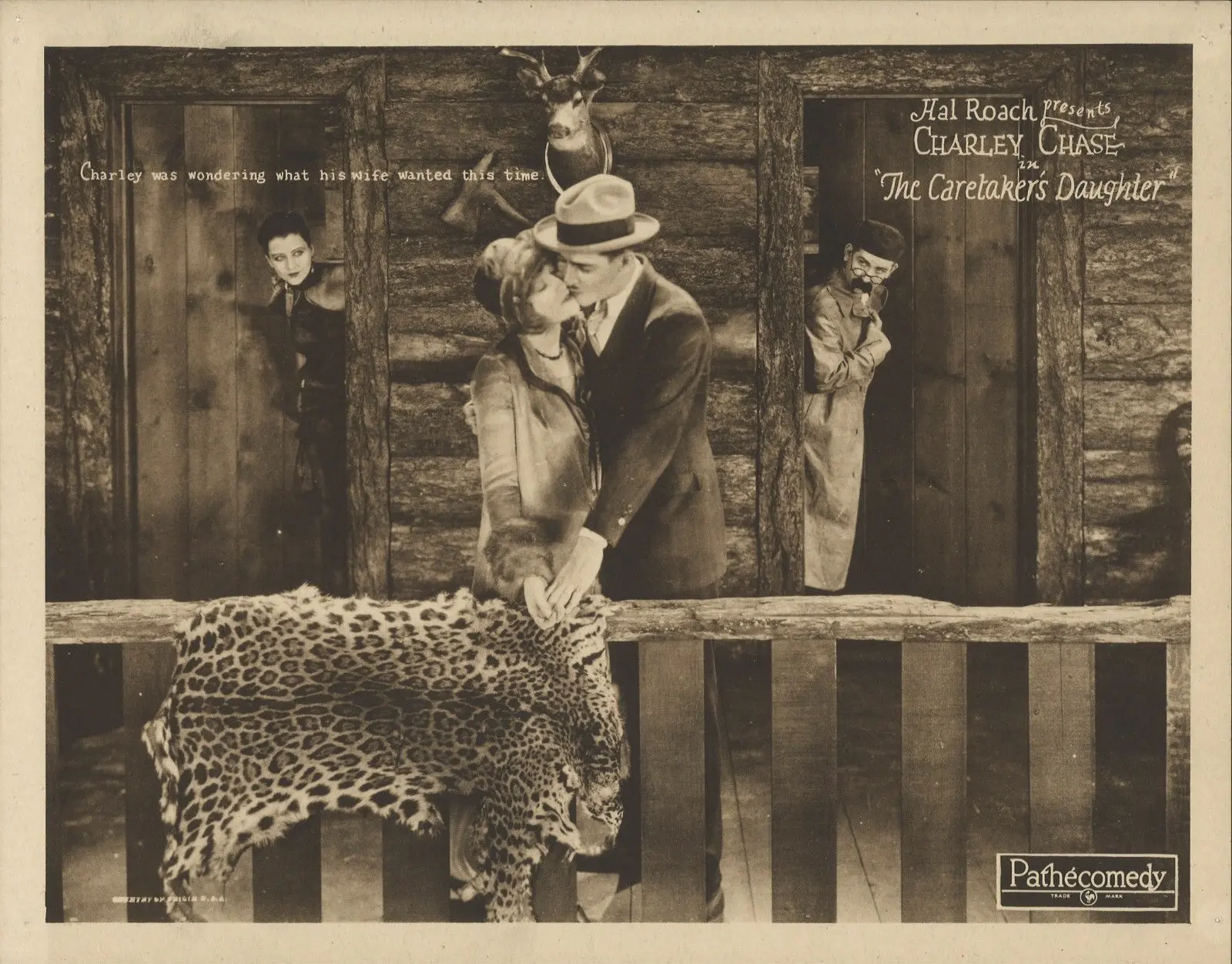
As the journey progresses, the film shifts gears from a situational comedy into a high-octane road movie. The inclusion of James Finlayson, known for his iconic double-takes and 'slow burn' reactions, adds a layer of antagonistic friction that elevates the material. When Charley's wife spots him en route, the film utilizes the geography of the Californian landscape not just as a setting, but as an active participant in the chaos. The chase is not merely about speed; it is about the erosion of Charley’s dignity. One can see echoes of the domestic anxieties explored in Pick Out Your Husband, though here the stakes are amplified by the specter of criminal violence.
The directorial prowess of James Parrott is evident in the film's brisk pacing. There is a palpable fluidity to the cinematography that defies the static conventions often associated with mid-20s shorts. The visual vocabulary employed here is far more sophisticated than the melodramatic tropes of Always in the Way or the somber tones of The Italian. Parrott understands that for a farce to succeed, the audience must believe in the urgency of the character's plight. Each frame is meticulously composed to highlight the proximity of the pursuers, creating a sense of impending doom that is paradoxically hilarious.
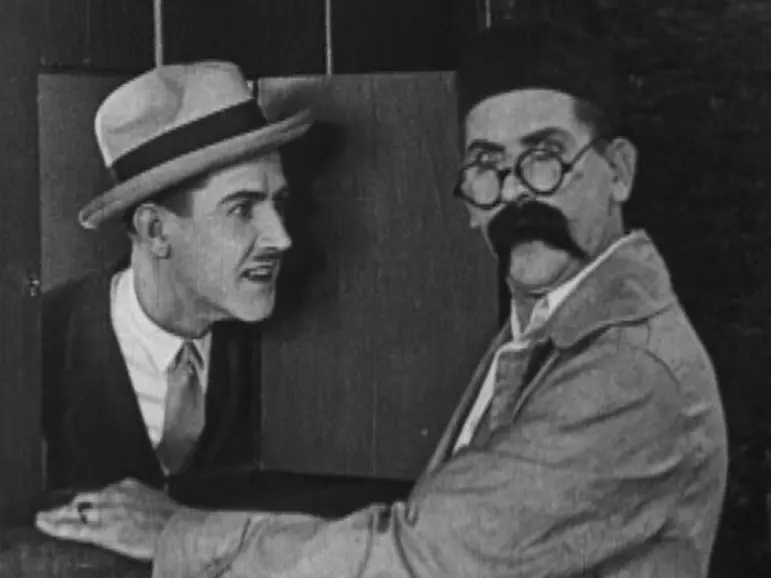
Consider the performance of Katherine Grant. She provides a necessary grounding to the absurdity. Her portrayal of the 'other woman' is not one of a femme fatale, but of a confused participant in a scheme she barely understands. This nuance is often missing in contemporary works like Mouchy or the more theatrical Gefangene Seele. In The Caretaker's Daughter, the humor is democratic; everyone is caught in the gears of the same infernal machine.
Beneath the surface of the frantic car chases and the cabin-bound hi-jinks lies a subtle critique of the American workforce. Charley’s predicament is a direct result of his inability to say 'no' to power. His boss leverages Charley’s job security to facilitate his own moral failings. This theme of the exploited worker was a recurring motif in silent cinema, though often handled with more gravity in films like Erlebnisse einer Sekretärin. By wrapping this critique in the cloak of comedy, Roach and Walker (the writer) make the medicine go down with a spoonful of sugar. It is a more sophisticated approach than the blunt moralizing found in The Black Stork.
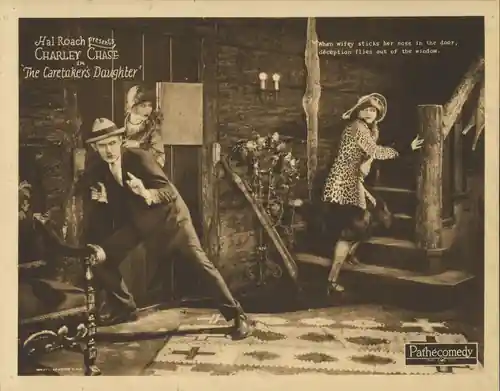
The film also explores the fragility of the domestic unit. The ease with which Charley's wife believes his infidelity speaks to a zeitgeist of marital suspicion, perhaps a reflection of the changing social mores of the Roaring Twenties. This isn't the idealized romance of Black Oxen; it is a messy, paranoid, and ultimately human depiction of a relationship under pressure. The 'Follow that car' trope is used here not just for momentum, but as a literal manifestation of a wife's pursuit of the truth.
One cannot discuss this film without acknowledging the technical mastery of the Roach production unit. The editing is particularly sharp, especially during the climactic scenes at the cabin. The way the camera captures the spatial relationship between the characters—Charley hiding, the wife investigating, the ex-con lurking—creates a tension that rivaled the suspense of Time Lock No. 776. It is a masterclass in blocking.
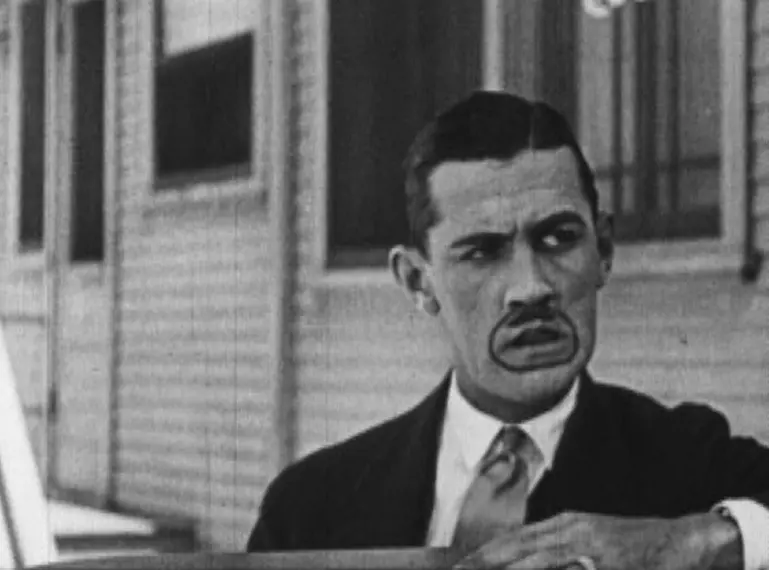
James Finlayson’s contribution is the secret sauce of the production. His facial contortions and unique physicality provide a counterpoint to Chase’s more subtle, bewildered expressions. While Chase is the 'straight man' to the universe's cruelty, Finlayson is the personification of that cruelty's immediate consequences. Their chemistry is far more dynamic than the pairings seen in The Courageous Coward or The Girl and the Judge. It is this interplay that ensures the film remains watchable nearly a century later.
In the grand tapestry of 1920s cinema, The Caretaker's Daughter is often overshadowed by the feature-length works of Keaton or Chaplin. However, to overlook this short is to ignore a vital component of film history. It captures a specific moment where comedy transitioned from pure vaudevillian slapstick into narrative-driven farce. It lacks the cynicism of Caught in the Act, opting instead for a frenetic, joyful energy that is infectious.
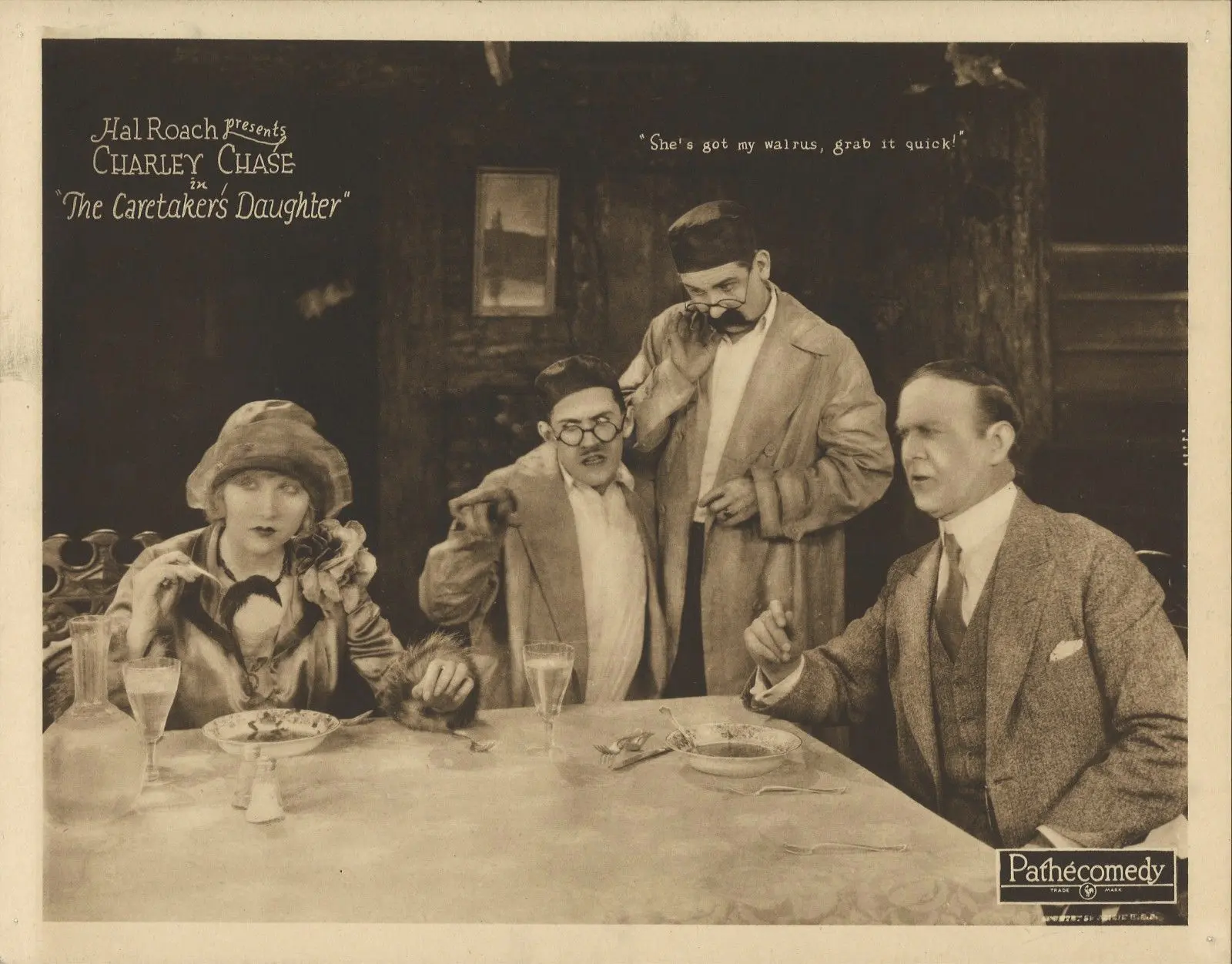
The film's resolution, while satisfying the requirements of the genre, leaves the audience with a lingering sense of the absurd. Charley Chase remains the quintessential victim of circumstance, a man who tried to do a 'solid' and ended up in a liquid state of total collapse. For those seeking to understand the evolution of the sitcom or the mechanics of the chase scene, this film is an essential text. It is a vibrant, breathing artifact of an era that understood that sometimes, the funniest thing in the world is a man simply trying to keep his head above water while the tide of misunderstanding pulls him out to sea.
Ultimately, the enduring appeal of The Caretaker's Daughter lies in its relatability. We have all been Charley at some point—trapped between a rock and a hard place, trying to appease a boss while maintaining a semblance of a personal life. The fact that this 1925 short can still elicit genuine laughter in the digital age is a testament to the universal nature of its themes and the sheer brilliance of its execution. It is a high-water mark for the Hal Roach studio and a shining jewel in the crown of Charley Chase’s filmography.
IMDb —
1925
Community
Log in to comment.