DbcultAccessing Vault...
Cult Review
Senior Film Conservator
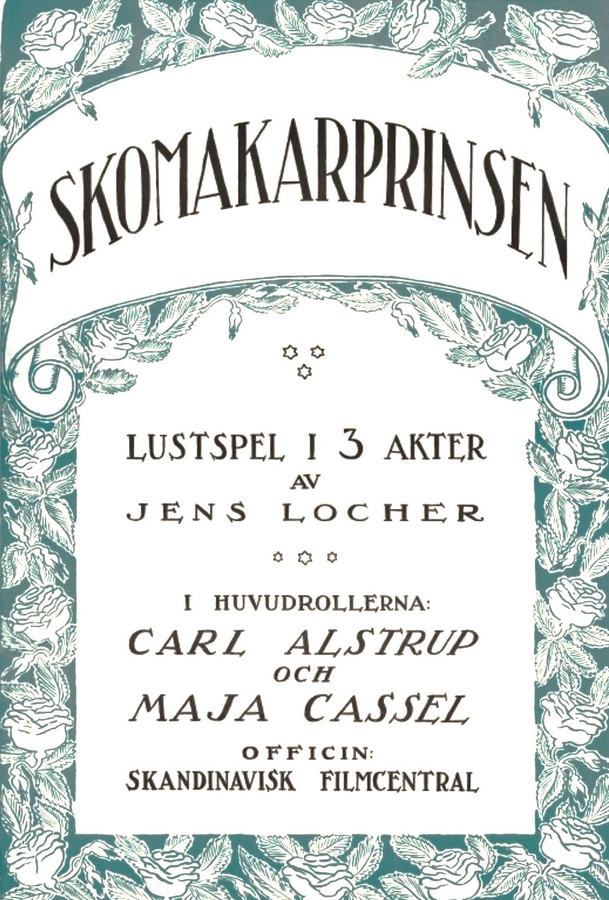
The projector hums like a distant beehive; then, through a veil of nitrate shimmer, Skomakarprinsen strides into the torchlight of rediscovery, boots still caked with century-old mud. What sounds like a trifling switcheroo—monarch and maker trading places—becomes, in the hands of director Viking Ringheim, a razor-sharp dissection of Scandinavian hierarchies teetering on the cusp of democratic modernity.
Forget rose-strewn Renaissance fairs; this duchy is a draughty dollhouse where courtiers sniff powdered wigs and bureaucrats barter futures over aquavit. The prince—played with mercurial panache by Carl Alstrup—has grown allergic to the very air of entitlement. His boredom is not the languid sigh of a Romantic antihero but the fidgety itch of a man whose every heartbeat has been pre-orchestrated by heraldic protocol.
Enter the shoemaker: Maja Cassel in breeches and smudged cheekbones, radiating proletarian authenticity so fierce it borders on erotic. She embodies not the jolly artisan of folk tales but a pragmatic anarchist who trusts only leather, thread, and the honest stink of hide. When the prince proffers his ludicrous swap, she counters with a craftsman's caveat: "Every shoe molds itself to the foot that owns it; be sure you can stomach the blisters of my life." The line, delivered via Swedish intertitles, flashes across the screen like a manifesto.
The narrative engine runs on humiliation, but of the most genteel Nordic sort. Palace lackeys fail to detect the substitution because they never truly see underlings; they only recognize insignia. Thus the false prince can parade in clod-hopping boots, barking irreverent decrees—"Let cobblers pay no tax; let aristocrats cobble!"—while courtiers bow, assuming eccentricity is a royal prerogative. Meanwhile the genuine article hunches over a last, fingertips bleeding, discovering that dignity is a currency whose mint lies inside the ribcage, not inside a coat of arms.
Ringheim's camera, often stationary in medium tableau, allows performances to breathe; yet when he finally dollies backward through the bustling marketplace, the world seems to exhale after decades of corseted restraint. The sequence recalls Hoffmanns Erzählungen in its carnival swirl, but where that German fantasy drifts into delirium, Skomakarprinsen keeps its gaze fixed on the sociological ledger.
Oda Larsen's princess arrives like a winter storm, fur collar high, eyes scanning the throne room with predatory appraisal. She is no docile pawn in marital realpolitik; she is a shareholder auditing a merger. Larsen's performance crackles with understated menace—watch how her gloved fingers drum against a gilt chair arm, calculating dowries and bloodlines. That the object of her contract is currently mending clogs two streets away adds piquant dramatic irony without slipping into farce.
The film's sexual politics, though circumscribed by 1920 censorship, seethe beneath the lacquer. Note the scene where the disguised prince offers the princess a pair of bespoke riding boots; as she eases her silk-stockinged foot into the leather, the camera lingers on the snug fit, a surrogate consummation. Firelight reflects in her pupils, suggesting that desire can be transferred through craftsmanship—an idea more subversive than any pamphlet.
Because dialogue is reduced to intertitles, faces must semaphore entire subtexts. Alstrup accomplishes this with microscopic shifts: a half-raised brow that mocks his own regal bearing, a jaw-clench when the cobbler's creditors berate him as a slacker. Cassel, conversely, wields stillness like a blade; her eyes—coal-bright in close-up—register each incremental fracture of feudal myth. Together they enact a pas de deux of class voyeurism, each savoring the other's supposed simplicity until the mirror cracks.
The score, reconstructed for recent DCP restorations, favors nyckelharpa and bass viol, plucking a modal drone that feels medieval yet uncannily modern. During the climactic unmasking, the music drops to heartbeat-level, allowing boot-heels on cobblestones to become percussive confession. It is one of those exquisite moments when silence, paradoxically, amplifies the silent medium.
Cinephiles will detect DNA shared with Lulu—both films probe eroticized power—and with Protsess Mironova, where jurisprudence becomes theater. Yet Skomakarprinsen sidesteps the fatalism of the former and the legal labyrinth of the latter, opting instead for a humanist shrug: systems fail because people are gloriously inconsistent.
Less obvious, but equally instructive, is its kinship with Polly with a Past. Both exploit role-reversal to expose how readily society mistakes packaging for substance. The difference lies in tonal aftertaste: Polly's transgressions are forgiven in a frosted cosmopolitan cocktail, whereas the Scandinavian cobbler and prince end their charade with frostbitten noses and a tacit understanding that tomorrow's bread is never guaranteed.
Cinematographer Hjalmar Kotte (often overlooked in canonical surveys) bathes palace interiors in anemic candle-glow, employing silver nitrate's spectral gleam to suggest moral anemia. Conversely, workshop scenes bask in umber shadows where dust motes ignite like miniature suns. The palette anticipates later Scandi-noir desaturation, yet retains silent cinema's painterly flair—note how a solitary crimson rag, draped over an anvil, provides the film's sole primary burst, a synecdoche for revolution muted by soot.
Ringheim's blocking also deserves laurels. Characters stride diagonally across the frame, creating depth that belies theatrical provenance. During the dual coronation—one official, one fraudulent—the camera frames both thrones in a single pan, a visual thesis statement on parallel universes rubbing shoulders.
That a woman dons male garb without narrative punishment feels quietly radical for 1920. Cassel's character never renounces her androgynous stance; when she finally reclaims her skirts, it reads as tactical, not penitential. The film refuses to heteronormatively weld her to the prince, opting instead for a complicit wink—two co-conspirators who know the world is too fragile for both love and truth.
Contrast this with Virtuous Wives, where marital restoration is the price of narrative closure. Skomakarprinsen intuits that virtue, like footwear, comes in sizes, and one size seldom fits all.
Spoilers are petulant when dealing with folklore, yet the finale deserves commentary. Revelation occurs not in chandeliered ballroom but on a rain-slick quayside at dawn. The prince, bootless, confesses to a cluster of dockworkers who greet the admission with shrugged shoulders; they have suspected as much and, more importantly, do not care. Power evaporates like morning brine, and the minister—who orchestrated the marriage scheme—retreats into fog, a paper silhouette.
The princess, witnessing the debacle from a departing skiff, smiles—not out of romantic fulfillment but from the liberating knowledge that contracts, like boots, can be re-heeled. It is an ending that sneers at restoration, embracing perpetual flux, a sentiment more 1970 than 1920.
Is Skomakarprinsen a masterpiece? The term feels leaden for so sprightly a phantom. It is, rather, a svelte paradox: a film that laughs at monarchy while loving the human faces beneath the crowns; a satire that refuses cynicism because it believes in the supple resilience of ordinary folk. Restoration reveals only a handful of scratches—mostly around reel changes—preserving the lustrous grayscale that makes each frame resemble a graphite sketch breathed to life.
If you track it down at a repertory house or streaming platform savvy enough to license archival gold, do not expect the Sturm-und-Drang of Kultur nor the expressionist fever of The Face in the Dark. Instead, anticipate a wry grin that lingers long after the lights ascend, a recognition that every shoe—be it brocade slipper or clodhopper—ultimately treads the same dirt. And in that dirt, the film whispers, grows the only kingdom that truly lasts: the common ground of shared folly, stitched together by the stubborn thread of empathy.
IMDb 5.5
1931
Community
Log in to comment.