DbcultAccessing Vault...
Cult Review
Senior Film Conservator
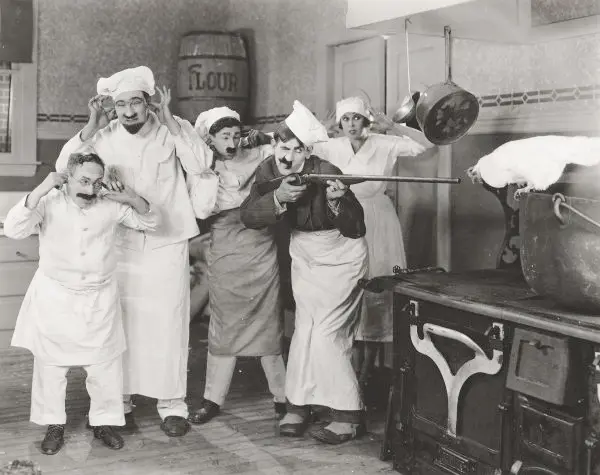
Is Pay the Cashier a mandatory relic for silent film buffs? Short answer: Yes, but only if you appreciate the frantic, mechanical slapstick of the pre-sync era and can stomach a surprisingly dark finale.
This film is for historians of the Hal Roach era and those who find humor in the intersection of poverty and technology. It is decidedly NOT for viewers who demand a tidy, happy resolution or high-definition visual clarity.
1) This film works because it captures the specific anxiety of the early 20th-century industrial boom, where 'systems' were seen as the solution to human fallibility.
2) This film fails because its pacing in the middle act drags as it over-explains the mechanical 'Lunch Basket' gimmick, losing the kinetic energy of the opening cafeteria raid.
3) You should watch it if you want to see James Parrott before he became a legendary director, or if you enjoy seeing how early cinema handled the concept of the 'unreliable machine.'
Pay the Cashier is a fascinating time capsule that reflects the post-WWI obsession with efficiency. While it lacks the poetic grace of a Buster Keaton feature, it possesses a raw, cynical energy that many of its contemporaries lacked. It offers a unique look at the 'cafeteria'—then a relatively new social phenomenon—and turns it into a laboratory for social Darwinism. If you are looking for a lighthearted romp, the ending might leave you cold. But if you want to see the DNA of modern 'disruption' satire, it is essential viewing.
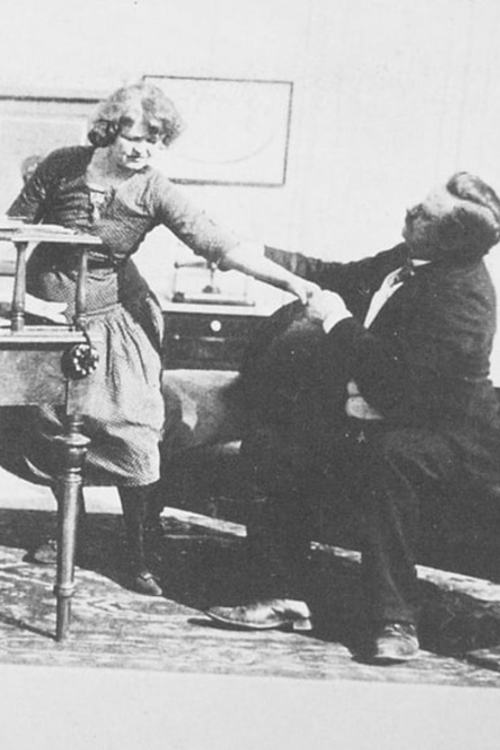
The film opens with a sequence that feels uncomfortably modern: a man so hungry he has transcended shame. Roy Brooks plays Paul with a jittery, avian quality. He doesn't just walk; he flits. When he enters the 'A-La-Cafeteria,' the camera lingers on the steam tables with a fetishistic intensity that underscores his desperation. This isn't the whimsical hunger of Chaplin in The Gold Rush; it is a predatory, survivalist hunger.
The 'sampling' scene is the film’s first major comedic set piece. Paul’s attempts to look like a discerning gourmet while essentially eating a full meal one teaspoon at a time is choreographed with surgical precision. He uses his fingers, his sleeves, and a series of increasingly absurd excuses to stay in the line. It works. But it’s flawed. The flaw lies in the proprietor's delayed reaction, which feels more like a plot necessity than a natural consequence.
Compare this to the more sentimental approach found in A Boy of Flanders. Where that film seeks to evoke tears through the plight of the poor, Pay the Cashier seeks to evoke a nervous sweat. There is no nobility in Paul’s poverty; there is only craftiness. This lack of sentimentality is the film's greatest strength, setting it apart from the more saccharine shorts of the 1920s.
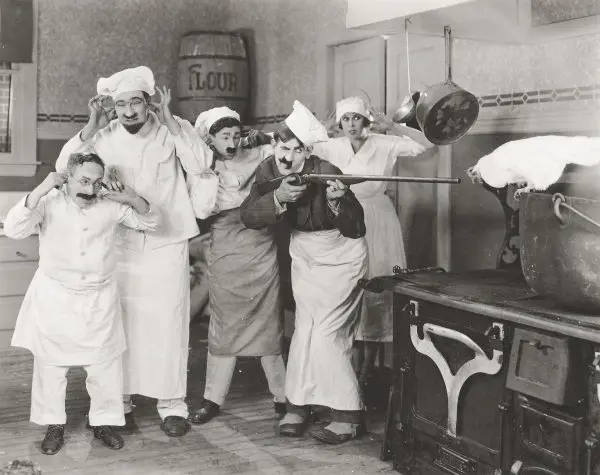
Once Paul is caught, the film shifts from a character study of a scrounger to a satire of the 'Efficiency Movement.' The introduction of the 'Lunch Basket Order' system is where the film finds its brain. Paul, the victim of the system, becomes its architect. He convinces the proprietor that human error—and human theft—can be engineered out of existence.
The basket system itself is a marvel of silent film prop work. It’s a series of locking mechanisms that look like something out of a Rube Goldberg sketch. In one specific scene, we see a customer trying to wrestle a roll out of a locked basket, only for the machine to 'snap' back like a mousetrap. It is a brutal, funny commentary on how technology often complicates the simplest human interactions.
The climax involving the fire alarm is a masterclass in irony. The very baskets designed to keep the food in the restaurant become the vessels that allow the customers to steal it all at once. The sight of dozens of people running into the street, each clutching a locked basket of stolen lunch, is the film’s most enduring image. It suggests that no matter how many locks you put on a door, panic will always find the key.
The direction (likely influenced by the uncredited James Parrott) is surprisingly sophisticated for a 1921 short. While many films of this era, such as The Chauffeur, relied on flat, stage-like compositions, Pay the Cashier uses depth. We often see the proprietor watching Paul from the background while Paul continues his antics in the foreground. This 'deep focus' (long before Welles popularized the term) creates a constant sense of impending doom.
The cinematography by the Roach regulars is functional but effective. The lighting in the cafeteria is harsh, emphasizing the sterile, industrial nature of the setting. There are no soft edges here. Even the romantic interest, played by Ethel Broadhurst, feels like a cog in the machine rather than a source of warmth. This tonal consistency is rare in early comedy.
The film’s pacing, however, is its Achilles' heel. The middle section, where Paul explains the mechanics of the baskets to the proprietor, feels like a corporate training video. It’s too long. It’s too dry. It lacks the 'snap' we see in films like Behind the Front. However, the payoff at the end almost justifies the wait.
Pros:
- A sharp, cynical take on the 'American Dream' of invention.
- Strong physical performance by Roy Brooks.
- A genuinely surprising and dark ending that defies comedy tropes.
- Excellent use of depth in the cafeteria set.
Cons:
- The middle section drags significantly.
- The female characters are given almost nothing to do.
- Some of the 'tasting' gags are repeated one too many times.
Pay the Cashier is a fascinating, if uneven, piece of silent history. It lacks the polish of the major features of the time, but it has a bite that is surprisingly fresh. The final image of Paul flattened against the wall, staring down the barrels of two revolvers, is a jarring reminder of the stakes involved in early 20th-century survival. It’s a comedy that ends with a threat of execution—a bold choice that makes it worth the 15-minute investment. It isn't a masterpiece, but it is a vital footnote in the history of cinematic satire. Skip the slow middle if you must, but don't miss the beginning or the end.
IMDb 6.1
1931
Community
Log in to comment.