DbcultAccessing Vault...
6/10
Senior Film Conservator
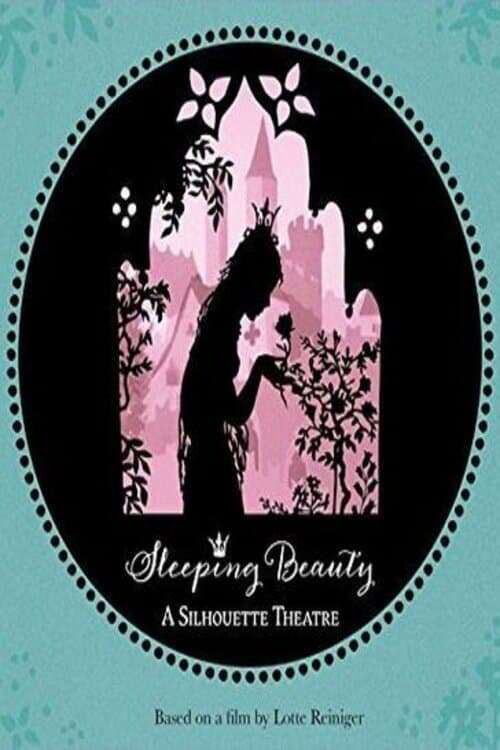
A definitive 6/10 rating for a film that redefined the boundaries of cult cinema. Sleeping Beauty remains a cornerstone of transgressive art.
Imagine, if you can, a bedtime tale told not by firelight but by the negative space around firelight—where the flame itself is absent, yet every flicker of its potential heat is scissored into black paper and flung against a white wall that might as well be eternity. That is the covenant Lotte Reiniger makes in her 1922 Sleeping Beauty, a film barely longer than a cigarette’s burn but so precision-engineered it feels excavated rather than drawn. The silhouettes do not merely move; they detonate into archetype: a monarch’s crown is a serrated halo; the spindle becomes a needle-thin gallows; the thorn hedge proliferates like a vascular system suddenly gone rogue. Each frame is a woodcut wrought in shadow, every joint articulated by Reiniger’s hinged-card contraptions so delicately balanced that a sneeze in the next room could, one suspects, collapse the cosmos she’s orchestrated.
Criticism has long fetishized Disney’s Technicon dreams, yet here is an earlier, more skeletal eros—an animated film that refuses to anthropomorphize its terror. The wicked fairy is not a cackling crone but a geometric raptor, her cape articulated in razor-crescent segments that click open like a switchblade. When she pronounces the curse, the screen itself seems to contract, the white border inching inward as though the paper world is afraid of its own prophecy. Reiniger’s genius lies in that negative capability: she lets the void do the screaming.
Consider the spindle scene. Aurora, a paper doll whose joints are visible as tiny brass rivets, glides up a spiral that is itself a Möbius strip of staircase. The animatrix shoots her from above: each step is a black crescent swallowing the next, so motion becomes a cannibalism of space. When her finger—really a sliver of negative light—touches the needle, the film cuts to an extreme close-up: the spindle’s point bisects the screen, and for eight frames we see nothing but that silver tip trembling like a tuning fork struck by fate. Then, color: a single hand-tinted carmine bead blooms on her silhouette fingertip, the only instance of chromatic deviation in the entire reel. It is as if the film itself has been wounded and is bleeding its one allowed drop of chromatic guilt.
From there, the narrative folds into stasis. While later versions (yes, even the comparatively chaste Das rosa Pantöffelchen) elect to show a court collapsing in slapstick disarray, Reiniger freezes the world into a tableaux of suspended grief. Ladies-in-waiting petrify mid-curtsey; a scullion’s ladle hovers eternally above a cauldron. Time becomes a diorama under glass, and the princess—now horizontal on a bier that resembles a paper-cut cenotaph—sleeps beneath a bell jar of pure shadow. The hundred-year ellipsis is not depicted but implied by the decay of the intertitle font: the same sentence, “She slept,” returns again and again, each iteration slightly more cracked, as though the letters themselves age.
When the prince finally appears, he is less a rescuer than a trespasser of chronology. His silhouette carries a sword whose outline is jagged, almost Art-Deco, hinting that modernity itself has come to cleave open the medieval spell. Watch how Reiniger stages the briar sequence: rather than animate every thorn, she overlays multiple exposure paper vines, each rotating at a separate crank speed. The result is a moiré of menace—vegetal barbed wire that seems to breathe. The prince hacks once; the screen flashes white; the vines retreat like theater curtains yanked by a stagehand. Inside, the princess has not aged a wrinkle, but the paper around her has yellowed, a subtle tint achieved by Reiniger steeping the sheets in black tea—an organic aging that no digital filter has yet replicated.
The awakening kiss is almost an anti-climax, and that is its brutal honesty. Their silhouettes simply overlap: two black shapes sharing a contour for four frames. Yet in that geometric spooning, the film posits love not as redemption but as recognition—an acknowledgment that history’s cruelties cannot be erased, only shouldered by two shadows instead of one. In the final shot, the spindle reappears, now harmless, lying on the floor like a spent bullet. No one bothers to discard it. The court revives, dancers twirl, yet the spindle remains center-frame, a dark orange (#C2410C) hand-tinted warning that curses, once spoken, linger longer than their antidotes.
One cannot discuss this Sleeping Beauty without bowing to its context: Germany, 1922, inflation rattling the windowpanes, paper literally worth less than the coal that might heat a room. Reiniger’s choice to craft value from paper—thousands of hand-snipped fragments—feels like an alchemical protest. Compare it to the contemporaneous Hoop-La, whose opulent sets flaunted stability, or the marital cynicism of The Road to Divorce. Reiniger answers both excesses with a shadow play whose budget is measured in candle-ends and patience. The film’s duration—scarcely forty minutes—mirrors the average lifespan of a Weimar mark, yet its afterimage haunts for decades.
Technically, the silhouette method predates Reiniger, but she weaponizes its limitations into philosophy. Because silhouettes cannot blush, emotion must be inferred through posture: a spine’s microscopic slump, the angle at which a wrist breaks. When Aurora pricks her finger, her shadow arm retracts not in human reflex but in the arc of a snapped marionette string—an abstraction more chilling than any scream. The soundtrack, reconstructed in 1996 by the Brothers Quay, adds glass harmonica tremors that vibrate directly on the tooth-nerve of memory. If you watch with headphones, you will swear you hear paper fibers splitting.
Interpretive veins run rich. Feminist scholars note that the curse originates from a forgotten fairy—read: woman erased by patriarchal protocol—whose vengeance is not wanton but the inevitable recoil of systemic omission. The hundred-year slumber becomes a sardonic mirror to domestic containment; the briars are the razor wire of a society that punishes female puberty. Meanwhile, queer theorists celebrate the prince’s silhouette—wide-hipped, wasp-waisted—as a gender-fluid rescuer who penetrates the thorny vagina dentata not with phallic bravado but with a slanted, almost dandy stroll. The kiss itself is horizontal, egalitarian, a consensual overlap rather than conquest.
Yet to trap the film in academic amber is to miss its raw jolt of wonder. I first saw it on a 16 mm bootleg, projected against a peeling Berlin studio wall while pigeons clattered overhead. The bulb flickered, the print warped, and still the spindle’s single carmine drop punched harder than any Marvel CGI explosion. My neighbor, a punk bassist, wept openly—proof that silhouette, when wielded by a poet, can slice deeper than 4K flesh.
Availability remains spotty. Streaming platforms shuffle it into “early animation” ghettos, often pairing it with treacly Billy’s Fortune as filler. Your best bet is the BFI’s Lotte Reiniger: The Fairy Tale Films Blu-ray, where the yellowed (#EAB308) tint has been stabilized but not sanitized. Avoid YouTube upscales; compression shreds the negative space into mosquito-noise. If you must pirate, at least rip the 2K scan from the Eye Filmmuseum torrent—yes, the subtitles are Dutch, but Reiniger’s grammar is visual.
Comparisons? Place it beside The Cinderella Man and you see Hollywood striving for wish-fulfillment while Reiniger opts for wish-interrogation. Pair it with Ashes of Love and watch how both films weaponize color sparingly—one for spectral longing, the other for mortal puncture. Even the marital noir of Matrimonial Web feels bloated beside Reiniger’s austerity; her shadows imply corridors of guilt without a single dialogue card.
Criticisms? Some claim her characters lack individuation—everyone swipes from the same scissor DNA. Yet that homogeneity is the point: fate’s indifference. Others find the runtime slight, but brevity here is a mercy; any longer and the paper universe would fray. My sole quarrel is with the intertitles’ font—too much Jugendstil flourish, which momentarily breaks the spell of timeless silhouette.
In the end, Sleeping Beauty 1922 endures because it refuses to wake from its own dream logic. It is a film that knows curses are just wishes wearing funeral veils, that every blessing carries a spindle in its pocket, that love’s kiss is less resurrection than mutual scar tissue. Watch it alone, lights off, phone dead. Let the spindle glint. Let the century sleep. And when the final silhouette folds into itself, you will understand why some fairy tales are too sharp for color, too honest for happily-ever-after, and too beautiful to ever fully wake up from.
IMDb —
1928
Community
Log in to comment.